
Early Airport Arrival: Psychology says people who arrive three hours early at the airport are not just ‘early birds’, there is a surprising childhood reason behind it

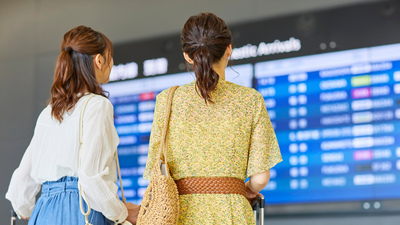
All of us have come across people who are usually calm and composed, plan their day well, execute their tasks, arrive right on time, and talk like they have all the calm in the world.But this demeanour suddenly changes when they have to catch a flight!They want to reach the airport hours earlier than necessary, far exceeding what a typical flight procedure requires.Have you wondered why it is so?While most of us just let it go off as a personality trait, assuming that the person might just be a nervous flyer or an early bird, there might just be an actually interesting reason behind it.But the more you watch someone do this consistently, the less it looks like nerves about flying and the more it looks like something else entirely. These people do not panic once they board the plane, but just right before that, in traffic, in security lines, in the small window of time where everything could still go wrong and someone would need to be blamed for it.Let’s find out what psychology says about this.
People who arrive at the airport hours early are not just early birds
The plane was never really the issue. The people who tend to arrive early get the feeling of “inflated responsibility”, as per psychologists, basically the feeling way more accountable for things going wrong than you actually are, even stuff that’s totally out of your hands.According to the study published in the National Library of Medicine, researchers found that people who carry this belief tend to over-prepare specifically when they feel like the outcome depends on them, and this pattern traces it back to childhood, specifically in cases where kids were handed too much responsibility too early, or grew up in homes where doing things “right” wasn’t optional.
This early reasoning does not come across upfront; it is just the silent gestures
It can be noticed quietly, through tone and body language. A parent’s stress during a change of plans, a sigh after something goes wrong, teaches a child what forgetting one thing can cost everyone else.Research on family anxiety transmission has found a similar pattern; according to studies on parental fear expression, children whose parents were more openly fearful scored higher on their own measures of fearfulness. And this paternal fear did not mean to be scolded; the face alone was often enough to make the lesson stick through the years.
The same child grows restless and fearful if anything goes wrong
The same child grows restless and fearful if anything goes wrongThat same child usually grows into the adult who can’t sit with not knowing what’s coming. This connects to “intolerance of uncertainty”, a predictor of chronic worry according to the researchers. People high in this trait consistently respond to unpredictability with more preparation and more worry, not less.Similarly, coming to the early airport arrival scenario, all procedures happening at the place are in our control, be it the TSA line, the weather, or the guy ahead of you unpacking a laptop bag in slow motion.But you can control when you leave the house, so that is what people do. The three-hour buffer isn’t really insurance against missing a flight. It’s insurance against a very specific, very familiar feeling of quiet certainty that if something went wrong, it would somehow trace back to them.


