
Does a window seat on a flight expose you to more radiation? Here’s what studies say |

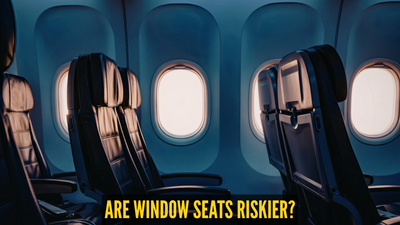
Grab a window seat, and you get the best views of the skyline or mountains. It really makes the trip feel like a proper adventure. But, as some studies point out, bagging that window spot on a daytime flight might actually expose you to more radiation than you’d think.Now, there’s no need to panic. Experts are quick to reassure us that if you only travel occasionally, the risks are tiny. Even so, if you’re stuck on a long-haul flight for 10 hours or more, it’s worth understanding exactly what’s going on up there so you can make smart choices.
Why does radiation exposure increase during flights?
Commercial aeroplanes normally cruise somewhere between 30,000 and 40,000 feet. Up there, you’ve got a lot less of the Earth’s atmosphere sitting above you compared to when you’re on the ground. Our atmosphere acts like a giant protective blanket, that filters out and absorbs different radiations usually.When that natural shield gets thinner, passengers end up facing higher levels of both ultraviolet (UV) and cosmic radiation. People often mix the two up in conversation, but they’re quite different. UV radiation beams down from the Sun and mostly targets your skin, whereas cosmic radiation is made up of high-energy particles zooming in from deep space. Cosmic radiation easily passes straight through the aeroplane cabin, meaning it hits everyone on board, no matter where they’re sitting.
The window seat factor
The window seats are a little more problematic. It all comes down to the fact that aeroplane windows simply don’t block out all UV radiation.Research carried out by the Federal Aviation Administration’s Civil Aerospace Medical Institute discovered that while cabin windows are brilliant at stopping UV-B rays (the ones that cause sunburn), they let a massive amount of UV-A radiation slip right through.UV-A is a bit sneakier than UV-B. It penetrates much deeper into the skin and is linked to long-term skin damage and premature ageing. And because there’s less atmosphere to block it, UV radiation is considerably stronger at cruising altitude than it is back on the ground.In fact, a well-known study by researchers at the University of California, San Francisco published in JAMA Dermatology looked at UV levels inside a cockpit. They found that sitting in the sunlight for just under an hour (56.6 minutes) at 30,000 feet gave the pilots a dose of UV-A equivalent to a 20-minute session in a tanning bed.This doesn’t mean you’re getting zapped with a medical X-ray through the glass. It just proves that UV-A exposure can be surprisingly high when the sun is beaming straight into the cabin.
What about the chest X-ray comparison?
When you hear that a flight gives you the radiation of “two chest X-rays,” they aren’t talking about the sun’s UV rays. That claim is all about cosmic radiation.These high-energy particles from outside our atmosphere crash into atmospheric gases, creating a secondary shower of radiation that hits aeroplanes flying at high altitudes. Unlike the UV rays sneaking in through the window, cosmic radiation affects absolutely everyone on the plane, whether you’re glued to the window, stuck in the middle seat, or stretching your legs in the aisle.According to the radiation models aviation regulators use, a long-haul intercontinental flight can expose you to roughly 0.10 to 0.15 millisieverts (mSv) of cosmic radiation. To put that into perspective, health agencies estimate that a standard diagnostic chest X-ray delivers about 0.1 mSv of radiation.
Are travellers at risk?
If you only fly a few times a year, experts agree that the health risk from all this radiation is incredibly small. The real concern is for flight crews, pilots, and those hardcore business travellers who spend hundreds of hours in the sky each year. Studies show that flight crews rack up much higher cumulative doses of radiation than the rest of us because they essentially work in a high-altitude environment.Dermatologists are also particularly worried about the UV-A side of things. Repeated exposure over years and years can age the skin faster and bump up the risk of certain skin cancers.
How can you reduce exposure?
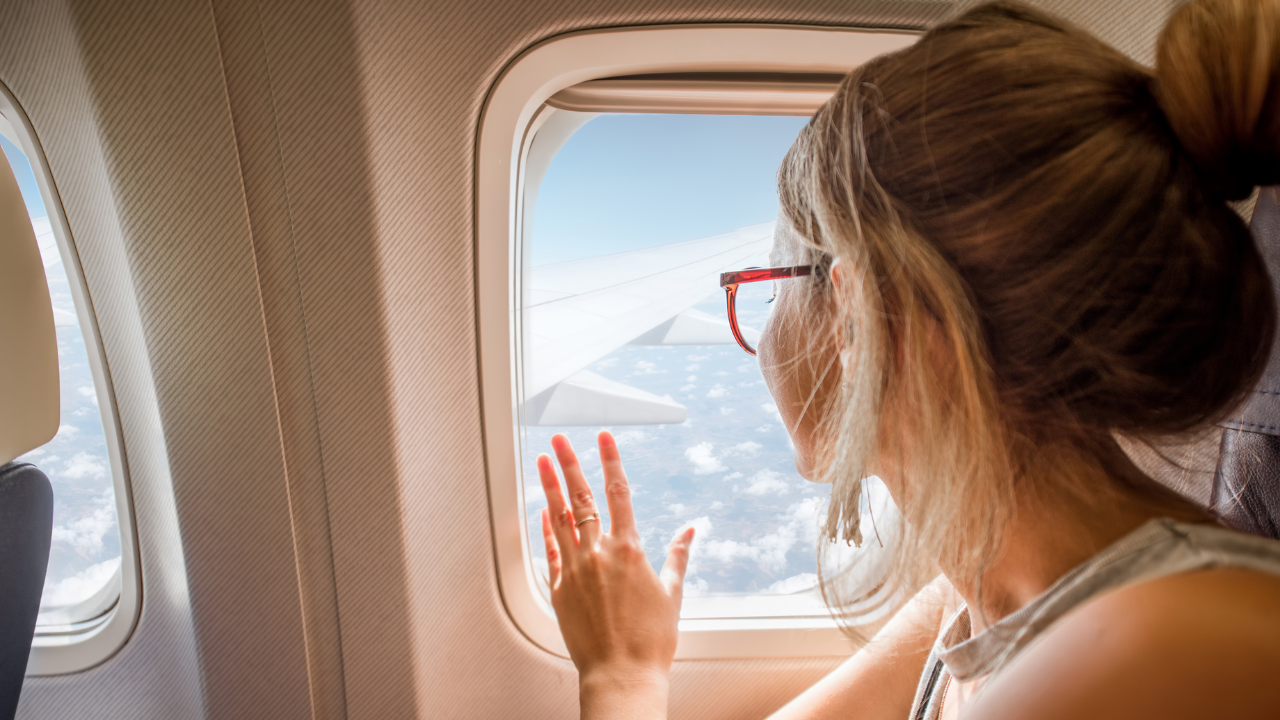
Image Credit: Canva
Thankfully, it’s pretty easy to minimise your UV exposure on a daytime flight.
- Lower the blind: This is the quickest and best fix. It instantly blocks direct sunlight from coming inside.
- Swap seats: Choosing an aisle seat instead of a window seat is another great way to dodge the direct rays.
- Use sunscreen: If you’re on a long daytime flight and want to keep the window open, it’s a good idea to apply a broad-spectrum sunscreen (SPF 30 or higher), especially if the sun is glaring right at you.
- Cover up: Throwing on UV-blocking sunglasses and wearing lightweight, long-sleeved clothes will give you an extra layer of defence.
Passengers in the window seat do soak up significantly higher levels of UV-A radiation than people chilling on the ground. While occasional travellers don’t need to stress, frequent flyers would definitely benefit from taking a few easy precautions, like wearing sunscreen, covering up, and shutting the blind during sunny daytime trips.Next time you snag that highly sought-after window seat, definitely enjoy the view but remember that a little bit of sun protection at 35,000 feet can go a long way.


