
Day after US, Iran agreed to tentative deal, Israeli strikes kill 4 in Lebanon

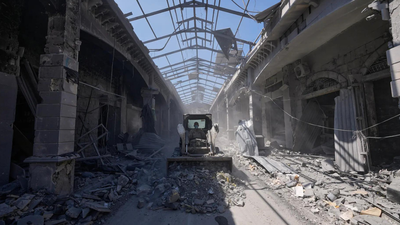
The TOI correspondent from Washington: Iran’s top diplomat said Tuesday that the tentative deal to end the war with the US would require Israel to withdraw from Lebanon — a condition Israel has rejected, leading to the resumption of all-out war. While Israel is not party to the agreement, it is part of the war. Iranian foreign minister Abbas Araghchi said Israel’s continued occupation of southern Lebanon would violate the deal. “Without the withdrawal of Israeli forces from the territories they occupied during this war, the war has not fully come to an end,” Araghchi said. A US official, who spoke on condition of anonymity to discuss outlines of the agreement, has said the deal did not call for an Israeli withdrawal. On Tuesday, Israeli drone strikes in Leabanon killed at least four people, Lebanon’s National News Agency (NNA) reported. Two people were killed in a double-tap strike, with a drone hitting a car in the village of Mayfadoun followed by a second strike after people had gathered at the scene. Another drone strike on the town of Shoukin killed two other people, the agency said. Throughout Tuesday, the Israeli military pounded southern Lebanon with drone strikes, a missile launch, and artillery strikes, according to NNA, while drones hovered over the capital Beirut. There was no immediate comment from the Israeli military on the reported strikes.In a statement, Israel’s military said it had intercepted rockets launched by Hezbollah at an area of southern Lebanon that was witnessing operations by Israeli soldiers. The military also said it had struck a launcher that had fired some of the rockets.Meanwhile, US President Trump Tuesday sought to contain a growing political backlash over his emerging deal with Iran, pledging to hold a detailed press conference after Friday’s formal signing ceremony and read the memorandum of understanding “word for word” to counter accusations that he had conceded too much in exchange for a headline-grabbing diplomatic win on his birthday.The unusual promise came as critics across the ideological spectrum savaged him for a deal that the White House has promoted as a landmark achievement ending months of conflict with Tehran, but which, in reality, represents only a dodgy opening phase of a far more complicated diplomatic process.The MoU, signed electronically this week and due to be formalised in Switzerland on Friday, is being described by US officials as the framework for a 60-day ceasefire and negotiation period. The most contentious issues — Iran’s nuclear programme, the scope and timing of sanctions relief, the fate of frozen Iranian assets, and regional security arrangements — remain unresolved and will be the subject of subsequent talks.Yet, even before the ink has dried, supporters and detractors alike have rushed to portray the MoU as either a masterstroke of statesmanship or a historic capitulation. For Trump, who has long prided himself on his dealmaking prowess, the agreement offers an opportunity to claim credit for ending a war without committing American troops to another prolonged West Asia conflict. But critics, especially within conservative and pro-Israel circles, have accused him of prioritising a political victory over long-term strategic considerations.Prominent Trump ally Mark Levin has emerged as one of the agreement’s fiercest critics, warning that any arrangement that leaves Iran’s ballistic missile capabilities intact while easing economic pressure risks emboldening Tehran and its regional proxies. The backlash has triggered an extraordinary “circular firing squad” within the broader MAGA movement, exposing a long-simmering divide between America First restraint advocates and traditional hawks. On one side stand Levin and like-minded conservatives who argue that maximum pressure on Iran and unwavering support for Israel must remain non-negotiable pillars of Republican foreign policy. On the other are influential figures such as Tucker Carlson, Megyn Kelly, Jack Posobiec and Candace Owens, who contend that critics of the agreement are dragging the US into another endless West Asia war. The administration has sought to reassure sceptics by emphasising that the MoU is not a final settlement, but headlines announcing “Trump Makes Iran Great Again,” fuelled by claims from Iranian state media that Washington has been worsted, has put the White House in a tough spot. Leaks in the media revealing that the US will allow Iran to immediately begin selling oil and fuel under the deal to end the war, offering Tehran an early financial aid to wind down the conflict, has further embarrassed the White House.Allegations involving reconstruction funds to the tune of $300 billion, access to frozen assets and broader economic packages have fuelled suspicions that Tehran extracted enormous concessions from Washington. The administration has not confirmed many of the figures being cited by critics and has repeatedly denied reports suggesting that it agreed to sweeping benefits. The White House now faces the difficult task of persuading multiple audiences simultaneously: an American public weary of foreign wars, Republican voters divided over interventionism, nervous allies, and an Iranian leadership seeking tangible gains.With inputs from agencies


