
Daily inspiration: “Service to others is the rent you pay for your room here on earth”: How Muhammad Ali’s courage to fight injustice and inspired generations beyond the boxing ring

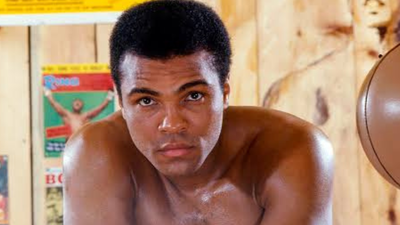
Muhammad Ali is remembered as one of the greatest athletes the world has ever seen. But the story behind his success goes far beyond world titles and famous fights. Before he became a three-time heavyweight champion, Ali was a young boy named Cassius Clay growing up in segregated Louisville, Kentucky. A stolen bicycle changed the course of his life, while the love of his mother gave him the confidence to dream big. Years later, he gave up the biggest years of his boxing career to stand by his beliefs. Through every stage of life, Ali showed that true greatness comes from courage, kindness, and staying true to your values.
How did Muhammad Ali’s stolen bicycle change his life?
Muhammad Ali’s journey into boxing began with an unexpected moment. At the age of 12, his prized red bicycle was stolen. Angry and upset, he told police officer Joe Martin that he wanted to “whip” the person who had taken it. Martin, who also trained young boxers, gave him a simple answer: first learn how to fight.That one conversation opened the door to a career that would change sports history.Away from the boxing gym, life was not always easy. His father earned a living painting signboards, while his mother, Odessa Grady Clay, worked as a domestic maid. She became a steady source of love and encouragement, teaching him to respect people and believe in himself despite the racial discrimination around him.Ali later summed up the values he learned growing up with one of his best-known quotes:“Service to others is the rent you pay for your room here on earth.”
Why did Muhammad Ali refuse the Vietnam War draft despite losing everything?
In 1967, Muhammad Ali made the biggest decision of his life. At the peak of his career, he refused induction into the U.S. military during the Vietnam War because of his religious beliefs and his opposition to racial injustice.The decision came with a heavy cost. He lost his heavyweight belt, was banned from the sport for more than three years, and dealt with widespread public backlash. Even so, he refused to bend his position.Ali felt that certain rules were worth more than fame, or even pure money. His stubborn drive to keep moving forward through the hard spells was seen in yet another well known quote:“I hated every minute of training, but I said, ‘Don’t quit. Suffer now and live the rest of your life as a champion.’”His comeback later became one of the greatest in sports as he defeated George Foreman in the “Rumble in the Jungle” and Joe Frazier in the “Thrilla in Manila.”
How did Muhammad Ali balance boxing greatness with being a father?
As his career moved forward, Ali’s focus was not limited to boxing. He wanted to be a caring father to his nine children while continuing his humanitarian work around the world.Despite global fame, he often spoke about how parenting was a different kind of challenge. He believed success at home could not be measured as quickly as success inside the ring.Ali once said:“I tried to be the greatest boxer in the world and a good parent, too. I had instant feedback on my success as a boxer, but as a parent, you have to wait to see how your kids turn out.”He also shared simple advice that reflected his love for family:“Enjoy your children, even when they don’t act the way you want them to.”
Why does Muhammad Ali’s legacy still inspire people today?
Even after Parkinson’s disease affected his health, Muhammad Ali kept inspiring people, through his compassion and public service, even when it wasn’t easy. His achievements inside the ring made him a sporting legend, but his courage outside it … well, that shaped an even bigger legacy, somehow. He showed that standing by your beliefs can come at a cost , and still those decisions tend to leave the deepest imprint. His story reminds people that success isn’t just about winning medals, or breaking records. It is also about helping others, guarding your values, and moving forward with kindness. That’s why, decades later, Muhammad Ali is remembered not only as “The Greatest” boxer, but as a person whose life inspired generations well beyond sport.


