
Cough Syrups Prescription: ‘This could save lives’: Doctors laud Centre’s tough stance on cough syrups |

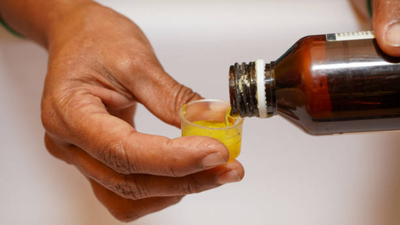
You will now require a doctor’s prescription to buy cough syrups and other syrup medicines.The Union Ministry of Health and Family Welfare on Tuesday issued a notification under which syrup medicines, including cough syrups, will no longer be available over the counter, news agency ANI reported.Welcoming the move, Dr Vivek Jain, Senior Director & Unit Head Paediatrics, Fortis Hospital, Shalimar Bagh, Delhi told TOI Health, “cough syrup is a medication that is intended for treatment of specific cough or cold symptoms only when prescribed by a doctor and should only be used when medically needed. No restrictions create a greater odds of using the wrong dosage, masking of an underlying illness, interaction with other medications and accidental poisoning for an adolescent or young adult. This regulatory measure is also necessary to properly reduce the use of self-medication among this population who by not using prescription medication could cause a longer time lapse in receiving a diagnosis for a potential illness,” .“The government’s move to limit OTC sales of cough syrups is a needed public health intervention. The recent rise in concern over how some cough formula misuse and abuse, especially those that contain codeine or habit-forming ingredients has made this regulation particularly necessary for adolescent and young adult populations who have easy access to cough syrup without appropriate level of medical supervision,” Dr. Jain said. “This has contributed to the misuse for recreational drug purposes, dependency to cough syrup, and in some instances, adverse health issues in these demanding age groups.““By having stricter regulation in place from the perspective of a public health official, complete reduction of substance use or misuse, improvement in patient safety will exist and responsible prescribing and dispensing will take place. Awareness campaigns will assist persons to understand rationale for the imposed restrictions. This being said, it will be necessary to provide appropriate access to genuine patients through a physician while reducing abuse or misuse access demonstrates the balance needed. As a result, this action will improve medication safety and promote more rational medication usage within the communities,” he added. Dr. Sivaranjani Santosh, a Hyderabad-based pediatrician, welcomed the decision and thanked the government for taking a firm stand. “Thank you! I appreciate the stance you have taken,” she wrote on Instagram.In the video, she welcomes the move and says it could save the lives of many children and infants who might otherwise end up hospitalized. According to her, this is a much-needed step that has been overdue for years.She describes the decision as a significant public health measure and praises the Ministry of Health and Family Welfare for taking a firm stand. For a long time, cough and cold syrups have been easily available over the counter, making it possible for people to use them without proper medical guidance. That, she argues, has contributed to misuse and avoidable health risks, especially among young children.She believes the new rule will help prevent unnecessary hospitalizations and encourage parents to seek proper medical advice before giving such medications to children.
India’s contaminated medicine crisis
Children in Chhindwara district, Madhya Pradesh,most of them toddlers, some barely past infancy, came down with the kind of mild respiratory illness that every Indian parent recognises as routine. The seasons change, a fever arrives, a runny nose follows. You go to the local pharmacy store, pick up a bottle of cough syrup, and go home. In October 2025, for dozens of families in central India, that entirely ordinary sequence of events ended with a funeral.By mid-October, at least 14 children, most under five years old, had died after being given Coldrif, a cough syrup manufactured by Sresan Pharmaceuticals in Tamil Nadu. Lab tests found the syrup contained approximately 48.6% diethylene glycol, or DEG which is an industrial solvent. The permissible limits for DEG in pharmaceuticals are vanishingly small. Coldrif contained it at levels that were not a trace contamination but a wholesale adulteration.Diethylene glycol is used industrially as a solvent and in antifreeze. In the human body, it metabolises into compounds that are directly toxic to the kidneys and nervous system. The WHO’s Medical Product Alert, issued on October 13, described how children given Coldrif initially presented with standard cold symptoms, then developed persistent vomiting, abdominal pain and difficulty urinating. Acute kidney injury followed. The Madhya Pradesh government banned Coldrif on October 2 after laboratory tests confirmed DEG contamination at the Sresan facility in Tamil Nadu. Meanwhile in Rajasthan, three more children between the ages of two and five died after being given a different cough syrup. Unlike Coldrif, this syrup did not test positive for DEG; it contained dextromethorphan hydrobromide, a cough suppressant considered unsafe for children.India is the world’s largest exporter of generic medicines. Its pharmaceutical industry supplies drugs to over 200 countries. The country’s ability to manufacture quality-controlled medicines at scale is genuinely significant for global health.In 2022 and 2023, dozens of children died in the Gambia, Uzbekistan and Cameroon after taking Indian-made cough syrups contaminated with ethylene glycol or diethylene glycol. In the Gambia, a WHO investigation attributed at least 66 child deaths to four cough syrups made by Maiden Pharmaceuticals. In Uzbekistan, 18 children died after ingesting Dok-1 Max, manufactured by Marion Biotech.On December 29, 2025, the government issued a draft notification inviting objections and suggestions from stakeholders and the public. The government said all comments received on the draft rules were considered before the final notification was issued. The notification stated, “Now, therefore, in exercise of the powers conferred by sections 12 and 33 of the said Act, the Central Government, after consultation with the Drugs Technical Advisory Board, hereby makes the following rules further to amend the Drugs Rules, 1945, namely.“In the amendment notified in the Official Gazette on June 9, 2026 the word “Syrups” has been removed from item number (7) under serial number 13 of Schedule K of the Drugs Rules, 1945.


