Career turning point: “I cried a lot and threw my rackets everywhere”: How one emotional loss changed Roger Federer’s mindset and set him on the path to greatness

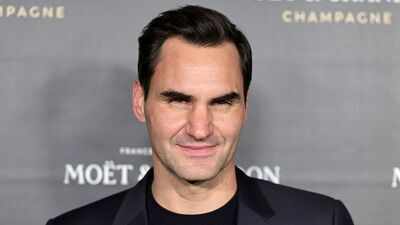
It is difficult to picture Roger Federer as the teenager he once was. The player remembered for his composure and elegant tennis spent his early years struggling to control his emotions on court. Federer later admitted, “I cried a lot and I threw my rackets everywhere,” while reflecting on how badly he handled losses. His talent was never the issue. The bigger challenge was learning how to stop frustration from taking control of his game.The wake-up call came in Hamburg in 2001. Federer lost 6-3, 6-4 to Franco Squillari in the opening round of the Hamburg Masters, and the defeat stayed with him for a reason that had little to do with the result. He smashed his racket, cried over his performance and realized that his behavior could not continue if he wanted to reach the level he believed was possible. After years, Federer described the match as a key moment in changing the way he approached tennis.
Why did the Hamburg defeat force Roger Federer to confront himself?
Federer was already becoming a serious prospect in 2001. He had won his first ATP title in Milan earlier that year and was climbing the rankings, but his emotional reactions could still derail him when matches became difficult. A missed shot was sometimes followed by frustration, and that frustration could carry into the next point.The Hamburg loss brought the problem into focus. Federer later recalled reaching match point before Squillari hit a passing shot after he came toward the net. Federer went for the volley but could not immediately see where the ball had gone. He then realized it had become trapped between his racket and the court, ending the match. His reaction was to smash his racket while crying over how badly he felt he had played.Federer later recalled telling himself, “I can’t take this attitude.” He began thinking about what would happen if he continued behaving that way for another decade and realized he would not be able to cope. From that point, he decided he needed to become calmer and more concentrated.However, that didn’t happen suddenly. Federer later explained that he initially went too far in the opposite direction, becoming so quiet that he appeared less competitive. He had to find a balance between what he described as “anger and calmness.”
Did Roger Federer’s new mindset immediately make him a star?
No, but the difference began appearing soon afterward. Just weeks after the Hamburg defeat, Federer arrived at Wimbledon and faced Pete Sampras in the fourth round. Sampras had won Wimbledon seven times and had not lost there in 31 consecutive matches, while Federer was only 19 and was playing on Centre Court for the first time.Federer stayed composed through a five-set battle and defeated the defending champion 7-6, 5-7, 6-4, 6-7, 7-5. He later admitted that his behavior had previously been a problem, saying, “I realised that the racquet throwing didn’t help my game because I was always getting very negative.” He also explained that he had started relaxing more on court and was no longer smashing as many rackets.Federer still lost to Tim Henman in the quarterfinals, so the Sampras victory did not suddenly turn him into a champion. What it did was show that the young Swiss player could handle the biggest stage and compete with the best player of his generation.The two matches also tell an important part of the same story. Hamburg forced Federer to confront his behaviour, while Wimbledon gave him an early chance to see what he could achieve with greater control.
When did Roger Federer’s mindset change become visible in his results?
Roger Federer continued developing during 2002, winning the Hamburg Masters and breaking into the top 10. His game was becoming more complete, but the mental work that began after the Squillari loss was happening alongside those improvements.The breakthrough came at Wimbledon in 2003. Federer had never reached a Grand Slam final, but he beat Andy Roddick in the semifinals before defeating Mark Philippoussis 7-6, 6-2, 7-6 to win his first major title.His reaction afterwards was emotional, but for an entirely different reason. Roger Federer cried after finally winning the title he had dreamed about. He had not become emotionless. Instead, he had learned how to keep his emotions from interfering while the match was still being played.That distinction became an interesting factor when we remember his amazing transformation. Federer did not suddenly stop caring about losing, and he never became a player without emotion. He simply became better at separating what he felt from what he needed to do next.
How did controlling his emotions shape Roger Federer’s career?
By 2004, Federer had become world No. 1 and won three Grand Slam titles in the same season. The pressure had changed completely. He was no longer the young player trying to prove that he belonged. He was now the player everyone wanted to beat.His improved temperament gave his extraordinary tennis more consistency. Federer could lose a set without allowing frustration to ruin the next one, and he became increasingly comfortable staying patient when an opponent pushed him into difficult situations.The numbers that followed were extraordinary. Federer finished with 20 Grand Slam singles titles, including eight Wimbledon championships, and spent 310 weeks as world No. 1.Those achievements are usually linked to his serve, forehand movement and remarkable variety, but his emotional development was an important part of the same journey. The talent was already there. He needed to learn how to consistently access it under pressure.Thus, the Hamburg defeat deserves to be remembered as a genuine career turning point. It was not a Grand Slam victory or a famous upset, and it did not make Federer a champion overnight. Instead, it forced a gifted 19-year-old to recognise that his temperament could hold him back if he did not address it.Federer later described his younger self as someone who cried, threw rackets and struggled badly with losing. The player who eventually became one of tennis’s greatest champions was built through the process of changing that behaviour, not by pretending those emotions never existed.He learned that controlling his emotions did not mean caring less about winning. It meant giving himself a better chance to win.The teen who left Hamburg frustrated with himself could not have known what was coming. Within weeks, he would defeat Sampras at Wimbledon. Two years later, he would win his first Grand Slam there. By 2004, he would be the world’s No. 1 player.The Hamburg loss did not create Roger Federer by itself, but it forced him to confront a weakness that could have followed him throughout his career. His greatest transformation began when he understood that before he could consistently control matches, he first had to learn how to control himself.


