
As Lake Mead’s water vanished after years of drought, human bodies, abandoned boats and decades-old mysteries began emerging from the lakebed | World News

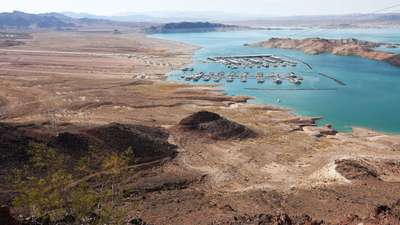
America’s largest reservoir, Lake Mead, has become the unlikely centre of one of the most extraordinary discoveries in recent US history. As years of relentless drought caused water levels to plunge to record lows, the shrinking shoreline began revealing secrets that had remained hidden beneath the surface for decades. Human remains, abandoned boats, military relics and forgotten infrastructure gradually emerged from the lakebed, drawing investigators, historians and curious visitors alike. What started as an environmental crisis soon evolved into a remarkable series of discoveries, offering rare insights into unsolved cases, lost history and the growing impact of climate change on the Colorado River Basin, which supplies water to millions of people across the American Southwest.
The day Lake Mead began giving up its dead
On May 1, 2022, visitors enjoying a day at Lake Mead National Recreation Area noticed something unusual protruding from the newly exposed shoreline near Hemenway Harbor, just outside Las Vegas. It was an old, rusted metal barrel that had been hidden beneath the reservoir for decades. When authorities opened it, they found human remains.The Las Vegas Metropolitan Police Department later confirmed the victim had died from a gunshot wound, making the case a suspected homicide. Investigators believe the killing likely took place between the late 1970s and early 1980s, when Lake Mead’s water level was significantly higher and the barrel would have remained hundreds of feet beneath the surface.The grim discovery made headlines around the world, but it quickly became clear that this was not an isolated case.Just six days later, another set of skeletal remains was found at Callville Bay, another part of the shrinking reservoir. Over the following months, additional remains continued to emerge as the shoreline retreated further.Since 2022, authorities have recovered at least six sets of human remains from different locations around Lake Mead. While some have been identified as people who accidentally drowned decades ago, others remain under investigation. Among those identified was Thomas Erndt, a 42-year-old who disappeared while swimming in the lake in 2002. Modern DNA testing has also helped investigators identify other victims whose identities had remained unknown for years.The discoveries transformed Lake Mead from a popular recreation destination into one of America’s most unusual crime and history stories, raising a question that still lingers today: what else is hidden beneath the reservoir?
Why were bodies suddenly appearing at Lake Mead?
The answer lies not in a sudden tragedy, but in a slow-moving environmental crisis that has been unfolding for more than two decades.Lake Mead was created in the 1930s after the completion of the Hoover Dam on the Colorado River. At full capacity, it is the largest reservoir in the United States and serves as a crucial water source for around 25 million people across Nevada, Arizona, California and parts of Mexico.However, the reservoir has been shrinking steadily due to a combination of prolonged drought, declining snowpack in the Rocky Mountains, increasing demand for Colorado River water and rising temperatures that accelerate evaporation.Scientists describe the current dry period as one of the worst megadroughts in the western United States in at least 1,200 years.As the water receded, areas that had remained submerged since the reservoir filled nearly 90 years ago slowly reappeared. The retreating shoreline exposed vast stretches of lakebed that had not seen daylight for generations, allowing investigators to access places that had previously been impossible to search.One of the clearest signs of the reservoir’s decline is the striking white mineral band surrounding Lake Mead’s cliffs. Known as the “bathtub ring”, it marks previous high-water levels and stretches for miles around the reservoir, providing a visual reminder of just how dramatically the water has fallen.
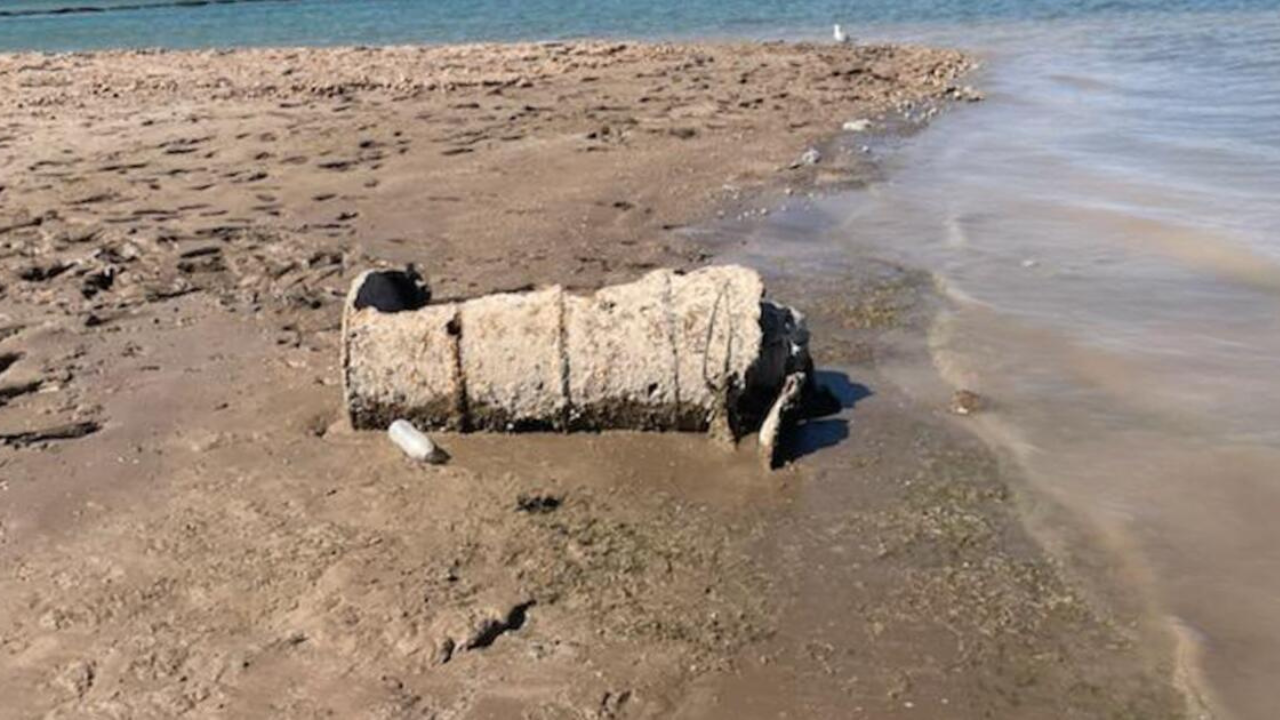
A rusted barrel lies on the exposed shoreline of Lake Mead as falling water levels continue to reveal long-submerged objects.
Ghost boats began appearing across the lakebed
Human remains were only one part of what the disappearing waters revealed.As Lake Mead continued shrinking, abandoned boats that had sunk years or even decades earlier began emerging across the reservoir. Some remained partially submerged, while others now sit stranded on cracked desert ground hundreds of metres from the current shoreline.Old marinas, boat ramps, docks and vehicles also reappeared as the water retreated. In some places, visitors can walk across areas that were once deep underwater, discovering rusting engines, twisted metal and other remnants of Lake Mead’s past.One of the most fascinating discoveries was a Higgins landing craft dating back to the Second World War. The military vessel had been used during training exercises before eventually sinking beneath the reservoir. Its reappearance offered historians an unexpected opportunity to study a piece of wartime history that had remained hidden for decades.Divers have also documented aircraft wreckage and numerous other submerged objects scattered across the lakebed, reflecting nearly 90 years of recreational activity, military training and accidental losses.Each falling metre of water continues to reveal another piece of history that had been preserved beneath the reservoir’s surface.
Did Lake Mead really hide Mafia victims?
The discovery of a murder victim inside a barrel immediately sparked speculation that Lake Mead may have been used by organised crime figures to dispose of bodies.The theory was not entirely surprising. During the 1970s and early 1980s, Las Vegas still had well-documented connections to organised crime, and popular culture has long linked the city’s mob history with unsolved disappearances.Investigators, however, have urged caution.While police believe the barrel victim was murdered, they have never confirmed any connection between the case and the Mafia. Officials continue to emphasise that every set of remains recovered from Lake Mead is being investigated separately. Several are believed to be the victims of accidental drownings, boating incidents or other unrelated events rather than organised crime.Nevertheless, the combination of decades-old human remains, a barrel containing a homicide victim and the reservoir’s hidden past has fuelled intense public fascination. Each new discovery has generated fresh speculation, even as investigators continue to rely on forensic evidence rather than folklore or mob legends.
Why experts believe more discoveries are still waiting beneath Lake Mead
Investigators believe the remarkable discoveries at Lake Mead are unlikely to be over.For nearly 90 years, the reservoir has covered vast stretches of desert, canyons and former river valleys. During that time, countless boats, vehicles and personal belongings disappeared beneath the water. Some people who drowned were never recovered, while others vanished under circumstances that remain unexplained.Officials from the National Park Service and the Las Vegas Metropolitan Police Department have repeatedly said that additional human remains or historical artefacts could emerge if water levels continue to fall. Every drop in the reservoir exposes new sections of lakebed that were previously inaccessible, giving investigators an opportunity to search areas that had remained hidden for generations.Water levels naturally fluctuate from year to year depending on snowfall and rainfall across the Colorado River Basin. However, experts say prolonged drought increases the likelihood that more long-hidden objects and remains could be uncovered in the future.
More than bodies, the lake also revealed forgotten history
Although the human remains dominated headlines, Lake Mead’s shrinking waters uncovered far more than unsolved mysteries.As the shoreline retreated, visitors and researchers encountered abandoned marinas, rusting boat docks, submerged roads, old foundations and vehicles that had disappeared beneath the reservoir decades earlier. Several abandoned pleasure boats now rest on dry, cracked earth, creating eerie scenes that have become some of the most recognisable images of Lake Mead’s drought.The falling water also exposed military history. Among the most notable discoveries was a Higgins landing craft, a type of boat widely used by Allied forces during the Second World War, including the D-Day landings in Normandy. The vessel had been used during military training exercises before eventually ending up beneath the reservoir.Archaeologists have also gained access to sites that had been underwater since the 1930s. As water levels continue to change, researchers have been able to document landscapes and historical features that were submerged after the Hoover Dam transformed the Colorado River into Lake Mead.Each discovery has helped build a clearer picture of the region’s environmental and human history, turning the shrinking reservoir into an unexpected archive of the past.
Lake Mead has become a symbol of America’s water crisis
The discoveries beneath Lake Mead captured public imagination, but scientists say the reservoir’s declining water level tells an even bigger story.Lake Mead is fed by the Colorado River, one of North America’s most important waterways. The river provides water for cities, farms and industries across seven US states and parts of Mexico. Nearly 40 million people depend on the Colorado River system in some way, while millions of acres of farmland rely on it for irrigation.After more than two decades of drought, combined with rising temperatures and increasing demand for water, the river has come under enormous strain. Climate scientists say warmer conditions reduce mountain snowpack, increase evaporation and make it more difficult for reservoirs such as Lake Mead to recover fully, even after wetter winters.Perhaps the clearest visual reminder of this decline is the reservoir’s famous white “bathtub ring”. The bright mineral deposits circling the surrounding cliffs mark previous water levels and illustrate just how far the lake has receded. In some places, the difference between historic and recent water levels exceeds 170 feet, creating a stark contrast visible from miles away.For many scientists, Lake Mead has become one of the most visible examples of how climate change and long-term water shortages are reshaping the American West.
What happens next?
The future of Lake Mead depends largely on the health of the Colorado River Basin.Heavy snowfall in the Rocky Mountains can temporarily increase inflows, and particularly wet winters have helped stabilise water levels in recent years. However, experts warn that short-term improvements do not erase the long-term challenges facing the reservoir.Federal agencies and the seven states that share the Colorado River continue negotiating ways to reduce water consumption and protect supplies for the future. Conservation measures, new water management agreements and improved forecasting are expected to play an increasingly important role as climate conditions evolve.Even if water levels recover in some years, investigators believe the reservoir may continue revealing pieces of its hidden past whenever the shoreline retreats again.
A reservoir that continues to rewrite history
Lake Mead’s disappearing waters have transformed one of America’s most important reservoirs into an unexpected window into the past. What began as a drought story soon evolved into an extraordinary series of discoveries that included homicide victims, people who had vanished decades earlier, abandoned boats, wartime relics and forgotten infrastructure. Each new finding has deepened public fascination while providing investigators, historians and archaeologists with fresh clues about events that had long been lost beneath the surface.


