
Andy Burnham confirms PM leadership bid after Starmer resignation; all about Labour leader who sparked revolt

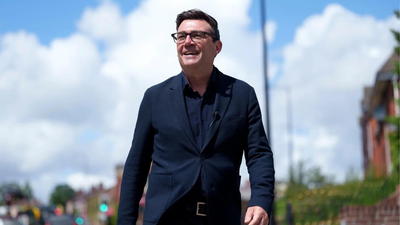
Andy Burnham confirms his bid for UK Prime Minister
Greater Manchester mayor Andy Burnham has confirmed he will seek to replace Keir Starmer as UK prime minister and Labour leader following Starmer’s resignation on Monday, positioning himself as a candidate focused on stability, economic growth and public services during a period of political transition.In a statement posted on social media shortly after Starmer announced he would step down, Burnham paid tribute to the outgoing prime minister while formally declaring his intention to enter the leadership contest.“Keir has given huge service to our country and I want to thank him for his leadership and dedication during such a challenging period.“His decision marks the beginning of a transition and it is important that this process is conducted in an orderly and responsible way. I will put myself forward as part of this process.“The country expects stability, seriousness and a continued focus on the issues that matter most and that is what it will get. As we move forward, our priority must be to work together to get the country back to where we all want it to be.“People want to see progress on economic growth, cost of living, public services, housing and opportunities for the next generation. Political change should never distract from the responsibility to improve people’s lives.“The Labour movement has always been at its strongest when it looks forward with confidence and purpose.“This is what we will do from here and we will make sure this transition is a positive process of renewal for our party and our country.”Burnham’s announcement came after Starmer revealed outside 10 Downing Street that he had informed King Charles III of his resignation earlier in the day. He said he would remain prime minister until Labour elects a new leader.Starmer’s departure follows a turbulent period for his government, which initially entered office with strong public backing but later faced mounting pressure over the economy, public services and divisions within the Labour Party.The resignation brings an end to a premiership that lasted just over two years. Starmer became Britain’s 58th prime minister after leading Labour to a landslide victory in the 2024 general election, ending 14 years of Conservative rule.His exit adds another chapter to the United Kingdom’s recent pattern of relatively short-lived premierships, with Labour now preparing for a leadership contest that will determine both the party’s future direction and the country’s next prime minister.
From Labour activist to national contender
Born in Liverpool in 1970 and raised in nearby Culcheth, Burnham joined the Labour Party as a teenager before studying at the University of Cambridge. The son of a telephone engineer and a doctor’s receptionist, he built his political career during the New Labour era and steadily rose through the party’s ranks.After being elected as the MP for Leigh in 2001, Burnham held several senior government positions, including Culture Secretary, Chief Secretary to the Treasury and Health Secretary. Following Labour’s defeat in 2010, he remained a prominent figure in opposition politics through various shadow cabinet roles.
Rise of ‘King of the North’
Burnham’s national profile grew significantly during the Covid-19 pandemic, when he publicly challenged Boris Johnson’s government over financial support for northern England. His campaign for additional funding during lockdown restrictions resonated widely and helped establish him as a leading voice for regional interests.The episode earned him the nickname “King of the North”, a label that continues to reflect his political influence and popularity across northern England.Since becoming Mayor of Greater Manchester in 2017, Burnham has focused on transport, housing and regional development. One of his flagship projects has been the Bee Network, an integrated public transport system designed to improve connectivity across the city region.
A familiar face in Labour leadership contests
Burnham has twice sought Labour’s top job. He first entered the leadership race following Gordon Brown’s resignation in 2010, before making a second bid in 2015. Although unsuccessful on both occasions, the campaigns helped cement his status as a nationally recognised Labour politician.Over the years, he has cultivated a political identity largely outside Westminster, building support through his mayoral leadership and advocacy for devolved powers.
Why Burnham is viewed as serious challenger
Supporters believe Burnham’s appeal extends beyond Labour’s traditional voter base and argue that his communication style and regional credentials could help reconnect the party with working-class communities.His backers also point to his electoral success in Greater Manchester and his ability to challenge political opponents from outside London as key strengths, particularly as Labour seeks to counter growing competition from Nigel Farage’s Reform UK.However, critics argue that Burnham has adjusted his political positions to fit different phases of Labour’s evolution, having served under leaders ranging from Tony Blair and Gordon Brown to Jeremy Corbyn. Some also question whether the achievements that boosted his popularity in Greater Manchester can be translated into success at the national level.As Labour prepares to choose a successor to Starmer, Burnham’s experience, profile and regional support base are expected to make him one of the most closely watched candidates in the contest for the prime ministership.


