
Amit Shah NEW DELHI: Home minister Amit Shah on Tuesday said the Narendra Modi govt has set a goal to make the country illegal immigration-free in a “very short period of time” and, for this purpose, reached out to the border states over the past eight months, sharing with them its document on a quadrangular approach to border security.The policy drawn up by the Centre enlists the border guarding forces, state and district administration, relevant arms of govt of India and local citizens as key stakeholders in securing the borders.Addressing the valedictory session of the national security strategy conference (NSSC) organised by Intelligence Bureau here, Shah reiterated that “this country is not a Dharamshala and only the citizens have the right to live here”. “Infiltrators are a threat of the country’s security, economy and trigger unnatural demographic shifts,” he stated at the event attended by over 850 officials of the Central security agencies and forces, the state/UT police and intelligence agencies.With NSSC focused on anticipating security trends and challenges over the next 15-20 years and devising strategies to avert them, Shah underlined that challenges should be identified and destroyed before they become big. “By creating such an ecosystem, we will be able to create a secure, infiltrator-free and narcotics free India,” he told the officers that included both young ones at the cutting-edge level and their seasoned, experienced seniors.Stating that PM Narendra Modi had set the target of making the nation developed by 2047, Shah said the first condition for this would be making its internal security more robust.Commending the state police forces, central agencies and the Central armed police forces (CAPFs) for having eliminated the challenge posed by three hotspots — J&K, Left-wing extremism-hit areas and the north-east — the home minister said that had the past governments visualised these problems before they became acute, the country would not have had to bear the brunt of them for decades.Shah also described the dismantling of the Popular Front of India (PFI) network “in one night” (in multi-state raids of Sept 2022), apart from imposing a ban on it, as “an excellent instance of Centre-state coordination”.The home minister emphasised on the need to take the country’s first anti-terror doctrine — PRAHAAR — from document to practice, to “eradicate terrorism and dismantle the terror ecosystem”. He said the govt has strengthened the anti-fugitive drive, having deported 274 fugitives from different countries between 2019 and 2026. “All the states should aim to bring the fugitives back to face the law here,” he stated.Stating that global instability, lack of energy security, supply chain disruption and increasing radicalisation of cyber misinformation have emerged as the key challenges, Shah insisted that the security policy taken each of these into account and aim to effectively tackle them.Join conversationView All Comments →Share your thoughts in the commentsInsightfulAgreeDisagreeSkepticalConcerningPromisingWorth ReadingBig DevelopmentPost CommentBe respectful · TOI community guidelinesWith the latest focus of the home minister being to eliminate the drugs menace, Shah sought the cooperation of the states in making the country narcotics-free.”Police of all states should implement the Narcotics Control Vision Document 2026-2029 on the ground to protect the new generation and work on three D’s ‘detect, disrupt and destroy’ for “a drug-free India,” he stated.Shah also asked the officers to used the integrated data bank of CCTNS, ICJS, Natgrid and NAFIS to develop actionable intelligence through data integration, analysis and identification of modus operandi through AI, so that future challenges can be prevented.Get the latest India News and Live updates. Download the TOI app.About the AuthorBharti JainBharti Jain is senior editor with The Times of India, New Delhi. She has been writing on security matters since 1996. Having covered the Union home ministry, security agencies, Election Commission and the ‘prime’ political beat, the Congress, for The Economic Times all these years, she moved to TOI in August 2012. Her repertoire of news stories delves into the whole gamut of issues related to terrorism and internal strife, besides probing strategic affairs in India’s neighbourhood.Read MoreEnd of ArticleFollow Us On Social MediaVideosBihar BPSC Protest Explodes In Patna As Students Break Barricades, Police Use Water Cannons | WatchIndia Opens DRDO Missile Technologies To Defence Firms In Major Push For Indigenous ProductionXi-Modi Meeting In Delhi? China Prepares Massive Delegation As India-China Ties Show Fresh ThawExplained: Why Are Sugar Prices Rising In India Despite Record Sugarcane Production?Supreme Court Notice To 20 Rebel TMC MPs On Abhishek Banerjee’s Disqualification Plea’People Were Shot In The Head’: Sonam Wangchuk Seeks Inquiry Report Into 2025 Ladakh ViolenceAjeet Bharti EXCLUSIVE On ‘Reservation Hatao Andolan’, Harsh Dubey, CJP & His Criticism Of BJPTMC’s Abhishek Banerjee Moves Supreme Court Over Delay In Disqualification Of 20 Rebel TMC MPsTrump Pushes $103,265 H-1B Fee; 71% Indian Professionals Brace For Major Immigration BlowJaishankar Meets Putin In Moscow, India-Russia Trade Soars As Both Sides Target $100 Billion By 2030123PhotostoriesWho is Sheikha Moza? The Qatari royal who made haute couture her signature5 iconic places in Maharashtra where Ganesh Chaturthi is more than a festivalChinese singer Liu Yu’s Manish Malhotra couture moment in Paris is proof that Indian craftsmanship needs no introduction10 baby girl names that sound modern but have ancient roots5 traditional Bengali sarees you probably haven’t heard ofFrom castor to coconut oil: Natural oils for faster beard growthTraitors 2: From Shalini Passi’s over Rs 2,000 crore family wealth to Mallika Sherawat’s Rs 170 crore fortune, here’s a look at the net worth of popular contestantsYour blood pressure could be rising because of these 7 everyday habits you may think are completely harmless7 simple ways to live every day like a holiday like Dua Lipa, despite working full-timeUrvashi Rautela makes a tricolour statement in a one-of-a-kind gown that took 3 months to create123Hot PicksBPSC exam rowSugar priceNew Zealand social media banTrump tariffICSI CS june resultNEET UG 2026Sridhar VembuTrump’s SpaceXNEET PG 2026 admit cardTop TrendingBandra Parsi BungalowSuresh GowdaRupali ChakankarKarnataka Food Licence SuspensionAllahabad High CourtMumbai Airport DemolitionRam RahimDelhi Women AccidentDelhi Gurgaon RainMaharashtra Hill Tragedy

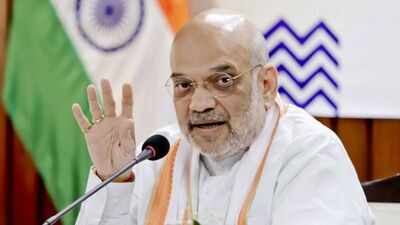
NEW DELHI: Home minister Amit Shah on Tuesday said the Narendra Modi govt has set a goal to make the country illegal immigration-free in a “very short period of time” and, for this purpose, reached out to the border states over the past eight months, sharing with them its document on a quadrangular approach to border security.The policy drawn up by the Centre enlists the border guarding forces, state and district administration, relevant arms of govt of India and local citizens as key stakeholders in securing the borders.Addressing the valedictory session of the national security strategy conference (NSSC) organised by Intelligence Bureau here, Shah reiterated that “this country is not a Dharamshala and only the citizens have the right to live here”. “Infiltrators are a threat of the country’s security, economy and trigger unnatural demographic shifts,” he stated at the event attended by over 850 officials of the Central security agencies and forces, the state/UT police and intelligence agencies.With NSSC focused on anticipating security trends and challenges over the next 15-20 years and devising strategies to avert them, Shah underlined that challenges should be identified and destroyed before they become big. “By creating such an ecosystem, we will be able to create a secure, infiltrator-free and narcotics free India,” he told the officers that included both young ones at the cutting-edge level and their seasoned, experienced seniors.Stating that PM Narendra Modi had set the target of making the nation developed by 2047, Shah said the first condition for this would be making its internal security more robust.Commending the state police forces, central agencies and the Central armed police forces (CAPFs) for having eliminated the challenge posed by three hotspots — J&K, Left-wing extremism-hit areas and the north-east — the home minister said that had the past governments visualised these problems before they became acute, the country would not have had to bear the brunt of them for decades.Shah also described the dismantling of the Popular Front of India (PFI) network “in one night” (in multi-state raids of Sept 2022), apart from imposing a ban on it, as “an excellent instance of Centre-state coordination”.The home minister emphasised on the need to take the country’s first anti-terror doctrine — PRAHAAR — from document to practice, to “eradicate terrorism and dismantle the terror ecosystem”. He said the govt has strengthened the anti-fugitive drive, having deported 274 fugitives from different countries between 2019 and 2026. “All the states should aim to bring the fugitives back to face the law here,” he stated.Stating that global instability, lack of energy security, supply chain disruption and increasing radicalisation of cyber misinformation have emerged as the key challenges, Shah insisted that the security policy taken each of these into account and aim to effectively tackle them.
Share your thoughts in the comments
Be respectful · TOI community guidelines
With the latest focus of the home minister being to eliminate the drugs menace, Shah sought the cooperation of the states in making the country narcotics-free.“Police of all states should implement the Narcotics Control Vision Document 2026-2029 on the ground to protect the new generation and work on three D’s ‘detect, disrupt and destroy’ for “a drug-free India,” he stated.Shah also asked the officers to used the integrated data bank of CCTNS, ICJS, Natgrid and NAFIS to develop actionable intelligence through data integration, analysis and identification of modus operandi through AI, so that future challenges can be prevented.


