
AI representational BENGALURU: “Individuals shall have the right to complete and connected streets and the right to access any place in an urban area by walk or by cycle.” Those words sound like they could have come straight from the Supreme Court’s June 19 ruling declaring that safe walking is part of the fundamental rights guaranteed under Articles 21 and 19(1)(d).They did not. They are from Section 30 of Karnataka’s draft Active Mobility Bill, prepared in Dec 2021 by the Directorate of Urban Land Transport (DULT). The irony is hard to miss. While SC has now called for a dedicated law to protect pedestrians, Karnataka has spent years sitting on one.Spread across 17 chapters and 55 sections, the draft seeks to turn safe walking and cycling from civic aspirations into statutory obligations.Putting people before vehiclesAn analysis of the draft bill shows that six chapters do the heavy lifting. New streets must come with footpaths and cycle tracks built in from the start, not retrofitted if space allows, and existing roads must be redeveloped to incorporate walking and cycling infrastructure. Drivers get a statutory duty to yield at crossings, not just a courtesy expectation.Section 4 places a duty on urban local bodies to design, construct and maintain complete and connected streets with adequate footpaths and cycle tracks. Section 5 explicitly states that streets must prioritise the movement of people over vehicles.Annual audits & inspectionsUnlike many policy documents, the draft prescribes timelines and accountability. Municipal corporations are required to prepare Comprehensive Mobility Plans within two years. Urban local bodies must conduct annual audits of infrastructure and carry out regular “walking inspections”, with physical and digital records maintained.These are specifically required to identify issues faced by women, children, senior citizens and persons with disabilities.Safer streets, funding & accountabilityThe bill proposes footpaths to be continuous, unobstructed, well-lit and accessible. It mandates kerb ramps, pedestrian refuge islands, dedicated signal phases and traffic-calming measures.Residential areas, school zones and hospital zones with high pedestrian movement are to be designated “slow streets”, with speeds capped at 20 kmph.Section 22 bars any agency or individual from erecting temporary or permanent structures on footpaths and cycle tracks, treating them as infringements on pedestrian rights. Construction works are required to provide safe detours. Motorists are prohibited from parking on footpaths.Perhaps the strongest provision is Chapter 15. It gives pedestrian and cycling infrastructure “first charge” on municipal funds — the kind of protection that matters when budgets get squeezed. The Bill also creates grievance redressal systems and empowers authorities to levy fines up to Rs 1 lakh, rising to Rs 2 lakh for repeat violations. Even govt departments can be held liable.4Yrs on, The question is whyThe SC has supplied the constitutional backing. Karnataka already has the legislative blueprint. The missing piece is political urgency. Because every year that the Bill remains in a limbo is another year in which pedestrians are forced off broken pavements, onto carriageways and into harm’s way.DULT commissioner P Manivannan, who has now been given additional charge of the agency, told TOI that he would “look into the bill” in the coming week.Get the latest India news and live updates. Download the TOI App.End of ArticleFollow Us On Social MediaVideosRow Erupts Over US Ambassador Sergio Gor’s ‘Two Nations’ Remark After Meeting TN CM VijayCM Vijay’s First Detailed Assembly Speech: Hits Back At ‘Actor’s Party’ Jibe, Renews Anti-NEET PushTMC Leader Humiliated In Public | Shoe Garland, Sit-Ups & Eggs Thrown Amid Corruption AllegationsNSA Ajit Doval Flags Evolving Terrorism And Disruptive Technologies At BRICS MeetBengaluru NEET Controversy: Cong Says Rally Did Not Disrupt Exam, Calls BJP Charges BaselessEU Unveils Ambassadors Network In India, Seeks Stronger People-To-People LinksLucknow Fire Kills 15; SIT Formed To Probe Safety Violations, Four Accused ArrestedTMC Rift Out In Open As Rebel Camp Forms 30-Member National PanelIndians Among 13 Killed In Explosion At Ras Laffan LNG Complex In QatarStudents Jump, Rescuers Breach Walls: Inside The Lucknow Fire Tragedy That Claimed 15 Lives123Photostories7 Auspicious house names are popular among homeowners who believe in wealth, peace and prosperityChinese proverb of the day on success: ‘Be not afraid of going slowly; be afraid only of standing still’Woodworm alert: 7 signs and prevention tips every UK homeowner should knowPsychology says people who say ‘no’ more often aren’t selfish; they may have healthier emotional boundariesThis small island in Europe has more puffins than humans and feels frozen in timePsychologist reveals 5 things ‘fun dads’ do that can raise happier childrenSadhguru’s go-to summer coolers for better digestion and hydrationPsychology says people who can’t stop thinking about an ex aren’t necessarily still in love; they may be missing a version of themselvesHeatwave gardening: The right way to water your plants when temperatures soar7 Low-maintenance UK plants that attract birds, bees, and butterflies123Hot PicksIPL tradeGold rate todayCUET UG Result 2026Telangana school bandhCBSE 12th revaluationMaldivian wisdomSpanish proverbMalay proverbPortuguese proverbTop TrendingDelhi MurderUS-Iran WarKunal ShahFIFA World Cup 2026ITR filing 2026Tamil Nadu Ammonia Gas LeakNEET UG ExamGold rate todayDelhi weatherMumbai rain

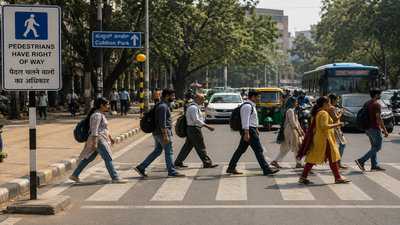
BENGALURU: “Individuals shall have the right to complete and connected streets and the right to access any place in an urban area by walk or by cycle.” Those words sound like they could have come straight from the Supreme Court’s June 19 ruling declaring that safe walking is part of the fundamental rights guaranteed under Articles 21 and 19(1)(d).They did not. They are from Section 30 of Karnataka’s draft Active Mobility Bill, prepared in Dec 2021 by the Directorate of Urban Land Transport (DULT). The irony is hard to miss. While SC has now called for a dedicated law to protect pedestrians, Karnataka has spent years sitting on one.Spread across 17 chapters and 55 sections, the draft seeks to turn safe walking and cycling from civic aspirations into statutory obligations.

Putting people before vehiclesAn analysis of the draft bill shows that six chapters do the heavy lifting. New streets must come with footpaths and cycle tracks built in from the start, not retrofitted if space allows, and existing roads must be redeveloped to incorporate walking and cycling infrastructure. Drivers get a statutory duty to yield at crossings, not just a courtesy expectation.Section 4 places a duty on urban local bodies to design, construct and maintain complete and connected streets with adequate footpaths and cycle tracks. Section 5 explicitly states that streets must prioritise the movement of people over vehicles.Annual audits & inspectionsUnlike many policy documents, the draft prescribes timelines and accountability. Municipal corporations are required to prepare Comprehensive Mobility Plans within two years. Urban local bodies must conduct annual audits of infrastructure and carry out regular “walking inspections”, with physical and digital records maintained.These are specifically required to identify issues faced by women, children, senior citizens and persons with disabilities.Safer streets, funding & accountabilityThe bill proposes footpaths to be continuous, unobstructed, well-lit and accessible. It mandates kerb ramps, pedestrian refuge islands, dedicated signal phases and traffic-calming measures.Residential areas, school zones and hospital zones with high pedestrian movement are to be designated “slow streets”, with speeds capped at 20 kmph.Section 22 bars any agency or individual from erecting temporary or permanent structures on footpaths and cycle tracks, treating them as infringements on pedestrian rights. Construction works are required to provide safe detours. Motorists are prohibited from parking on footpaths.Perhaps the strongest provision is Chapter 15. It gives pedestrian and cycling infrastructure “first charge” on municipal funds — the kind of protection that matters when budgets get squeezed. The Bill also creates grievance redressal systems and empowers authorities to levy fines up to Rs 1 lakh, rising to Rs 2 lakh for repeat violations. Even govt departments can be held liable.4Yrs on, The question is whyThe SC has supplied the constitutional backing. Karnataka already has the legislative blueprint. The missing piece is political urgency. Because every year that the Bill remains in a limbo is another year in which pedestrians are forced off broken pavements, onto carriageways and into harm’s way.DULT commissioner P Manivannan, who has now been given additional charge of the agency, told TOI that he would “look into the bill” in the coming week.


