
AI-generated image The privacy debate around artificial intelligence has intensified after recent changes by Google and Meta highlighted how user data can be used to improve AI models. The issue is no longer limited to search queries. AI companies are increasingly interested in the data users create while interacting with their services — chats, photos, voice recordings, documents and search activity.Why has this become a bigger issue now?■ Google began rolling out its new Search Services History settings on May 26, separating search activity controls from the older Web & App Activity settings. Under the new system, images, audio recordings, videos, and files used across services such as Search, Maps, Translate, News, and Lens may be stored and potentially used to improve AI systems unless users turn the option off. Google said the rollout would continue over the following months.Meta’s AI photo tools drew attention in the first week of July 2026, when the company expanded features, including Muse Image, which can create AI-generated images using eligible public Instagram photos unless users opt out.What are Google and Meta saying?■ Google has defended the changes as giving users “more control” over their search history and personalisation settings. The company says users can disable Search Services History entirely or choose whether images, files and audio recordings are saved. “We take your privacy seriously and take steps to protect it when using your Search Services History data to train our AI models,” said Google in a support document.Meta says its AI features are intended to help users create and edit images and that people can manage eligible AI settings through the privacy controls available on its platforms. “At any time, you can turn off or allow reuse for reels, feed videos and photos across your entire account,” said Meta.Which platforms may use your data?■ The broader issue extends beyond Google and Meta. OpenAI’s ChatGPT allows many consumer-account conversations to be used for model improvement unless users disable the relevant training settings. Microsoft Copilot collects prompts, documents and usage data to improve services, although commercial customers receive stronger protections. Anthropic’s Claude and xAI’s Grok can also use some consumer interactions and uploads for model improvement, subject to their privacy settings and opt-out options.What data these AI platforms useDoes paying for a service stop data from being used?■ Not necessarily. Consumer subscriptions mainly provide additional features and higher usage limits. The strongest restrictions are usually found in enterprise, education and commercial plans, where providers make contractual commitments not to train models on customer data.What should users check?■ Privacy specialists say users who are concerned about AI training should review their settings rather than assume defaults are restrictive. On Google services, that means checking Search Services History, Web & App Activity and auto-delete settings. ChatGPT users can disable “Chat History & Training” if they do not want conversations used for model improvement.Meta users should review Instagram and Meta AI privacy controls and opt out of AI features that use public photos where available. Claude users can check data controls in settings and disable model-improvement participation where offered, while Grok users should review privacy settings on X and avoid sharing sensitive personal information.Get the latest India news and live updates. Download the TOI App.About the AuthorAabhas SharmaA business management graduate, Aabhas turned to journalism before you could say MBA. It has been almost 15 years and there has been no looking back.End of ArticleFollow Us On Social MediaVideosMP Draft UCC Proposes Jail For Unregistered Live-In Relationships, Mandatory RegistrationMajor Blow To TMC As 20 Rebel MPs Move Closer To Official NCPI Recognition | Watch5 Plots, 4 Flats, Villa: ACB Raid On HMDA Engineer Exposes Rs 9.24 Crore Assets | HyderabadIndia-UK Trade Deal Kicks In From July 15, 99% Of Indian Exports Get Duty-Free AccessSupreme Court Refuses Stay In Bhojshala Case, Allows Alternate Namaz Site Till Final VerdictOp Vijay: How India Captured Tololing And Point 5140 Before Tiger HillAssam’s Tinsukia Uses CCTV And LED Screens To Shame Alleged Public Urinators’Brazenly Violated Our Order’: Supreme Court Imposes ₹3 Lakh Fine On Comedian Samay RainaCalls For Wangchuk To Call Off Hunger Strike Grow: Politicians, Actors, Even Dipke Issue Appeals₹198 Crore, 8 Criminal Cases: What Prashant Kishor’s Bankipur Bypoll Affidavit Reveals123PhotostoriesCan gardening keep your brain younger? What neuroscience saysIndia gets plenty of sun, so why are millions still vitamin D deficient? Expert explains the silent health crisisAre fewer toys better for your child? What happened when a German kindergarten removed every toy for three monthsExclusive – Sunita Ahuja on Govinda’s alleged affairs and why she chose forgiveness; says ‘Why should I walk away if I love my husband? Kaun sa hero doodh ka dhula hai’From gold mines to desert ruins; 5 real ghost towns across America that look frozen in timeThink you know cows? These 5 surprising facts say otherwise8 ways to stop overthinking before it steals your peace of mindAlia Bhatt serves gothic glam in an all-black look as she joins Sohum Shah for ‘Tumbbad 2’Your kidneys could be losing function for years before creatinine rises; Doctor explains the silent damage most people never notice10 literary baby names inspired by Shakespeare’s timeless plays123Hot PicksOil Price TodayTop Stock RecommendationsMichael JordanKylian MbappeBengaluru ProfessorCarol RuckdeschelRussia Saction BillGold Rate TodayMinecraft Bedrock 26.40.31 BetaTop TrendingMLB All Start Best MomentsVietnam Boat TragedyITR filingFIFA World Cup 2026Tamil Nadu Steel Melting UnitGhaziabad Mall Rape MurderDelhi Police Wife MurderSharad PawarJharkhand RapeIran war


The privacy debate around artificial intelligence has intensified after recent changes by Google and Meta highlighted how user data can be used to improve AI models. The issue is no longer limited to search queries. AI companies are increasingly interested in the data users create while interacting with their services — chats, photos, voice recordings, documents and search activity.Why has this become a bigger issue now?■ Google began rolling out its new Search Services History settings on May 26, separating search activity controls from the older Web & App Activity settings. Under the new system, images, audio recordings, videos, and files used across services such as Search, Maps, Translate, News, and Lens may be stored and potentially used to improve AI systems unless users turn the option off. Google said the rollout would continue over the following months.Meta’s AI photo tools drew attention in the first week of July 2026, when the company expanded features, including Muse Image, which can create AI-generated images using eligible public Instagram photos unless users opt out.What are Google and Meta saying?■ Google has defended the changes as giving users “more control” over their search history and personalisation settings. The company says users can disable Search Services History entirely or choose whether images, files and audio recordings are saved. “We take your privacy seriously and take steps to protect it when using your Search Services History data to train our AI models,” said Google in a support document.Meta says its AI features are intended to help users create and edit images and that people can manage eligible AI settings through the privacy controls available on its platforms. “At any time, you can turn off or allow reuse for reels, feed videos and photos across your entire account,” said Meta.Which platforms may use your data?■ The broader issue extends beyond Google and Meta. OpenAI’s ChatGPT allows many consumer-account conversations to be used for model improvement unless users disable the relevant training settings. Microsoft Copilot collects prompts, documents and usage data to improve services, although commercial customers receive stronger protections. Anthropic’s Claude and xAI’s Grok can also use some consumer interactions and uploads for model improvement, subject to their privacy settings and opt-out options.
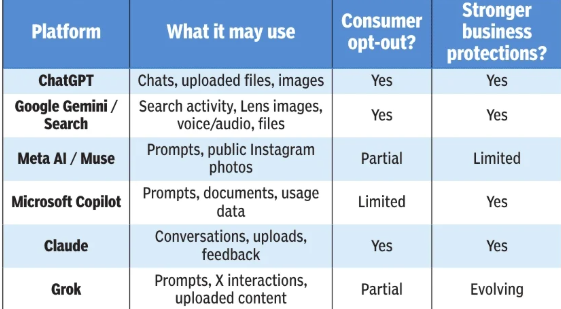
What data these AI platforms use
Does paying for a service stop data from being used?■ Not necessarily. Consumer subscriptions mainly provide additional features and higher usage limits. The strongest restrictions are usually found in enterprise, education and commercial plans, where providers make contractual commitments not to train models on customer data.What should users check?■ Privacy specialists say users who are concerned about AI training should review their settings rather than assume defaults are restrictive. On Google services, that means checking Search Services History, Web & App Activity and auto-delete settings. ChatGPT users can disable “Chat History & Training” if they do not want conversations used for model improvement.Meta users should review Instagram and Meta AI privacy controls and opt out of AI features that use public photos where available. Claude users can check data controls in settings and disable model-improvement participation where offered, while Grok users should review privacy settings on X and avoid sharing sensitive personal information.


