
A significant demographic of the service providers at these platforms and the consumers comprise of women. India’s instant domestic help economy is expanding faster. As app-based platforms promise cleaners, cooks and household workers within minutes. However, the real contest here is no longer just about speed, convenience or pricing. It is increasingly about trust.A significant demographic of the service providers at these platforms and the consumers comprise of women.For years, domestic work in India has operated through informal neighbourhood networks, word-of-mouth referrals and personal recommendations. The new generation of platforms is attempting to formalise that ecosystem by adding identity verification, digital payments, ratings, training, insurance and customer support.But unlike food delivery or ride-hailing, these services involve something far more intimate: a stranger entering a private home.That has forced platforms to solve an unusually difficult problem. They must simultaneously protect women who enter unfamiliar homes for work and women who may be home alone when they invite those workers inside.The result is a rapidly evolving safety architecture built around background checks, restricted service hours, real-time monitoring, SOS systems, human escalation teams and, increasingly, AI-assisted risk detection.Formalising trust in an informal workforceIndia’s domestic work sector employs millions of workers, many of them women, and remains overwhelmingly informal. Instant domestic help platforms have created new income opportunities by offering structured onboarding, predictable payments and access to a larger customer base.But formalisation has also brought safety concerns into sharper focus.A spokesperson for Pronto shared the measures it takes to ensure transparency, saying that every worker completes criminal court record verification and police verification before joining the platform. Customers, too, verify their name, phone number and address through OTP authentication and must agree to a code of conduct before placing a booking.Pronto’s workers, for example, receive training before taking their first assignment, and that low customer ratings are investigated by trainers rather than triggering automatic deactivation.“Every hub we operate doubles as a training centre, and a professional takes her first booking only after she is trained, background-verified and dispatch-ready, a process that takes about four days,” the spokesperson said.Similarly, Snabbit, whose workforce consists entirely of women professionals, said it has built a multi-layered safety framework supported by a dedicated Trust & Safety team.A spokesperson said the system includes “mandatory KYC and background checks for all experts on the platform, verified customers, address-level traceability and controlled job allocation.”Safety vs surveillance divideThe sharpest divide between platforms and customers is emerging around body-worn cameras.Pronto has begun experimenting with optional recorded bookings designed to protect workers from false allegations in cases of disputes with customers.For many users, however, the presence of a camera inside a private home changes the nature of the interaction. “I know some platforms are starting to equip their workers with chest-mounted bodycams for transparency, and while I understand it protects the worker from false claims, it completely freaks me out as a customer,” a Delhi resident said.“My home is my private sanctuary. The idea of a stranger walking through my living room with an active lens, recording the exact layout of my home, my entrances, my exits, my personal belongings, and where my work setup or valuables are, feels like an extreme invasion of privacy.”Her concerns extend beyond the recording itself. “Where is that video footage stored? Who at the tech company has access to it? Could that footage leak or be hacked?” she said. “I would honestly think twice before booking a service that mandates live video recording inside my private space. There has to be a boundary between physical safety and digital surveillance.”Pronto, however, ensured that the sole mechanism of this process is to ensure safety and privacy.It said that additional video data is collected only on opt-in verified bookings. According to its spokesperson, customers choose the feature during booking and confirm it again when the worker arrives. The camera is tilted downward to capture only the work area, records no audio, blurs faces and personal information on the device itself, deletes raw footage immediately, and retains only an anonymised encrypted version for a limited review period and AI training.Safety by designOne of the most striking trends across the sector is that many safety measures are designed not around responding to incidents, but around preventing high-risk situations from arising in the first place.Several platforms have restricted service hours, particularly avoiding late-evening and night bookings when women workers may be required to enter unfamiliar homes after dark.Snabbit said its safety system monitors active jobs in real time and can identify anomalies that may require intervention. According to its spokesperson, “Active jobs are monitored in real time, with the dedicated Trust & Safety team supporting rapid escalation and incident response.”What women check before opening the doorFor many women, however, trust begins long before a worker arrives.A 24-year-old student in Jaipur said she has developed a consistent checklist before booking any on-demand domestic service. She checks whether the app displays a verified profile with a photograph, ID verification, ratings and reviews, and prefers platforms that offer real-time tracking and OTP-based service verification.“The first thing I check is whether the app shows a verified profile with a photo, ID verification, ratings, and reviews from other women,” she said. “Real-time tracking and an OTP-based start and end of the service also make me feel more comfortable.”Before the worker arrives, she follows a set of precautions that have become almost automatic. She keeps her phone fully charged, informs at least one friend that someone is coming over, avoids leaving valuables or personal documents in plain sight, and stays in a part of the house where she can easily monitor what is happening.“I usually make sure my phone is fully charged and I let at least one friend know that someone is coming over,” she said. “If it’s a longer service, I stay in a part of the house where I can easily see what’s happening.”She is also careful about digital privacy. “I prefer apps that mask phone numbers, and I never share extra details unless they’re necessary for the service,” she said. “I avoid mentioning that I live alone or discussing my schedule. Once the job is done, I’m careful not to continue communication outside the platform.”For her, safety is not just about preventing a crime; it is about minimising information that could make her vulnerable later.The rituals of being home aloneMinal, a 26-year-old professional in Delhi described a different set of habits that have emerged through repeated use of instant service platforms. While the agent is at home, she stays in the hall rather than a closed bedroom, keeps her phone in her hand, and deliberately leaves a pair of her partner’s or male flatmate’s shoes near the entrance.“I never sit in my bedroom with the door shut. I stay in the main living area, usually at the dining table with my laptop,” she said. “I also leave a pair of my male flatmate’s or partner’s shoes near the entryway. It’s a small mental trick, but it makes me feel less exposed.”She and two close friends have an informal safety protocol built around messaging apps.“I have a private WhatsApp group with two close friends. We have a tacit rule: whenever an instant maid or repair person is assigned, I drop the tracking link, their name, and a quick ‘Expected time: 45 mins,’” she said. “I don’t overthink it, but it gives me a safety net.”When asked what app features actually make her feel secure, she was sceptical of marketing labels.“Honestly, badges and ‘police verified’ tags on an app screen don’t mean much to me anymore. Anyone can upload a document,” she said. “What actually makes me feel safe is seeing a real-time, live selfie of the person taken right when they accept the job, matching the photo on their profile. Plus, knowing there’s a strict OTP entry system where they can’t start billing until I give them a code at the door.”Her distinction is important: she is less interested in historical verification and more interested in real-time authentication.The older customer’s definition of trustFor older users, digital verification often feels less persuasive than physical verification.Sarita, a 52-year-old homemaker in Delhi-NCR, said she places greater trust in tangible indicators such as uniforms, identity cards and residential security systems.“A professional now gets to share her version of events and any relevant information before a decision is taken, and we work to keep investigations balanced and transparent,” Pronto spokesperson said.That shift, from treating workers merely as service providers to treating them as rights-bearing participants in the platform ecosystem, may prove as important as any technological innovation.Join conversationView All Comments →Share your thoughts in the commentsInsightfulAgreeDisagreeSkepticalConcerningPromisingWorth ReadingBig DevelopmentPost CommentBe respectful · TOI community guidelinesThe next phase of trustAs instant domestic help services expand beyond metropolitan cities into smaller urban centres, safety may become the industry’s primary competitive differentiator.Speed is easy to advertise. Trust is harder to build.Women are asking for features that combine digital verification with human accountability: live identity confirmation, female-worker filters, trusted-contact notifications, residential gate integration, discreet exit mechanisms, neighbourhood-level reputation and transparent data governance.Platforms, meanwhile, are investing in training hubs, background verification, restricted service hours, SOS networks, counselling, insurance and AI-assisted monitoring.Get the latest India News and Live updates. Download the TOI app.End of ArticleFollow Us On Social MediaVideos‘If You Don’t Kill My Husband, I Will’: Telangana Man Uncovers Wife’s Shocking Chats With Lover‘Brahmins Joining BSP’: Mayawati SLAMS Akhilesh Yadav Over PDA’s ‘P Change’ From Pichhde To Pandit‘I Am Proud Of All Of You’: PM Modi’s Big Msg To Students At First Public Speech After CJP ProtestsKashmir Tourist Security To Get Major Upgrade With CCTV, Command Centres And Security AuditsUS Senate Passes Russia Sanctions Bill, India Faces Potential 100% Tariff Over Russian Oil Purchases’Did We Fail To Listen’: Tharoor Admits CJP Protest Resonated More Than Congress ‘Chhatron Ki Goonj’JPSC Protest Enters Day 14: Students Demand Exam Cancellation, CBI Probe After First Talks With GovtSonam Wangchuk Says Wife Sought Rahul Gandhi’s Help To End His 26-Day Hunger Strike At Jantar MantarOMCs Say E20 Petrol Meets Quality Standards After Nationwide Testing, Reject Contamination ClaimsNeha Bora Inked During Jharkhand Student Protest: AISA Alleges Political Attack, Accused Detained123PhotostoriesFrom pig trotters to sprouting mushrooms: 5 bizarre luxury shoes breaking the internetOptical illusion personality test: What you spot first says everything about your hidden desiresRed or white patch in your mouth that won’t go away? Doctor explains the warning signs you should not ignore10 best monsoon snacks to enjoy on rainy daysFrom tiny forest jewels to giant river hunters: 12 kingfishers species to spot in IndiaDelhi must stay ahead of dengue this monsoon: Why rain, stagnant water and delayed diagnosis can turn a seasonal threat serious5 things stylish women always remove from their closetsDia Mirza’s mother’s maroon Banarasi saree is a generational love letter that fast fashion could never match7 extraordinary animals travellers can see in some of Earth’s harshest placesYour liver can repair itself, but not forever: Doctor explains when early liver damage can be reversed and what happens if scarring progresses123Hot PicksThailand School ShootingUPI TransactionsAsk Me AnythingJharkhand protestGurgaon rainNICL Assistant RecruitmentAnkur WarikooIndia Labour CodesGold rate todayTop TrendingJapanese Quote of the dayNagpur Rape CaseAbhijeet DipkeGujarat Mystery WellJPSC ProtestDelhi RainDelhi Wife MurderEknath ShindeTamil Nadu BudgetPraveen Nettaru Murder Case

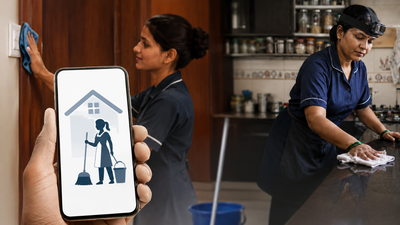
India’s instant domestic help economy is expanding faster. As app-based platforms promise cleaners, cooks and household workers within minutes. However, the real contest here is no longer just about speed, convenience or pricing. It is increasingly about trust.A significant demographic of the service providers at these platforms and the consumers comprise of women.For years, domestic work in India has operated through informal neighbourhood networks, word-of-mouth referrals and personal recommendations. The new generation of platforms is attempting to formalise that ecosystem by adding identity verification, digital payments, ratings, training, insurance and customer support.But unlike food delivery or ride-hailing, these services involve something far more intimate: a stranger entering a private home.That has forced platforms to solve an unusually difficult problem. They must simultaneously protect women who enter unfamiliar homes for work and women who may be home alone when they invite those workers inside.The result is a rapidly evolving safety architecture built around background checks, restricted service hours, real-time monitoring, SOS systems, human escalation teams and, increasingly, AI-assisted risk detection.
Formalising trust in an informal workforce
India’s domestic work sector employs millions of workers, many of them women, and remains overwhelmingly informal. Instant domestic help platforms have created new income opportunities by offering structured onboarding, predictable payments and access to a larger customer base.But formalisation has also brought safety concerns into sharper focus.A spokesperson for Pronto shared the measures it takes to ensure transparency, saying that every worker completes criminal court record verification and police verification before joining the platform. Customers, too, verify their name, phone number and address through OTP authentication and must agree to a code of conduct before placing a booking.Pronto’s workers, for example, receive training before taking their first assignment, and that low customer ratings are investigated by trainers rather than triggering automatic deactivation.“Every hub we operate doubles as a training centre, and a professional takes her first booking only after she is trained, background-verified and dispatch-ready, a process that takes about four days,” the spokesperson said.Similarly, Snabbit, whose workforce consists entirely of women professionals, said it has built a multi-layered safety framework supported by a dedicated Trust & Safety team.A spokesperson said the system includes “mandatory KYC and background checks for all experts on the platform, verified customers, address-level traceability and controlled job allocation.”
Safety vs surveillance divide
The sharpest divide between platforms and customers is emerging around body-worn cameras.Pronto has begun experimenting with optional recorded bookings designed to protect workers from false allegations in cases of disputes with customers.For many users, however, the presence of a camera inside a private home changes the nature of the interaction. “I know some platforms are starting to equip their workers with chest-mounted bodycams for transparency, and while I understand it protects the worker from false claims, it completely freaks me out as a customer,” a Delhi resident said.“My home is my private sanctuary. The idea of a stranger walking through my living room with an active lens, recording the exact layout of my home, my entrances, my exits, my personal belongings, and where my work setup or valuables are, feels like an extreme invasion of privacy.”Her concerns extend beyond the recording itself. “Where is that video footage stored? Who at the tech company has access to it? Could that footage leak or be hacked?” she said. “I would honestly think twice before booking a service that mandates live video recording inside my private space. There has to be a boundary between physical safety and digital surveillance.”Pronto, however, ensured that the sole mechanism of this process is to ensure safety and privacy.It said that additional video data is collected only on opt-in verified bookings. According to its spokesperson, customers choose the feature during booking and confirm it again when the worker arrives. The camera is tilted downward to capture only the work area, records no audio, blurs faces and personal information on the device itself, deletes raw footage immediately, and retains only an anonymised encrypted version for a limited review period and AI training.
Safety by design
One of the most striking trends across the sector is that many safety measures are designed not around responding to incidents, but around preventing high-risk situations from arising in the first place.Several platforms have restricted service hours, particularly avoiding late-evening and night bookings when women workers may be required to enter unfamiliar homes after dark.Snabbit said its safety system monitors active jobs in real time and can identify anomalies that may require intervention. According to its spokesperson, “Active jobs are monitored in real time, with the dedicated Trust & Safety team supporting rapid escalation and incident response.”
What women check before opening the door
For many women, however, trust begins long before a worker arrives.A 24-year-old student in Jaipur said she has developed a consistent checklist before booking any on-demand domestic service. She checks whether the app displays a verified profile with a photograph, ID verification, ratings and reviews, and prefers platforms that offer real-time tracking and OTP-based service verification.“The first thing I check is whether the app shows a verified profile with a photo, ID verification, ratings, and reviews from other women,” she said. “Real-time tracking and an OTP-based start and end of the service also make me feel more comfortable.”Before the worker arrives, she follows a set of precautions that have become almost automatic. She keeps her phone fully charged, informs at least one friend that someone is coming over, avoids leaving valuables or personal documents in plain sight, and stays in a part of the house where she can easily monitor what is happening.“I usually make sure my phone is fully charged and I let at least one friend know that someone is coming over,” she said. “If it’s a longer service, I stay in a part of the house where I can easily see what’s happening.”She is also careful about digital privacy. “I prefer apps that mask phone numbers, and I never share extra details unless they’re necessary for the service,” she said. “I avoid mentioning that I live alone or discussing my schedule. Once the job is done, I’m careful not to continue communication outside the platform.”For her, safety is not just about preventing a crime; it is about minimising information that could make her vulnerable later.
The rituals of being home alone
Minal, a 26-year-old professional in Delhi described a different set of habits that have emerged through repeated use of instant service platforms. While the agent is at home, she stays in the hall rather than a closed bedroom, keeps her phone in her hand, and deliberately leaves a pair of her partner’s or male flatmate’s shoes near the entrance.“I never sit in my bedroom with the door shut. I stay in the main living area, usually at the dining table with my laptop,” she said. “I also leave a pair of my male flatmate’s or partner’s shoes near the entryway. It’s a small mental trick, but it makes me feel less exposed.”She and two close friends have an informal safety protocol built around messaging apps.“I have a private WhatsApp group with two close friends. We have a tacit rule: whenever an instant maid or repair person is assigned, I drop the tracking link, their name, and a quick ‘Expected time: 45 mins,’” she said. “I don’t overthink it, but it gives me a safety net.”When asked what app features actually make her feel secure, she was sceptical of marketing labels.“Honestly, badges and ‘police verified’ tags on an app screen don’t mean much to me anymore. Anyone can upload a document,” she said. “What actually makes me feel safe is seeing a real-time, live selfie of the person taken right when they accept the job, matching the photo on their profile. Plus, knowing there’s a strict OTP entry system where they can’t start billing until I give them a code at the door.”Her distinction is important: she is less interested in historical verification and more interested in real-time authentication.
The older customer’s definition of trust
For older users, digital verification often feels less persuasive than physical verification.Sarita, a 52-year-old homemaker in Delhi-NCR, said she places greater trust in tangible indicators such as uniforms, identity cards and residential security systems.“A professional now gets to share her version of events and any relevant information before a decision is taken, and we work to keep investigations balanced and transparent,” Pronto spokesperson said.That shift, from treating workers merely as service providers to treating them as rights-bearing participants in the platform ecosystem, may prove as important as any technological innovation.
Share your thoughts in the comments
Be respectful · TOI community guidelines
The next phase of trust
As instant domestic help services expand beyond metropolitan cities into smaller urban centres, safety may become the industry’s primary competitive differentiator.Speed is easy to advertise. Trust is harder to build.Women are asking for features that combine digital verification with human accountability: live identity confirmation, female-worker filters, trusted-contact notifications, residential gate integration, discreet exit mechanisms, neighbourhood-level reputation and transparent data governance.Platforms, meanwhile, are investing in training hubs, background verification, restricted service hours, SOS networks, counselling, insurance and AI-assisted monitoring.

![Rahul Gandhi addresses the gathering during the ‘Chhatron Ki Goonj’ program, in Prayagraj, Uttar Pradesh. NEW DELHI: Congress leader Rahul Gandhi on Saturday described India’s youth as the country’s biggest strength, but said a lack of jobs, expensive education, paper leaks, poor access to credit and the growing use of AI were holding them back.Speaking at the ‘Chhatron Ki Goonj’ programme at KP Ground in Prayagraj, Rahul told the gathering, “You are power and pride of India; when I say this, I talk about every Indian citizen.” He said he wanted to speak about “dard (pain), data, and daulat (wealth)”, framing his address around the problems facing young Indians and the economic resources he believes should belong to them.Rahul said India’s nearly 40 crore young people were its “greatest strength”, adding that while there was much discussion about America, China and Russia, “India’s youth [are] unparalleled.” He argued that the country’s future would depend on the potential of its young population and the data they generate.He said artificial intelligence was also built on people’s data and argued that this data should be treated as an asset belonging to Indians. Rahul criticised the growing use of AI in discussions about employment, saying technological changes could further threaten jobs unless young people benefited from the economy being built around their data.Rahul also spoke about his connection to Prayagraj, describing the city as his family’s home and recalling its past as an important educational centre. He said Allahabad University had once been among the country’s best universities.Rahul said young Indians were being trapped in a “chakravyuh”, with education becoming increasingly expensive while degrees often failed to translate into jobs.“Today, education certificates have no meaning in India because they cannot give you job,” he said, arguing that students could spend years and large amounts of money on education without finding meaningful employment.Rahul said the problems extended across several routes into the workforce. “All doors of employment are closed in India,” he said, pointing to a decline in manufacturing, difficulties in securing loans, government-exam paper leaks and AI-driven job losses.“Decline in manufacturing, hard-to-come-by loans, paper leaks, AI replacing jobs – all this is hurting India’s youth,” Rahul said.He blamed demonetisation and GST for hurting small industries, alleged that banks were failing to provide adequate credit to small and medium businesses, and criticised the privatisation of public-sector companies. He also argued that AI could further reduce corporate employment while young Indians were increasingly pushed towards gig work.Rahul framed these problems as part of what he called the broader “system”, arguing that economic and political power had become concentrated among a small number of people. He linked this to his criticism of large corporations, the government and the RSS, alleging that they exercised disproportionate influence over India’s institutions.Join conversationView All Comments →Share your thoughts in the commentsInsightfulAgreeDisagreeSkepticalConcerningPromisingWorth ReadingBig DevelopmentPost CommentBe respectful · TOI community guidelinesRahul said recent student protests showed that young Indians were beginning to challenge the system. “Youths lit a light in darkness, and in doing so, changed the country,” he said.He urged young people to confront their fears without resorting to hatred or violence. “You cannot hate or be violent,” Rahul said, adding, “We will never resort to hatred or violence; will change the system with love and affection.”Get the latest India News and Live updates. Download the TOI app.About the AuthorTOI News DeskThe TOI News Desk comprises a dedicated and tireless team of journalists who operate around the clock to deliver the most current and comprehensive news and updates to the readers of The Times of India worldwide. With an unwavering commitment to excellence in journalism, our team is at the forefront of gathering, verifying, and presenting breaking news, in-depth analysis, and insightful reports on a wide range of topics. The TOI News Desk is your trusted source for staying informed and connected to the ever-evolving global landscape, ensuring that our readers are equipped with the latest developments that matter most.”Read MoreEnd of ArticleFollow Us On Social MediaVideosArunachal CM Rejects Chinese Encroachment As India Assigns Official Names To 27 Places‘If You Don’t Kill My Husband, I Will’: Telangana Man Uncovers Wife’s Shocking Chats With Lover‘Brahmins Joining BSP’: Mayawati SLAMS Akhilesh Yadav Over PDA’s ‘P Change’ From Pichhde To Pandit‘I Am Proud Of All Of You’: PM Modi’s Big Msg To Students At First Public Speech After CJP ProtestsKashmir Tourist Security To Get Major Upgrade With CCTV, Command Centres And Security AuditsUS Senate Passes Russia Sanctions Bill, India Faces Potential 100% Tariff Over Russian Oil Purchases’Did We Fail To Listen’: Tharoor Admits CJP Protest Resonated More Than Congress ‘Chhatron Ki Goonj’JPSC Protest Enters Day 14: Students Demand Exam Cancellation, CBI Probe After First Talks With GovtSonam Wangchuk Says Wife Sought Rahul Gandhi’s Help To End His 26-Day Hunger Strike At Jantar MantarOMCs Say E20 Petrol Meets Quality Standards After Nationwide Testing, Reject Contamination Claims123PhotostoriesFrom pig trotters to sprouting mushrooms: 5 bizarre luxury shoes breaking the internetOptical illusion personality test: What you spot first says everything about your hidden desiresRed or white patch in your mouth that won’t go away? Doctor explains the warning signs you should not ignore10 best monsoon snacks to enjoy on rainy daysFrom tiny forest jewels to giant river hunters: 12 kingfishers species to spot in IndiaDelhi must stay ahead of dengue this monsoon: Why rain, stagnant water and delayed diagnosis can turn a seasonal threat serious5 things stylish women always remove from their closetsDia Mirza’s mother’s maroon Banarasi saree is a generational love letter that fast fashion could never match7 extraordinary animals travellers can see in some of Earth’s harshest placesYour liver can repair itself, but not forever: Doctor explains when early liver damage can be reversed and what happens if scarring progresses123Hot PicksThailand School ShootingUPI TransactionsAsk Me AnythingJharkhand protestGurgaon rainNICL Assistant RecruitmentAnkur WarikooIndia Labour CodesGold rate todayTop TrendingJapanese Quote of the dayNagpur Rape CaseAbhijeet DipkeGujarat Mystery WellJPSC ProtestDelhi RainDelhi Wife MurderEknath ShindeTamil Nadu BudgetPraveen Nettaru Murder Case](https://vknewstoday.in/wp-content/uploads/1786203055_photo.jpg "Rahul Gandhi addresses the gathering during the ‘Chhatron Ki Goonj’ program, in Prayagraj, Uttar Pradesh. NEW DELHI: Congress leader Rahul Gandhi on Saturday described India’s youth as the country’s biggest strength, but said a lack of jobs, expensive education, paper leaks, poor access to credit and the growing use of AI were holding them back.Speaking at the ‘Chhatron Ki Goonj’ programme at KP Ground in Prayagraj, Rahul told the gathering, “You are power and pride of India; when I say this, I talk about every Indian citizen.” He said he wanted to speak about “dard (pain), data, and daulat (wealth)”, framing his address around the problems facing young Indians and the economic resources he believes should belong to them.Rahul said India’s nearly 40 crore young people were its “greatest strength”, adding that while there was much discussion about America, China and Russia, “India’s youth [are] unparalleled.” He argued that the country’s future would depend on the potential of its young population and the data they generate.He said artificial intelligence was also built on people’s data and argued that this data should be treated as an asset belonging to Indians. Rahul criticised the growing use of AI in discussions about employment, saying technological changes could further threaten jobs unless young people benefited from the economy being built around their data.Rahul also spoke about his connection to Prayagraj, describing the city as his family’s home and recalling its past as an important educational centre. He said Allahabad University had once been among the country’s best universities.Rahul said young Indians were being trapped in a “chakravyuh”, with education becoming increasingly expensive while degrees often failed to translate into jobs.“Today, education certificates have no meaning in India because they cannot give you job,” he said, arguing that students could spend years and large amounts of money on education without finding meaningful employment.Rahul said the problems extended across several routes into the workforce. “All doors of employment are closed in India,” he said, pointing to a decline in manufacturing, difficulties in securing loans, government-exam paper leaks and AI-driven job losses.“Decline in manufacturing, hard-to-come-by loans, paper leaks, AI replacing jobs – all this is hurting India’s youth,” Rahul said.He blamed demonetisation and GST for hurting small industries, alleged that banks were failing to provide adequate credit to small and medium businesses, and criticised the privatisation of public-sector companies. He also argued that AI could further reduce corporate employment while young Indians were increasingly pushed towards gig work.Rahul framed these problems as part of what he called the broader “system”, arguing that economic and political power had become concentrated among a small number of people. He linked this to his criticism of large corporations, the government and the RSS, alleging that they exercised disproportionate influence over India’s institutions.Join conversationView All Comments →Share your thoughts in the commentsInsightfulAgreeDisagreeSkepticalConcerningPromisingWorth ReadingBig DevelopmentPost CommentBe respectful · TOI community guidelinesRahul said recent student protests showed that young Indians were beginning to challenge the system. “Youths lit a light in darkness, and in doing so, changed the country,” he said.He urged young people to confront their fears without resorting to hatred or violence. “You cannot hate or be violent,” Rahul said, adding, “We will never resort to hatred or violence; will change the system with love and affection.”Get the latest India News and Live updates. Download the TOI app.About the AuthorTOI News DeskThe TOI News Desk comprises a dedicated and tireless team of journalists who operate around the clock to deliver the most current and comprehensive news and updates to the readers of The Times of India worldwide. With an unwavering commitment to excellence in journalism, our team is at the forefront of gathering, verifying, and presenting breaking news, in-depth analysis, and insightful reports on a wide range of topics. The TOI News Desk is your trusted source for staying informed and connected to the ever-evolving global landscape, ensuring that our readers are equipped with the latest developments that matter most.”Read MoreEnd of ArticleFollow Us On Social MediaVideosArunachal CM Rejects Chinese Encroachment As India Assigns Official Names To 27 Places‘If You Don’t Kill My Husband, I Will’: Telangana Man Uncovers Wife’s Shocking Chats With Lover‘Brahmins Joining BSP’: Mayawati SLAMS Akhilesh Yadav Over PDA’s ‘P Change’ From Pichhde To Pandit‘I Am Proud Of All Of You’: PM Modi’s Big Msg To Students At First Public Speech After CJP ProtestsKashmir Tourist Security To Get Major Upgrade With CCTV, Command Centres And Security AuditsUS Senate Passes Russia Sanctions Bill, India Faces Potential 100% Tariff Over Russian Oil Purchases’Did We Fail To Listen’: Tharoor Admits CJP Protest Resonated More Than Congress ‘Chhatron Ki Goonj’JPSC Protest Enters Day 14: Students Demand Exam Cancellation, CBI Probe After First Talks With GovtSonam Wangchuk Says Wife Sought Rahul Gandhi’s Help To End His 26-Day Hunger Strike At Jantar MantarOMCs Say E20 Petrol Meets Quality Standards After Nationwide Testing, Reject Contamination Claims123PhotostoriesFrom pig trotters to sprouting mushrooms: 5 bizarre luxury shoes breaking the internetOptical illusion personality test: What you spot first says everything about your hidden desiresRed or white patch in your mouth that won’t go away? Doctor explains the warning signs you should not ignore10 best monsoon snacks to enjoy on rainy daysFrom tiny forest jewels to giant river hunters: 12 kingfishers species to spot in IndiaDelhi must stay ahead of dengue this monsoon: Why rain, stagnant water and delayed diagnosis can turn a seasonal threat serious5 things stylish women always remove from their closetsDia Mirza’s mother’s maroon Banarasi saree is a generational love letter that fast fashion could never match7 extraordinary animals travellers can see in some of Earth’s harshest placesYour liver can repair itself, but not forever: Doctor explains when early liver damage can be reversed and what happens if scarring progresses123Hot PicksThailand School ShootingUPI TransactionsAsk Me AnythingJharkhand protestGurgaon rainNICL Assistant RecruitmentAnkur WarikooIndia Labour CodesGold rate todayTop TrendingJapanese Quote of the dayNagpur Rape CaseAbhijeet DipkeGujarat Mystery WellJPSC ProtestDelhi RainDelhi Wife MurderEknath ShindeTamil Nadu BudgetPraveen Nettaru Murder Case")
