
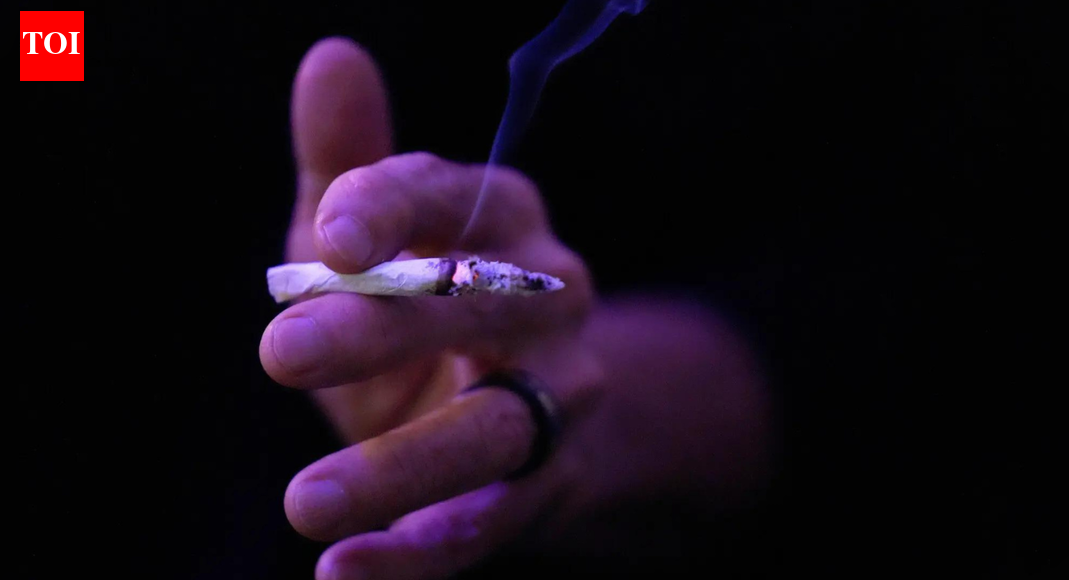
A nationwide school survey reveals alarming drug experimentation among Indian children, with initiation as early as 11 and an average age of 12.9. One in seven students has tried psychoactive substances, with opioids and cannabis prevalent. Experts warn of easy access and emotional distress driving this trend, urging early intervention and parental vigilance. A nationwide school survey reveals alarming drug experimentation among Indian children, with initiation as early as 11 and an average age of 12.9. One in seven students has tried psychoactive substances, with opioids and cannabis prevalent. Experts warn of easy access and emotional distress driving this trend, urging early intervention and parental vigilance. NEW DELHI: A major school survey across 10 Indian cities has revealed that children are experimenting with drugs far earlier than expected, with the average age of initiation just 12.9 years and some starting as young as 11. The findings, published in the National Medical Journal of India this month, show that one in seven school students tried a psychoactive substance at least once.The study surveyed 5,920 students aged around 14.7 years across Delhi, Bengaluru, Mumbai, Lucknow, Chandigarh, Hyderabad, Imphal, Jammu, Dibrugarh and Ranchi. It found 15.1% had used a substance in their lifetime, 10.3% in the past year, and 7.2% in the past month. After tobacco (4%) and alcohol (3.8%), the most commonly used substances were opioids (2.8%), cannabis (2%) and inhalants (1.9%), with most opioid use linked to non-prescribed pharmaceutical pills.The multi-city study was led by Dr Anju Dhawan, chief of National Drug Dependence Treatment Centre, AIIMS Delhi, in collaboration with medical colleges in Chandigarh, Dibrugarh, Lucknow, Bengaluru, Srinagar, Imphal, Mumbai, Hyderabad and Ranchi.Substance use rose sharply with age. Students in classes XI-XII were twice as likely to have used substances compared to Class VIII. Boys reported higher tobacco and cannabis use, while girls showed higher inhalant and pharmaceutical opioid use. Over half the students said they would hide drug use if asked, indicating that actual prevalence could be higher.The survey found a clear link between substance use and emotional distress: 31% of past-year users showed high psychological difficulty scores compared with 25% of non-users, with marked differences in conduct issues, hyperactivity and emotional symptoms.Against this backdrop, Dr Achal Bhagat, senior consultant psychiatrist and psychotherapist at Indraprastha Apollo Hospital, says the early age of initiation is an urgent warning. He notes that easy access and unaddressed emotional distress are driving children toward substances, even as the adolescent brain remains highly vulnerable to lasting harm from inhalants, opioids and cannabis. He points to a worrying rise in substance use among girls, often linked to discreet self-medication, and urges parents to watch for mood shifts, withdrawal, falling grades and secrecy. With only 1% of young users seeking help, he calls for stronger school mental-health support and open family conversations to prevent early experimentation from hardening into addiction.Family and peer influence also played a strong role, with 40% reporting tobacco or alcohol use at home and users far more likely to have peers who consume substances. Researchers say interventions must begin much earlier – ideally before middle school – to delay first use and prevent later addiction.The authors say the findings offer the clearest picture yet of adolescent substance use in India and stress the need for urgent school-based prevention, early identification and structured support before experimentation becomes entrenched.About the AuthorAnuja JaiswalAnuja Jaiswal is a Senior Assistant Editor at The Times of India, with an impressive 18-year career in narrative journalism. She specializes in health and heritage reporting, expertly simplifying complex health information to make it engaging and understandable for readers. Her deep dives into heritage topics are well-researched, resulting in captivating narratives that resonate with her audience. Over the years, she has worked in Chandigarh, Chhattisgarh and West UP, gaining diverse on-ground experience that shapes her storytelling.Read MoreEnd of ArticleFollow Us On Social MediaVideos’Singapura Derived From Sanskrit’: Singapore’s Ex-Deputy PM Highlights India’s InfluenceInterpol Blue Notice Explained: How CBI Tracks Absconding Luthra Brothers In Goa Nightclub Fire CaseIndia At The Centre: How The New US Security Blueprint Plans To Deepen Strategic Ties With DelhiBJP’s Nishikant Dubey Counters Rahul Gandhi, Accuses Cong Of Weakening India’s Key InstitutionsWhy Trump Accuses India Of Dumping Rice And What A New Tariff Shock Could Mean For Trade Relations’Vote Chori Is The Biggest Anti-National Act’: Rahul Gandhi Slams BJP In Lok Sabha’China…Trump…Economy’: Kharge Hits Out At PM Modi, Amit Shah In Rajya Sabha‘BJP Insulting Gandhi, Patel, Tagore’: Kharge Slams Amit Shah Over Vande Mataram & Nehru Claims’No Link To Bengal’: Amit Shah’s Fiery Speech on Vande Mataram, Blames Nehru, Indira of SabotageBJP’S Sanjay Jaiswal Thanks Rahul Gandhi For ‘Vote Chori’ Charge, Claims It Boosted NDA’S Bihar Win123PhotostoriesShilpa Shetty, Rani Mukerji and Aishwarya Rai; Big roles these leading ladies famously turned downFrom Shraddha Kapoor–Rahul Mody to Ahaan Panday–Aneet Padda: Bollywood’s most talked-about rumoured couples of 2025ABC juice health benefits: The superhero drink your body didn’t know it neededChef Sanjeev Kapoor shares healthy and extraordinary banana recipesJanuary birth? 5 reasons your soul chose to be born in this monthBig ears, big survival: 5 animals with unbelievably huge ears’Bigg Boss Season 19′ winner Gaurav Khanna’s stylish looks from the houseFrom ‘FA9LA’ to ‘Kaho Na Kaho’: Arabic music that shaped Bollywood’s biggest hits10 foods that make heart stronger naturally and how to eat themLesser-known facts about the ‘Tragedy King’ Dilip Kumar123Hot PicksCandace OwensCharlie KirkWorld NewsGold rate todaySilver rate todayPublic Holidays NovemberBank Holidays NovemberTop TrendingMarvin Harrison JrTee Higgins InjuryTrey Benson InjuryMariasharapova and Alexander Net worthAryna Sabalenka Net WorthCeeDee Lamb InjuryRafael Nadal and Mery Net WorthCandace OwensSimone BilesAnthony Richardson Injury
NEW DELHI: A major school survey across 10 Indian cities has revealed that children are experimenting with drugs far earlier than expected, with the average age of initiation just 12.9 years and some starting as young as 11. The findings, published in the National Medical Journal of India this month, show that one in seven school students tried a psychoactive substance at least once.The study surveyed 5,920 students aged around 14.7 years across Delhi, Bengaluru, Mumbai, Lucknow, Chandigarh, Hyderabad, Imphal, Jammu, Dibrugarh and Ranchi. It found 15.1% had used a substance in their lifetime, 10.3% in the past year, and 7.2% in the past month. After tobacco (4%) and alcohol (3.8%), the most commonly used substances were opioids (2.8%), cannabis (2%) and inhalants (1.9%), with most opioid use linked to non-prescribed pharmaceutical pills.The multi-city study was led by Dr Anju Dhawan, chief of National Drug Dependence Treatment Centre, AIIMS Delhi, in collaboration with medical colleges in Chandigarh, Dibrugarh, Lucknow, Bengaluru, Srinagar, Imphal, Mumbai, Hyderabad and Ranchi.Substance use rose sharply with age. Students in classes XI-XII were twice as likely to have used substances compared to Class VIII. Boys reported higher tobacco and cannabis use, while girls showed higher inhalant and pharmaceutical opioid use. Over half the students said they would hide drug use if asked, indicating that actual prevalence could be higher.The survey found a clear link between substance use and emotional distress: 31% of past-year users showed high psychological difficulty scores compared with 25% of non-users, with marked differences in conduct issues, hyperactivity and emotional symptoms.Against this backdrop, Dr Achal Bhagat, senior consultant psychiatrist and psychotherapist at Indraprastha Apollo Hospital, says the early age of initiation is an urgent warning. He notes that easy access and unaddressed emotional distress are driving children toward substances, even as the adolescent brain remains highly vulnerable to lasting harm from inhalants, opioids and cannabis. He points to a worrying rise in substance use among girls, often linked to discreet self-medication, and urges parents to watch for mood shifts, withdrawal, falling grades and secrecy. With only 1% of young users seeking help, he calls for stronger school mental-health support and open family conversations to prevent early experimentation from hardening into addiction.Family and peer influence also played a strong role, with 40% reporting tobacco or alcohol use at home and users far more likely to have peers who consume substances. Researchers say interventions must begin much earlier – ideally before middle school – to delay first use and prevent later addiction.The authors say the findings offer the clearest picture yet of adolescent substance use in India and stress the need for urgent school-based prevention, early identification and structured support before experimentation becomes entrenched.


