
NEW DELHI: India is deeply concerned over the recent developments in Iran and the Gulf region, govt said Saturday, hours after US-Israel joint military action against Iran and the latter’s retaliatory targeting of Gulf states where Washington has military assets. While seeking safety of civilians in a region that is home to a nearly 10-million-strong Indian diaspora, the govt also stressed in its tough balancing act that sovereignty and territorial integrity of all states must be protected.External affairs minister S Jaishankar spoke to his Iranian and Israeli counterparts, Seyed Abbas Araghchi and Gideon Sa’ar, respectively, to express deep concern and to reiterate India’s call for dialogue and diplomacy to de-escalate tensions. Israel attacks IranIsrael Attack Iran Live Updates: Missiles strike US navy headquarters in Bahrain; explosions heard in Abu Dhabi, DohaUS, Israel attack Iran: AI Tel Aviv flight returning to IndiaIran attacks US military bases across Middle East in operation ‘Truthful Promise 4’Late in the evening, Jaishankar also spoke to his counterparts from the UAE, Qatar, Kuwait and Bahrain and sought their cooperation in ensuring the well-being of the Indian community.India’s response in the form of a statement by the ministry of external affairs was carefully calibrated as it said that dialogue and diplomacy should be pursued to de-escalate tensions and address underlying issues. “We urge all sides to exercise restraint, avoid escalation and prioritise the safety of civilians,” said MEA, adding that Indian missions across the Gulf were in touch with Indian nationals and had issued appropriate advisories asking them to remain vigilant and follow local security guidance. There are close to 40,000 Indian citizens in Israel and anywhere between 6,000 and 10,000 in Iran.With the US and Israel reportedly looking to precipitate a regime change in Iran, India was again forced to walk a diplomatic tightrope, caught between its steady ties with Iran that are based on common regional interests and strong signs of improvement in the critical relationship with the US after a period of extreme turbulence.The attack on Iran also came barely 48 hours after a bilateral meeting between PM Narendra Modi and his counterpart Benjamin Netanyahu in Israel that saw the leaders discussing US-Iran tensions and Modi offering, if required, India’s support for any efforts towards a peaceful resolution. Significantly, in his media remarks during the visit which took place amidst mounting US-Iran friction, Modi said that peace and security in West Asia is directly linked to India’s security interests.The Gulf region is also one of India’s most significant and reliable sources of oil and gas. The diaspora, whose well-being is a major priority for the govt, is one of the largest sources of remittances for India. The GCC countries — Bahrain, Kuwait, Oman, Qatar, Saudi Arabia and United Arab Emirates — are together also India’s largest trading partner bloc.While India has deepened its strategic partnership with Israel in the past decade or so, its ties with Gulf states have also undergone a complete transformation during this period. India, in fact, now has a strategic partnership with five out of the six GCC countries, moving from the traditional energy buyer-seller relationship to other domains like defence and security, investment, connectivity and tech.India will be worried about the likely impact of a full-blown regional war on the India-Middle East-Europe Economic Corridor (IMEEC) project that has already been delayed by the instability in West Asia. During his visit to Israel, Modi had said that both countries will move forward with renewed momentum on initiatives like IMEEC and India–Israel–UAE–USA (I2U2) to promote regional connectivity.For India, Iran remains a key regional partner, one that New Delhi has not given up on despite President Donald Trump’s restoring a maximum pressure campaign against Iran. In Jan this year, India joined China, Pakistan and four other countries in voting against a UN Human Rights Council resolution that strongly deplored the crackdown on protests in Iran and extended the mandate of a fact-finding mission for the country.According to Indian authorities, it is in India’s interests to maintain a functional relationship with Iran, not least because of the strategic Chabahar port in the country that India has helped develop for access to Central Asia and Afghanistan, bypassing Pakistan – though the US muddied the picture last year with its decision to revoke a sanctions waiver for the port that is expected to come into effect in late April.End of ArticleFollow Us On Social MediaVideos’Moral Cowardice’: PM Modi’s Israel Visit Faces Oppn Heat As US-Israel Launch Strikes On Iran’Urge All Sides To…’: India Calls For Dialogue And De Escalation As US And Israel Attack Iran‘Historic’: US Envoy Gor Hails Micron’s Chip Plant Launch In Guj, Cites Modi-Trump FriendshipAfghanistan War, Iran Conflict Push Pakistan Into Two Front Security Challenge Amid Regional TensionHarvard University Responds After Sanskrit Course Image Sparks Criticism‘Target Religious Minorities’:UNHRC Side Event Flags Blasphemy Law Abuse In Pakistan And Bangladesh’Muslim League-Maoist Congress’: PM Modi Hits Out Over ‘Shirtless’ Protest At AI SummitIsrael-Iran War: AirIndia, IndiGo, Global Carriers Suspend Flights Amid West Asia Airspace ClosuresMunir’s Gamble Or US Script? As Trump Praises Pakistan, Is Islamabad Replaying Old Afghan Playbook?Five-Year Most-Favoured Nation Status Secured for India in Landmark EU Trade Agreement: What It Means for India123PhotostoriesChef Sanjeev Kapoor’s comfort recipes from his home kitchen that you can’t missHoli 2026: Forgotten Holi drinks that disappeared over time5 luxury electric cars offering performance, prestige and sustainable innovationFrom Jane Fonda to Melanie Griffith: actors who went throughknife to look youngerMy sugar is fine, but I feel terrible: Doctor explains what your diabetes report may be missingFrom Dilip Joshi to Munmun Dutta – Highest-paid Taarak Mehta Ka Ooltah Chashmah starsPlanning a Udaipur wedding like Rashmika Mandanna’s? 5 bridal style rules you can’t ignoreSmoke, strikes and sirens: Tehran in turmoil after US-Israel attack Iran — In pics5 common habits of people who never seem stressed10 Hindu Gods and the traditional bhog lovingly offered to them123Hot PicksIsrael attack IranWest Bengal SIRGold rate todayCEO Sam AltmanIncome Tax CalculatorPublic holidays March 2026Bank Holidays MarchTop TrendingIsrael Iran ConflictUS Israel Strike IranPakistna vs Sri Lanka ScorecardLucknow businessman murderRinku SinghIndian Wells Open 2026Crude OilQatar AirwaysMaxx Crosby InjuryNHL Trade

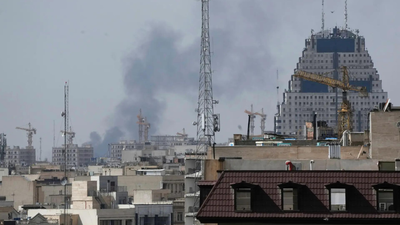
NEW DELHI: India is deeply concerned over the recent developments in Iran and the Gulf region, govt said Saturday, hours after US-Israel joint military action against Iran and the latter’s retaliatory targeting of Gulf states where Washington has military assets. While seeking safety of civilians in a region that is home to a nearly 10-million-strong Indian diaspora, the govt also stressed in its tough balancing act that sovereignty and territorial integrity of all states must be protected.External affairs minister S Jaishankar spoke to his Iranian and Israeli counterparts, Seyed Abbas Araghchi and Gideon Sa’ar, respectively, to express deep concern and to reiterate India’s call for dialogue and diplomacy to de-escalate tensions. Late in the evening, Jaishankar also spoke to his counterparts from the UAE, Qatar, Kuwait and Bahrain and sought their cooperation in ensuring the well-being of the Indian community.
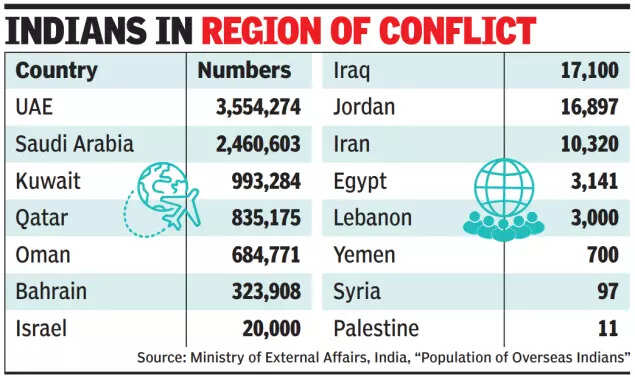
India’s response in the form of a statement by the ministry of external affairs was carefully calibrated as it said that dialogue and diplomacy should be pursued to de-escalate tensions and address underlying issues. “We urge all sides to exercise restraint, avoid escalation and prioritise the safety of civilians,” said MEA, adding that Indian missions across the Gulf were in touch with Indian nationals and had issued appropriate advisories asking them to remain vigilant and follow local security guidance. There are close to 40,000 Indian citizens in Israel and anywhere between 6,000 and 10,000 in Iran.With the US and Israel reportedly looking to precipitate a regime change in Iran, India was again forced to walk a diplomatic tightrope, caught between its steady ties with Iran that are based on common regional interests and strong signs of improvement in the critical relationship with the US after a period of extreme turbulence.The attack on Iran also came barely 48 hours after a bilateral meeting between PM Narendra Modi and his counterpart Benjamin Netanyahu in Israel that saw the leaders discussing US-Iran tensions and Modi offering, if required, India’s support for any efforts towards a peaceful resolution. Significantly, in his media remarks during the visit which took place amidst mounting US-Iran friction, Modi said that peace and security in West Asia is directly linked to India’s security interests.The Gulf region is also one of India’s most significant and reliable sources of oil and gas. The diaspora, whose well-being is a major priority for the govt, is one of the largest sources of remittances for India. The GCC countries — Bahrain, Kuwait, Oman, Qatar, Saudi Arabia and United Arab Emirates — are together also India’s largest trading partner bloc.While India has deepened its strategic partnership with Israel in the past decade or so, its ties with Gulf states have also undergone a complete transformation during this period. India, in fact, now has a strategic partnership with five out of the six GCC countries, moving from the traditional energy buyer-seller relationship to other domains like defence and security, investment, connectivity and tech.India will be worried about the likely impact of a full-blown regional war on the India-Middle East-Europe Economic Corridor (IMEEC) project that has already been delayed by the instability in West Asia. During his visit to Israel, Modi had said that both countries will move forward with renewed momentum on initiatives like IMEEC and India–Israel–UAE–USA (I2U2) to promote regional connectivity.For India, Iran remains a key regional partner, one that New Delhi has not given up on despite President Donald Trump’s restoring a maximum pressure campaign against Iran. In Jan this year, India joined China, Pakistan and four other countries in voting against a UN Human Rights Council resolution that strongly deplored the crackdown on protests in Iran and extended the mandate of a fact-finding mission for the country.According to Indian authorities, it is in India’s interests to maintain a functional relationship with Iran, not least because of the strategic Chabahar port in the country that India has helped develop for access to Central Asia and Afghanistan, bypassing Pakistan – though the US muddied the picture last year with its decision to revoke a sanctions waiver for the port that is expected to come into effect in late April.


