
Says Testator’s Wish Assumes Pre-Eminence NEW DELHI: The string of landmark judgments on gender equality could not help Shyla Joseph get an equitable 1/9th share of the property of her father N S Sreedharan, who had nine children but in his will disinherited her for marrying outside the community.A Supreme Court bench of Justices Ahsanuddin Amanullah and K Vinod Chandran reversed the concurrent findings of the HC and the trial court which had doubted the will and allowed equitable partition of Sreedharan’s property among the nine children, including Shyla.Writing the judgment, Justice Chandran said, “There can be no interference to the will which stands proved unequivocally. The judgment and decree of the high court and that of the trial court stands set aside. The plaintiff (Shyla) is found to have no claim over the properties of her father, which by a will have been bequeathed to the other siblings of the plaintiff.”Once the SC doubted the claim, senior advocate P B Krishnan, appearing for Shyla, requested the bench that her entitlement at best was just 1/9th share of her father’s assets which is a negligible portion of the properties.The bench said the question of equality does not arise in a case relating to the wish of a man about division and inheritance of his properties. It said, “We are not on equity, and the wish of the testator assumes pre-eminence. The last will and testament of the testator cannot be digressed from or frustrated.” While allowing the appeal of her siblings, the bench ordered dismissal of the suit she had filed for equitable partition of her father’s properties.It said the rule of prudence cannot apply to the contents of a will, which is the wish of the individual who has absolute discretion to divide his properties. If all siblings had been divested of their inheritance through a will, then the rule of prudence could have been applied by the courts, the bench said.Referring to the reason for which Sreedharan had disinherited Shyla, the SC said, “There is a reason stated for such exclusion, the acceptability of which to our minds, is not what the rule of prudence dictates. We cannot put the testator in our shoes… We cannot substitute our opinions in place of that of the testator; his desire prompted by his own justifications.”End of ArticleFollow Us On Social MediaVideos’Abrupt Variation In Chenab River Flow’: Pakistan Cries Over Indus Water Treaty Suspension’Asking Since June…’: Priyanka Gandhi, Nitin Gadkari Share ‘Appointment’ Banter In Lok Sabha’Possibilities For Expansion’: Argentinian Envoy On Trade Partnership With IndiaCM Mamata Banerjee Renames West Bengal’s Job Guarantee Scheme ‘Karmashree’ After Mahatma GandhiNitish Kumar’s Hijab Shocker: BJP MP Giriraj Singh Defends Bihar CM’s Act With ‘Go To Hell’ RemarkIndia Flags Pakistan Role In Bangladesh Protests, Backs Awami League Demand For Free & Fair PollsIndia’s Silent Exodus: Over Two Lakh Indian Citizens Quit Passports Yearly Amid Changing AspirationsApache AH-64e And Prachand Give India A Two-Front Air Strike Edge From Deserts To High HimalayasLok Sabha Passes Viksit Bharat G Ram G Bill Amid Protests, Opposition Tears Copies Over Gandhi Name‘Worst Is Behind Us’: IndiGo CEO Says Airline Back on Track After Operational Crisis123PhotostoriesJyotika’s unforgettable Bollywood moments from Doli Saja Ke Rakhna to ShaitaanDry mouth that won’t go away? Doctor explains if it is dehydration or something elseWinter’s hidden heart hazard: Why cold snaps spike attacksHealthy and delicious snacks under 100 calories for midnight munching8 insanely beautiful Indian destinations to cover before the year ends5 yoga asanas that can help control uric acid naturally6 reasons to eat ripe papaya daily for breakfastDipika Kakar breaks down during her first PET scan after liver cancer surgery; tells Shoaib, ‘I can’t do this without you’Dog breeds that (almost) never bite kidsThese 5 living animals once walked the earth with dinosaurs123Hot PicksTrump Gold CardUAE WeatherIndia Oman TradeGold rate todaySilver rate todayPublic Holidays DecemberBank Holidays DecemberTop TrendingPuka Nacua InjuryAnthony Richardson InjuryJosh Allen Car CollectionKobe BryantJayson TatumCam SkatteboPuka NacuaVictor WembanyamaNHL Trade RumorsMike Liaory
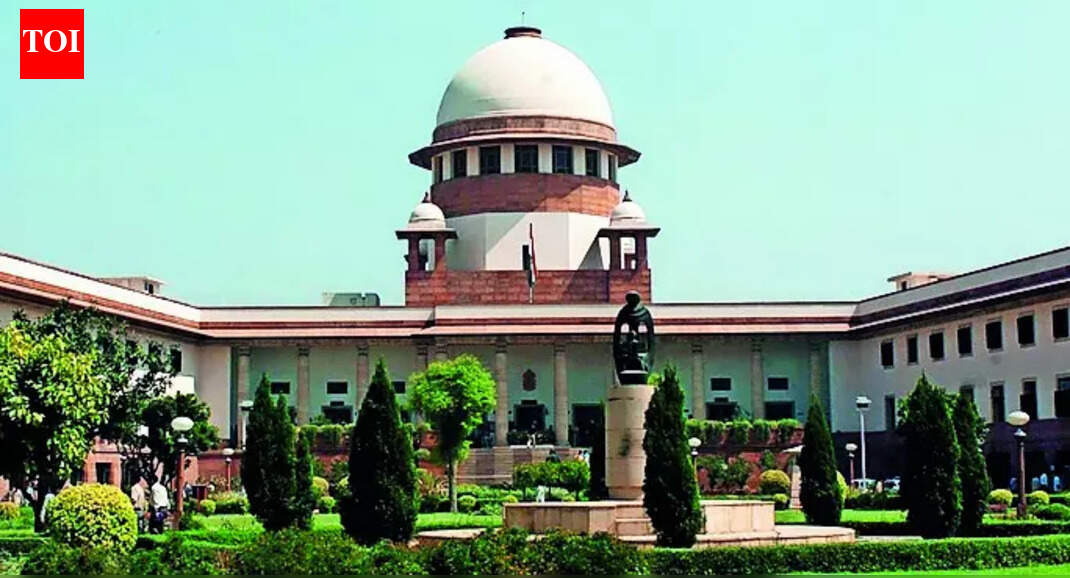

NEW DELHI: The string of landmark judgments on gender equality could not help Shyla Joseph get an equitable 1/9th share of the property of her father N S Sreedharan, who had nine children but in his will disinherited her for marrying outside the community.A Supreme Court bench of Justices Ahsanuddin Amanullah and K Vinod Chandran reversed the concurrent findings of the HC and the trial court which had doubted the will and allowed equitable partition of Sreedharan’s property among the nine children, including Shyla.Writing the judgment, Justice Chandran said, “There can be no interference to the will which stands proved unequivocally. The judgment and decree of the high court and that of the trial court stands set aside. The plaintiff (Shyla) is found to have no claim over the properties of her father, which by a will have been bequeathed to the other siblings of the plaintiff.”Once the SC doubted the claim, senior advocate P B Krishnan, appearing for Shyla, requested the bench that her entitlement at best was just 1/9th share of her father’s assets which is a negligible portion of the properties.The bench said the question of equality does not arise in a case relating to the wish of a man about division and inheritance of his properties. It said, “We are not on equity, and the wish of the testator assumes pre-eminence. The last will and testament of the testator cannot be digressed from or frustrated.” While allowing the appeal of her siblings, the bench ordered dismissal of the suit she had filed for equitable partition of her father’s properties.It said the rule of prudence cannot apply to the contents of a will, which is the wish of the individual who has absolute discretion to divide his properties. If all siblings had been divested of their inheritance through a will, then the rule of prudence could have been applied by the courts, the bench said.Referring to the reason for which Sreedharan had disinherited Shyla, the SC said, “There is a reason stated for such exclusion, the acceptability of which to our minds, is not what the rule of prudence dictates. We cannot put the testator in our shoes… We cannot substitute our opinions in place of that of the testator; his desire prompted by his own justifications.”


