
1950: Kevin Budden, a 20-year-old photographer, was dying from a taipan snake bite when he insisted the snake be saved; five years later, its venom helped save a boy’s life

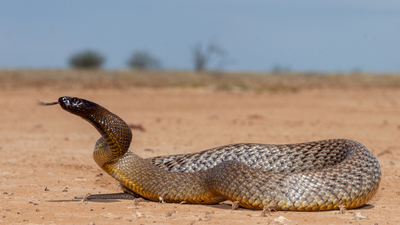
In July 1950, Kevin Budden was facing death from one of Australia’s most dangerous snakes. Yet his concern was not only about himself. The 20-year-old wanted the taipan that had bitten him to survive too.That decision gave scientists something they urgently needed: a live coastal taipan and access to its venom. Five years later, taipan antivenom was used to treat a young boy in Cairns.
The young man who went looking for a taipan
Budden was a young snake handler from Sydney with a strong interest in reptiles. Historical records show that he travelled to northern Queensland because scientists needed taipan venom to develop a specific antivenom.On July 27, 1950, he captured a coastal taipan near Cairns. The snake was about 1.8 metres long. While trying to place it securely into a bag, Budden lost his grip and was bitten on the hand.He still managed to secure the snake.The coastal taipan, Oxyuranus scutellatus, has highly developed venom apparatus and long fangs. Its venom can affect the nervous system and the body’s ability to clot blood. The Australian Museum notes that, before specific taipan antivenom became available, bites were nearly always fatal.
His final request was about the snake
As Budden’s condition deteriorated, he reportedly insisted that the snake should not be killed. It had to be kept alive and sent to Melbourne for research.That detail gives the story its unusual human weight. The animal that had caused his fatal injury was also the animal that could help prevent another death.Budden died at Cairns Hospital on July 28, 1950. The snake, however, survived the journey south. Museums Victoria records that it was milked for venom on August 1 by zoologist David Fleay and Dr F.C. Morgan.
What happened to the venom?
Fleay’s work was a crucial step. The live snake was milked several times, producing venom that could be studied and used in antivenom research.The venom did not become a medicine by itself. Researchers had to turn knowledge about the venom into a treatment capable of neutralising its effects. Budden’s specimen became an important part of that scientific effort.By the mid-1950s, a specific taipan antivenom had become available. The Australian Museum records the introduction of specific antivenom by the Commonwealth Serum Laboratories, while historical accounts place its availability in 1955.
Five years later, a boy needed it
In 1955, 10-year-old Bruce Stringer was bitten by a taipan while playing near Freshwater State School in Cairns.His condition became critical. Doctors initially tried brown snake antivenom, but he continued to deteriorate. He developed weakness, drooping eyelids and partial facial paralysis.Doctors then administered taipan antivenom. It was the first time the treatment was used in Australia, and Stringer survived. He later became a doctor himself.Today, taipan antivenom remains an established treatment for systemic envenoming from a taipan bite. Australia’s government-backed Healthdirect advises that suspected snake bites should always be treated as medical emergencies.Disclaimer: This article is based on historical records and official Australian health and museum sources. Snake bites are medical emergencies. Anyone suspected of being bitten by a venomous snake should seek emergency medical care immediately.


