
An aerial view of damaged structures covered in thick mud and debris following the flash floods at Devighat in Nepal’s Nuwakot NEW DELHI: The Glacial Lake Outburst Flood (GLOF) disaster in Nepal Wednesday has renewed discussion on India’s own strategy and preparedness to mitigate such risk with the presence of approximately 200 high-risk glacial lakes in the Himalayan regions.According to govt’s survey of these glacial lakes, Himalayan ranges are host to as many as 7,500 of them – with 10% in Sikkim and of which 25 are considered very high-risk. The study found 4,700 of these glacial lakes situated in Ganga river basin with a catchment area estimated at over 2.5 lakh sqkm, projecting a colossal scale of devastation a single breach could cause.India suffered one of the worst GLOF disasters in recent times when on Oct 3, 2023, glacial rocks of 14.7 cubic meter collapsed in South Lhonak Lake in Sikkim, close to midnight, “generating a 20-m high displacement wave”, wiping out several hydro power assets and settlements on its way downstream.Krishna Vatsa, member of National Disaster Management Authority (NDMA), said the Nepal event illustrates a new dimension of Himalayan disaster risk, though the precise sequence of events is still being scientifically established. “These are cascading hazards: an ice or rock failure can become a debris flow, create a temporary lake and then generate a flash flood. Such events can develop extremely rapidly and may provide very little warning time downstream.””India’s National GLOF Risk Mitigation Programme has marked 195 at-risk glacial lakes and follows five key priorities (assessment, monitoring, early warning, mitigation, community awareness). It needs to be speeded up and scaled up immediately as a priority for national security,” said Syed Safi Ahsan Rizvi, an ex-NDMA member.As a response to the Sikkim disaster, Centre had set up a high-level coordination committee on GLOF disaster risk reduction. The initiative, spearheaded by PM’s principal secretary PK Mishra, was tasked to host multi-agency deliberations and surveys of such lakes and identify the high-risk ones. Govt also allocated Rs 150 crore for the National GLOF Risk Mitigation Programme for four Himalayan states having high-risk glacial lakes.Join conversationView All Comments →Share your thoughts in the commentsInsightfulAgreeDisagreeSkepticalConcerningPromisingWorth ReadingBig DevelopmentPost CommentBe respectful · TOI community guidelinesThe first meeting of the coordination committee on DRR was held in Nov 2024, when PM’s principal secretary expressing his satisfaction on the group’s “tri-focal lens: assessment, monitoring, and mitigation”. The committee hosted regular meetings and received feedback, which were then formed as part of joint strategy between states and Centre. However, not much is known on follow up actions.Earlier, govt had claimed that multi-agency expeditions were conducted to assess all “A-category” lakes. The teams comprised scientists and officials from NDMA, Central Water Commission, Geological Survey of India, Centre for Development of Advance Computing, ITBP and the Army.Get the latest India News and Live updates. Download the TOI app.Here are more Raksha Bandhan wishes, Bhadra kaal and Shubh Muhurat from The Times of India.End of ArticleFollow Us On Social MediaVideosB Nagendra Quits Karnataka Cabinet Amid Valmiki Scam Allegations, Calls Charges Politically DrivenBlast Near Manipur BJP MLA’s House; CM Khemchand Singh Calls Attack ‘Barbaric’Fresh Threat To Kashmiri Pandits: Terror Group ULC Warns Over Reopening Exodus Cases | WatchUS Green Card Wait, USCIS Checks, UK Visas: How Immigration Rules Impact IndiansIndia Plans Javelin Missile Buy From US, Giving Infantry A Battle-Tested Tank-Killing Edge | Watch’Willing & Keen’: Penguin Random House Denies Dropping Sonia Gandhi’s Memoir Over Editorial ChangesGovt Taps EIL For Quality Checks On 5,000 Km Of Road Projects After Modi’s ‘4th-Party Audit’ Jibe469 Dead In Nepal Floods; 3 Bodies Found In Uttar Pradesh; Kathmandu Declines Foreign Rescue TeamsCongress Alleges ₹36,000 Crore ‘Sugar Scam’, Slams Modi Govt Over Festive Price RisePM Modi’s Central Asia Visit: SCO Summit, Uzbekistan Ties, Putin Meet In Focus123Photostories10 vintage baby girl names that still sound fresh todayJungkook style evolution: From bold eyeliner to quiet luxury, how BTS’ star transformed his fashion5 jewellery styling mistakes to avoid with traditional festive outfitsLock Upp 2 fame Akanksha Chamola’s luxurious Mumbai home: Elegant interiors, cosy living room and beautiful mandirH1N1 Or COVID-19? Symptoms may look the same, but the diagnosis can mean a very different treatment approachMakeup not lasting all day? Here’s why your base melts by noonThe ‘ick’ explained: 7 reasons attraction between partners can suddenly disappear (and how to bring the spark back)5 reasons people pull away even when they have feelings7 signs you like the idea of a romantic relationship more than your partnerCuff too tight, legs crossed or talking? Cardiologist reveals 5 home BP mistakes that can alter readings123Hot PicksNepal floodUPTET Result 2026Sunny LeoneKerala name changeRRB NTPC UG CBT 2 examAnkit Baliyan murderSridhar VembuDelhi murderNEET PG 2026 admit cardTop TrendingAnkit Balyan MurderChandigarh MurderSamay RainaUdaipur HotelFlorida Car CrashUS Green Card HolderBengal HospitalTamil Nadu Son MurderElon MuskKanpur Aircraft Crash

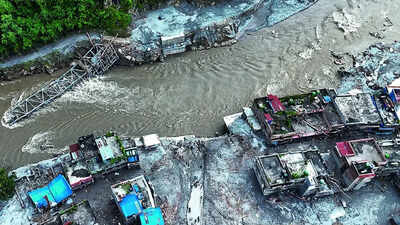
NEW DELHI: The Glacial Lake Outburst Flood (GLOF) disaster in Nepal Wednesday has renewed discussion on India’s own strategy and preparedness to mitigate such risk with the presence of approximately 200 high-risk glacial lakes in the Himalayan regions.According to govt’s survey of these glacial lakes, Himalayan ranges are host to as many as 7,500 of them – with 10% in Sikkim and of which 25 are considered very high-risk. The study found 4,700 of these glacial lakes situated in Ganga river basin with a catchment area estimated at over 2.5 lakh sqkm, projecting a colossal scale of devastation a single breach could cause.India suffered one of the worst GLOF disasters in recent times when on Oct 3, 2023, glacial rocks of 14.7 cubic meter collapsed in South Lhonak Lake in Sikkim, close to midnight, “generating a 20-m high displacement wave”, wiping out several hydro power assets and settlements on its way downstream.Krishna Vatsa, member of National Disaster Management Authority (NDMA), said the Nepal event illustrates a new dimension of Himalayan disaster risk, though the precise sequence of events is still being scientifically established. “These are cascading hazards: an ice or rock failure can become a debris flow, create a temporary lake and then generate a flash flood. Such events can develop extremely rapidly and may provide very little warning time downstream.”“India’s National GLOF Risk Mitigation Programme has marked 195 at-risk glacial lakes and follows five key priorities (assessment, monitoring, early warning, mitigation, community awareness). It needs to be speeded up and scaled up immediately as a priority for national security,” said Syed Safi Ahsan Rizvi, an ex-NDMA member.As a response to the Sikkim disaster, Centre had set up a high-level coordination committee on GLOF disaster risk reduction. The initiative, spearheaded by PM’s principal secretary PK Mishra, was tasked to host multi-agency deliberations and surveys of such lakes and identify the high-risk ones. Govt also allocated Rs 150 crore for the National GLOF Risk Mitigation Programme for four Himalayan states having high-risk glacial lakes.
Share your thoughts in the comments
Be respectful · TOI community guidelines
The first meeting of the coordination committee on DRR was held in Nov 2024, when PM’s principal secretary expressing his satisfaction on the group’s “tri-focal lens: assessment, monitoring, and mitigation”. The committee hosted regular meetings and received feedback, which were then formed as part of joint strategy between states and Centre. However, not much is known on follow up actions.Earlier, govt had claimed that multi-agency expeditions were conducted to assess all “A-category” lakes. The teams comprised scientists and officials from NDMA, Central Water Commission, Geological Survey of India, Centre for Development of Advance Computing, ITBP and the Army.


