
Excavations for the second phase of the 2,000-year-old Buddhist site at Zehanpora in Baramulla to begin on Saturday ZEHANPORA (BARAMULLA): Excavations will begin Saturday on the second phase of Zehanpora, a Buddhist site in north Kashmir’s Baramulla. J&K chief secretary Atal Dullo will inaugurate the project.The presence of a 2,000-year-old Buddhist civilisation at the site was discovered last year by Mohamad Ajmal Shah, a professor at University of Kashmir. It gained prominence after PM Narendra Modi mentioned it during his monthly radio programme Mann Ki Baat on Dec 28 last year.The Prime Minister recalled that people had noticed tall mounds in Zehanpora for years without knowing about their significance. What were first believed to be unusual rock formations were later found to resemble three Buddha stupas seen in photos in a French museum.According to Modi, the blurred photos, thousands of kilometres away, proved crucial as it showed three Buddhist stupas, helping archaeologists connect the dots and reconstruct Kashmir’s ancient past. The discovery reaffirms J&K’s rich cultural legacy.It all began in Oct 2023 when Shah was on a fellowship in France and came across the 100-odd old photos at Guimet Museum showing stupa domes in Baramulla. “I immediately realised I had visited the site. What struck me was the domes in the photos looked much larger than what we see now,” said Shah, attached to the varsity’s department of Central Asian Studies.Later, Shah requested J&K govt’s department of archaeology to fund the project and it agreed. Shah and his team started digging in Nov last year, initially discovering a hall identified as an apsidal (semi-circular) stupa.Shah and his team also found iron/copper artefacts, needles, decorated objects and other materials. “We identified wall alignments through drone images and excavated precisely at those points. There is a strong possibility that many structures and artefacts still lie preserved beneath the ground,” Shah said.Shah highlighted the possibility that the site was linked to the Fourth Buddhist Council (1st century CE). “Kashmir was a major centre of Buddhism in ancient times. It was here that Hinayana Buddhism evolved into Mahayana Buddhism, giving the religion a new philosophical and cultural form,” he said.Join conversationView All Comments →Share your thoughts in the commentsInsightfulAgreeDisagreeSkepticalConcerningPromisingWorth ReadingBig DevelopmentPost CommentBe respectful · TOI community guidelinesShah pointed out that the Chinese explorer Hiuen Tsang had mentioned Baramulla in his travel accounts. According to Shah, Tsang spent a night at Uskur, a Buddhist site near Baramulla town and visited several monasteries in the area. “This suggests Tsang must have visited the monastery at Zehanpora as well,” Shah said.Get the latest India News and Live updates. Download the TOI app.Here are more Raksha Bandhan wishes, Bhadra kaal and Shubh Muhurat from The Times of India.End of ArticleFollow Us On Social MediaVideosB Nagendra Quits Karnataka Cabinet Amid Valmiki Scam Allegations, Calls Charges Politically DrivenBlast Near Manipur BJP MLA’s House; CM Khemchand Singh Calls Attack ‘Barbaric’Fresh Threat To Kashmiri Pandits: Terror Group ULC Warns Over Reopening Exodus Cases | WatchUS Green Card Wait, USCIS Checks, UK Visas: How Immigration Rules Impact IndiansIndia Plans Javelin Missile Buy From US, Giving Infantry A Battle-Tested Tank-Killing Edge | Watch’Willing & Keen’: Penguin Random House Denies Dropping Sonia Gandhi’s Memoir Over Editorial ChangesGovt Taps EIL For Quality Checks On 5,000 Km Of Road Projects After Modi’s ‘4th-Party Audit’ Jibe469 Dead In Nepal Floods; 3 Bodies Found In Uttar Pradesh; Kathmandu Declines Foreign Rescue TeamsCongress Alleges ₹36,000 Crore ‘Sugar Scam’, Slams Modi Govt Over Festive Price RisePM Modi’s Central Asia Visit: SCO Summit, Uzbekistan Ties, Putin Meet In Focus123Photostories10 vintage baby girl names that still sound fresh todayJungkook style evolution: From bold eyeliner to quiet luxury, how BTS’ star transformed his fashion5 jewellery styling mistakes to avoid with traditional festive outfitsLock Upp 2 fame Akanksha Chamola’s luxurious Mumbai home: Elegant interiors, cosy living room and beautiful mandirH1N1 Or COVID-19? Symptoms may look the same, but the diagnosis can mean a very different treatment approachMakeup not lasting all day? Here’s why your base melts by noonThe ‘ick’ explained: 7 reasons attraction between partners can suddenly disappear (and how to bring the spark back)5 reasons people pull away even when they have feelings7 signs you like the idea of a romantic relationship more than your partnerCuff too tight, legs crossed or talking? Cardiologist reveals 5 home BP mistakes that can alter readings123Hot PicksNepal floodUPTET Result 2026Sunny LeoneKerala name changeRRB NTPC UG CBT 2 examAnkit Baliyan murderSridhar VembuDelhi murderNEET PG 2026 admit cardTop TrendingAnkit Balyan MurderChandigarh MurderSamay RainaUdaipur HotelFlorida Car CrashUS Green Card HolderBengal HospitalTamil Nadu Son MurderElon MuskKanpur Aircraft Crash

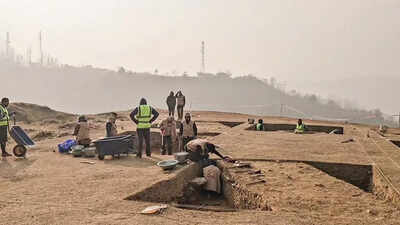
ZEHANPORA (BARAMULLA): Excavations will begin Saturday on the second phase of Zehanpora, a Buddhist site in north Kashmir’s Baramulla. J&K chief secretary Atal Dullo will inaugurate the project.The presence of a 2,000-year-old Buddhist civilisation at the site was discovered last year by Mohamad Ajmal Shah, a professor at University of Kashmir. It gained prominence after PM Narendra Modi mentioned it during his monthly radio programme Mann Ki Baat on Dec 28 last year.The Prime Minister recalled that people had noticed tall mounds in Zehanpora for years without knowing about their significance. What were first believed to be unusual rock formations were later found to resemble three Buddha stupas seen in photos in a French museum.According to Modi, the blurred photos, thousands of kilometres away, proved crucial as it showed three Buddhist stupas, helping archaeologists connect the dots and reconstruct Kashmir’s ancient past. The discovery reaffirms J&K’s rich cultural legacy.It all began in Oct 2023 when Shah was on a fellowship in France and came across the 100-odd old photos at Guimet Museum showing stupa domes in Baramulla. “I immediately realised I had visited the site. What struck me was the domes in the photos looked much larger than what we see now,” said Shah, attached to the varsity’s department of Central Asian Studies.Later, Shah requested J&K govt’s department of archaeology to fund the project and it agreed. Shah and his team started digging in Nov last year, initially discovering a hall identified as an apsidal (semi-circular) stupa.Shah and his team also found iron/copper artefacts, needles, decorated objects and other materials. “We identified wall alignments through drone images and excavated precisely at those points. There is a strong possibility that many structures and artefacts still lie preserved beneath the ground,” Shah said.Shah highlighted the possibility that the site was linked to the Fourth Buddhist Council (1st century CE). “Kashmir was a major centre of Buddhism in ancient times. It was here that Hinayana Buddhism evolved into Mahayana Buddhism, giving the religion a new philosophical and cultural form,” he said.
Share your thoughts in the comments
Be respectful · TOI community guidelines
Shah pointed out that the Chinese explorer Hiuen Tsang had mentioned Baramulla in his travel accounts. According to Shah, Tsang spent a night at Uskur, a Buddhist site near Baramulla town and visited several monasteries in the area. “This suggests Tsang must have visited the monastery at Zehanpora as well,” Shah said.


