
Meet Ryoya Sugimoto: The Japanese teenager who spotted strange jellyfish at a dock and helped scientists identify a species new to science

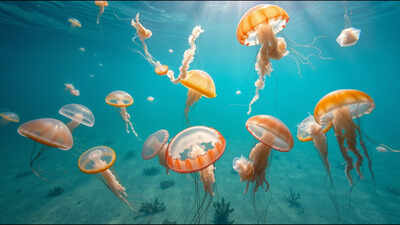
In 2018, 13-year-old Ryoya Sugimoto was watching marine life from the docks of Tanabe Bay in Wakayama, Japan, when he spotted jellyfish he could not identify. He had been fascinated by jellyfish since childhood, after being stung by a blue button jellyfish, Porpita porpita, and had taught himself about jellyfish using books from his local library. When the animals he encountered did not match species he knew, Sugimoto collected several dozen and raised them at home, using methods he had taught himself. As they matured, their unusual shape and prominently curled gonads led him to believe they might represent something previously undescribed. Years later, those specimens became the basis for the formal description of Orchistoma integrale, a species new to science and the first member of its family recorded in Japan. The findings were published in the peer-reviewed journal Plankton and Benthos Research in 2025, titled Orchistoma integrale sp. nov. (Hydrozoa, Orchistomatidae), a new species of hydromedusa with the first record of the genus from the Northwest Pacific.
How a teenager’s home-reared jellyfish specimens led to contact with a NOAA scientist
Rather than leave the unusual animals unidentified, Sugimoto contacted Dr Allen Collins, a zoologist at NOAA Fisheries’ National Systematics Laboratory and a specialist in jellyfish taxonomy. According to NOAA Fisheries, Collins initially did not expect the specimens to represent something new, but he agreed to examine them. Sugimoto had raised the animals from juveniles to maturity, allowing the researchers to study their development as well as their adult morphology. When Collins and his collaborators compared the specimens using morphological and molecular data, the results supported their recognition as a distinct species.
Why the Orchistoma integrale jellyfish surprised marine biologists studying its family
The animal was eventually named Orchistoma integrale, with the name referring to its prominently curled gonads, which resemble the mathematical symbol for an integral. Working alongside Collins and Dr Takato Izumi of Fukuyama University, Sugimoto co-authored the formal species description published in Plankton and Benthos Research.Before this discovery, four species were recognised in the genus Orchistoma, but none had been reported from the Northwest Pacific, including Japan. The paper describes O. integrale as a new species based on a combination of morphological and molecular characteristics, including its prominently curled gonads and scattered nematocysts on the umbrella. It is technically a hydrozoan rather than a true jellyfish in the strict taxonomic sense. The study also documented its development from juvenile medusa to adult and identified its polyp stage, the attached life stage that produces medusae. NOAA says this was the first time the polyp stage had been identified for any species in the genus.
What the discovery means for tracking marine species along Japan’s coastline
The holotype, the specimen used as the physical reference for the species’ scientific name, is housed at the National Museum of Nature and Science in Tsukuba, Japan. NOAA also reports that one of the species’ tentacles and an additional whole specimen are preserved at the Smithsonian National Museum of Natural History in Washington, D.C. The Smithsonian’s collection record identifies Orchistoma integrale material collected from Tanabe Bay in July 2018 and records Ryoya Sugimoto among the collectors.The discovery also leaves scientists with questions about the species’ distribution. Collins has raised the possibility that it may have been present but overlooked, may have recently expanded its range, or may have been introduced from elsewhere. The published study’s molecular characterisation also provides a reference that could allow researchers to detect the species in environmental DNA samples in the future. Sugimoto, now affiliated with the University of Tokyo, continues to study hydrozoan development and species identification.


