
How to identify an underground yellowjacket nest in your lawn and stay safe from painful stings

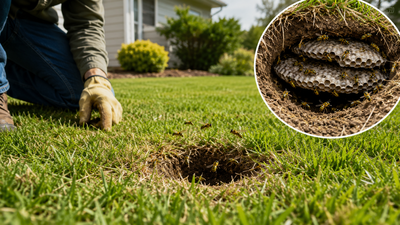
A small, unremarkable hole in the grass is easy to walk past without a second glance. Yet that opening could be the entrance to an underground yellowjacket colony housing thousands of insects. The opening is often just a small hole, yet it can lead to a very large nest hidden below the surface, meaning a colony can grow substantially before anyone notices it. In areas with dense vegetation, the entrance itself may not even be visible, and homeowners are instead advised to look for a steady line of insects flying in and out. According to the San Mateo County Mosquito and Vector Control District, spotting this early matters, since disturbing a nest by accident, while mowing, gardening, or letting children and pets play nearby, can provoke a defensive response from the entire colony. Knowing how to identify a nest, understand the risk it poses, and respond safely can prevent a painful surprise and, for some people, a genuine medical emergency.
Why a tiny yellowjacket nest entrance can hide a much larger colony
The size of the entrance does not indicate what lies beneath it. The opening is often just a small hole, yet it can lead to a very large nest hidden below the surface. This means a nest can grow substantially before anyone notices it, particularly in areas with dense vegetation where the entrance itself may be obscured. In these cases, the district advises looking instead for the line of insects entering and exiting the nest, since the hole itself might not be visible.Not every hole in the lawn belongs to a yellowjacket colony, and not every yellowjacket nest needs to be destroyed. According to Oregon State University, yellowjackets are beneficial insects that prey on pests such as cabbage moth larvae and help recycle dead animals in the environment. Whether the nest needs attention largely depends on where it sits. A hole tucked away from foot traffic poses far less risk than one beside a patio, play area, or garden bed that people regularly use.
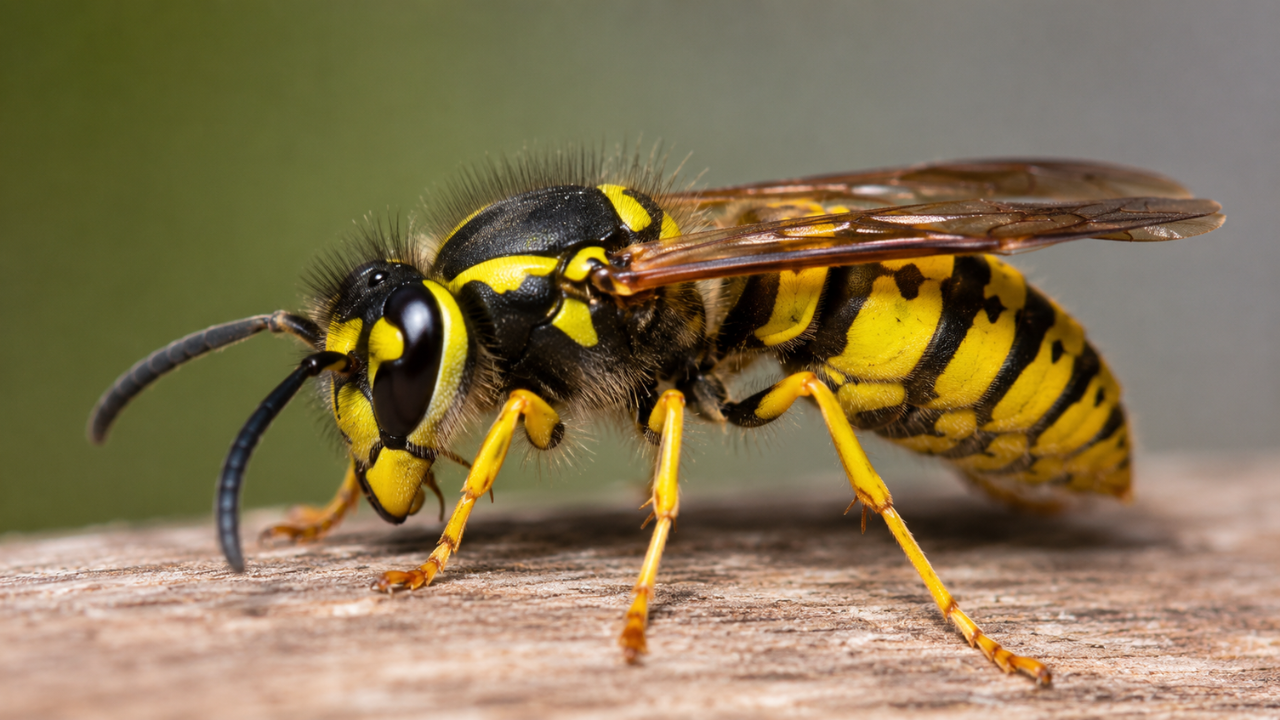
Image AI generated
Why disturbing a yellowjacket nest can trigger a dangerous attack
Disturbing a nest, even unintentionally, can provoke a defensive response from the entire colony. Yellowjackets aggressively protect their nests, and a single sting causes pain, redness, swelling, and itching, while multiple stings can lead to fever and sickness. The organisation also notes that around 3 per cent of adults are severely allergic to insect stings, meaning a reaction in these cases can escalate into a medical emergency requiring immediate attention.This is precisely why experts discourage amateur attempts to interfere with a nest once it has been located. Homeowners are advised to mark the nest location without disturbing it, using a flag or another object, so that a trained technician can find and treat it safely. Nests found on eaves or in trees are usually built by aerial-nesting wasps, which the district considers beneficial and generally harmless unless the nest sits somewhere people or pets are likely to disturb it.
How to safely deal with a yellowjacket nest and avoid dangerous stings around the home
- Do not approach, poke, or pour anything into the hole. Pouring petrol or other fuel down a nest opening is extremely hazardous and environmentally unsound.
- Watch from a safe distance to confirm activity. Look for insects flying in and out of the opening, or a steady line of them travelling in the same direction.
- Mark the location without disturbing it. Use a flag, stick, or similar marker so the spot can be found again later without needing to get close.
- Keep children, pets, and garden equipment away from the area until the nest has been dealt with.
- Consider whether action is even necessary. Action is optional when a nest sits away from human activity, and yellowjackets can simply be left alone if the location poses little risk.
- Contact a licensed pest control service or local vector control district if the nest is near a home, patio, or recreational area, or if anyone in the household has a known allergy to stings.
- Avoid DIY nest destruction if you are uncertain. Spraying a nest carries a very high risk of multiple stings, and this task is best left to professionals equipped with appropriate protective clothing.


