
Wallet aluminium foil hack: Can wrapping your wallet in aluminium foil prevent theft and leaks of critical information?

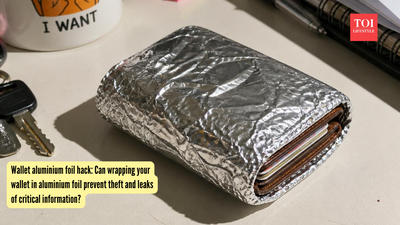
Aluminium foil is one of the most useful kitchen essentials. The easily malleable metal is thinned into thin sheets that help us keep food fresh in tiffins or when going on a picnic, but it seems like the internet has just found another viable use for aluminium foil!Somewhere between grandma’s kitchen drawer and modern data privacy, an unlikely household staple has found a new job that costs next to nothing. Yet people across social media are swearing by it as a way to guard something most of us carry every single day without a second thought: our wallets, but this time wrapped in aluminium foil.Wallets today are no longer simple leather pouches for cash. They are small vaults of wireless-enabled technology, with debit cards through which transactions can be made just with a touch, which, in a small but real way, is a target.So does wrapping your cards in kitchen foil actually do anything, or is this just another internet fad made relatable with science?
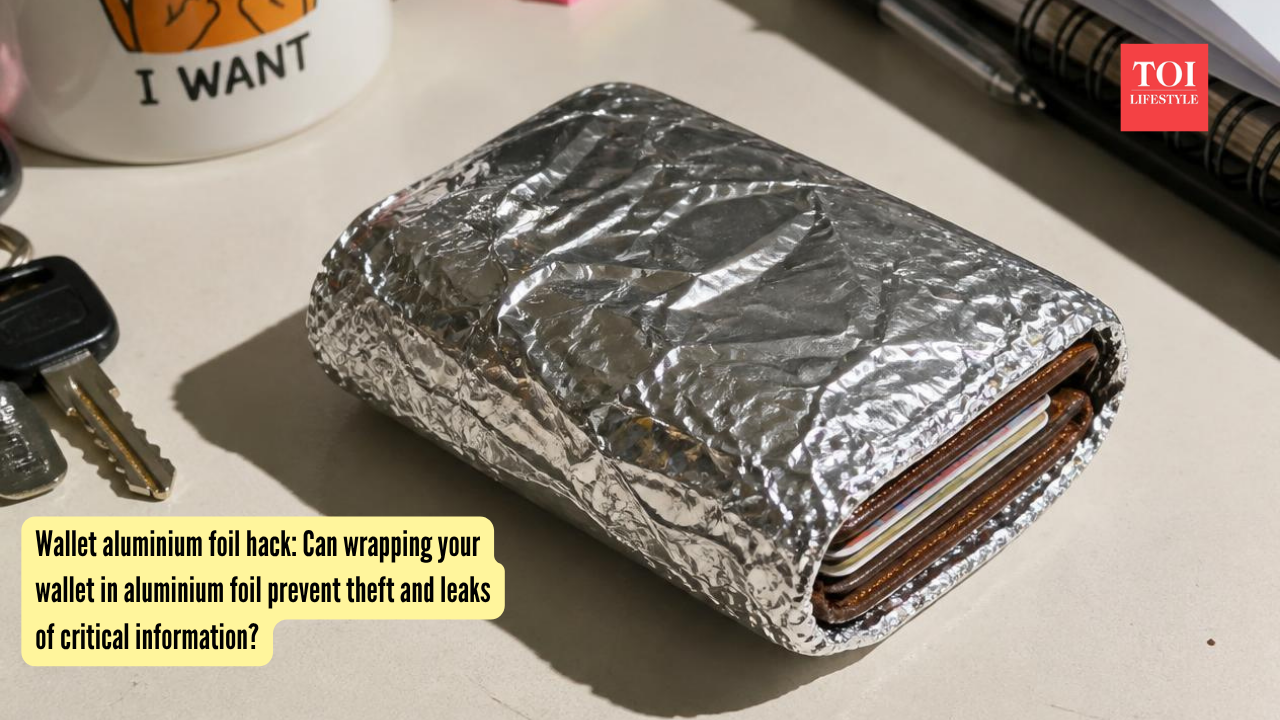
Can wrapping your wallet in aluminium foil prevent theft and leaks of critical information? What does the trend say? (Photo: AI generated via Canva)
Why is your wallet more exposed than you think?
Modern wallets rarely hold just cash anymore. They carry contactless debit and credit cards, RFID-enabled driver’s licences, passport cards, transit passes and office access badges, all designed for quick tap-and-go convenience. That same convenience is the source of the worry.These cards communicate wirelessly, and in theory, specialised RFID readers could pick up that signal without the owner ever noticing, which has raised uncertainty about outright theft and more about quiet, unauthorised data collection.
How far can these signals actually travel?
Large-scale wireless theft from payment cards remains rare, but the privacy risk around RFID-enabled ID documents is taken seriously. According to the ACLU of Washington, a non-partisan civil rights organization based in Seattle, some enhanced driver’s licences transmit their unique ID number “from up to 50 meters away (162 ft.), or the width of a football field”.
Does foil actually block the signal?
Aluminium is a conductive metal, and when it is wrapped snugly around a wallet, it behaves like a makeshift Faraday cage, weakening or blocking the radio waves that RFID and NFC chips rely on to communicate. In practice, this makes it considerably harder for a reader to make contact with the chips tucked inside, which is exactly why the DIY trend has caught on so widely despite its unglamorous appearance.
So is the foil trick completely secure?
Foil is not a complete fix. It can dull or interrupt RFID signals, but it does nothing for the case of digital theft, such as phishing, skimming devices, or data breaches that have nothing to do with radio waves at all. The ACLU has further warned about wireless ID systems more broadly, saying that “any wireless signal is inherently insecure”, a reminder that no single household fix covers every risk.
Which cards actually need the protection
Not every card in your wallet carries equal risk. Contactless bank cards already come with encryption and authentication layered in, keeping the odds of remote theft fairly low. Government-issued RFID or Radio Frequency Identification documents are some that can be read from far greater distances than a bank card ever would be.


