
A fossil older than dinosaurs by 200 million years has preserved something incredibly rare

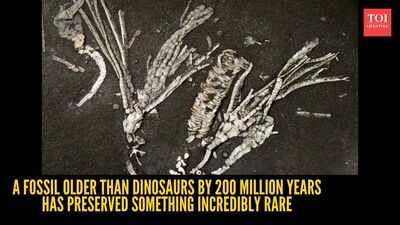
Long before dinosaurs walked the Earth, and long before animals or plants fully spread across dry land, strange marine creatures were already thriving in the planet’s earliest reefs. Among them were crinoids — ancient relatives of starfish that looked like delicate sea flowers anchored to the ocean floor. More than 450 million years ago, these animals were helping shape some of the first complex marine ecosystems on Earth.Now, a remarkable fossil discovery from the University of Oklahoma is giving scientists an unusually detailed look at one of those early reef dwellers. What makes the find so important is not just its age, but the fact that it preserved something almost never seen in fossils: soft tissue.For paleontologists, that is an extraordinary breakthrough. Fossils usually preserve only hard parts such as bones, shells, teeth, or skeletal plates. Soft tissue like skin, organs, and delicate feeding structures usually disappears soon after death. That is why this new discovery has captured so much attention. It offers a rare window into the biology of one of Earth’s earliest animal groups.
A fossil preservation miracle
Dr. Lena Cole, a paleontologist at the University of Oklahoma and assistant curator of invertebrate paleontology at the Sam Noble Oklahoma Museum of Natural History, says soft tissue preservation is extremely rare because decay begins almost immediately after death, reported OU News.“After an animal dies, soft tissues like skin, eyes, or internal organs are the first things to decay,” she explained. “Most fossils are only made up of hard parts like bones, teeth, or shells. Soft tissues are only preserved when the environment acts almost like a natural refrigerator or vacuum-sealer — conditions that are incredibly rare.”That is exactly why the fossil of Dendrocrinus simcoensis is so exceptional. The specimen preserves tube feet, the tiny structures crinoids use to feed and interact with water currents. According to Cole and her colleagues, this is only the second known fossil example of soft tissue preservation in a crinoid — and the oldest one ever found.In paleontology, that is the kind of discovery that comes along extremely rarely. Cole described it as “one in a million,” noting that crinoid fossils exist in huge numbers, yet only a tiny handful preserve soft tissue at all.
Older than the dinosaurs
Dr. David Wright, another University of Oklahoma paleontologist and co-author of the study, emphasized just how ancient the fossil really is.“It’s incredible these soft tissues have survived more than 450 million years,” he said. “For reference, these soft tissues are more than 200 million years older than the oldest dinosaur.”That comparison helps put the discovery into perspective. Dinosaurs often feel ancient to us, but this fossil predates them by an enormous stretch of time. It comes from a world that looked very different from the one we know today — a time when early marine life was still experimenting with forms, feeding strategies, and ecological roles.Crinoids are especially important because they were among the first animals to flourish in early coral reef environments. Their preserved tube feet can tell scientists not just what they looked like, but how they lived. In that sense, the fossil is more than a curiosity. It is evidence of how life was adapting in some of Earth’s earliest ecosystems.
What tube feet can reveal
At first glance, tube feet might sound like a small detail. But in paleontology, small details often matter a great deal.Tube feet play an important role in crinoid feeding and movement. They help the animals capture food particles and interact with currents in the surrounding water. Their size, spacing, and structure vary depending on habitat and feeding style. That means they can reveal clues about how a species survived in its environment.Dr. Wright compared them to mammal teeth. Just as tooth shape can tell scientists what an animal ate, the structure of tube feet can help reveal how a crinoid fed and where it lived.“Since crinoid tube feet are used for feeding, you can think of them in a similar way to how we think about teeth in mammals,” Wright explained. “Differences in their structure tell us about what kinds of environments a species lived in and how it fed.”Cole added that when the anatomy of this ancient crinoid is compared with living species, the differences are striking. That comparison helps scientists understand how crinoids changed over hundreds of millions of years and how their feeding systems evolved as ocean environments shifted.
Clues from ancient oceans
The fossil is important not only because it preserves a rare body part, but because it helps reconstruct the world in which crinoids lived. During the early Paleozoic era, oceans were full of evolving life forms, and reef ecosystems were still taking shape. Discoveries like this help paleontologists understand how early animal communities functioned and how they responded to changing environments.According to Wright, extinct species often reveal features that no longer exist in modern animals.“Fossilized remains of long-extinct species can show features well outside the range of variation we see in living species,” he said. “By comparing ecological ways of life for extinct and modern species, we can understand how patterns of adaptive evolution have changed through time and what factors shaped the modern biosphere.”That is the broader scientific value of the discovery. It is not just about one fossil or one species. It is about understanding how life on Earth became the way it is today.Because soft tissues are so rarely preserved in early echinoderms, every new discovery adds something meaningful to the bigger picture. Each specimen can reveal new details about ancient feeding strategies, survival methods, and evolutionary pathways.
Why museum collections matter
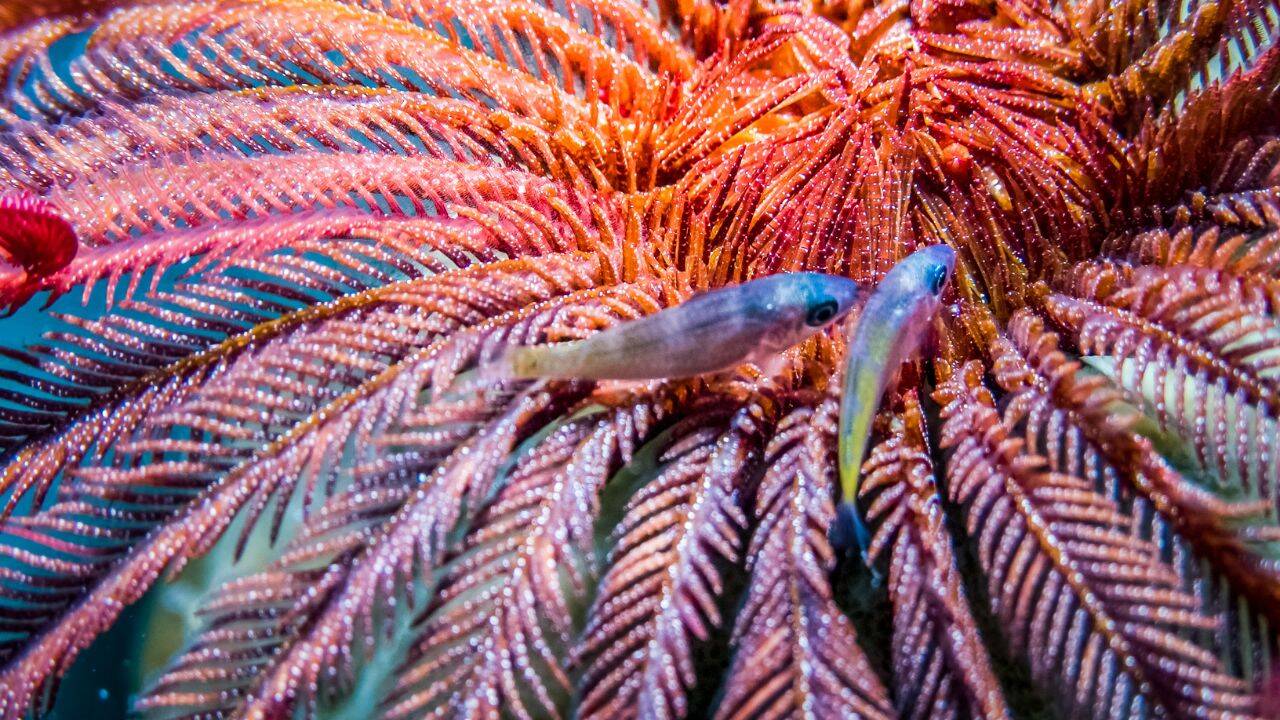
Feather Star (representative image from Canva)
Many people imagine paleontology as a field science, with researchers digging fossils out of remote rocks and deserts. That is certainly part of the job. But some of the most important discoveries happen long after excavation, inside museum collections.That is exactly what happened here. The fossil of Dendrocrinus simcoensis had been preserved for years at the Musée de paléontologie et de l’évolution in Montréal, a small museum supported by community donations. When Cole and Wright examined it during a research visit, they realized the specimen held something far more important than anyone had recognized before.“New fossil discoveries ultimately come from fieldwork, but museum collections play a significant role in this kind of integrative research,” Wright said. “We don’t always know the full significance of the specimens we collect. New technologies, ideas or expertise often find surprising ways to utilize existing specimens to make new discoveries.”Cole also stressed the importance of community support in keeping museum collections alive. Without those collections, and without the people who preserve them, this fossil might never have revealed its secrets.That point matters because museums are often treated as static places for display. In reality, they are active scientific resources. They hold material that can still produce new discoveries decades or even centuries after it was first collected.
A reminder that discoveries are still waiting
The University of Oklahoma’s invertebrate paleontology collections now hold more than a million specimens, with new fossils added every year. That scale makes one thing clear: there is still a vast amount of scientific knowledge waiting to be uncovered.As Wright noted, there are simply too many fossils for one person to study in a lifetime. That means the next major discovery may already be sitting in a drawer, waiting for the right person, the right question, or the right technology to bring it to light.This fossil is a good reminder that some of the greatest scientific breakthroughs are not always dramatic or loud. Sometimes they are hidden in plain sight, preserved in stone for hundreds of millions of years, waiting quietly for someone to notice what everyone else missed.


