
Why some forests in Mexico glow green after sunset, and the tiny fungi behind the eerie light

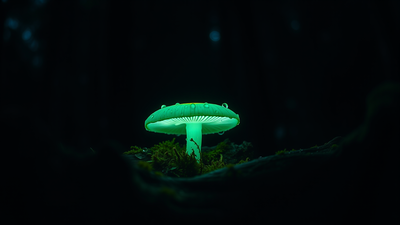
Deep inside the cloud forests of Mexico, certain patches of bark and rotting wood begin to glow a faint, ghostly green once darkness sets in. The source is not the trees themselves but tiny mushrooms growing on them, fungi capable of producing their own light through a chemical reaction inside their cells. For years, very few of these glowing species had ever been formally documented in Mexico, even though bioluminescent fungi have fascinated naturalists since the time of Aristotle, who once described the eerie light coming from rotting wood as a kind of cold fire. Recent research has now confirmed several bioluminescent fungi living in Mexican forests, including brand new species never recorded anywhere in the world before, offering a clearer picture of just how widespread this strange, glowing phenomenon really is.
What actually makes these fungi glow
The green glow produced by these mushrooms comes from a chemical reaction between a light producing compound called luciferin and an enzyme called luciferase, the same basic chemistry that gives fireflies their spark. Inside the fungus, this reaction releases energy in the form of visible light rather than heat, a process scientists call cold light. Around eighty species of mushroom forming fungi are currently known to glow this way, most of them belonging to a handful of related groups, and the light is usually strongest in the actively growing mycelium or in young, freshly formed mushroom caps rather than in older, drying ones. Because the glow is so faint, it is essentially invisible in daylight and only becomes noticeable once the forest grows properly dark after dusk.
New glowing mushrooms found in Mexico’s cloud forests
According to a study published in the Journal of Fungi, researchers working in a protected cloud forest area in western Mexico identified new bioluminescent species belonging to the genus Mycena, a group already well known for containing many of the world’s glow in the dark mushrooms. The fungi were found growing on decaying wood in a forest dominated by oak and sweetgum trees at an elevation of over fifteen hundred metres, a cool, consistently damp environment that suits this kind of fungus particularly well. Researchers combined traditional microscope based study of the mushrooms with genetic analysis to confirm that these specimens represented species that had never been formally described anywhere before, adding meaningfully to the small global list of known bioluminescent fungi.
The first confirmed cases of glowing fungi in the country
This discovery builds on earlier work that first confirmed bioluminescence in Mexican fungi at all. According to an earlier study published in the journal Mycotaxon, two species, Mycena stylobates and Panellus stipticus, were recorded as genuinely bioluminescent in Mexico for the first time, both collected from relict cloud forest habitats. Panellus stipticus had actually been recorded in Mexico before this study, but no one had ever confirmed that the Mexican populations of the fungus actually glowed, since bioluminescence in this species is known to vary quite a bit depending on where in the world a particular population is found. Establishing that Mexican specimens do glow was therefore an important, if quiet, addition to the scientific record.
Why some fungi bother glowing at all
Scientists have spent decades debating why fungi evolved this ability in the first place, since producing light takes real metabolic energy and offers no obvious benefit at first glance. The leading theory suggests that the glow helps attract insects at night, which then pick up fungal spores on their bodies and carry them elsewhere in the forest, effectively giving the fungus a second, animal assisted way of spreading itself beyond simply releasing spores into the wind. Some research, including experiments using glowing plastic mushrooms fitted with tiny LED lights, found that a green glow really does draw in more nighttime insects compared to unlit controls, lending support to this idea. Other studies, however, particularly ones involving Australia’s well known ghost fungus, found no clear difference in insect visits between glowing and non glowing samples, suggesting the true purpose of the light may vary quite a bit from one fungal species to another.
Why finding these fungi matters beyond curiosity
Documenting bioluminescent fungi in a place like Mexico is not just a matter of ticking off a curious natural phenomenon; it also helps researchers understand how widely distributed this trait actually is across different fungal lineages and forest types around the world. Cloud forests in particular are considered fragile, biodiversity rich ecosystems that are increasingly threatened by logging, land clearing and a warming climate, and every new species documented there adds a small but genuine data point to the case for protecting these habitats. For now, anyone lucky enough to wander through the right patch of Mexican forest after sunset might just catch a glimpse of this quiet, glowing world, one that had been growing in the dark for far longer than science had actually been paying attention to it.


