
India needs national strategy to improve access to new cancer therapies: Experts NEW DELHI: India needs a coordinated national strategy to bridge the gap between breakthrough cancer treatments and patient access, ensuring that scientific advances benefit every eligible patient, leading oncologists, cancer survivors and public health experts said on Wednesday.Speaking at a media roundtable on “Bridging Innovation and Affordability in Cancer Care”, organised by the Indian Cancer Society (ICS), the experts said that although cancer treatment has advanced significantly, access remains limited due to high costs, inadequate insurance coverage, limited diagnostic facilities and unequal healthcare infrastructure.The roundtable, held during Cancer Survivor Month, brought together oncologists and cancer survivors to discuss ways to make innovations in cancer care more affordable and accessible across India.Jyotsna Govil, chairperson of the Indian Cancer Society, said cancer care is entering a new era of scientific innovation, but the challenge is ensuring these advances reach every patient who can benefit.”Through dialogues like these, we hope to encourage informed public conversations that help improve access to quality cancer care while keeping patients at the centre of every decision,” she said.Experts said India does not have to choose between innovation and affordability. Instead, they called for public resources to focus on therapies that offer the greatest public health benefit. They stressed that wider adoption of new cancer treatments should be based on strong clinical evidence, improvements in survival and quality of life, cost-effectiveness and relevance to India’s disease burden.Dr Ravi Mehrotra, management committee member of the Indian Cancer Society and former director of the National Institute of Cancer Prevention and Research (NICPR), called for evidence-based prioritisation of cancer therapies.”India does not have to choose between innovation and affordability. Evidence-based prioritisation, supported by scientific evaluation and real-world evidence, can help ensure that scientific advances translate into meaningful health gains for the largest number of patients,” he said.The experts also emphasised the need to strengthen scientific evaluation systems, including Health Technology Assessment, to support decisions on adopting innovative therapies under publicly funded healthcare programmes. They said proven treatments could gradually be included under schemes such as Ayushman Bharat to reduce patients’ out-of-pocket expenses.Dr Ajay Gogia, Professor of Medical Oncology at Dr B.R.A. Institute Rotary Cancer Hospital (IRCH), AIIMS New Delhi, said the future of cancer treatment lies in providing the most suitable therapy for each patient.”Precision medicine, supported by scientific evidence and appropriate patient selection, enables us to improve outcomes while making better use of healthcare resources. Evidence-based optimisation of treatment can also help improve affordability. Innovation achieves its true value only when patients can access it,” he said.Dr (Prof) Jyoti Wadhwa, principal lead of Medical and Precision Oncology at Apollo Athenaa Women’s Cancer Centre and Apollo Hospital, Delhi, said India has the potential to become a global leader in cancer research because of its clinical expertise and diverse patient population.”Greater collaboration in clinical research will help improve future standards of care while generating evidence that reflects India’s healthcare realities and expands access to innovative therapies including biosimilars,” she said.Dr Pragya Shukla, head of Clinical Oncology at Delhi State Cancer Institute, stressed the need to strengthen public financing, evidence-based reimbursement systems and healthcare infrastructure.”Our fight against cancer cannot be considered successful until the recommended treatment reaches even the poorest of the poor. Scientific advances achieve their true purpose only when every patient who needs them has a fair opportunity to receive them,” she said.Cancer survivors also shared their experiences of diagnosis, treatment and recovery, saying timely access to innovative therapies, financial support and proper medical guidance can significantly improve outcomes and quality of life.The experts also called for stronger efforts in cancer prevention, tobacco control, HPV and Hepatitis B vaccination, early detection and organised screening programmes. They said reducing India’s cancer burden would require a balanced approach that combines prevention, innovation and equitable access.The roundtable concluded with a consensus that collaboration among the government, healthcare institutions, researchers, industry, civil society and patient groups is essential to ensure that advances in cancer treatment benefit all patients. Get the latest India news and live updates. Download the TOI App.End of ArticleFollow Us On Social MediaVideos’Highly Deplorable’: India Slams Pakistan Over Demolition Of 125-Year-Old Gurdwara In FarooqabadHealth Concerns Mount As Sonam Wangchuk’s Blood Sugar Falls, Weight Drops As Fast ContinuesDMK Seeks FIR Against CM Vijay, Alleges Plot To Induce MLAs And Alter Assembly NumbersCongress Claims BJP in West Bengal “Will Be Equally Aggressive”; MP Sparks Debate On GovernanceIran Invites BJP Chief Nitin Nabin, Congress Prez Kharge, Pawan Khera To Khamenei’s Funeral: ReportModi Cabinet Reshuffle Buzz: Will NDA Allies And Rebel MPs Find A Place In The Union Cabinet?Three Arrested, Senthil Balaji Under Scanner In Alleged TVK Government Toppling BidCongress Moves Privilege Motion Against Rajnath Singh Over Op Sindoor Claims; Seeks Transparency’Neglecting For 2.5 Years’ Kailash Vijayvargiya’s Letter To CM Mohan Yadav Triggers Political StormWATCH: Eggs, Vegetables Hurled At Mahua Moitra; TMC MP Accuses ‘BJP Goons’, Says Police Stood By123PhotostoriesCould that ‘viral fever’ actually be malaria? Experts explain why the two conditions are often mixed upWhat would you do? My gym trainer keeps messaging me after workouts; here’s what these 5 women did nextCan you spot the odd bee? This viral brainteaser claims only people with sharp vision can solve it quicklySerena Williams’ ₹25-crore diamond ring, luxe watch and ‘glazed diamond’ nails stole the spotlight at Wimbledon7 dishes introduced during British rule that Indians still loveAngelina Jolie’s best action movies: ‘Lara Croft’, ‘Salt’ and more60-second money lesson: The biggest money mistake most women make in the first week after salary day (and how to avoid it)From walking on ceilings to shooting blood: 5 shocking lizard factsLock Upp 2: Ram Kapoor, Sunita Ahuja to Akanksha Chamola—contestants’ net worth revealed; this celebrity tops the list with Rs 135 croreWilliam Faulkner’s quote, ‘You cannot swim for new horizons until you have courage to lose sight of the shore,’ perfectly explains why growth demands risk123Hot PicksLPG gas pricePatrick MahomesNEET PG RegistrationEmployees Provident Funds SchemeGTA 6India vs England t20Marcus SmartNayara petrol priceHow to Watch FIFA World Cup TodayTop TrendingNayara energy petrol priceLPG priceKetan Agarwal Murder CaseFIFA World Cup 2026Monaco BlastBengaluru TechieAnukalp MishraSergei IvanovIndigo Check-in Bag FaresAyodhya Ram Temple Donation Theft

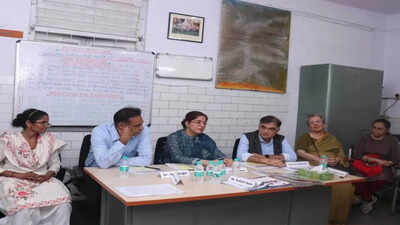
NEW DELHI: India needs a coordinated national strategy to bridge the gap between breakthrough cancer treatments and patient access, ensuring that scientific advances benefit every eligible patient, leading oncologists, cancer survivors and public health experts said on Wednesday.Speaking at a media roundtable on “Bridging Innovation and Affordability in Cancer Care”, organised by the Indian Cancer Society (ICS), the experts said that although cancer treatment has advanced significantly, access remains limited due to high costs, inadequate insurance coverage, limited diagnostic facilities and unequal healthcare infrastructure.The roundtable, held during Cancer Survivor Month, brought together oncologists and cancer survivors to discuss ways to make innovations in cancer care more affordable and accessible across India.Jyotsna Govil, chairperson of the Indian Cancer Society, said cancer care is entering a new era of scientific innovation, but the challenge is ensuring these advances reach every patient who can benefit.“Through dialogues like these, we hope to encourage informed public conversations that help improve access to quality cancer care while keeping patients at the centre of every decision,” she said.Experts said India does not have to choose between innovation and affordability. Instead, they called for public resources to focus on therapies that offer the greatest public health benefit. They stressed that wider adoption of new cancer treatments should be based on strong clinical evidence, improvements in survival and quality of life, cost-effectiveness and relevance to India’s disease burden.Dr Ravi Mehrotra, management committee member of the Indian Cancer Society and former director of the National Institute of Cancer Prevention and Research (NICPR), called for evidence-based prioritisation of cancer therapies.“India does not have to choose between innovation and affordability. Evidence-based prioritisation, supported by scientific evaluation and real-world evidence, can help ensure that scientific advances translate into meaningful health gains for the largest number of patients,” he said.The experts also emphasised the need to strengthen scientific evaluation systems, including Health Technology Assessment, to support decisions on adopting innovative therapies under publicly funded healthcare programmes. They said proven treatments could gradually be included under schemes such as Ayushman Bharat to reduce patients’ out-of-pocket expenses.Dr Ajay Gogia, Professor of Medical Oncology at Dr B.R.A. Institute Rotary Cancer Hospital (IRCH), AIIMS New Delhi, said the future of cancer treatment lies in providing the most suitable therapy for each patient.“Precision medicine, supported by scientific evidence and appropriate patient selection, enables us to improve outcomes while making better use of healthcare resources. Evidence-based optimisation of treatment can also help improve affordability. Innovation achieves its true value only when patients can access it,” he said.Dr (Prof) Jyoti Wadhwa, principal lead of Medical and Precision Oncology at Apollo Athenaa Women’s Cancer Centre and Apollo Hospital, Delhi, said India has the potential to become a global leader in cancer research because of its clinical expertise and diverse patient population.“Greater collaboration in clinical research will help improve future standards of care while generating evidence that reflects India’s healthcare realities and expands access to innovative therapies including biosimilars,” she said.Dr Pragya Shukla, head of Clinical Oncology at Delhi State Cancer Institute, stressed the need to strengthen public financing, evidence-based reimbursement systems and healthcare infrastructure.“Our fight against cancer cannot be considered successful until the recommended treatment reaches even the poorest of the poor. Scientific advances achieve their true purpose only when every patient who needs them has a fair opportunity to receive them,” she said.Cancer survivors also shared their experiences of diagnosis, treatment and recovery, saying timely access to innovative therapies, financial support and proper medical guidance can significantly improve outcomes and quality of life.The experts also called for stronger efforts in cancer prevention, tobacco control, HPV and Hepatitis B vaccination, early detection and organised screening programmes. They said reducing India’s cancer burden would require a balanced approach that combines prevention, innovation and equitable access.The roundtable concluded with a consensus that collaboration among the government, healthcare institutions, researchers, industry, civil society and patient groups is essential to ensure that advances in cancer treatment benefit all patients.


