
Aakanksha Chamola Cheating: The truth about infidelity: Is cheating a mistake or a conscious choice? |


After announcing separation from her husband, Gaurav Khanna, Akanksha Chamola is back in the news – this time for a heated debate on cheating.On Lock Upp Season 2, a conversation with fellow contestant Ram Kapoor took a sharp turn when the topic of infidelity came up. Kapoor argued that in a long marriage, a lapse during a ‘bad phase’ should not be treated as a dealbreaker. Akanksha Chamola disagreed – firmly. Infidelity, she said, is never an accident. It is a decision.“Par sir galti se nahin hoti hai. Aap physically intimate ho rahe ho kisi se, wo ek process hai (No, it does not happen by mistake. When you are getting physically intimate with someone, it is a process). You have to take somebody’s clothes off, take your clothes off, and do it and finish it off. You cannot say galti. Aisa nahi hai ki maine chaaku rakha aur galti se maar diya (You cannot call it a mistake. It is not like you stab someone and say that you kept a knife on the table and mistakenly ran it through the other person).”Their exchange has since sparked a larger conversation: can cheating ever really be a ‘mistake’, or is it a conscious choice? Let us take a look at what psychology and experts have to say about this.
What is infidelity?

Infidelity is one of the most damaging forces in a romantic relationship. Let us start with the basics. What really is infidelity? It is defined as any type of secret emotional, sexual or romantic behaviour that violates the exclusivity that romantic relationships have by definition. There are four main subtypes: sexual, emotional, combined (sexual and emotional) and internet infidelity.
Is cheating really impulsive?

Almost everyone, who has been caught explains infidelity as something that ‘just happened’. Akanksha’s argument that infidelity is a ‘process’, not an accident, actually lines up with a growing body of psychological research. In reality, infidelity involves conscious and intentional decisions, even if they are impulsive or later regretted. While impulsivity – such as acting without thinking or seeking immediate gratification – may increase the likelihood of cheating, it does not automatically lead to unfaithfulness. Why? Because behaviour is shaped by a combination of factors such as one’s personality, core values and self-control. A 2016 study shows that sexual impulsivity, in particular, is linked to problematic behaviours such as infidelity, risky sexual behaviour and its consequences. Even so, impulsivity is just a trait, and people are still responsible for their choices in relationships. So, no, infidelity does not ‘just happen’ – not unless you intend it to.
Cheaters who are married have little regret
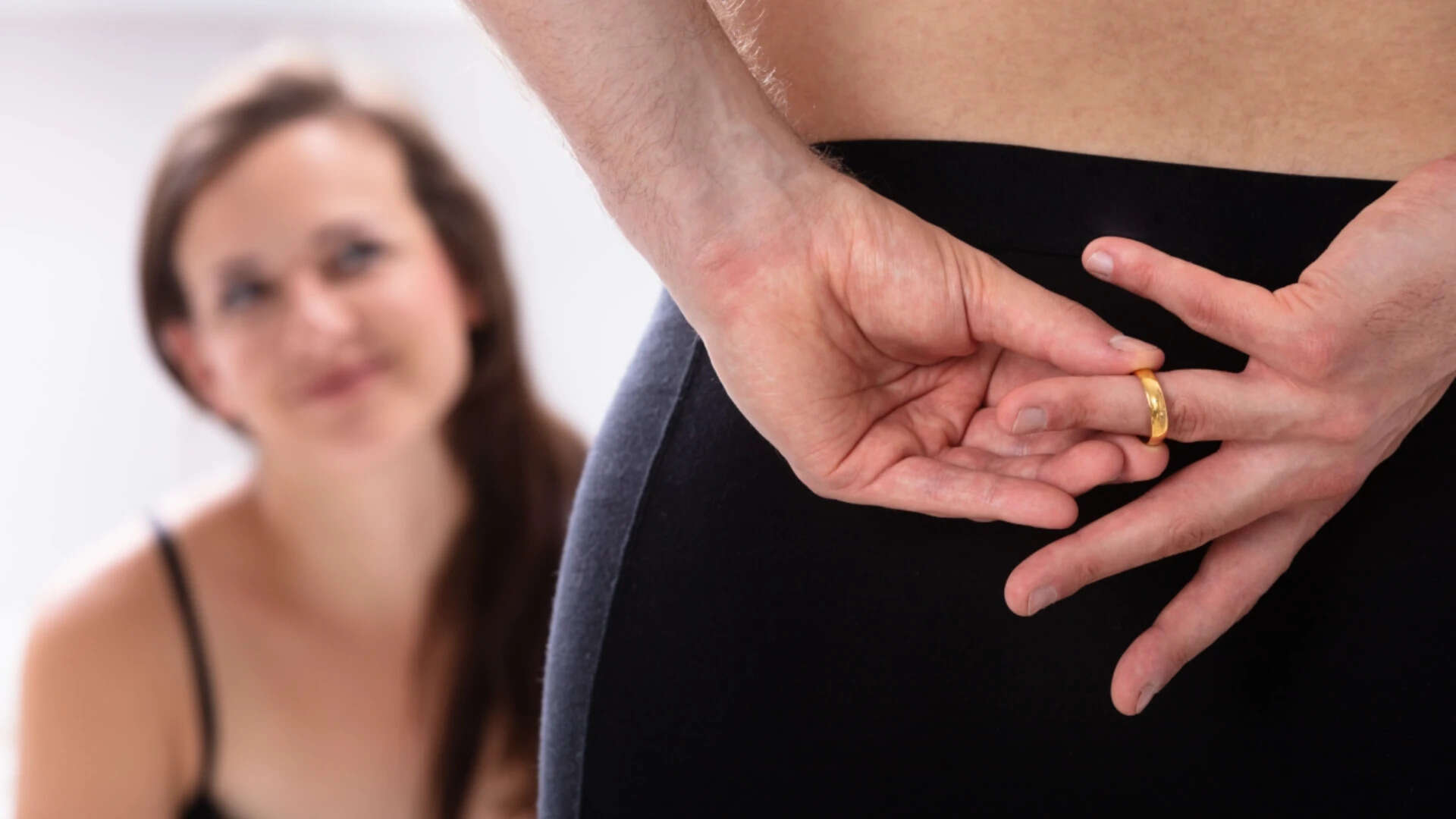
Contrary to what cheaters might claim, individuals who engage in extramarital affairs often report little regret. A 2023 report on the psychology of infidelity, published in the journal Archives of Sexual Behavior, found that married people who have affairs find them highly satisfying, express little remorse and believe the cheating did not harm their otherwise healthy marriages.“In popular media – television shows, films and books – people who have affairs have this intense moral guilt, and we do not see that in this sample of participants,” lead author Dylan Selterman, an associate teaching professor at Johns Hopkins University’s Department of Psychological and Brain Sciences who studies relationships and attraction, said in a release. “Ratings for satisfaction with affairs were high — sexual satisfaction and emotional satisfaction. And feelings of regret were low. These findings paint a more complicated picture of infidelity compared to what we thought we knew,” Selterman added.
Powerful people are more likely to cheat

Remember another contestant, Sunita Ahuja, the wife of Bollywood actor Govinda – who stated that extramarital affairs are common among actors? “Hero, heroines ke toh hote bhi hai affairs! (Heroes and heroines do have affairs, after all! ),” the YouTuber said. Though normalising it may not be the right thing to do (and Riteish Deshmukh’s reaction is pure gold), what Sunita Ahuja meant may hold some truth. Powerful people may have a greater tendency to cheat. Being successful does not automatically make you unfaithful, but a 2024 study published in the journal Archives of Sexual Behavior suggests that the chances of infidelity are significantly higher among more powerful individuals.“In a romantic relationship, these power dynamics might lead the more powerful partner to think they bring more to the table than their less powerful partner,” lead author Gurit Birnbaum, a professor of psychology at Reichman University, said in a statement. “The more powerful might see this as a sign that they have more options outside the relationship and are more desirable partners in general.”Though not all, some powerful individuals may pay attention to other potentially promising alternatives because they believe they have more relationship options than their current partner. “The belief in having other options, like other possible partners, can weaken their commitment to their current relationship,” said co-author Harry Reis, a psychology professor at the University of Rochester.
Why do they cheat on their partner?

Now the trillion-dollar question: why do people really cheat? According to Selterman, people have a ‘diversity of motivations’ for cheating. Even individuals in meaningful relationships may be unfaithful. “Sometimes they will cheat even if their relationships are pretty good. We do not see solid evidence here that people’s affairs are associated with lower relationship quality or lower life satisfaction,” the researcher said.A 2023 study by a team of psychologists from Reichman University in Israel and the University of Rochester in upstate New York dissected the psychology of cheating. They found that people are unfaithful for a variety of reasons. People can be satisfied in a relationship and still cheat. Context, according to the study’s lead author, Gurit Birnbaum, is key. “People often cheat not because they planned to do so. Rather, the opportunity presented itself and they were too depleted – too tired, too drunk, too distracted – to resist the temptation,” Birnbaum said.Harry Reis, a psychology professor at the University of Rochester and co-author of the study, added that while men are more likely to cheat because they feel their sexual needs are not being met, women may cheat because they feel that their emotional needs are not being met.
Can you prevent the temptation to cheat?

The answer is yes. If you feel tempted to cheat on your partner, there may be a way to prevent it. Birnbaum and her team found a simple technique that may help. This is less about willpower and more about a mental strategy called ‘perspective-taking’. In simple terms, put yourself in your partner’s shoes. Now imagine how your partner would feel if you cheated on them. This is not just about guilt – imagine the actual conversation you would have, word by word. Is that something you would want? If not, do not do it.In a series of experiments, researchers asked people in committed relationships to consciously imagine their partner’s point of view whenever they encountered someone attractive – literally picturing how their partner would feel and what they would say if they found out. The results were striking. Participants showed reduced sexual and romantic interest in alternative partners. “Perspective-taking does not prevent you from cheating, but it lessens the desire to do so,” Reis said. He added that cheating means “prioritising one’s own goals over the good of the partner and the relationship, so seeing things from the other person’s perspective gives one a more balanced view of these situations.” Perspective-taking also increased commitment and desire towards one’s partner.Whether you agree or disagree, science and experts suggest that infidelity is not really a ‘mistake’. It is a choice – an intentional one – regardless of whether you regret it afterwards.


