
(Photo credit: PTI) NEW DELHI: The Centre on Monday unveiled the Operational Guidelines on National Ambulance Services (NAS), 2026, prescribing national standards for ambulance deployment, staffing, equipment and monitoring to strengthen emergency medical transport across the country.The guidelines, released by Union health minister Jagat Prakash Nadda during the 16th Conference of the Central Council of Health and Family Welfare (CCHFW), seek to standardise ambulance services and strengthen pre-hospital emergency care through uniform operational standards across all states and Union Territories.Nadda said the framework aims to enhance the quality, accessibility and efficiency of pre-hospital emergency care through standardised ambulance infrastructure, staffing, equipment, response protocols, digital integration and quality assurance mechanisms.The guidelines prescribe detailed operational norms covering the entire ambulance ecosystem, including ambulance categorisation, population-based deployment, human resource requirements, equipment standards, medicines, infection prevention and control, vehicle maintenance, performance monitoring and grievance redressal mechanisms. The objective is to establish uniform standards that ensure quality, accessibility, efficiency and responsiveness of ambulance services while enabling timely patient stabilisation and referral.A major focus of the guidelines is the establishment of Integrated Command and Dispatch Centres (ICDCs) equipped with GPS-enabled ambulance tracking, structured triage systems, call logging, standardised dispatch protocols and real-time performance dashboards. They also encourage the progressive integration of ambulance services with the unified emergency response number 112, enabling faster, better coordinated emergency response.The guidelines mandate compliance with AIS-125 standards for all ambulances to enhance the safety, quality and standardisation of emergency medical vehicles. They also prescribe training and skill standards for Emergency Medical Technicians (EMTs), recognising their role in delivering pre-hospital emergency care.To strengthen referral systems, the framework proposes GIS-enabled mapping of health facilities, referral centres, ambulance base locations, accident-prone and high-risk areas, bed availability and critical care readiness. This is expected to help dispatch teams identify and transport patients to the most appropriate healthcare facility in the shortest possible time.The guidelines also recommend scientific deployment of ambulances based on emergency call volumes, accident hotspots, referral patterns, traffic conditions, terrain and geographical accessibility to ensure optimal utilisation of ambulance resources and improve response times.Get the latest India news and live updates. Download the TOI App.About the AuthorAnuja JaiswalAnuja Jaiswal is a Senior Assistant Editor at The Times of India, with an impressive 18-year career in narrative journalism. She specializes in health and heritage reporting, expertly simplifying complex health information to make it engaging and understandable for readers. Her deep dives into heritage topics are well-researched, resulting in captivating narratives that resonate with her audience. Over the years, she has worked in Chandigarh, Chhattisgarh and West UP, gaining diverse on-ground experience that shapes her storytelling.Read MoreEnd of ArticleFollow Us On Social MediaVideosWhy Nayara Reduced Fuel Prices But PSU Oil Companies Didn’t?Dhaka Threatens Action Against Media Airing Sheikh Hasina’s Statements After Return ClaimSpecialised ‘Baaz Battalions’ to Strengthen Border Monitoring, ISR and Battlefield Awareness’Break Silos, Self-Reliance’: PM Modi Holds High-Level Meet With Union SecretariesMumbai Horror: School Bus Crushed By Falling Tree In Mumbai; One Child Dead, Five Injured’Kashmir Is Not Part Of Pakistan’: PoJK Protesters Warn IslamabadAfter Converting To Islam For Love, UP’s Ayush Malik Returns To Hinduism | Watch’This Is Bigger Than Dharmendra Pradhan’: Students Demand Reforms Not ‘Political Damage Control’Another Blow To Uddhav Thackeray: Prominent Mumbai Leader Sachin Ahir Switches Sides | WatchRs 65 Lakh House, SUV, Farmhouse: Ram Temple Donation Theft Accused’s Assets Under Scanner123PhotostoriesHighest-protein Indian dals ranked from best to leastWhat would you do? My colleague constantly asks about my personal life; 5 women share how they reactedFrom Naomi Osaka to Maria Sharapova: Five times Tennis stars paid homage to pop culture with their on-court fits7 countries where children walk to school alone and why parents trust themJuly gardening guide: 7 flowers, fruits, and vegetables to plant in the UKThis Amritsari-style Eggless Potato Mayonnaise by Chef Vikas Khanna is a treat for vegetariansWhy some people leave your texts unread for hours? Psychology says it may not be about ‘rejection’ after allFrom 124-Year-Old Plum Cakes to Legendary Biscuits: 5 of India’s oldest bakeries every food lover needs to try60-second money lesson: What your UPI history reveals about your spending habits9 actors who learned real skills for roles: Cillian Murphy, Kate Winslet, Jenna Ortega and more123Hot PicksLPG gas priceCBSE best marks ruleCBSE Class 12 supplementary exam 202Ram Temple donation theftMumbai RainsNew visa ruleZohran MamdaniYousuf ImranAP EAPCET Result 2026Top TrendingNayara energy petrol priceLPG priceSonam RaghuvanshiFIFA World Cup 2026Monaco BlastBengaluru TechieAnukalp MishraSergei IvanovMK StalinJosh Hokit

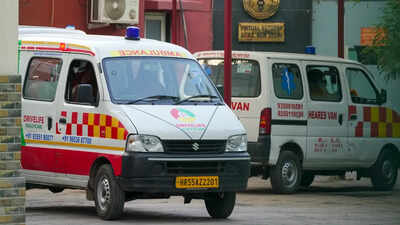
NEW DELHI: The Centre on Monday unveiled the Operational Guidelines on National Ambulance Services (NAS), 2026, prescribing national standards for ambulance deployment, staffing, equipment and monitoring to strengthen emergency medical transport across the country.The guidelines, released by Union health minister Jagat Prakash Nadda during the 16th Conference of the Central Council of Health and Family Welfare (CCHFW), seek to standardise ambulance services and strengthen pre-hospital emergency care through uniform operational standards across all states and Union Territories.Nadda said the framework aims to enhance the quality, accessibility and efficiency of pre-hospital emergency care through standardised ambulance infrastructure, staffing, equipment, response protocols, digital integration and quality assurance mechanisms.The guidelines prescribe detailed operational norms covering the entire ambulance ecosystem, including ambulance categorisation, population-based deployment, human resource requirements, equipment standards, medicines, infection prevention and control, vehicle maintenance, performance monitoring and grievance redressal mechanisms. The objective is to establish uniform standards that ensure quality, accessibility, efficiency and responsiveness of ambulance services while enabling timely patient stabilisation and referral.A major focus of the guidelines is the establishment of Integrated Command and Dispatch Centres (ICDCs) equipped with GPS-enabled ambulance tracking, structured triage systems, call logging, standardised dispatch protocols and real-time performance dashboards. They also encourage the progressive integration of ambulance services with the unified emergency response number 112, enabling faster, better coordinated emergency response.The guidelines mandate compliance with AIS-125 standards for all ambulances to enhance the safety, quality and standardisation of emergency medical vehicles. They also prescribe training and skill standards for Emergency Medical Technicians (EMTs), recognising their role in delivering pre-hospital emergency care.To strengthen referral systems, the framework proposes GIS-enabled mapping of health facilities, referral centres, ambulance base locations, accident-prone and high-risk areas, bed availability and critical care readiness. This is expected to help dispatch teams identify and transport patients to the most appropriate healthcare facility in the shortest possible time.The guidelines also recommend scientific deployment of ambulances based on emergency call volumes, accident hotspots, referral patterns, traffic conditions, terrain and geographical accessibility to ensure optimal utilisation of ambulance resources and improve response times.


