
NEW DELHI: Noting that the Madhya Pradesh HC order declaring the disputed Bhojshala complex a temple only validated the fears and concerns they had raised since the 2019 Ayodhya verdict, the Jamiat Ulama-i-Hind (JUH) on Friday released a report arguing that Supreme Court’s interpretation of Places of Worship Act revealed how “deeply majoritarian politics has penetrated legal validation”.Speaking at the programme attended by senior lawyers, legal experts, former judges, researchers, and intellectuals, JUH president Maulana Mahmood Asad Madani observed that disputes did not end with the Babri Masjid issue; rather, new controversies relating to Gyanvapi, Mathura Eidgah, Kamal Maula Mosque, and other religious sites were now being raised, reopening old wounds.The report titled ‘A critical analysis of Babri Masjid judgement and the Case of the Places of Worship (Special Provisions) Act 1991’ provides a detailed analysis of major SC judgments claiming that certain judicial interpretations weakened constitutional principles relating to the protection of religious places.In particular, the report discusses the far-reaching implications of observations made in the Ismail Faruqui case, wherein a mosque was held not to be an essential part of Islamic practice. “As the judiciary increasingly accommodates Hindutva majoritarian-ism, Muslim sacred spaces have become legally vulnerable, culturally contested, and politically targeted,” it said.The report said Places of Worship Act was designed to freeze the religious character of worship sites as they existed on Aug 15, 1947. “Yet recent court rulings have interpreted the Act so narrowly that fresh claims against mosques in Va-ranasi, Mathura, and elsewhere are now proceeding,” it said.“The arguments deployed in those cases — concerning essential practices, belief, archaeological evidence, and civilisational memory — are now being recycled in ongoing litigation involving the Gyanvapi Mosque in Sambhal, the Shahi Eidgah at Mathura, and others,” the report stated.It further recommended that “communal politics and historical claims should not be allowed to become instruments for legal disputes”.End of ArticleFollow Us On Social MediaVideos’Not An Iota Of Truth’: PM Modi Rubbishes Report Of Restriction On Foreign Travel28 Hostages From Kuki, Naga Communities Held By Armed Groups Released In Manipur’I Am Sorry To…’: Shashi Tharoor To Skip VD Satheesan’s Swearing-In As Kerala CMNEET UG 2026 Re-Exam On June 21, Computer-Based Test Format From Next Year: Education MinisterOman To Gujarat: India Fast-Tracks Deep-Sea Gas Pipeline Project Amid Hormuz CrisisCJI Surya Kant Makes Strong Remarks During Senior Advocate HearingKerala CM-Designate Satheesan Hits Back At BJP Over IUML, Secularism DebateFormer RAW Chief Flags Security Risks Over PM Modi’s Convoy DownsizingTMC MP Derek O’Brien Slams Centre After Petrol-Diesel Hike, Targets Modi Government’Bhojshala Complex Is A Temple, Hindus Have Right To Worship’: MP High Court123PhotostoriesKishwer Merchant recalls her father’s reaction to her interfaith marriage and age gap with Suyyash Rai; reacts to her son being trolled for wearing a skull capLauki vs Tori: Which has more nutrition for summer and 5 interesting ways to eat themAncient Kashmiri beauty secrets that are becoming popular again in IndiaFrom transparent bodies to underground lives: 5 bizarre frogs you’ve probably never heard of8 modern TV unit designs to instantly upgrade your living roomPersonality test: Mango, litchi, watermelon? Pick a fruit and see if you are a natural leader, kind, or creativeCannes 2026:Why Sanam Saeed’s Cannes debut is a major moment for Pakistani cinemaHow to grow butterfly-friendly native plants in Indian city home gardensNot just travel: 10 cheapest countries to retire in — 9 and 10 will surprise you5 adorable dog breeds that stay puppy-sized forever123Hot PicksCBSE class 12 resultUS Iran warPrateek YadavHaryana election resultForeign outflowNEET exam cancelledTamil Nadu assemblyTop TrendingNEET UG Re-Exam dateAdmit card indian army agniveer gdIPL Points TablePM ModiKerala Board SSLC Result 2026IPL 2026IPL Orange Cap 2026Bengaluru RapeWho is Shubham KhairnarIndia UA Trade Talk

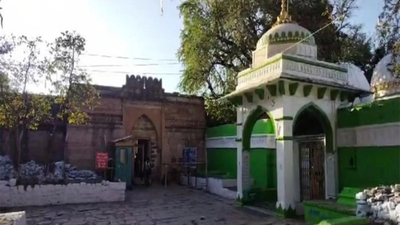
NEW DELHI: Noting that the Madhya Pradesh HC order declaring the disputed Bhojshala complex a temple only validated the fears and concerns they had raised since the 2019 Ayodhya verdict, the Jamiat Ulama-i-Hind (JUH) on Friday released a report arguing that Supreme Court’s interpretation of Places of Worship Act revealed how “deeply majoritarian politics has penetrated legal validation”.Speaking at the programme attended by senior lawyers, legal experts, former judges, researchers, and intellectuals, JUH president Maulana Mahmood Asad Madani observed that disputes did not end with the Babri Masjid issue; rather, new controversies relating to Gyanvapi, Mathura Eidgah, Kamal Maula Mosque, and other religious sites were now being raised, reopening old wounds.The report titled ‘A critical analysis of Babri Masjid judgement and the Case of the Places of Worship (Special Provisions) Act 1991’ provides a detailed analysis of major SC judgments claiming that certain judicial interpretations weakened constitutional principles relating to the protection of religious places.In particular, the report discusses the far-reaching implications of observations made in the Ismail Faruqui case, wherein a mosque was held not to be an essential part of Islamic practice. “As the judiciary increasingly accommodates Hindutva majoritarian-ism, Muslim sacred spaces have become legally vulnerable, culturally contested, and politically targeted,” it said.The report said Places of Worship Act was designed to freeze the religious character of worship sites as they existed on Aug 15, 1947. “Yet recent court rulings have interpreted the Act so narrowly that fresh claims against mosques in Va-ranasi, Mathura, and elsewhere are now proceeding,” it said.“The arguments deployed in those cases — concerning essential practices, belief, archaeological evidence, and civilisational memory — are now being recycled in ongoing litigation involving the Gyanvapi Mosque in Sambhal, the Shahi Eidgah at Mathura, and others,” the report stated.It further recommended that “communal politics and historical claims should not be allowed to become instruments for legal disputes”.


