
3 simple money lessons every parent can teach a child from age 5


When it comes to parenting, people often assume that children from wealthy families automatically learn better money habits. But money education is not really about how much a family earns. It is about what children are taught to do with money. A child does not need a large allowance or an expensive bank account to understand earning, spending, saving, and giving. These lessons can begin with something as simple as helping around the house and learning how to divide a small amount of money. The goal is not to make a five-year-old obsessed with money. It is to help them understand that money has a purpose and that every choice involving money comes with responsibility.
1. Give children age-appropriate responsibilities
28 Jul 2026 | 16:22
How do you teach children about money and financial responsibility?
By around the age of five, children can start taking responsibility for simple tasks at home. They could clean their room, fold their clothes, put away their toys, or help take out household waste, depending on what is safe and appropriate for their age. Parents can introduce a small allowance for completing agreed-upon responsibilities. For example, a child could receive $5 a week. The important part is not the amount. It is the connection between effort and reward. Children begin to understand that money does not simply appear. It is connected to time, effort, and responsibility. However, parents should also make it clear that being part of a family means helping with some basic household tasks simply because everyone contributes. Not every helpful act needs to have a price attached to it.
2. Divide the money into three jars

Once a child starts receiving a small allowance, parents can make the lesson more meaningful by dividing the money into three categories: giving, spending, and investing. For example, a $5 weekly allowance could be divided into:$1 for giving$2 for spending$2 for investingThe exact amounts can change depending on the child’s age and the family’s circumstances. What matters most is creating the habit of dividing money instead of spending everything immediately. This simple exercise can introduce children to three important ideas: generosity, choice, and long-term thinking.
3. Teach children that money can have a purpose
The first jar can be a giving jar. A child could put $1 into it every week. At the end of the month, parents can help them use that money to support someone in need or contribute to a cause. The key is to let the child participate in the process. Instead of simply taking the money and donating it on their behalf, parents can involve them in deciding where it should go. This can help children understand that money is not only about buying things for themselves. It can also be used to help others. That lesson can shape how they think about wealth and generosity as they grow older.
Spending teaches freedom and choice
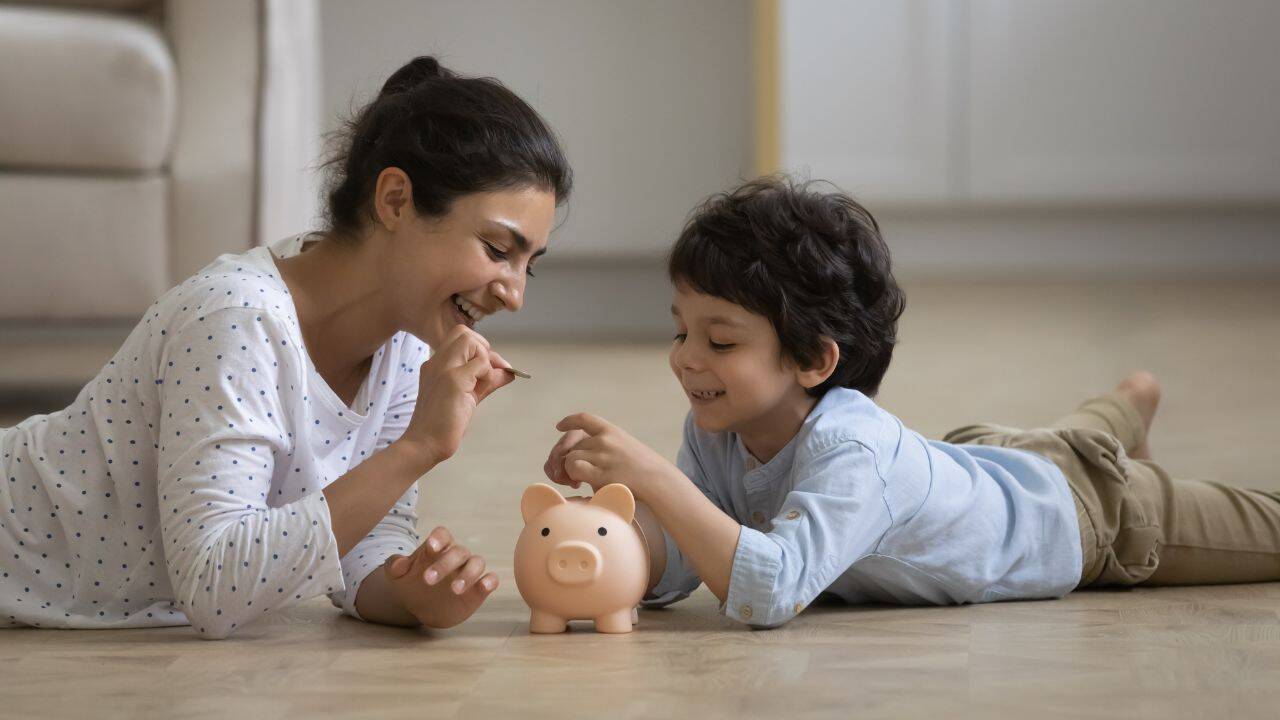
The second jar can be the spending jar. If $2 goes into this jar each week, the child can eventually use the money to buy something they genuinely want. This is important because children also need to learn that money can be enjoyed. If parents constantly tell children that spending is bad, they may struggle to understand the difference between thoughtful spending and impulsive spending later in life. Giving children a small amount of freedom allows them to experience the consequences of their choices. They may spend everything quickly and regret it. Or they may save for something they really want. Both experiences can become valuable lessons.
Investing teaches patience and long-term thinking
The third jar can be the investing or long-term savings jar. For young children, this does not necessarily mean putting money into complex financial products. Parents can use a simple savings account or another age-appropriate method and explain the basic idea of growing money over time. The example of adding an extra $1 from the parent’s pocket to the child’s $2 can also teach the concept of matching contributions. As children grow older, parents can gradually introduce concepts such as interest, compound growth, investing and risk in ways they can understand. The lesson is simple: not all money needs to be spent today. Some money can be kept aside to grow or support a future goal.
The real difference is intentional parenting

The biggest lesson here is not that wealthy parents know more about money. It is that intentional parenting can give children financial skills regardless of their family’s income. A child who learns to earn, give, spend, and save small amounts can gradually develop habits that will matter much more when the numbers become bigger. Parents do not have to wait until their children get their first job to discuss money. They can start with a few coins, three jars, and simple conversations at home. Because financial intelligence is not built in one day. It is built through small decisions repeated over many years.


