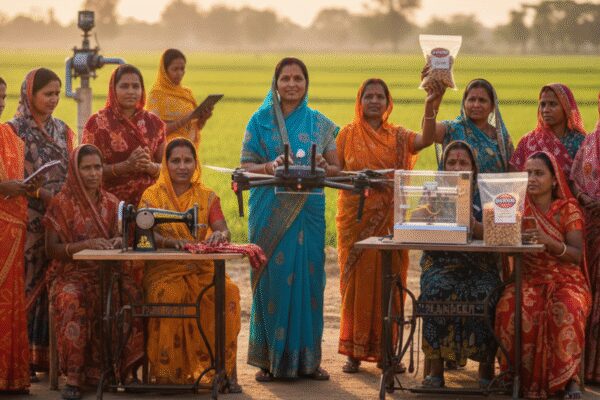
Millions of rural Indian women are transforming their lives and communities by becoming ‘Lakhpati Didis,’ surpassing Rs 1 lakh in annual household income through self-help groups. This initiative, backed by government schemes, fosters financial literacy, entrepreneurship, and community influence, making these women a significant political constituency. Their economic empowerment is reshaping rural India’s landscape.  Over the past few decades, women’s participation in India’s rural economy has moved from the margins to the centre of policy conversations. From savings collectives and micro-enterprises to agriculture, dairy and small manufacturing, women – particularly in hinterlands – are increasingly being seen not merely as beneficiaries of welfare, but as economic agents capable of driving household incomes and local growth.When Shashibala Sonkar from a small town in Mirzapur, UP, first joined a self-help group (SHG) five years ago, she saw it as a way to make a little money to ease her financial troubles and access small loans. This year, she crossed a milestone that officially changed her life: her household income surpassed Rs1 lakh a year, qualifying her as a Lakhpati Didi – one among millions of rural women recognised by the Centre as economic contributors and community inspirations.IPL Auction 2026IPL Auction 2026: Full list of sold and unsold players for all teamsIPL Auction: CSK bet big on youth, pay Rs 14.2 crore each for uncapped Prashant and KartikIPL 2026 team and squad List: Updated players for all 10 Teams; who got whom “Our finances were not strong. I used to look for some or other work through which I could support my family. I used to do tailoring and knitting, then I joined the samooh (SHG) and things changed” said Shashibala in conversation with TOI.Her story reflects a shift in rural India’s socio-economic landscape. This shift in thinking has found formal expression in the government’s push to strengthen and scale self-help groups (SHGs), which today form one of the largest women-led grassroots economic networks in the world. With millions of women organised into savings and credit collectives, the focus has gradually moved beyond subsistence livelihoods towards income sustainability and entrepreneurship. And this shift is also increasingly becoming a political battleground. What Is a Lakhpati Didi – And where did It come from?The term Lakhpati Didi refers to a member of a self-help group whose annual household income exceeds Rs 1 lakh, sustained over at least four agricultural or business cycles, with a monthly average above Rs 10,000. These women are recognised not just for income, but for adopting sustainable livelihood practices and managing resources effectively.The idea was centrally promoted by the Union government in 2023 on Independence Day, when Prime Minister Narendra Modi described his vision of making “two crore Lakhpati Didis in villages”, highlighting the role of SHG women in the rural economy.This target was taken forward with formalisation in the Budget 2024, where finance minister Nirmala Sitharaman raised the scheme’s ambition from two crore to three crore Lakhpati Didis. The initiative builds on the Deendayal Antyodaya Yojana – National Rural Livelihoods Mission (DAY-NRLM), launched under the ministry of rural development. This is itself the evolved form of India’s long-standing SHG network, which traces its institutional history to 1992’s NABARD SHG-Bank Linkage Programme and gained scale under NRLM from 2011 onwards.How self-help groups work on the groundAn SHG typically comprises 10-20 rural women who save small amounts collectively, access credit, and then invest in income-generating activities. These range from dairy and agriculture to services and small enterprises. Over time, the groups federate into larger bodies for better access to training, finance and markets.Shashibala told TOI, in 2021 she along with some other women of the community established ‘Om Sai Ajivika Mahila Swayam Sahayata Samooh’ which has been “transformative and helpful’ for her and all the other women associated with the group. Currently she is the only one from the group to be recognised as Lakhpati Didi.She says, “the journey which began five years ago has been slow, steady, but sustainable.”Under DAY-NRLM, SHGs receive:Revolving funds (Rs 20,000–Rs 30,000 per group, of their own saving),Community investment funds (up to Rs 2.5 lakh),Bank linkages (Financial inclusion is a key component to make SHG members preferred clients of the banking system, which in turn helps in)Collateral-free bank loans up to Rs 20 lakh with interest subvention and overdraft facilities.The system has helped organise nearly 9–10 crore women into over 90 lakh SHGs nationwide as of mid-2025. These funds form the very backbone on which the initiatives by SHG sustain themselves on. Shashibala has established a Namkeen manufacturing unit in her town with the help of funds acquired through the SHG. According to her, who also holds a senior position in the group, the loans “aren’t that difficult to get” when compared to usual bank loans which require collateral, guarantees and a lengthier process. “When we started the group I decided I needed something sustainable and even my son was planning for business so we went for namkeen business. But the problem was the finances, you can ask relatives for help but then after everything they’ll offer what a few thousands that’s not enough,” she told TOI. She further added, “I initially took a loan of Rs 2 lakh from CCL (joint account of position holders in group), it wasn’t that difficult to get it, probably due to SGH, and further some help through ‘Gram Sanghatans’ which work in association with self-help groups.”She also tells us that although getting loans through group wasn’t a task, it was comparatively when she required more capital and her son applied for a loan under PMEGP (PM employment generation program). But, it became “easier” when she became a guarantor in the application and eventually acquired a Rs 10 lakh loan. In many states, SHG groups have diversified beyond savings and credit into local manufacturing, services and even tech-related work. For instance, Sita Devi from a small village in Karnal, Haryana, after enrolling under NRLM, she underwent FL-CRP training and completed her graduation. She later received drone pilot training in Gurgaon. On completing the course, she was provided a drone, which now forms the backbone of her livelihood. She undertakes agricultural tasks such as fertiliser spraying and crop monitoring.SHGs have been mobilised for campaigns like Har Ghar Tiranga – stitching tricolour flags linked to rural livelihoods – demonstrating their reach into community life.Scale and impact – By the numbersThe latest official figures show a sharp rise in women achieving Lakhpati Didi status. By late 2025, over 2 crore women had crossed the Rs 1 lakh household income threshold, spanning thousands of self-help groups across states. Shashibala said, “there are people from ‘Development alternative’ (people from government) who work in coordination with SGH, they look into and facilitate initiatives, make regular regulatory visits and they this year in their August audit decided to recognise her as Lakhpati Didi.” Earlier this year on Independence Day when PM Narendra Modi from the rampart of Red Fort acknowledged the contribution of Lakhpati Didis to the economy and women empowerment, Shashibala was among the 15 Lakhpati Didis sitting in the audience gallery.She was also given the certificate of recognition by the UP deputy CM Keshav Prasad Maurya in an event to felicitate the newly recognised Lakpati Didi in August.Individual states have also pushed their own efforts: Uttar Pradesh recorded over 17.09 lakh Lakhpati Didis, with investments in revolving funds, bank loans and sector-specific linkages like integrated farming, dairy, sericulture and producer groups. Meanwhile Gujarat reported nearly 5.96 lakh Lakhpati Didis, backed by over Rs 1,400 crore in funds and Rs 3,600 crore in credit to SHGs. Why they matter beyond economicsSHGs – and by extension Lakhpati Didis – are more than income networks. They serve as conduits for financial literacy, skill development, collective action, social support and opinion making. The government’s own notes describe them as fostering inclusion and entrepreneurship, not just subsistence livelihoods. As in the case of Shahsibala, there is now always a perpetual beeline of media, organisations and people inviting her to events, and ceremonies. She now has become an inspiration for many women, more recently Gates Foundation is working on a series with her, focusing on empowering women, and bolstering the reach and development work of the self-help group network.Researchers also point to the vital roles SHG women played during crises like the COVID-19 pandemic, where they took up mask production, sanitiser making and community outreach, illustrating their importance in local resilience. The tight knit network and personal equations provides these women from humble backgrounds a sworn credibility and a standing in local communities, much more than average political party or leader. This has helped these women to emerge as a new brand of influencers – which work probably on a more reliable, traditional word of mouth.The election lens: Why SHG women are politically significantAs a long-term development project, SHGs are not new. But what has changed in recent years – and become politically salient – is the scale Lakhpati Didi has gained political visibility at a time when rural women’s votes – particularly in swing regions – matter decisively.In the 2024 Lok Sabha election, parties across the spectrum sought to court women voters with tailored promises, from direct cash transfers to livelihood programmes. While Lakhpati Didi itself was not an election manifesto pledge per se, its enhancement in Budget 2024, including the decision to raise the target from two crore to three crore women – presented mid-election year – added a political dimension to it.Political analysts note that SHG women represent a large, organised and socially influential constituency, particularly in states such as Bihar, Uttar Pradesh, West Bengal, Andhra Pradesh, Telangana, Odisha and Madhya Pradesh, where rural votes often decide tight contests. Unlike cash-transfer beneficiaries, SHG members are embedded in community networks, making programme performance – timely credit, training quality, market access – a subject of collective discussion at the village level.For the ruling party, showcasing Lakhpati Didis aligns with broader narratives of Aatmanirbhar Bharat and women’s empowerment. Opposition parties, while supportive of women’s economic opportunities, have raised questions about implementation gaps, inclusion errors, and whether benefits reach the poorest households.In several states, opposition leaders have challenged governments on delayed payments, limited access to training, or insufficient infrastructure support – common electoral talking points in rural constituencies. These debates intensify in assembly polls, where the award or denial of a programme’s benefits can shift local votes.Election strategists have pointed out that in close contests, SHG-linked livelihoods can influence voting behaviour not through direct transfers, but through perceived economic stability and dignity of work. The continuation – or disruption – of livelihood support can shape local political loyalties, particularly among women voters who have traditionally been less courted through income-focused programmes. How political parties view themThe BJP has regularly highlighted Lakhpati Didi milestones in public events and state tours, framing them as achievements of its governance model. Government events such as Lakhpati Didi Sammelans – where certificates are handed over to newly certified women – are often attended by senior leaders to underline the scheme’s reach. Regional and opposition parties have sometimes echoed similar goals, advocating for rural women’s empowerment as part of their platforms. However, where the ruling coalition touts numerical targets and credit support, critics focus on on-ground gaps – such as whether infrastructure, market access and sustainable demand truly follow the initial income gains.Election pundits explain that such programmes serve not just as welfare tools but as voter engagement levers: assured income gains, community status and local group networks can translate into political loyalty or voting preferences, especially in marginal seats. The recently concluded Bihar elections have put the political significance of these women to the fore. Reports have also highlighted that these women were tasked with ensuring at least 80 per cent women voting at every booth they were provided with electors and were under constant monitoring. They were used as community mobilisers to reach out to women multiple times a day, and encourage them to go out and vote. These women were also instrumental in taking the Rs 10,000 financial aid announced for women months before elections to their communities. The Election Commission itself used the network of Didis for spreading electoral awareness, for identifying Burqha-clad women at booths. More than 1,80,000 women were deployed on booths throughout the state in both phases of elections. In this background it becomes even important to acknowledge that Bihar saw a massive jump of 8.8 per cent more women voting in comparison to men. Opposition from RJD to Congress have questioned the use of Didis in the electoral process. Political analysts pointed out the possible conflict of interest, as to the very beneficiaries of the government’s financial aid were used for handling polling-related duties for voter awareness. In conclusion, with a national target of three crore Lakhpati Didis, the scale of ambition is enormous. Achieving it will require deepening credit linkages, enhancing digital infrastructure, strengthening market networks, and ensuring equitable inclusion of marginalised communities.Politically, as India moves for next election cycle through state elections, Lakhpati Didi is likely to remain a reference point in debates on rural development and women’s economic participation. Whether it endures as a transformative livelihood model or becomes another contested policy marker will depend on how effectively income gains are sustained beyond targets – and beyond election seasons.But one fact is determined, as we live in the times of influencer marketing these women have emerged as the newest addition to that brand of influencers and as a political constituency which no party can afford to ignore.End of ArticleFollow Us On Social MediaVideosBondi Beach Shooting: Terrorists’ Origin Mystery Deepens As Indian Passport, Hyderabad Link EmergesIn Israel, Jaishankar Condoles Sydney Attack Targeting Jews, Sends Zero Tolerance on Terror MessagePM Modi Lands In Addis Ababa, Indian Diaspora In Ethiopia Awaits To Meet PMFrom Kolkata Chaos to Delhi Celebration: Lionel Messi’s G.O.A.T India Tour At A GlancePM Modi Pitches New Economic Corridor As King Abdullah Praises India’s Growth At Jordan Forum MeetPriyanka Gandhi Targets VB-G RAM G Bill Over MGNREGA, Blasts Centre’s Name Change TacticsSonia Gandhi Targets Modi Govt On ASHA, Anganwadi Workers In Rajya SabhaNational Herald Case: Court Declines To Act On ED Chargesheet, Congress Claims Truth Has PrevailedEverything Fine, Says Shashi Tharoor After Skipping Congress Rally Amid Growing Speculation of RiftDelhi-Agra Expressway Crash: Multiple Buses Catch Fire, 4 Dead, 25 Injured123Photostories10 world leaders and their favourite foods7 countries and territories so small you can explore them in a day — and what it costs to visitLove seasonal fruits? Then transform them into dry fruits to relish throughout the yearThrowback to electrifying performances by Ranveer Singh, Hrithik Roshan,AR Rahmanat IPL opening ceremonies over the years7 essential life lessons and wisdom to embrace from Brené Brown’s book “The Gifts of Imperfection”Shah Rukh Khan to Preity Zinta: Celebrities who own IPL teamsHutton-Mdivani Jadeite Necklace to L’Incomparable Necklace: Unveiling the world’s top 5 most expensive necklaces ever made6 desi-style Hummus recipes to try with snacks this party seasonLove eating walnuts? Then soak them for boosting their efficacyTop 7 Indian cities with AQI under 50 (where to breath clean air in 2025)123Hot Picksilia TopuriaCorona RemediesJetBlue flight VenezuelaGold rate todaySilver rate todayPublic Holidays NovemberBank Holidays NovemberTop TrendingPrashant VeerAuston MatthewsVanessa BryantJalen Hurts Wife Net WorthSaros Release DateIPL Most Expensive PlayerBukayo Saka and Tolami Benson Net WorthConnor McDavidVenkatesh iyerMatheesha Pathirana

Millions of rural Indian women are transforming their lives and communities by becoming ‘Lakhpati Didis,’ surpassing Rs 1 lakh in annual household income through self-help groups. This initiative, backed by government schemes, fosters financial literacy, entrepreneurship, and community influence, making these women a significant political constituency. Their economic empowerment is reshaping rural India’s landscape. Over the past few decades, women’s participation in India’s rural economy has moved from the margins to the centre of policy conversations. From savings collectives and micro-enterprises to agriculture, dairy and small manufacturing, women – particularly in hinterlands – are increasingly being seen not merely as beneficiaries of welfare, but as economic agents capable of driving household incomes and local growth.When Shashibala Sonkar from a small town in Mirzapur, UP, first joined a self-help group (SHG) five years ago, she saw it as a way to make a little money to ease her financial troubles and access small loans. This year, she crossed a milestone that officially changed her life: her household income surpassed Rs1 lakh a year, qualifying her as a Lakhpati Didi – one among millions of rural women recognised by the Centre as economic contributors and community inspirations.IPL Auction 2026IPL Auction 2026: Full list of sold and unsold players for all teamsIPL Auction: CSK bet big on youth, pay Rs 14.2 crore each for uncapped Prashant and KartikIPL 2026 team and squad List: Updated players for all 10 Teams; who got whom “Our finances were not strong. I used to look for some or other work through which I could support my family. I used to do tailoring and knitting, then I joined the samooh (SHG) and things changed” said Shashibala in conversation with TOI.Her story reflects a shift in rural India’s socio-economic landscape. This shift in thinking has found formal expression in the government’s push to strengthen and scale self-help groups (SHGs), which today form one of the largest women-led grassroots economic networks in the world. With millions of women organised into savings and credit collectives, the focus has gradually moved beyond subsistence livelihoods towards income sustainability and entrepreneurship. And this shift is also increasingly becoming a political battleground. What Is a Lakhpati Didi – And where did It come from?The term Lakhpati Didi refers to a member of a self-help group whose annual household income exceeds Rs 1 lakh, sustained over at least four agricultural or business cycles, with a monthly average above Rs 10,000. These women are recognised not just for income, but for adopting sustainable livelihood practices and managing resources effectively.The idea was centrally promoted by the Union government in 2023 on Independence Day, when Prime Minister Narendra Modi described his vision of making “two crore Lakhpati Didis in villages”, highlighting the role of SHG women in the rural economy.This target was taken forward with formalisation in the Budget 2024, where finance minister Nirmala Sitharaman raised the scheme’s ambition from two crore to three crore Lakhpati Didis. The initiative builds on the Deendayal Antyodaya Yojana – National Rural Livelihoods Mission (DAY-NRLM), launched under the ministry of rural development. This is itself the evolved form of India’s long-standing SHG network, which traces its institutional history to 1992’s NABARD SHG-Bank Linkage Programme and gained scale under NRLM from 2011 onwards.How self-help groups work on the groundAn SHG typically comprises 10-20 rural women who save small amounts collectively, access credit, and then invest in income-generating activities. These range from dairy and agriculture to services and small enterprises. Over time, the groups federate into larger bodies for better access to training, finance and markets.Shashibala told TOI, in 2021 she along with some other women of the community established ‘Om Sai Ajivika Mahila Swayam Sahayata Samooh’ which has been “transformative and helpful’ for her and all the other women associated with the group. Currently she is the only one from the group to be recognised as Lakhpati Didi.She says, “the journey which began five years ago has been slow, steady, but sustainable.”Under DAY-NRLM, SHGs receive:Revolving funds (Rs 20,000–Rs 30,000 per group, of their own saving),Community investment funds (up to Rs 2.5 lakh),Bank linkages (Financial inclusion is a key component to make SHG members preferred clients of the banking system, which in turn helps in)Collateral-free bank loans up to Rs 20 lakh with interest subvention and overdraft facilities.The system has helped organise nearly 9–10 crore women into over 90 lakh SHGs nationwide as of mid-2025. These funds form the very backbone on which the initiatives by SHG sustain themselves on. Shashibala has established a Namkeen manufacturing unit in her town with the help of funds acquired through the SHG. According to her, who also holds a senior position in the group, the loans “aren’t that difficult to get” when compared to usual bank loans which require collateral, guarantees and a lengthier process. “When we started the group I decided I needed something sustainable and even my son was planning for business so we went for namkeen business. But the problem was the finances, you can ask relatives for help but then after everything they’ll offer what a few thousands that’s not enough,” she told TOI. She further added, “I initially took a loan of Rs 2 lakh from CCL (joint account of position holders in group), it wasn’t that difficult to get it, probably due to SGH, and further some help through ‘Gram Sanghatans’ which work in association with self-help groups.”She also tells us that although getting loans through group wasn’t a task, it was comparatively when she required more capital and her son applied for a loan under PMEGP (PM employment generation program). But, it became “easier” when she became a guarantor in the application and eventually acquired a Rs 10 lakh loan. In many states, SHG groups have diversified beyond savings and credit into local manufacturing, services and even tech-related work. For instance, Sita Devi from a small village in Karnal, Haryana, after enrolling under NRLM, she underwent FL-CRP training and completed her graduation. She later received drone pilot training in Gurgaon. On completing the course, she was provided a drone, which now forms the backbone of her livelihood. She undertakes agricultural tasks such as fertiliser spraying and crop monitoring.SHGs have been mobilised for campaigns like Har Ghar Tiranga – stitching tricolour flags linked to rural livelihoods – demonstrating their reach into community life.Scale and impact – By the numbersThe latest official figures show a sharp rise in women achieving Lakhpati Didi status. By late 2025, over 2 crore women had crossed the Rs 1 lakh household income threshold, spanning thousands of self-help groups across states. Shashibala said, “there are people from ‘Development alternative’ (people from government) who work in coordination with SGH, they look into and facilitate initiatives, make regular regulatory visits and they this year in their August audit decided to recognise her as Lakhpati Didi.” Earlier this year on Independence Day when PM Narendra Modi from the rampart of Red Fort acknowledged the contribution of Lakhpati Didis to the economy and women empowerment, Shashibala was among the 15 Lakhpati Didis sitting in the audience gallery.She was also given the certificate of recognition by the UP deputy CM Keshav Prasad Maurya in an event to felicitate the newly recognised Lakpati Didi in August.Individual states have also pushed their own efforts: Uttar Pradesh recorded over 17.09 lakh Lakhpati Didis, with investments in revolving funds, bank loans and sector-specific linkages like integrated farming, dairy, sericulture and producer groups. Meanwhile Gujarat reported nearly 5.96 lakh Lakhpati Didis, backed by over Rs 1,400 crore in funds and Rs 3,600 crore in credit to SHGs. Why they matter beyond economicsSHGs – and by extension Lakhpati Didis – are more than income networks. They serve as conduits for financial literacy, skill development, collective action, social support and opinion making. The government’s own notes describe them as fostering inclusion and entrepreneurship, not just subsistence livelihoods. As in the case of Shahsibala, there is now always a perpetual beeline of media, organisations and people inviting her to events, and ceremonies. She now has become an inspiration for many women, more recently Gates Foundation is working on a series with her, focusing on empowering women, and bolstering the reach and development work of the self-help group network.Researchers also point to the vital roles SHG women played during crises like the COVID-19 pandemic, where they took up mask production, sanitiser making and community outreach, illustrating their importance in local resilience. The tight knit network and personal equations provides these women from humble backgrounds a sworn credibility and a standing in local communities, much more than average political party or leader. This has helped these women to emerge as a new brand of influencers – which work probably on a more reliable, traditional word of mouth.The election lens: Why SHG women are politically significantAs a long-term development project, SHGs are not new. But what has changed in recent years – and become politically salient – is the scale Lakhpati Didi has gained political visibility at a time when rural women’s votes – particularly in swing regions – matter decisively.In the 2024 Lok Sabha election, parties across the spectrum sought to court women voters with tailored promises, from direct cash transfers to livelihood programmes. While Lakhpati Didi itself was not an election manifesto pledge per se, its enhancement in Budget 2024, including the decision to raise the target from two crore to three crore women – presented mid-election year – added a political dimension to it.Political analysts note that SHG women represent a large, organised and socially influential constituency, particularly in states such as Bihar, Uttar Pradesh, West Bengal, Andhra Pradesh, Telangana, Odisha and Madhya Pradesh, where rural votes often decide tight contests. Unlike cash-transfer beneficiaries, SHG members are embedded in community networks, making programme performance – timely credit, training quality, market access – a subject of collective discussion at the village level.For the ruling party, showcasing Lakhpati Didis aligns with broader narratives of Aatmanirbhar Bharat and women’s empowerment. Opposition parties, while supportive of women’s economic opportunities, have raised questions about implementation gaps, inclusion errors, and whether benefits reach the poorest households.In several states, opposition leaders have challenged governments on delayed payments, limited access to training, or insufficient infrastructure support – common electoral talking points in rural constituencies. These debates intensify in assembly polls, where the award or denial of a programme’s benefits can shift local votes.Election strategists have pointed out that in close contests, SHG-linked livelihoods can influence voting behaviour not through direct transfers, but through perceived economic stability and dignity of work. The continuation – or disruption – of livelihood support can shape local political loyalties, particularly among women voters who have traditionally been less courted through income-focused programmes. How political parties view themThe BJP has regularly highlighted Lakhpati Didi milestones in public events and state tours, framing them as achievements of its governance model. Government events such as Lakhpati Didi Sammelans – where certificates are handed over to newly certified women – are often attended by senior leaders to underline the scheme’s reach. Regional and opposition parties have sometimes echoed similar goals, advocating for rural women’s empowerment as part of their platforms. However, where the ruling coalition touts numerical targets and credit support, critics focus on on-ground gaps – such as whether infrastructure, market access and sustainable demand truly follow the initial income gains.Election pundits explain that such programmes serve not just as welfare tools but as voter engagement levers: assured income gains, community status and local group networks can translate into political loyalty or voting preferences, especially in marginal seats. The recently concluded Bihar elections have put the political significance of these women to the fore. Reports have also highlighted that these women were tasked with ensuring at least 80 per cent women voting at every booth they were provided with electors and were under constant monitoring. They were used as community mobilisers to reach out to women multiple times a day, and encourage them to go out and vote. These women were also instrumental in taking the Rs 10,000 financial aid announced for women months before elections to their communities. The Election Commission itself used the network of Didis for spreading electoral awareness, for identifying Burqha-clad women at booths. More than 1,80,000 women were deployed on booths throughout the state in both phases of elections. In this background it becomes even important to acknowledge that Bihar saw a massive jump of 8.8 per cent more women voting in comparison to men. Opposition from RJD to Congress have questioned the use of Didis in the electoral process. Political analysts pointed out the possible conflict of interest, as to the very beneficiaries of the government’s financial aid were used for handling polling-related duties for voter awareness. In conclusion, with a national target of three crore Lakhpati Didis, the scale of ambition is enormous. Achieving it will require deepening credit linkages, enhancing digital infrastructure, strengthening market networks, and ensuring equitable inclusion of marginalised communities.Politically, as India moves for next election cycle through state elections, Lakhpati Didi is likely to remain a reference point in debates on rural development and women’s economic participation. Whether it endures as a transformative livelihood model or becomes another contested policy marker will depend on how effectively income gains are sustained beyond targets – and beyond election seasons.But one fact is determined, as we live in the times of influencer marketing these women have emerged as the newest addition to that brand of influencers and as a political constituency which no party can afford to ignore.End of ArticleFollow Us On Social MediaVideosBondi Beach Shooting: Terrorists’ Origin Mystery Deepens As Indian Passport, Hyderabad Link EmergesIn Israel, Jaishankar Condoles Sydney Attack Targeting Jews, Sends Zero Tolerance on Terror MessagePM Modi Lands In Addis Ababa, Indian Diaspora In Ethiopia Awaits To Meet PMFrom Kolkata Chaos to Delhi Celebration: Lionel Messi’s G.O.A.T India Tour At A GlancePM Modi Pitches New Economic Corridor As King Abdullah Praises India’s Growth At Jordan Forum MeetPriyanka Gandhi Targets VB-G RAM G Bill Over MGNREGA, Blasts Centre’s Name Change TacticsSonia Gandhi Targets Modi Govt On ASHA, Anganwadi Workers In Rajya SabhaNational Herald Case: Court Declines To Act On ED Chargesheet, Congress Claims Truth Has PrevailedEverything Fine, Says Shashi Tharoor After Skipping Congress Rally Amid Growing Speculation of RiftDelhi-Agra Expressway Crash: Multiple Buses Catch Fire, 4 Dead, 25 Injured123Photostories10 world leaders and their favourite foods7 countries and territories so small you can explore them in a day — and what it costs to visitLove seasonal fruits? Then transform them into dry fruits to relish throughout the yearThrowback to electrifying performances by Ranveer Singh, Hrithik Roshan,AR Rahmanat IPL opening ceremonies over the years7 essential life lessons and wisdom to embrace from Brené Brown’s book “The Gifts of Imperfection”Shah Rukh Khan to Preity Zinta: Celebrities who own IPL teamsHutton-Mdivani Jadeite Necklace to L’Incomparable Necklace: Unveiling the world’s top 5 most expensive necklaces ever made6 desi-style Hummus recipes to try with snacks this party seasonLove eating walnuts? Then soak them for boosting their efficacyTop 7 Indian cities with AQI under 50 (where to breath clean air in 2025)123Hot Picksilia TopuriaCorona RemediesJetBlue flight VenezuelaGold rate todaySilver rate todayPublic Holidays NovemberBank Holidays NovemberTop TrendingPrashant VeerAuston MatthewsVanessa BryantJalen Hurts Wife Net WorthSaros Release DateIPL Most Expensive PlayerBukayo Saka and Tolami Benson Net WorthConnor McDavidVenkatesh iyerMatheesha Pathirana

Over the past few decades, women’s participation in India’s rural economy has moved from the margins to the centre of policy conversations. From savings collectives and micro-enterprises to agriculture, dairy and small manufacturing, women – particularly in hinterlands – are increasingly being seen not merely as beneficiaries of welfare, but as economic agents capable of…

Read More
Dec 16, 2025, 16:26 IST

Dec 16, 2025, 16:26 IST

IPL Auction 2026: Cameron Green. (Image: Agencies) Australian all-rounder Cameron Green has become the most expensive overseas player in Indian Premier League (IPL) mini-auction history, being acquired by Kolkata Knight Riders for Rs 25.20 Crore in the IPL 2026 auction. This record-breaking purchase surpasses previous high-value overseas acquisitions and highlights the growing trend of teams…

Read More
IPL Auction: Why CSK bid Rs 14.2 crore for Prashant Veer and Kartik Sharma, coach Stephen Fleming explains

IPL Auction: Why CSK bid Rs 14.2 crore for Prashant Veer and Kartik Sharma, coach Stephen Fleming explains

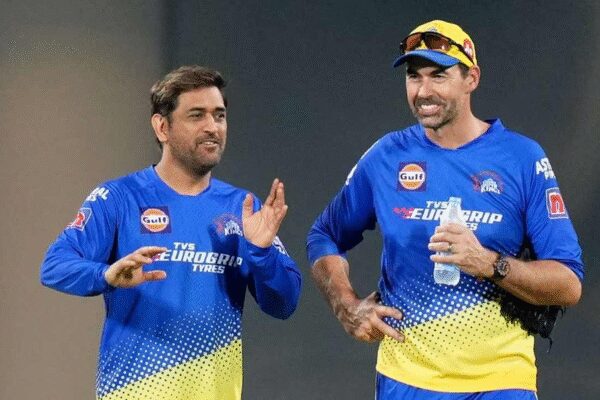
MS Dhoni and Stephen Fleming (Agency Image) Chennai Super Kings head coach Stephen Fleming has explained the thinking behind the franchise’s biggest moves at the IPL 2026 auction, following the record-breaking signings of Kartik Sharma and Prashant Veer. CSK stunned the auction table on Tuesday by securing uncapped wicketkeeper batter Kartik Sharma for Rs 14.2…

Read More
World’s richest just got richer! Elon Musk becomes first person to cross 0 bn net worth — how SpaceX’s 0 bn valuation helped

World’s richest just got richer! Elon Musk becomes first person to cross $600 bn net worth — how SpaceX’s $800 bn valuation helped

Elon Musk became first person ever to have a fortune exceeding $600 billion, with the sharp rise in the value of his companies, particularly SpaceX, driving his net worth to unprecedented levels. The latest jump follows a offer launched by SpaceX earlier this month that values the private rocket company at $800 billion, up from…

Read More
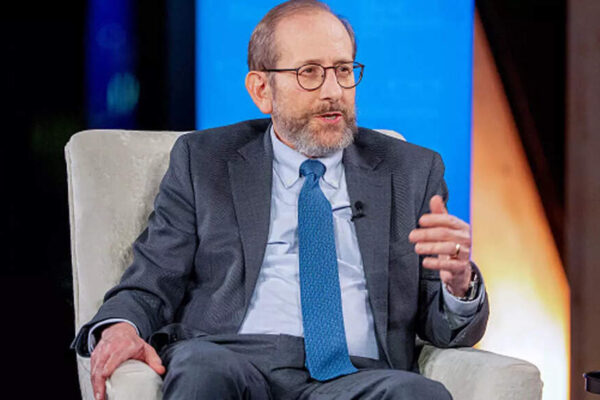
Harvard confirms Alan Garber to continue as president indefinitely amid Trump administration scrutiny and federal funding disputes

Harvard confirms Alan Garber to continue as president indefinitely amid Trump administration scrutiny and federal funding disputes

Alan Garber extended as Harvard President indefinitely as Corporation and Board of Overseers support leadership. (Getty Images) Harvard University’s governing boards have confirmed that Alan M. Garber ’76 will continue as president indefinitely, extending his leadership well beyond the previously anticipated end of his term. The decision delays a presidential search that had been expected…

Read More
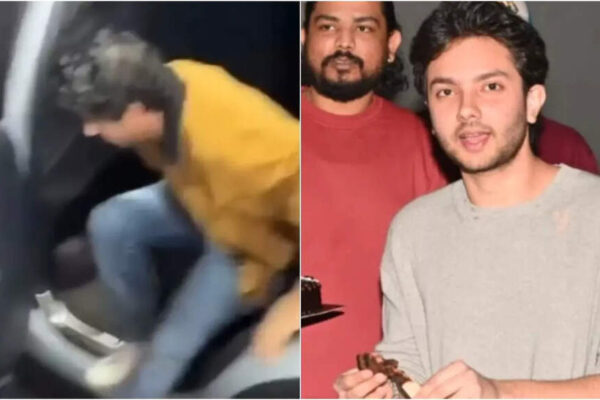
Aryan Khan avoids paparazzi as he arrives for Sohail Khan’s son Nirvan Khan’s birthday – Watch

Aryan Khan avoids paparazzi as he arrives for Sohail Khan’s son Nirvan Khan’s birthday – Watch

Aryan Khan made a discreet entrance at his brother Nirvan Khan’s birthday bash in Mumbai, expertly sidestepping the camera’s glare. The emerging director, fresh off the success of his hit series ‘The Ba***ds of Bollywood’, kept his identity under wraps as he stepped into the celebration, leaving fans eagerly speculating about his next move. Aryan…

Read More
Antidepressants can secretly affect your weight, heart rate, and blood pressure; know their side effects and how to stay safe |

Antidepressants can secretly affect your weight, heart rate, and blood pressure; know their side effects and how to stay safe |

Antidepressants are designed to fight depression and anxiety; their physical side effects can be quite different depending on the kind of drug. Large recent studies have shown that medications can have profound effects on weight, blood pressure, heart rate, and metabolism in strikingly different ways. Some of these drugs may contribute to weight gain, while…

Read More
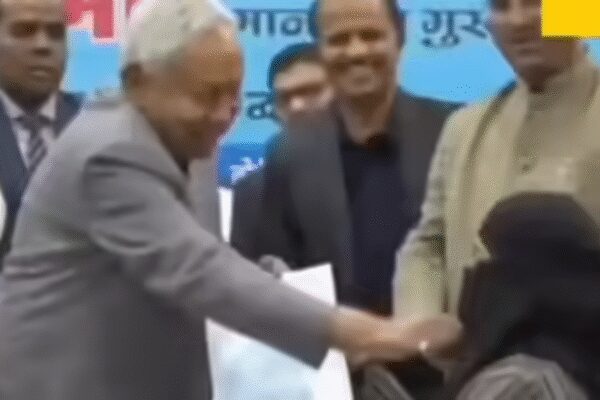
‘Fatherly affection’: Minority affairs minister Zama Khan defends Nitish Kumar in hijab video row; slams opposition for condemning act

‘Fatherly affection’: Minority affairs minister Zama Khan defends Nitish Kumar in hijab video row; slams opposition for condemning act

NEW DELHI: Bihar minority affairs minister Zama Khan on Tuesday defended Chief Minister Nitish Kumar after a row erupted over an incident in which he was seen removing the hijab of a woman doctor during a public function.Addressing the issue, Khan said, “The CM is, perhaps, older than the father of the woman in question….

Read More
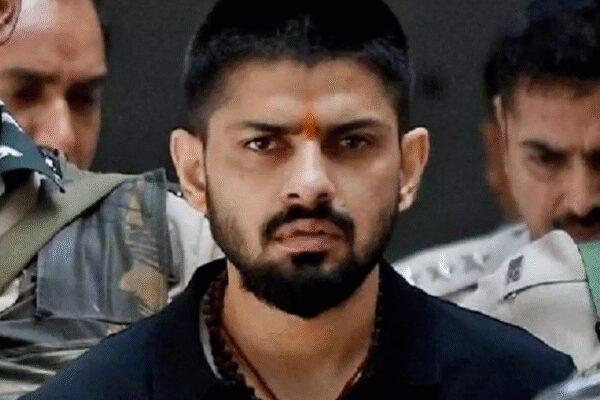
Bishnoi gang’s threat a new normal in Ontario: Indian-origin brothers in Canada allege they received ‘last warning to pay  million’

Bishnoi gang’s threat a new normal in Ontario: Indian-origin brothers in Canada allege they received ‘last warning to pay $2 million’

Ontario brothers Ranbir Singh Mand and his brother Dharmjit complained that they had been receiving threats allegedly from a member of India’s Lawrence Bishnoi gang. In an interview with Global News, Ranbir said it’s a new normal now in several parts of Ontario. The brother told Global News that the extortionist accused them of selling…

Read More

The Trump administration’s 2025 National Security Strategy redefines global power dynamics, placing India at a critical juncture. The document emphasizes unilateral action and self-interest, urging India to contribute more to Indo-Pacific security through initiatives like the Quad, signaling a shift towards transactional alliances. Image created with help of AI Driving the newsThe Donald Trump administration’s 2025 National Security Strategy (NSS) doesn’t just chart a course-it redraws the map. Released quietly at night, the 29-page document abandons decades of bipartisan foreign-policy orthodoxy in favor of a singular, transactional view of global power-and puts India at the crossroads.In this Trumpian worldview:Allies are burdens.Values are luxuries.Power must be unilateral.India is named four times-and each time, the ask is clear: Contribute more, align more, expect less.“We must continue to improve commercial relations with India to encourage it to contribute to Indo-Pacific security, including through the Quad with Australia and Japan.”The NSS 2025Why it mattersThe 2025 NSS is Trump’s clearest articulation of “America First” applied globally-a strategy driven not by alliances or ideology, but by leverage, deterrence, and self-interest.Plus, the new National Security Strategy is the clearest statement yet of how Washington sees power shifting in the Indo-Pacific.IPL Auction 2026IPL Auction 2026: Full list of sold and unsold players for all teamsIPL Auction: CSK bet big on youth, pay Rs 14.2 crore each for uncapped Prashant and KartikIPL 2026 team and squad List: Updated players for all 10 Teams; who got whomChina is the central competitor. The Indo-Pacific is the primary theater. Trump’s NSS also shows deep nostalgia for 19th-century power politics. It invokes the Roosevelt Corollary to the Monroe Doctrine, warning Latin America not to allow “hostile foreign ownership” of key assets. It praises “Western identity” and warns that some Nato members may become “majority non-European”—a line critics say reeks of racial nationalism.“Certain Nato members will become majority non-European. It is an open question whether they will view their alliance with the US in the same way.”The big picture: The two-front contest with ChinaThe NSS breaks the China challenge into two interlocking priorities:1. Rebalance the economic relationship-using tariffs, industrial policy, and supply chain realignment.2. Maintain credible military deterrence in the Indo-Pacific to prevent conflict.The goal, per the document: a “virtuous cycle” where economic discipline funds long-term defense strength, and military stability creates space for harder economic measures.India sits at the intersection of both goals. It is one of the few countries that:Can match China’s geographic and demographic scale.Offers manufacturing and investment alternatives.Shares an interest in freedom of navigation and supply chain resilience. This isn’t diplomacy for diplomacy’s sake. India is now a strategic node in an integrated effort to restructure power in Asia-militarily, economically, and technologically.Zoom in: Quad as an action platform, not a talking shopBy naming the Quad as a vehicle for India’s expanded security role, the strategy treats the grouping as a real mechanism, not a slogan.India’s role in the Quad (with Australia, Japan, and the US) gets specific attention in the strategy. The message: this is not about feel-good alignment among democracies-it’s about concrete strategic coordination.The NSS views the Quad as:A regional security multiplier, especially in maritime surveillance and logistics.A counterweight to China’s dominance in chokepoints, including the South China Sea and Indian Ocean.A framework to deepen tech and defense coordination, without requiring a formal alliance.Importantly, the US accepts that India will avoid alliance language. But Washington still wants interoperability, joint awareness, and shared capability development.The maritime logic: India in the South China SeaOne of the most pointed passages in the NSS warns of the risk of Chinese coercion in sea lanes: “Control over the South China Sea would allow a competitor to impose de facto tolls or threaten closure of vital global commerce routes.”It adds: Addressing this threat will require cooperation from all affected nations-“explicitly including India.”Why it’s notable:It recognizes India as a maritime player, not just a continental one.It reframes sea-lane control as an economic security issue, not just a military one.It suggests India’s strategic geography and naval presence (especially in the Andaman and Nicobar region) is integral to the Indo-Pacific security architecture.This marks a paradigm shift. In Donald Trump administration’s view, India is no longer just guarding its own neighborhood-it’s involved in shaping regional order.Between the lines: Tech, minerals, and ecosystemsA long section of the strategy links deterrence to economic and technological primacy. The NSS defines future military power through economic and technological strength-naming:AIQuantum computingAutonomous systemsSpace and undersea capabilitiesNuclear deterrenceIndia is seen as a potential partner in building trusted ecosystems, not reliant on China. The logic: the US wants to de-Sinicize the global innovation stack, and India could help build a non-Chinese infrastructure of trust.The document also makes explicit reference to critical minerals and influence in Africa, noting that:“The US should enlist European and Asian allies and partners, including India, to secure access and shape norms.”Translation: India isn’t just a regional actor-it’s part of a global coalition effort to compete with China across emerging markets, tech governance, and strategic resources.India and the Global South: Opportunity-and pressureThe NSS notes that China’s exports to low- and middle-income countries doubled between 2020 and 2024-and now surpass exports to the US.Why it matters for India:India also seeks to expand in the Global South, including Africa, Southeast Asia, and Latin America.The US effort to diversify supply chains offers a potential investment windfall for Indian manufacturing.But it also means more alignment pressure from Washington-especially on: Tech standardsExport controlsTransshipment enforcementIndia may find itself pushed to take sides, particularly as Chinese platforms become more embedded in third-country markets.Strategic ambiguity meets shrinking spaceIndia has long practiced strategic autonomy, balancing ties with the US, Russia, China, and others.But the NSS implies that ambiguity is becoming costly. Washington is constructing:Technology alliancesCritical-mineral blocsSecurity coalitionsAnd India is expected to be part of them, even without a treaty.The NSS’s tone suggests a “coalition of the willing” model-with partners taking on real commitments, not just symbolic ones. And India is no longer outside that circle.Burden-sharing: India’s special status-and subtle askUnlike Japan or South Korea, India is not a treaty ally and does not host US bases. The NSS accepts that.But the broader message is clear: the US military “cannot, and should not have to, do this alone.”India is likely to be spared the hardest asks-no troop hosting or treaty obligations. Still, Washington will watch:India’s naval activismIts defense procurement choicesIts cooperation on maritime domain awarenessThe NSS sets the tone: Shared threat, shared responsibility-even without shared treaties.What they are sayingThe Economist warns the NSS is a “dog’s breakfast” of contradictory impulses—“muscular without being hawkish, restrained without being dovish”—and dangerously dismissive of long-term allies. Chidanand Rajghatta calls the document a “hard pivot toward unilateral action” that turns India from a partner to a pressure point, noting the irony of Washington asking more from India while punishing it with tariffs. MAGA hardliners lament there’s no mention of Islamic terrorism; liberal critics decry the NSS’s silence on authoritarianism in China, Russia, Iran, or North Korea.Nato allies privately worry the document is the first step to US withdrawal from the alliance—a fear stoked by Trump’s past threat to “encourage Russia” to attack freeloading Nato members.Trade and tariff friction: The unresolved tensionThe NSS’s “America First diplomacy” leans hard into tariffs and reciprocal trade. While it promotes deeper US-India commercial ties, it doesn’t promise a smooth path.That creates a familiar dilemma for New Delhi:How to partner with the US on security…without accepting unlimited economic concessions or tech restrictions?The NSS hints that strategic alignment will increasingly shape market access. That could put India in a tight spot-especially if it wants tech access but not tech alignment.What India can take from this strategyFour key signals emerge:1. India is named-clearly-as a strategic asset. Not just a regional actor, but a necessary component of a larger China-balancing architecture.2. Maritime security is moving to center stage.India’s role in sea-lane protection and freedom-of-navigation missions is now strategic, not optional.3. The tech-minerals-economic triangle matters. India is expected to help shape the future of global production and standards-especially outside China’s orbit.4. The US expects quiet alignment-even without alliance.India won’t be asked to sign treaties. But it’s being asked to act like an ally.What’s nextWatch for:Quad military exercises to expand scope and geographyIndo-US joint ventures in critical tech sectorsPressure on India to reduce Russian defense tiesBilateral discussions on maritime domain awarenessWashington lobbying New Delhi on export controls and chip alignmentDon’t expect:A formal allianceUS bases in IndiaA rollback of tariffs without strategic concessionsThe bottom lineThe NSS is a mirror: it reflects Trump’s belief that alliances are transactional, values are optional, and burden-sharing is overdue.The question isn’t whether India will align-it’s how far it can go without losing strategic independence.America First may not mean America Alone—but under Trump’s NSS, India has been drafted. And the fine print says: “Help us win, or step aside.”(With inputs from agencies)End of ArticleFollow Us On Social MediaVideosIn Israel, Jaishankar Condoles Sydney Attack Targeting Jews, Sends Zero Tolerance on Terror MessagePM Modi Lands In Addis Ababa, Indian Diaspora In Ethiopia Awaits To Meet PMFrom Kolkata Chaos to Delhi Celebration: Lionel Messi’s G.O.A.T India Tour At A GlancePM Modi Pitches New Economic Corridor As King Abdullah Praises India’s Growth At Jordan Forum MeetPriyanka Gandhi Targets VB-G RAM G Bill Over MGNREGA, Blasts Centre’s Name Change TacticsSonia Gandhi Targets Modi Govt On ASHA, Anganwadi Workers In Rajya SabhaNational Herald Case: Court Declines To Act On ED Chargesheet, Congress Claims Truth Has PrevailedEverything Fine, Says Shashi Tharoor After Skipping Congress Rally Amid Growing Speculation of RiftDelhi-Agra Expressway Crash: Multiple Buses Catch Fire, 4 Dead, 25 InjuredPM Modi Praises Jordan’s Fight Against Terrorism As India And Jordan Strengthen Strategic Relations123Photostories7 countries and territories so small you can explore them in a day — and what it costs to visitLove seasonal fruits? Then transform them into dry fruits to relish throughout the yearThrowback to electrifying performances by Ranveer Singh, Hrithik Roshan,AR Rahmanat IPL opening ceremonies over the years7 essential life lessons and wisdom to embrace from Brené Brown’s book “The Gifts of Imperfection”Shah Rukh Khan to Preity Zinta: Celebrities who own IPL teamsHutton-Mdivani Jadeite Necklace to L’Incomparable Necklace: Unveiling the world’s top 5 most expensive necklaces ever made6 desi-style Hummus recipes to try with snacks this party seasonLove eating walnuts? Then soak them for boosting their efficacyTop 7 Indian cities with AQI under 50 (where to breath clean air in 2025)10 words people googled the most in 2025 as per Google Trends report123Hot Picksilia TopuriaCorona RemediesJetBlue flight VenezuelaGold rate todaySilver rate todayPublic Holidays NovemberBank Holidays NovemberTop TrendingPrashant VeerAuston MatthewsVanessa BryantJalen Hurts Wife Net WorthSaros Release DateIPL Most Expensive PlayerBukayo Saka and Tolami Benson Net WorthConnor McDavidVenkatesh iyerMatheesha Pathirana

Image created with help of AI Driving the newsThe Donald Trump administration’s 2025 National Security Strategy (NSS) doesn’t just chart a course-it redraws the map. Released quietly at night, the 29-page document abandons decades of bipartisan foreign-policy orthodoxy in favor of a singular, transactional view of global power-and puts India at the crossroads.In this Trumpian…

Read More
Dec 16, 2025, 16:37 IST

Dec 16, 2025, 16:37 IST

Cameron Green (AFP Photo) NEW DELHI: Kolkata Knight Riders shattered records at the IPL players’ auction on Tuesday, shelling out a staggering Rs 25.20 crore to secure Australian all-rounder Cameron Green.The bid saw Green eclipse compatriot Mitchell Starc’s previous mark of Rs 24.75 crore, making him the most expensive overseas player in IPL auction history….

Read More
‘Playing at home again’: Ravi Bishnoi reacts after Rajasthan Royals seal Rs 7.2 crore deal at IPL Auction | Cricket News

‘Playing at home again’: Ravi Bishnoi reacts after Rajasthan Royals seal Rs 7.2 crore deal at IPL Auction | Cricket News

Ravi Bishnoi (PTI Photo/Shashank Parade) India leg-spinner Ravi Bishnoi described his return to Rajasthan Royals as “like playing at home” after the inaugural champions secured him for Rs 7.2 crore at the IPL 2026 mini-auction in Abu Dhabi on Tuesday. The bidding for the 25-year-old turned intense before the Royals finally had the last word…

Read More
TS Inter time table 2026 for 2nd year exams revised: Telangana Board shifts key papers to this date; check details

TS Inter time table 2026 for 2nd year exams revised: Telangana Board shifts key papers to this date; check details

The Telangana Board of Intermediate Education (TG BIE) has revised the Intermediate Public Examinations (IPE) 2026 schedule for second-year students following the declaration of a state holiday for the Holi festival in March 2026. As per the revised date sheet, select examinations that were earlier scheduled for March 3, 2026, will now be conducted one…

Read More
Ranveer Singh’s cryptic Instagram note has an R Madhavan and ‘Dhurandhar’ connection?

Ranveer Singh’s cryptic Instagram note has an R Madhavan and ‘Dhurandhar’ connection?

Spoiler Alert: This article contains significant plot details and spoilers for ‘Dhurandhar’. If you haven’t seen ‘Dhurandhar’ yet and wish to avoid spoilers, please stop reading now.Ranveer Singh’s latest film ‘Dhurandhar’ has taken the box office by storm since its release on December 5. The spy thriller has been racing ahead with strong momentum and…

Read More
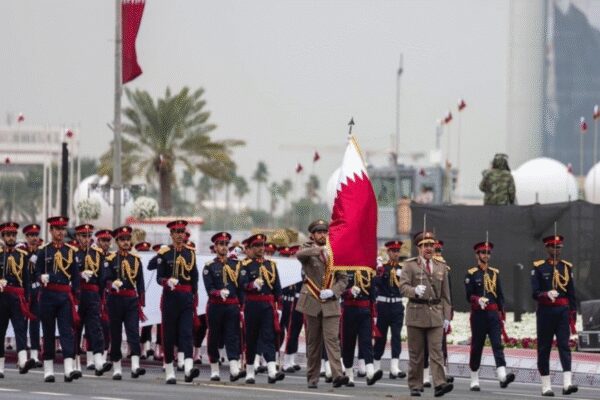
Qatar announces 2025 National Day parade timings

Qatar announces 2025 National Day parade timings

Qatar’s 2025 National Day Parade at Doha Corniche begins 9 a.m., entrances 5–7:30 a.m/Image: X Qatar is inviting residents and citizens to join the 2025 National Day Parade at Doha Corniche, promising a lively morning filled with culture, patriotism, and community spirit. The event is set to be a memorable celebration, showcasing the nation’s heritage…

Read More
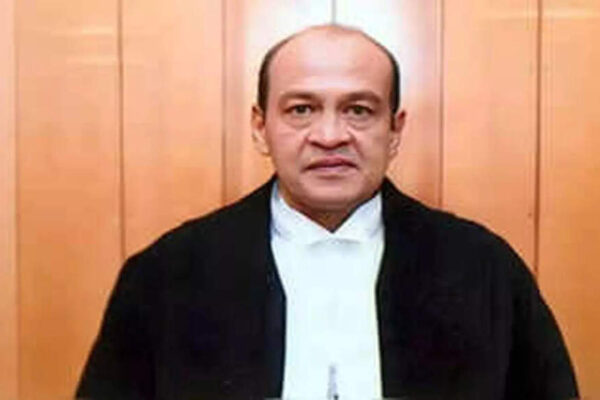
An Allahabad High Court judge, Justice Yashwant Varma, has approached the Supreme Court challenging the Lok Sabha Speaker’s inquiry committee formed to probe corruption allegations against him. He argues the committee’s constitution by the Speaker alone is a procedural lapse, as such a panel should be jointly formed by both Houses of Parliament. Cash discovery row: Justice Yashwant Varma (File Photo) NEW DELHI: The Supreme Court on Tuesday agreed to hear a plea by Allahabad high court’s Justice Yashwant Varma challenging the constitution of an inquiry committee set up by the Lok Sabha Speaker to probe corruption charges against him.A bench of Justices Dipankar Datta and Augustine George Masih issued notices to the Lok Sabha Speaker’s office and the secretaries-general of both Houses of Parliament, seeking their responses after senior advocate Mukul Rohatgi, appearing for Justice Varma, flagged a “procedural lapse” in the constitution of the Lok Sabha inquiry panel.Rohatgi submitted that the introduction of a motion in both Houses of Parliament to remove a judge requires the inquiry panel to be formed jointly by the Lok Sabha and Rajya Sabha, and cannot be constituted unilaterally by the Lok Sabha Speaker.IPL Auction 2026MI, RR, CSK, KKR: As it happened – How Green became a ‘Knight’ after intense bidding warIPL Auction: Uncapped duo hit jackpot as CSK spend Rs 28.4 crore on Prashant and KartikIPL 2026 team and squad List: Updated players for all 10 Teams; who got whom”Where the notices of the motion are ‘given’ to the Houses on the same date, no committee will be constituted, unless the motion is being admitted in both Houses. And where such motion is admitted in both Houses, the committee shall be constituted jointly by the Lok Sabha Speaker and the Rajya Sabha Chairman,” PTI quoted Rohatgi as saying.In his plea, Justice Varma has also sought that the admission of the Lok Sabha motion to remove him be declared “contrary to law.”The matter has been posted for the next hearing on January 7.On March 14, large sums of currency were found at Justice Varma’s official residence in Delhi, where he was then serving as a high court judge. He was later transferred to the Allahabad high court in Uttar Pradesh. Following the discovery, then-Chief Justice of India (CJI) Sanjiv Khanna initiated an in-house probe into the allegations and set up a three-member panel, which submitted its report on May 4. The panel found Justice Varma guilty of misconduct.After receiving the report, the then-CJI asked Justice Varma to resign or face impeachment proceedings. Following the judge’s refusal to resign, the report was forwarded to President Droupadi Murmu and Prime Minister Narendra Modi.On August 7, the Supreme Court dismissed Justice Varma’s plea seeking to invalidate the in-house inquiry report. On August 12, Lok Sabha Speaker Om Birla constituted a separate three-member committee to probe the charges against the judge.About the AuthorTOI News DeskThe TOI News Desk comprises a dedicated and tireless team of journalists who operate around the clock to deliver the most current and comprehensive news and updates to the readers of The Times of India worldwide. With an unwavering commitment to excellence in journalism, our team is at the forefront of gathering, verifying, and presenting breaking news, in-depth analysis, and insightful reports on a wide range of topics. The TOI News Desk is your trusted source for staying informed and connected to the ever-evolving global landscape, ensuring that our readers are equipped with the latest developments that matter most.”Read MoreEnd of ArticleFollow Us On Social MediaVideosPM Modi Lands In Addis Ababa, Indian Diaspora In Ethiopia Awaits To Meet PMFrom Kolkata Chaos to Delhi Celebration: Lionel Messi’s G.O.A.T India Tour At A GlancePM Modi Pitches New Economic Corridor As King Abdullah Praises India’s Growth At Jordan Forum MeetPriyanka Gandhi Targets VB-G RAM G Bill Over MGNREGA, Blasts Centre’s Name Change TacticsSonia Gandhi Targets Modi Govt On ASHA, Anganwadi Workers In Rajya SabhaNational Herald Case: Court Declines To Act On ED Chargesheet, Congress Claims Truth Has PrevailedEverything Fine, Says Shashi Tharoor After Skipping Congress Rally Amid Growing Speculation of RiftDelhi-Agra Expressway Crash: Multiple Buses Catch Fire, 4 Dead, 25 InjuredPM Modi Praises Jordan’s Fight Against Terrorism As India And Jordan Strengthen Strategic RelationsIndia Slams Pakistan As ‘Global Epicentre Of Terror’, Vows To Counter Pak-Sponsored Attacks At UN123PhotostoriesThrowback to electrifying performances by Ranveer Singh, Hrithik Roshan,AR Rahmanat IPL opening ceremonies over the years7 essential life lessons and wisdom to embrace from Brené Brown’s book “The Gifts of Imperfection”Shah Rukh Khan to Preity Zinta: Celebrities who own IPL teamsHutton-Mdivani Jadeite Necklace to L’Incomparable Necklace: Unveiling the world’s top 5 most expensive necklaces ever made6 desi-style Hummus recipes to try with snacks this party seasonLove eating walnuts? Then soak them for boosting their efficacyTop 7 Indian cities with AQI under 50 (where to breath clean air in 2025)10 words people googled the most in 2025 as per Google Trends reportMumbai–Pune: Where Shivaji once triumphed, engineers now build India’s tallest cable-stayed bridge8 common mistakes people mostly commit while worshipping the Tulsi plant123Hot Picksilia TopuriaCorona RemediesJetBlue flight VenezuelaGold rate todaySilver rate todayPublic Holidays NovemberBank Holidays NovemberTop TrendingPrashant VeerAuston MatthewsVanessa BryantJalen Hurts Wife Net WorthBukayo Saka and Tolami Benson Net WorthConnor McDavidVenkatesh iyerMatheesha PathiranaSOF ICO resultFortnite Bleach Characters

An Allahabad High Court judge, Justice Yashwant Varma, has approached the Supreme Court challenging the Lok Sabha Speaker’s inquiry committee formed to probe corruption allegations against him. He argues the committee’s constitution by the Speaker alone is a procedural lapse, as such a panel should be jointly formed by both Houses of Parliament. Cash discovery row: Justice Yashwant Varma (File Photo) NEW DELHI: The Supreme Court on Tuesday agreed to hear a plea by Allahabad high court’s Justice Yashwant Varma challenging the constitution of an inquiry committee set up by the Lok Sabha Speaker to probe corruption charges against him.A bench of Justices Dipankar Datta and Augustine George Masih issued notices to the Lok Sabha Speaker’s office and the secretaries-general of both Houses of Parliament, seeking their responses after senior advocate Mukul Rohatgi, appearing for Justice Varma, flagged a “procedural lapse” in the constitution of the Lok Sabha inquiry panel.Rohatgi submitted that the introduction of a motion in both Houses of Parliament to remove a judge requires the inquiry panel to be formed jointly by the Lok Sabha and Rajya Sabha, and cannot be constituted unilaterally by the Lok Sabha Speaker.IPL Auction 2026MI, RR, CSK, KKR: As it happened – How Green became a ‘Knight’ after intense bidding warIPL Auction: Uncapped duo hit jackpot as CSK spend Rs 28.4 crore on Prashant and KartikIPL 2026 team and squad List: Updated players for all 10 Teams; who got whom”Where the notices of the motion are ‘given’ to the Houses on the same date, no committee will be constituted, unless the motion is being admitted in both Houses. And where such motion is admitted in both Houses, the committee shall be constituted jointly by the Lok Sabha Speaker and the Rajya Sabha Chairman,” PTI quoted Rohatgi as saying.In his plea, Justice Varma has also sought that the admission of the Lok Sabha motion to remove him be declared “contrary to law.”The matter has been posted for the next hearing on January 7.On March 14, large sums of currency were found at Justice Varma’s official residence in Delhi, where he was then serving as a high court judge. He was later transferred to the Allahabad high court in Uttar Pradesh. Following the discovery, then-Chief Justice of India (CJI) Sanjiv Khanna initiated an in-house probe into the allegations and set up a three-member panel, which submitted its report on May 4. The panel found Justice Varma guilty of misconduct.After receiving the report, the then-CJI asked Justice Varma to resign or face impeachment proceedings. Following the judge’s refusal to resign, the report was forwarded to President Droupadi Murmu and Prime Minister Narendra Modi.On August 7, the Supreme Court dismissed Justice Varma’s plea seeking to invalidate the in-house inquiry report. On August 12, Lok Sabha Speaker Om Birla constituted a separate three-member committee to probe the charges against the judge.About the AuthorTOI News DeskThe TOI News Desk comprises a dedicated and tireless team of journalists who operate around the clock to deliver the most current and comprehensive news and updates to the readers of The Times of India worldwide. With an unwavering commitment to excellence in journalism, our team is at the forefront of gathering, verifying, and presenting breaking news, in-depth analysis, and insightful reports on a wide range of topics. The TOI News Desk is your trusted source for staying informed and connected to the ever-evolving global landscape, ensuring that our readers are equipped with the latest developments that matter most.”Read MoreEnd of ArticleFollow Us On Social MediaVideosPM Modi Lands In Addis Ababa, Indian Diaspora In Ethiopia Awaits To Meet PMFrom Kolkata Chaos to Delhi Celebration: Lionel Messi’s G.O.A.T India Tour At A GlancePM Modi Pitches New Economic Corridor As King Abdullah Praises India’s Growth At Jordan Forum MeetPriyanka Gandhi Targets VB-G RAM G Bill Over MGNREGA, Blasts Centre’s Name Change TacticsSonia Gandhi Targets Modi Govt On ASHA, Anganwadi Workers In Rajya SabhaNational Herald Case: Court Declines To Act On ED Chargesheet, Congress Claims Truth Has PrevailedEverything Fine, Says Shashi Tharoor After Skipping Congress Rally Amid Growing Speculation of RiftDelhi-Agra Expressway Crash: Multiple Buses Catch Fire, 4 Dead, 25 InjuredPM Modi Praises Jordan’s Fight Against Terrorism As India And Jordan Strengthen Strategic RelationsIndia Slams Pakistan As ‘Global Epicentre Of Terror’, Vows To Counter Pak-Sponsored Attacks At UN123PhotostoriesThrowback to electrifying performances by Ranveer Singh, Hrithik Roshan,AR Rahmanat IPL opening ceremonies over the years7 essential life lessons and wisdom to embrace from Brené Brown’s book “The Gifts of Imperfection”Shah Rukh Khan to Preity Zinta: Celebrities who own IPL teamsHutton-Mdivani Jadeite Necklace to L’Incomparable Necklace: Unveiling the world’s top 5 most expensive necklaces ever made6 desi-style Hummus recipes to try with snacks this party seasonLove eating walnuts? Then soak them for boosting their efficacyTop 7 Indian cities with AQI under 50 (where to breath clean air in 2025)10 words people googled the most in 2025 as per Google Trends reportMumbai–Pune: Where Shivaji once triumphed, engineers now build India’s tallest cable-stayed bridge8 common mistakes people mostly commit while worshipping the Tulsi plant123Hot Picksilia TopuriaCorona RemediesJetBlue flight VenezuelaGold rate todaySilver rate todayPublic Holidays NovemberBank Holidays NovemberTop TrendingPrashant VeerAuston MatthewsVanessa BryantJalen Hurts Wife Net WorthBukayo Saka and Tolami Benson Net WorthConnor McDavidVenkatesh iyerMatheesha PathiranaSOF ICO resultFortnite Bleach Characters

Cash discovery row: Justice Yashwant Varma (File Photo) NEW DELHI: The Supreme Court on Tuesday agreed to hear a plea by Allahabad high court’s Justice Yashwant Varma challenging the constitution of an inquiry committee set up by the Lok Sabha Speaker to probe corruption charges against him.A bench of Justices Dipankar Datta and Augustine George…

Read More