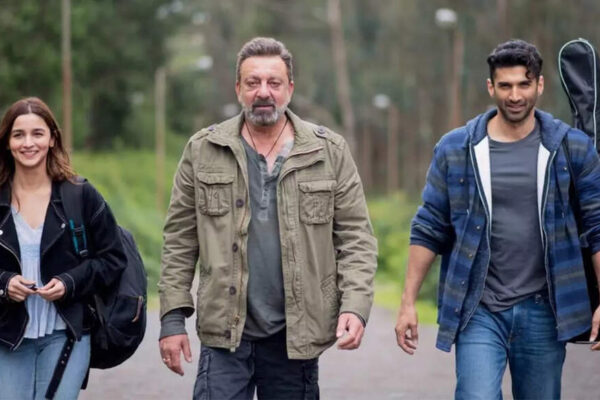
Pooja Bhatt says Sanjay Dutt wanted ‘Sadak 2’ to recreate the close bond they shared on set, ‘What he told me was that the environment that was there on the sets I miss’

Pooja Bhatt says Sanjay Dutt wanted ‘Sadak 2’ to recreate the close bond they shared on set, ‘What he told me was that the environment that was there on the sets I miss’

In a heartfelt podcast discussion, Pooja Bhatt unveiled the true inspiration behind ‘Sadak 2’. Rather than the pressure of continuing a successful franchise, it was Sanjay Dutt’s nostalgia for the authentic camaraderie on set that led to the sequel’s creation. Filmmaker and actor Pooja Bhatt has opened up about the emotional conversation with Sanjay Dutt…


Read More
‘Jingle Bells All the Way’ in Delhi: The Christmas markets you absolutely can’t miss! |

‘Jingle Bells All the Way’ in Delhi: The Christmas markets you absolutely can’t miss! |

It’s that time of the year already! Come December, Delhi, the national capital, turns into a one big charming winter wonderland. The Christmas fever is high in the city with its iconic Christmas markets. These vibrant markets are shining with fairy lights, festive shopping and some mouthwatering bakes. From European-style markets to homegrown craft fairs,…

Read More
Ukraine: Russian drone strike kills 3; power outages hit 600,000 Ukrainian homes

Ukraine: Russian drone strike kills 3; power outages hit 600,000 Ukrainian homes

A massive overnight Russian assault on Ukraine killed three people and injured nearly 30, officials said on Saturday, as strikes on the power grid left more than 600,000 households without electricity.Residential buildings in multiple districts were hit in the early hours, with loud explosions echoing across the city as emergency crews responded, as cited by…

Read More
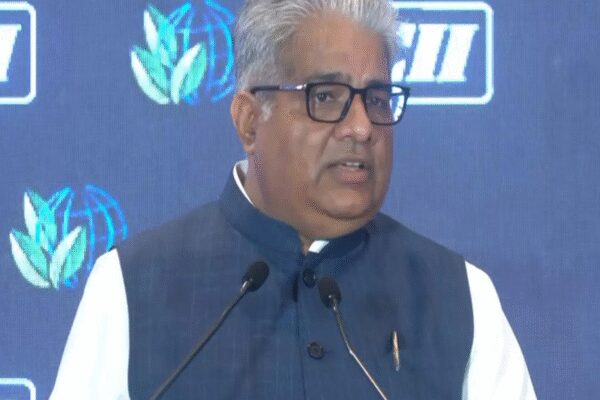
COP30 in Brazil concluded with India’s environment minister highlighting successful outcomes, including increased adaptation finance and a just transition mechanism. India played a key role in shaping decisions, reinforcing multilateralism and developing countries’ interests. Discussions on fossil fuels and deforestation occurred outside formal processes, while trade measures like CBAM were addressed. Bhupender Yadav (ANI) The 30th session of the UN climate change conference (COP30) concluded in Belem, Brazil on Nov 22, keeping alive the hope of multilateral processes to find answers to global problems. India was led by the country’s environment and climate change minister Bhupender Yadav during the crucial round of negotiations that finally ended with adopting the political outcome – Global Mutirao: Uniting humanity in a global mobilization against climate change – of the annual summit. Consensus on tripling adaptation finance by 2035, establishment of the Just Transition Mechanism, setting up a Global Implementation Accelerator – a two-year process to close the gap between current national climate plans and what is required to keep the global warming within 1.5 degree Celsius – and establishing a two-year work programme for delivery of climate finance are among the key outcomes of COP30. Yadav explained to Vishwa Mohan what these outcomes meant for India and what would be the fate of other critical issues which could not make it to the final decision document. Excerpts: Has the COP30 come up to the expectations of India?COP30 has fully met India’s expectations and stands as a strong affirmation of our leadership and commitment to climate multilateralism. The 29 decisions adopted by consensus clearly reflect India’s priorities across critical areas such as climate finance including adaptation finance, adaptation, unilateral trade measures, technology, and just transition, etc.India played a central role in shaping the ‘Mutirão’ Decision, which reinforces that multilateralism is working and must remain the backbone of global climate action.Driven by PM Narendra Modi’s leadership, India steered the group of like-minded developing countries. We were able to secure a dedicated two-year work programme on Article 9.1 of the Paris Agreement that will bring renewed focus to the legally binding finance obligations of developed countries. Our persistent efforts also ensured that concerns on Unilateral Trade Measures were advanced.India’s expectations on the Global Goal on Adaptation namely flexibility, voluntary nature of indicators, nationally determined indicators, no additional reporting burdens, and continued technical refinement, are all embedded in the COP30 outcome.We also ensured the setting up of Technology Implementation Programme to facilitate implementation of technology needs of developing countries. Importantly, COP 30 has established an institutional arrangement for just transition, reflecting the needs and priorities of developing nations.Overall, India’s core objectives of upholding inclusivity, safeguarding interests of developing countries, and strengthening trust in the multilateral process, have been fully realized at COP30.What more could have been done in Belém?In line with the positions, we advanced throughout COP30. India firmly and confidently articulated its priorities, especially on matters of vital importance to developing countries. We are satisfied with the outcomes, notably the creation of the dedicated work programme on Article 9.1, which places renewed emphasis on the finance obligations of developed nations. COP30 marks an important step forward in strengthening equity and reinforcing climate justice within the multilateral process.What was India’s stand on two critical issues – roadmap on transitioning away from fossil fuels and ending deforestation – during the negotiation? Both these issues could not make it to the final decision text.The COP 30 Presidency’s Belém Roadmaps on ‘Forest and Climate’ and ‘Transitioning Away from Fossil Fuels Roadmap’ have been developed outside the formal UNFCCC processes. The Roadmap on Forest and Climate seeks to bring together Parties and stakeholders to deliberate on strategies to halt and reverse deforestation. The Transitioning Away from Fossil Fuels Roadmap aims to address the fiscal, economic, and social dimensions of the global energy transition, outlining credible pathways for scaling up zero- and low-carbon solutions, while fully recognising national and regional circumstances.India welcomes the Forest and Climate Roadmap. We take note of the Roadmap on Transitioning Away from Fossil Fuels in the context of our national priorities and our long-standing commitment to ensuring energy security for our people.COP30 also witnessed the launch of the Tropical Forests Forever Facility (TFFF), a mechanism designed to provide long-term, results-based payments to tropical forest countries for verified conservation of standing forests. The facility aims to mobilise more than .7 billion in its first phase and has received endorsement from 63 countries, thereby establishing a permanent capital base for global forest protection. India is among the countries endorsing the TFFF as an observer.Did India articulate its points on the EU’s unilateral trade measure such as CBAM? Will it still be implemented by the EU from next year as per its plan?With unilateral measures such as the EU’s Carbon Border Adjustment Mechanism (CBAM) already taking effect, and similar initiatives being considered by the United Kingdom and Canada, it was critical for India that this issue be taken up formally on the COP 30 agenda. India, together with the Like-Minded Developing Countries (LMDC), tabled a proposal on “promoting international cooperation and addressing concerns arising from climate-change–related unilateral trade-restrictive measures.” Despite strong and unified opposition from developed countries, India pushed for substantive engagement. Intense negotiations followed, and although the matter did not enter the formal agenda, India secured a meaningful outcome.The COP30 decision reaffirmed that all Parties must cooperate to promote a supportive and open international economic system, one that advances sustainable economic growth and development, especially for developing countries, enabling them to more effectively address climate change. The decision also reiterated that climate-related measures including unilateral actions must not become tools for arbitrary or unjustifiable discrimination, nor serve as disguised restrictions on international trade.Under the adopted decision, Parties will now begin structured dialogues from June 2027 to examine opportunities, challenges, and barriers related to strengthening international cooperation on the role of trade in climate action. A high-level event will be convened in 2028 to exchange experiences and perspectives, with a summary report to be presented later that year.This outcome ensures that the issue of unilateral trade measures such as CBAM is duly highlighted as impediment to an open and fair economic system and as barriers that constrain the ability of developing economies to pursue ambitious climate action.Did the absence of the US make any difference on the overall outcome of COP30?India emphasized that a rules-based multilateral framework remains indispensable for ensuring equity, trust, and predictability in global climate action. Consistent with this approach, Country Parties at COP 30 demonstrated a clear and united commitment to strengthen multilateral climate cooperation, reaffirming that only global collective actions can effectively address the challenge of climate change. The absence of a country did not make any difference on the overall outcome of COP30.Parties at COP30 collectively acknowledged that the Paris Agreement continues to deliver substantive progress towards its temperature goals. Scientific assessments highlighted that, without the Framework Convention and the Paris Agreement architecture, the world would have been on a trajectory toward 3.5 – 4 degree Celsius of warming. Instead, current commitments and cooperative mechanisms have meaningfully bent the curve downward, demonstrating the value and effectiveness of sustained global climate governance.About the AuthorVishwa MohanVishwa Mohan is Senior Editor at The Times of India. He writes on environment, climate change, agriculture, water resources and clean energy, tracking policy issues and climate diplomacy. He has been covering Parliament since 2003 to see how politics shaped up domestic policy and India’s position at global platform. Before switching over to explore sustainable development issues, Vishwa had covered internal security and investigative agencies for more than a decade.Read MoreEnd of ArticleFollow Us On Social MediaVideosIMD Issues Red Alert as Cyclone Ditwah Approaches TN; Sri Lanka Deaths Exceed 80Siddaramaiah, DK Shivakumar Project Unity After High-Stakes Karnataka Meet Amid Rumours Of Cong RiftEU MP Filip Dewinter Labels Pakistan As A ‘Terror State’, Urges Europe To Act And Align With IndiaNepal’s Currency Map Includes Indian Land; Ex-Minister Calls Dialogue Essential Amid Rising TensionIndia’s Maritime Future Is Preordained: CDS Chauhan Predicts Indian Navy’s Decisive Warfighting RolePak Slams Rajnath’s Sindh Remark But Ignores Its Leader Claiming Gujarat, Rajasthan, Haryana As OwnIndiGo And Air India Warn Of Delays As Airbus Solar Radiation Snag Hits 350 A320 Jets In IndiaPakistan Faces Global Scrutiny as UN Flags Grave Risks to Rule of Law, Judicial Freedom, GovernanceCyclone Ditwah Approaches India: Tamil Nadu, Puducherry, Andhra Pradesh Brace For Impact’Op Sindoor Was Just A Glimpse Of Future Theatre Commands’: Air Marshal Ashutosh Dixit123PhotostoriesIn Pics | Tesla Opens India’s First All-In-One Facility in Gurgaon7 animals that became space travellers ahead of humansShilpa Shetty yet again serves major fashion goals with her silver saree-jacket comboYour soul temple: 6 powerful temples to visit in India based on personality types7 houseplants to avoid if you have kidsEveryday fashion inspired by Bollywood elegance and effortless celebrity charm influencing real life wardrobes across generations5 must visit places in Delhi for a fun weekend with kidsHow Dilwale Dulhania Le Jayenge rewrote the way India falls in loveHow Universe Communicate With You According To Your Birth Date7 everyday Indian foods that help improve your child’s memory123Hot PicksDelhi AQI TodayNew Labour CodeWorld NewsGold rate todaySilver rate todayPublic Holidays NovemberBank Holidays NovemberTop TrendingGiannis AntetokounmpoBo BichetteWWE Smackdown HighlightsDonald TrumpPerez HiltonCyclone DitwahR AshwinAyesha CurryFuzzy ZoellerJammie Booker

COP30 in Brazil concluded with India’s environment minister highlighting successful outcomes, including increased adaptation finance and a just transition mechanism. India played a key role in shaping decisions, reinforcing multilateralism and developing countries’ interests. Discussions on fossil fuels and deforestation occurred outside formal processes, while trade measures like CBAM were addressed. Bhupender Yadav (ANI) The 30th session of the UN climate change conference (COP30) concluded in Belem, Brazil on Nov 22, keeping alive the hope of multilateral processes to find answers to global problems. India was led by the country’s environment and climate change minister Bhupender Yadav during the crucial round of negotiations that finally ended with adopting the political outcome – Global Mutirao: Uniting humanity in a global mobilization against climate change – of the annual summit. Consensus on tripling adaptation finance by 2035, establishment of the Just Transition Mechanism, setting up a Global Implementation Accelerator – a two-year process to close the gap between current national climate plans and what is required to keep the global warming within 1.5 degree Celsius – and establishing a two-year work programme for delivery of climate finance are among the key outcomes of COP30. Yadav explained to Vishwa Mohan what these outcomes meant for India and what would be the fate of other critical issues which could not make it to the final decision document. Excerpts: Has the COP30 come up to the expectations of India?COP30 has fully met India’s expectations and stands as a strong affirmation of our leadership and commitment to climate multilateralism. The 29 decisions adopted by consensus clearly reflect India’s priorities across critical areas such as climate finance including adaptation finance, adaptation, unilateral trade measures, technology, and just transition, etc.India played a central role in shaping the ‘Mutirão’ Decision, which reinforces that multilateralism is working and must remain the backbone of global climate action.Driven by PM Narendra Modi’s leadership, India steered the group of like-minded developing countries. We were able to secure a dedicated two-year work programme on Article 9.1 of the Paris Agreement that will bring renewed focus to the legally binding finance obligations of developed countries. Our persistent efforts also ensured that concerns on Unilateral Trade Measures were advanced.India’s expectations on the Global Goal on Adaptation namely flexibility, voluntary nature of indicators, nationally determined indicators, no additional reporting burdens, and continued technical refinement, are all embedded in the COP30 outcome.We also ensured the setting up of Technology Implementation Programme to facilitate implementation of technology needs of developing countries. Importantly, COP 30 has established an institutional arrangement for just transition, reflecting the needs and priorities of developing nations.Overall, India’s core objectives of upholding inclusivity, safeguarding interests of developing countries, and strengthening trust in the multilateral process, have been fully realized at COP30.What more could have been done in Belém?In line with the positions, we advanced throughout COP30. India firmly and confidently articulated its priorities, especially on matters of vital importance to developing countries. We are satisfied with the outcomes, notably the creation of the dedicated work programme on Article 9.1, which places renewed emphasis on the finance obligations of developed nations. COP30 marks an important step forward in strengthening equity and reinforcing climate justice within the multilateral process.What was India’s stand on two critical issues – roadmap on transitioning away from fossil fuels and ending deforestation – during the negotiation? Both these issues could not make it to the final decision text.The COP 30 Presidency’s Belém Roadmaps on ‘Forest and Climate’ and ‘Transitioning Away from Fossil Fuels Roadmap’ have been developed outside the formal UNFCCC processes. The Roadmap on Forest and Climate seeks to bring together Parties and stakeholders to deliberate on strategies to halt and reverse deforestation. The Transitioning Away from Fossil Fuels Roadmap aims to address the fiscal, economic, and social dimensions of the global energy transition, outlining credible pathways for scaling up zero- and low-carbon solutions, while fully recognising national and regional circumstances.India welcomes the Forest and Climate Roadmap. We take note of the Roadmap on Transitioning Away from Fossil Fuels in the context of our national priorities and our long-standing commitment to ensuring energy security for our people.COP30 also witnessed the launch of the Tropical Forests Forever Facility (TFFF), a mechanism designed to provide long-term, results-based payments to tropical forest countries for verified conservation of standing forests. The facility aims to mobilise more than $6.7 billion in its first phase and has received endorsement from 63 countries, thereby establishing a permanent capital base for global forest protection. India is among the countries endorsing the TFFF as an observer.Did India articulate its points on the EU’s unilateral trade measure such as CBAM? Will it still be implemented by the EU from next year as per its plan?With unilateral measures such as the EU’s Carbon Border Adjustment Mechanism (CBAM) already taking effect, and similar initiatives being considered by the United Kingdom and Canada, it was critical for India that this issue be taken up formally on the COP 30 agenda. India, together with the Like-Minded Developing Countries (LMDC), tabled a proposal on “promoting international cooperation and addressing concerns arising from climate-change–related unilateral trade-restrictive measures.” Despite strong and unified opposition from developed countries, India pushed for substantive engagement. Intense negotiations followed, and although the matter did not enter the formal agenda, India secured a meaningful outcome.The COP30 decision reaffirmed that all Parties must cooperate to promote a supportive and open international economic system, one that advances sustainable economic growth and development, especially for developing countries, enabling them to more effectively address climate change. The decision also reiterated that climate-related measures including unilateral actions must not become tools for arbitrary or unjustifiable discrimination, nor serve as disguised restrictions on international trade.Under the adopted decision, Parties will now begin structured dialogues from June 2027 to examine opportunities, challenges, and barriers related to strengthening international cooperation on the role of trade in climate action. A high-level event will be convened in 2028 to exchange experiences and perspectives, with a summary report to be presented later that year.This outcome ensures that the issue of unilateral trade measures such as CBAM is duly highlighted as impediment to an open and fair economic system and as barriers that constrain the ability of developing economies to pursue ambitious climate action.Did the absence of the US make any difference on the overall outcome of COP30?India emphasized that a rules-based multilateral framework remains indispensable for ensuring equity, trust, and predictability in global climate action. Consistent with this approach, Country Parties at COP 30 demonstrated a clear and united commitment to strengthen multilateral climate cooperation, reaffirming that only global collective actions can effectively address the challenge of climate change. The absence of a country did not make any difference on the overall outcome of COP30.Parties at COP30 collectively acknowledged that the Paris Agreement continues to deliver substantive progress towards its temperature goals. Scientific assessments highlighted that, without the Framework Convention and the Paris Agreement architecture, the world would have been on a trajectory toward 3.5 – 4 degree Celsius of warming. Instead, current commitments and cooperative mechanisms have meaningfully bent the curve downward, demonstrating the value and effectiveness of sustained global climate governance.About the AuthorVishwa MohanVishwa Mohan is Senior Editor at The Times of India. He writes on environment, climate change, agriculture, water resources and clean energy, tracking policy issues and climate diplomacy. He has been covering Parliament since 2003 to see how politics shaped up domestic policy and India’s position at global platform. Before switching over to explore sustainable development issues, Vishwa had covered internal security and investigative agencies for more than a decade.Read MoreEnd of ArticleFollow Us On Social MediaVideosIMD Issues Red Alert as Cyclone Ditwah Approaches TN; Sri Lanka Deaths Exceed 80Siddaramaiah, DK Shivakumar Project Unity After High-Stakes Karnataka Meet Amid Rumours Of Cong RiftEU MP Filip Dewinter Labels Pakistan As A ‘Terror State’, Urges Europe To Act And Align With IndiaNepal’s Currency Map Includes Indian Land; Ex-Minister Calls Dialogue Essential Amid Rising TensionIndia’s Maritime Future Is Preordained: CDS Chauhan Predicts Indian Navy’s Decisive Warfighting RolePak Slams Rajnath’s Sindh Remark But Ignores Its Leader Claiming Gujarat, Rajasthan, Haryana As OwnIndiGo And Air India Warn Of Delays As Airbus Solar Radiation Snag Hits 350 A320 Jets In IndiaPakistan Faces Global Scrutiny as UN Flags Grave Risks to Rule of Law, Judicial Freedom, GovernanceCyclone Ditwah Approaches India: Tamil Nadu, Puducherry, Andhra Pradesh Brace For Impact’Op Sindoor Was Just A Glimpse Of Future Theatre Commands’: Air Marshal Ashutosh Dixit123PhotostoriesIn Pics | Tesla Opens India’s First All-In-One Facility in Gurgaon7 animals that became space travellers ahead of humansShilpa Shetty yet again serves major fashion goals with her silver saree-jacket comboYour soul temple: 6 powerful temples to visit in India based on personality types7 houseplants to avoid if you have kidsEveryday fashion inspired by Bollywood elegance and effortless celebrity charm influencing real life wardrobes across generations5 must visit places in Delhi for a fun weekend with kidsHow Dilwale Dulhania Le Jayenge rewrote the way India falls in loveHow Universe Communicate With You According To Your Birth Date7 everyday Indian foods that help improve your child’s memory123Hot PicksDelhi AQI TodayNew Labour CodeWorld NewsGold rate todaySilver rate todayPublic Holidays NovemberBank Holidays NovemberTop TrendingGiannis AntetokounmpoBo BichetteWWE Smackdown HighlightsDonald TrumpPerez HiltonCyclone DitwahR AshwinAyesha CurryFuzzy ZoellerJammie Booker

The 30th session of the UN climate change conference (COP30) concluded in Belem, Brazil on Nov 22, keeping alive the hope of multilateral processes to find answers to global problems. India was led by the country’s environment and climate change minister Bhupender Yadav during the crucial round of negotiations that finally ended with adopting the…

Read More
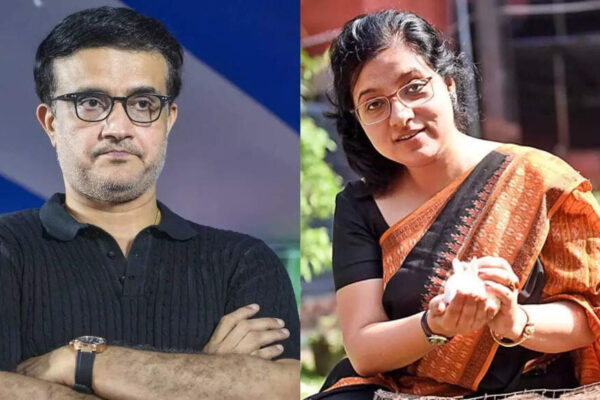
Former Indian captain Sourav Ganguly’s wife Dona files police complaint after facing abuse online

Former Indian captain Sourav Ganguly’s wife Dona files police complaint after facing abuse online

Sourav Ganguly and his wife Dona Dona Ganguly, a renowned Odissi dancer and wife of former Indian cricket captain Sourav Ganguly, has filed a police complaint regarding abusive and derogatory remarks directed at her on social media.She submitted her formal complaint at Thakurpukur police station, prompting authorities to launch an investigation against unknown individuals.The controversy…

Read More
Price gap widens: Luxury home prices in India’s top seven cities jump 40%, led by Delhi-NCR’s 72% surge

Price gap widens: Luxury home prices in India’s top seven cities jump 40%, led by Delhi-NCR’s 72% surge

Luxury home prices in India’s top seven cities appreciated 40% between 2022 and 2025, while affordable homes saw a more modest rise of 26%, according to an ANAROCK Research analysis of average price trends.Delhi and NCR recorded the highest average luxury home price appreciation at 72%, with prices jumping from Rs 13,450 per sq. ft….

Read More
Strawberry vs blueberry: Which berry supports nutrition and overall health |

Strawberry vs blueberry: Which berry supports nutrition and overall health |

Choosing between strawberries and blueberries might seem simple at first glance, but understanding how these two popular berries differ in nutritional content, health benefits, and practical dietary impact can help guide smarter choices. Both are celebrated for their antioxidant content, colourful appeal, and potential health-promoting properties, yet they affect the body in distinct ways. Strawberries…

Read More
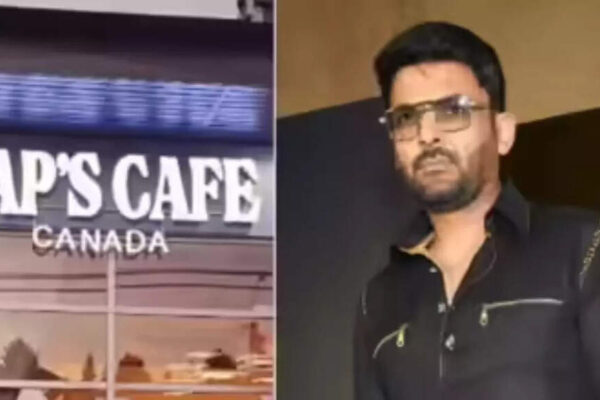
‘Goldy Dhillon gang had plans to kill Kapil Sharma if…’: Chilling details emerge in Canada Kap’s Cafe firing case

‘Goldy Dhillon gang had plans to kill Kapil Sharma if…’: Chilling details emerge in Canada Kap’s Cafe firing case

LUDHIANA: The Delhi Crime Branch on Friday arrested Ludhiana-based gangster Bandhu Maan Singh Sekhon, wanted by the Canadian authorities in connection with the shootings at comedian Kapil Sharma’s Kap’s Cafe in Surrey, Canada. During questioning, Sekhon revealed that the gang had planned to kill Kapil Sharma if the extortion money demanded from him was not…

Read More
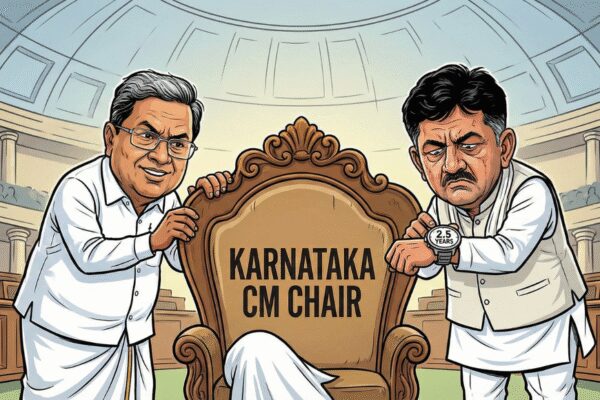
Karnataka’s Congress faces a leadership dilemma as Chief minister Siddaramaiah and deputy CM DK Shivakumar present a united front after intense speculation. The party grapples with balancing the influential AHINDA coalition and Vokkaliga support, crucial for its electoral success, as a potential midterm leadership change remains unresolved.  The Karnataka power struggle, simmering for months and boiling over in the past week, took an unexpectedly choreographed turn this morning. Chief minister Siddaramaiah and his deputy, DK Shivakumar, appeared together for a breakfast meeting in Bengaluru, their first joint engagement since the renewed speculation over a midterm change of leadership. Later, the two leaders held a brief press conference, presenting a picture of unity and saying that there were “no differences” even as the political machinery around them remains anything but settled.Their appearance did little to quiet the central question: whether the Congress should persist with Siddaramaiah for a full five-year term or honour what many in the party believe was an unwritten 2023 understanding to hand over the chief ministership to Shivakumar at the halfway mark. If anything, the carefully staged optics, forced by the Congress high command, only underscored the stakes. The party’s largest state government is caught between two leaders who represent different regions, different caste networks and different styles of politics. Both are indispensable. Neither can be easily sidelined.Also Read: What happened in high-stakes breakfast meet between CM Siddaramaiah, DK ShivakumarOver the past week, Karnataka’s political theatre were shifted from Vidhana Soudha to New Delhi, where groups of MLAs landed to press their case with the high command. Religious seers spoke out, caste associations issued warnings and cabinet colleagues have chosen their words with increasing precision.The AICC leadership might have been able to delay the decision for now but in reality confronts a dilemma that runs deeper than personalities in Karnataka: how to preserve the delicate alliance of AHINDA voters and Vokkaliga mobilisation that gave Congress 136 seats in 2023.The power-sharing question — never confirmed, never denied — has finally arrived at its moment of reckoning. Today’s show of unity may have bought time, but it has not resolved the question that will shape both the government’s stability and the party’s prospects in 2028: who should lead Karnataka for the remainder of this term, and at what political cost?The recent showdown was not merely a spat between two ambitious men. It is the product of a far deeper tension – between social coalitions and caste networks, between ideological appeal and organisational muscle, between the leader who brings votes and the one who converts those votes into victory. In Karnataka, Congress’s major bastion in the South, those forces have collided.Also Read: Did Congress high command fail to act on time, yet again?The question is no longer simply who sits in the chief minister’s chair. It is whether Congress can hold together the coalition that delivered it 136 seats in 2023, its best performance in Karnataka’s history, or whether the cracks visible recently will widen into a full-blown rupture.A deal that was never confirmed & never deniedWhen the Congress swept to power in May 2023, the celebration masked an immediate dilemma. The party had fought the election with two towering leaders – Siddaramaiah, the seasoned chief ministerial face who carried the AHINDA coalition of minorities, backward classes and Dalits; and DK Shivakumar, the state party president whose Vokkaliga influence and organisational firepower had helped dismantle the JD(S) in Old Mysuru.The question of who would lead was so contentious that party negotiators, meeting in a Bengaluru hotel for hours, were forced to engineer a delicate truce. What emerged was a dual arrangement: Siddaramaiah would become chief minister, and Shivakumar would serve as deputy CM and continue as state Congress chief.Officially, that was the end of it. Unofficially, almost everyone in Karnataka politics believed there was a rotation understanding – that Siddaramaiah would govern for 2.5 years and Shivakumar would take over for the latter half. The party never confirmed it. Neither leader openly acknowledged it.But neither denied it.This ambiguity held the coalition together – until now.Two men, two mandatesTo understand why this dispute has spiraled, it is important to understand the two fundamentally different power bases Siddaramaiah and Shivakumar command.The AHINDA architectSiddaramaiah, now in his late 70s, is not just another regional satrap. Born into a Kuruba OBC family and shaped by socialist politics, he crafted AHINDA (minorities, backward classes and Dalits) as a counterweight to dominant-caste politics. Over four decades, he turned it from an idea into a social bloc.AHINDA is not a single caste. It is a mosaic stretching across Karnataka – non-dominant OBCs in the north, Dalits in central districts, Muslims in urban clusters, tribals in forest belts. In 2023, they voted overwhelmingly for Congress.In many villages, Siddaramaiah is not referred to by name but as “nam’ma manushya” (our man). His welfare agenda, free bus travel for women, cash transfers, rice entitlements, subsidised power, deepened that connection. The Karnataka State Federation of Backward Class Communities (KSFBCC) has warned Congress that any attempt to unseat Siddaramaiah in the wake of power strife in the state will have a bearing on the party.The Vokkaliga strongmanDK Shivakumar, by contrast, emerged from the rugged, faction-ridden politics of Old Mysuru. His constituency, Kanakapura, is carved out of Vokkaliga heartland. His rise has been defined by a willingness to fight, sometimes literally, for political turf.Where Siddaramaiah speaks of social justice, Shivakumar speaks of loyalty. He is the organiser who mobilises crowds, funds campaigns, manages crises, and negotiates defections. He is also Congress’s biggest Vokkaliga face at a time when the JD(S) is weakened and the BJP is eyeing gains in the region.His win in 2023 was emphatic – 75% vote share, defeating former BJP deputy CM R Ashoka by over 1.2 lakh votes. For Vokkaligas, this proved his stature. For the Congress machine, it proved his indispensability.These two power structures, AHINDA and Vokkaliga, are not interchangeable. Congress relies on both. And that dependence is central to the present crisis.A map split between two political logicsKarnataka’s 2023 electoral map revealed a kind of dualism that Congress must navigate carefully.AHINDA-heavy Kalyana Karnataka delivered a decisive win for Siddaramaiah’s brand of welfare and identity politics.Old Mysuru, where Vokkaliga votes matter, swung unexpectedly towards Congress reflecting Shivakumar’s influence and organisational discipline.Lingayat-dominant regions, long considered BJP bastions, also saw surprising gains for Congress: the party improved from 20 seats in 2018 to 42 seats in 2023.Urban Bengaluru aligned with the party’s welfare pitch, especially among women and minority voters.Senior party officials involved in the campaign often describe the 2023 victory as the result of complementary strengths: Siddaramaiah’s ability to attract votes from marginalised groups and women, and Shivakumar’s ability to translate that support into seats through booth-level management.Both contributions were essential. And both now complicate the succession question.Delhi becomes the battlegroundIn recent days, the focus of Karnataka politics shifted to Delhi. Legislators aligned with Shivakumar traveled to the capital to meet senior party leaders, hoping to press the case for a midterm transition. According to people familiar with the meetings, these MLAs emphasised the perceived understanding on rotation and argued that the party’s credibility depended on honoring it.Meanwhile, Siddaramaiah has clearly stated that he intends to complete a full term and his supporters have emphasised the importance of administrative continuity and safeguarding the welfare-driven political coalition that brought the party its 2023 mandate. The backdoor meetings, public remarks by leaders and final admission by party chief Mallikarjun Kharge shows how complicated the decision is.The role of seers and community voicesIn Karnataka, religious heads of major communities play an important role in shaping political narratives. Several Vokkaliga seers publicly signaled support for Shivakumar’s claim to the chief ministership, emphasising that the community had not held the post since the early 2000s. This created additional pressure by framing the question as one of caste representation.AHINDA-aligned voices, meanwhile, conveyed concerns – either directly or through political messaging – that sidelining Siddaramaiah could weaken the social coalition that has backed Congress for over a decade. Their argument centered on stability and the electoral risks of alienating backward-class and Dalit voters.Siddaramaiah: Stability and mandateSiddaramaiah has maintained publicly that he intends to complete a full five-year term, saying earlier this year that he had been sworn in to govern for the entire duration. His position is anchored in administrative logic: major welfare programs require continuity and the party won the mandate with him as the projected chief ministerial face.Supporters of Siddaramaiah often point to the strong performance of AHINDA regions in 2023, arguing that any sudden shift in leadership could dilute the political momentum built around welfare schemes and social justice politics.Shivakumar: Organisation and representationShivakumar has largely avoided direct confrontation in public, consistently saying that the party leadership would decide the matter. But his camp’s position has been clear: many MLAs believe he was central to the 2023 victory and that the understanding reached during the post-election negotiations should be upheld.In addition to his organisational strengths, the political significance of the Vokkaliga community works in Shivakumar’s favour. With JD(S) weakened and BJP attempting to make inroads in Old Mysuru, elevating Shivakumar could help consolidate a valuable electoral base.A dilemma unlike any otherThe Congress’s central leadership must weigh several competing risks:If Siddaramaiah continues for the full term:Vokkaliga discontent could grow.Shivakumar’s organisational apparatus could lose enthusiasm.Old Mysuru gains may be difficult to sustain in 2028.If Shivakumar takes over midterm:AHINDA voters may feel sidelined.Welfare-driven governance could lose coherence.Siddaramaiah’s loyalists in the cabinet and administrative apparatus may resist or slow political implementation.If Congress announces a future-dated transition:Both camps may continue positioning themselves aggressively.Governance could enter a prolonged period of negotiation and factional balancing.MLAs may interpret any ambiguity as a sign to negotiate personal positions.Congress has faced similar leadership battles in Rajasthan, Madhya Pradesh and Chhattisgarh, and eventually lost the power in these states.What happens nextThe Congress high command – Sonia Gandhi, Rahul Gandhi and Mallikarjun Kharge – is expected to take a decision soon. Reports suggest the timing is tied to the upcoming Parliament session and the state assembly calendar.The possible outcomes are straightforward:Siddaramaiah continues for the full term, with cabinet adjustments to accommodate Shivakumar’s supporters.Shivakumar takes over now, with assurances of administrative stability and a negotiated division of responsibilities.A future-dated transition is announced, preserving temporary balance but delaying final resolution.Each scenario carries political risks that will reverberate through 2028, when Karnataka returns to the polls.The larger questionThe debate over succession has exposed a deeper question for Congress: Can the party manage a coalition built on two separate pillars when it must choose only one leader to represent it?Karnataka delivered Congress not just a numerical mandate, but a symbolic victory against the BJP’s national dominance. It showcased a model built on welfare, caste coalition-building and organisational renewal.If Congress handles the transition smoothly, Karnataka could remain a stronghold and a template. If it mishandles it, the state could fall out of the party’s hands, in a familiar cycle of its recent history.Either way, the central challenge remains unchanged:Congress must choose a leader without losing any camp.And in Karnataka, that has never been an easy choice.End of ArticleFollow Us On Social MediaVideosSiddaramaiah, DK Shivakumar Project Unity After High-Stakes Karnataka Meet Amid Rumours Of Cong RiftEU MP Filip Dewinter Labels Pakistan As A ‘Terror State’, Urges Europe To Act And Align With IndiaNepal’s Currency Map Includes Indian Land; Ex-Minister Calls Dialogue Essential Amid Rising TensionIndia’s Maritime Future Is Preordained: CDS Chauhan Predicts Indian Navy’s Decisive Warfighting RolePak Slams Rajnath’s Sindh Remark But Ignores Its Leader Claiming Gujarat, Rajasthan, Haryana As OwnIndiGo And Air India Warn Of Delays As Airbus Solar Radiation Snag Hits 350 A320 Jets In IndiaPakistan Faces Global Scrutiny as UN Flags Grave Risks to Rule of Law, Judicial Freedom, GovernanceCyclone Ditwah Approaches India: Tamil Nadu, Puducherry, Andhra Pradesh Brace For Impact’Op Sindoor Was Just A Glimpse Of Future Theatre Commands’: Air Marshal Ashutosh DixitPM Modi Unveils World’s Tallest Bronze Statue Of Lord Ram In South Goa123PhotostoriesYour soul temple: 6 powerful temples to visit in India based on personality types7 houseplants to avoid if you have kidsEveryday fashion inspired by Bollywood elegance and effortless celebrity charm influencing real life wardrobes across generations5 must visit places in Delhi for a fun weekend with kidsHow Dilwale Dulhania Le Jayenge rewrote the way India falls in loveHow Universe Communicate With You According To Your Birth Date7 everyday Indian foods that help improve your child’s memoryExpert-approved 3 best drinks and their right quantity to reverse fatty liver naturallyWeekly Cosmic Messages From November 29 To December 5, 2025 According To Your Birth DateBrainless but brilliant: 5 animals that survive without a brain123Hot PicksDelhi AQI TodayNew Labour CodeWorld NewsGold rate todaySilver rate todayPublic Holidays NovemberBank Holidays NovemberTop TrendingGiannis AntetokounmpoBo BichetteWWE Smackdown HighlightsDonald TrumpPerez HiltonCyclone DitwahR AshwinAyesha CurryFuzzy ZoellerJammie Booker

Karnataka’s Congress faces a leadership dilemma as Chief minister Siddaramaiah and deputy CM DK Shivakumar present a united front after intense speculation. The party grapples with balancing the influential AHINDA coalition and Vokkaliga support, crucial for its electoral success, as a potential midterm leadership change remains unresolved. The Karnataka power struggle, simmering for months and boiling over in the past week, took an unexpectedly choreographed turn this morning. Chief minister Siddaramaiah and his deputy, DK Shivakumar, appeared together for a breakfast meeting in Bengaluru, their first joint engagement since the renewed speculation over a midterm change of leadership. Later, the two leaders held a brief press conference, presenting a picture of unity and saying that there were “no differences” even as the political machinery around them remains anything but settled.Their appearance did little to quiet the central question: whether the Congress should persist with Siddaramaiah for a full five-year term or honour what many in the party believe was an unwritten 2023 understanding to hand over the chief ministership to Shivakumar at the halfway mark. If anything, the carefully staged optics, forced by the Congress high command, only underscored the stakes. The party’s largest state government is caught between two leaders who represent different regions, different caste networks and different styles of politics. Both are indispensable. Neither can be easily sidelined.Also Read: What happened in high-stakes breakfast meet between CM Siddaramaiah, DK ShivakumarOver the past week, Karnataka’s political theatre were shifted from Vidhana Soudha to New Delhi, where groups of MLAs landed to press their case with the high command. Religious seers spoke out, caste associations issued warnings and cabinet colleagues have chosen their words with increasing precision.The AICC leadership might have been able to delay the decision for now but in reality confronts a dilemma that runs deeper than personalities in Karnataka: how to preserve the delicate alliance of AHINDA voters and Vokkaliga mobilisation that gave Congress 136 seats in 2023.The power-sharing question — never confirmed, never denied — has finally arrived at its moment of reckoning. Today’s show of unity may have bought time, but it has not resolved the question that will shape both the government’s stability and the party’s prospects in 2028: who should lead Karnataka for the remainder of this term, and at what political cost?The recent showdown was not merely a spat between two ambitious men. It is the product of a far deeper tension – between social coalitions and caste networks, between ideological appeal and organisational muscle, between the leader who brings votes and the one who converts those votes into victory. In Karnataka, Congress’s major bastion in the South, those forces have collided.Also Read: Did Congress high command fail to act on time, yet again?The question is no longer simply who sits in the chief minister’s chair. It is whether Congress can hold together the coalition that delivered it 136 seats in 2023, its best performance in Karnataka’s history, or whether the cracks visible recently will widen into a full-blown rupture.A deal that was never confirmed & never deniedWhen the Congress swept to power in May 2023, the celebration masked an immediate dilemma. The party had fought the election with two towering leaders – Siddaramaiah, the seasoned chief ministerial face who carried the AHINDA coalition of minorities, backward classes and Dalits; and DK Shivakumar, the state party president whose Vokkaliga influence and organisational firepower had helped dismantle the JD(S) in Old Mysuru.The question of who would lead was so contentious that party negotiators, meeting in a Bengaluru hotel for hours, were forced to engineer a delicate truce. What emerged was a dual arrangement: Siddaramaiah would become chief minister, and Shivakumar would serve as deputy CM and continue as state Congress chief.Officially, that was the end of it. Unofficially, almost everyone in Karnataka politics believed there was a rotation understanding – that Siddaramaiah would govern for 2.5 years and Shivakumar would take over for the latter half. The party never confirmed it. Neither leader openly acknowledged it.But neither denied it.This ambiguity held the coalition together – until now.Two men, two mandatesTo understand why this dispute has spiraled, it is important to understand the two fundamentally different power bases Siddaramaiah and Shivakumar command.The AHINDA architectSiddaramaiah, now in his late 70s, is not just another regional satrap. Born into a Kuruba OBC family and shaped by socialist politics, he crafted AHINDA (minorities, backward classes and Dalits) as a counterweight to dominant-caste politics. Over four decades, he turned it from an idea into a social bloc.AHINDA is not a single caste. It is a mosaic stretching across Karnataka – non-dominant OBCs in the north, Dalits in central districts, Muslims in urban clusters, tribals in forest belts. In 2023, they voted overwhelmingly for Congress.In many villages, Siddaramaiah is not referred to by name but as “nam’ma manushya” (our man). His welfare agenda, free bus travel for women, cash transfers, rice entitlements, subsidised power, deepened that connection. The Karnataka State Federation of Backward Class Communities (KSFBCC) has warned Congress that any attempt to unseat Siddaramaiah in the wake of power strife in the state will have a bearing on the party.The Vokkaliga strongmanDK Shivakumar, by contrast, emerged from the rugged, faction-ridden politics of Old Mysuru. His constituency, Kanakapura, is carved out of Vokkaliga heartland. His rise has been defined by a willingness to fight, sometimes literally, for political turf.Where Siddaramaiah speaks of social justice, Shivakumar speaks of loyalty. He is the organiser who mobilises crowds, funds campaigns, manages crises, and negotiates defections. He is also Congress’s biggest Vokkaliga face at a time when the JD(S) is weakened and the BJP is eyeing gains in the region.His win in 2023 was emphatic – 75% vote share, defeating former BJP deputy CM R Ashoka by over 1.2 lakh votes. For Vokkaligas, this proved his stature. For the Congress machine, it proved his indispensability.These two power structures, AHINDA and Vokkaliga, are not interchangeable. Congress relies on both. And that dependence is central to the present crisis.A map split between two political logicsKarnataka’s 2023 electoral map revealed a kind of dualism that Congress must navigate carefully.AHINDA-heavy Kalyana Karnataka delivered a decisive win for Siddaramaiah’s brand of welfare and identity politics.Old Mysuru, where Vokkaliga votes matter, swung unexpectedly towards Congress reflecting Shivakumar’s influence and organisational discipline.Lingayat-dominant regions, long considered BJP bastions, also saw surprising gains for Congress: the party improved from 20 seats in 2018 to 42 seats in 2023.Urban Bengaluru aligned with the party’s welfare pitch, especially among women and minority voters.Senior party officials involved in the campaign often describe the 2023 victory as the result of complementary strengths: Siddaramaiah’s ability to attract votes from marginalised groups and women, and Shivakumar’s ability to translate that support into seats through booth-level management.Both contributions were essential. And both now complicate the succession question.Delhi becomes the battlegroundIn recent days, the focus of Karnataka politics shifted to Delhi. Legislators aligned with Shivakumar traveled to the capital to meet senior party leaders, hoping to press the case for a midterm transition. According to people familiar with the meetings, these MLAs emphasised the perceived understanding on rotation and argued that the party’s credibility depended on honoring it.Meanwhile, Siddaramaiah has clearly stated that he intends to complete a full term and his supporters have emphasised the importance of administrative continuity and safeguarding the welfare-driven political coalition that brought the party its 2023 mandate. The backdoor meetings, public remarks by leaders and final admission by party chief Mallikarjun Kharge shows how complicated the decision is.The role of seers and community voicesIn Karnataka, religious heads of major communities play an important role in shaping political narratives. Several Vokkaliga seers publicly signaled support for Shivakumar’s claim to the chief ministership, emphasising that the community had not held the post since the early 2000s. This created additional pressure by framing the question as one of caste representation.AHINDA-aligned voices, meanwhile, conveyed concerns – either directly or through political messaging – that sidelining Siddaramaiah could weaken the social coalition that has backed Congress for over a decade. Their argument centered on stability and the electoral risks of alienating backward-class and Dalit voters.Siddaramaiah: Stability and mandateSiddaramaiah has maintained publicly that he intends to complete a full five-year term, saying earlier this year that he had been sworn in to govern for the entire duration. His position is anchored in administrative logic: major welfare programs require continuity and the party won the mandate with him as the projected chief ministerial face.Supporters of Siddaramaiah often point to the strong performance of AHINDA regions in 2023, arguing that any sudden shift in leadership could dilute the political momentum built around welfare schemes and social justice politics.Shivakumar: Organisation and representationShivakumar has largely avoided direct confrontation in public, consistently saying that the party leadership would decide the matter. But his camp’s position has been clear: many MLAs believe he was central to the 2023 victory and that the understanding reached during the post-election negotiations should be upheld.In addition to his organisational strengths, the political significance of the Vokkaliga community works in Shivakumar’s favour. With JD(S) weakened and BJP attempting to make inroads in Old Mysuru, elevating Shivakumar could help consolidate a valuable electoral base.A dilemma unlike any otherThe Congress’s central leadership must weigh several competing risks:If Siddaramaiah continues for the full term:Vokkaliga discontent could grow.Shivakumar’s organisational apparatus could lose enthusiasm.Old Mysuru gains may be difficult to sustain in 2028.If Shivakumar takes over midterm:AHINDA voters may feel sidelined.Welfare-driven governance could lose coherence.Siddaramaiah’s loyalists in the cabinet and administrative apparatus may resist or slow political implementation.If Congress announces a future-dated transition:Both camps may continue positioning themselves aggressively.Governance could enter a prolonged period of negotiation and factional balancing.MLAs may interpret any ambiguity as a sign to negotiate personal positions.Congress has faced similar leadership battles in Rajasthan, Madhya Pradesh and Chhattisgarh, and eventually lost the power in these states.What happens nextThe Congress high command – Sonia Gandhi, Rahul Gandhi and Mallikarjun Kharge – is expected to take a decision soon. Reports suggest the timing is tied to the upcoming Parliament session and the state assembly calendar.The possible outcomes are straightforward:Siddaramaiah continues for the full term, with cabinet adjustments to accommodate Shivakumar’s supporters.Shivakumar takes over now, with assurances of administrative stability and a negotiated division of responsibilities.A future-dated transition is announced, preserving temporary balance but delaying final resolution.Each scenario carries political risks that will reverberate through 2028, when Karnataka returns to the polls.The larger questionThe debate over succession has exposed a deeper question for Congress: Can the party manage a coalition built on two separate pillars when it must choose only one leader to represent it?Karnataka delivered Congress not just a numerical mandate, but a symbolic victory against the BJP’s national dominance. It showcased a model built on welfare, caste coalition-building and organisational renewal.If Congress handles the transition smoothly, Karnataka could remain a stronghold and a template. If it mishandles it, the state could fall out of the party’s hands, in a familiar cycle of its recent history.Either way, the central challenge remains unchanged:Congress must choose a leader without losing any camp.And in Karnataka, that has never been an easy choice.End of ArticleFollow Us On Social MediaVideosSiddaramaiah, DK Shivakumar Project Unity After High-Stakes Karnataka Meet Amid Rumours Of Cong RiftEU MP Filip Dewinter Labels Pakistan As A ‘Terror State’, Urges Europe To Act And Align With IndiaNepal’s Currency Map Includes Indian Land; Ex-Minister Calls Dialogue Essential Amid Rising TensionIndia’s Maritime Future Is Preordained: CDS Chauhan Predicts Indian Navy’s Decisive Warfighting RolePak Slams Rajnath’s Sindh Remark But Ignores Its Leader Claiming Gujarat, Rajasthan, Haryana As OwnIndiGo And Air India Warn Of Delays As Airbus Solar Radiation Snag Hits 350 A320 Jets In IndiaPakistan Faces Global Scrutiny as UN Flags Grave Risks to Rule of Law, Judicial Freedom, GovernanceCyclone Ditwah Approaches India: Tamil Nadu, Puducherry, Andhra Pradesh Brace For Impact’Op Sindoor Was Just A Glimpse Of Future Theatre Commands’: Air Marshal Ashutosh DixitPM Modi Unveils World’s Tallest Bronze Statue Of Lord Ram In South Goa123PhotostoriesYour soul temple: 6 powerful temples to visit in India based on personality types7 houseplants to avoid if you have kidsEveryday fashion inspired by Bollywood elegance and effortless celebrity charm influencing real life wardrobes across generations5 must visit places in Delhi for a fun weekend with kidsHow Dilwale Dulhania Le Jayenge rewrote the way India falls in loveHow Universe Communicate With You According To Your Birth Date7 everyday Indian foods that help improve your child’s memoryExpert-approved 3 best drinks and their right quantity to reverse fatty liver naturallyWeekly Cosmic Messages From November 29 To December 5, 2025 According To Your Birth DateBrainless but brilliant: 5 animals that survive without a brain123Hot PicksDelhi AQI TodayNew Labour CodeWorld NewsGold rate todaySilver rate todayPublic Holidays NovemberBank Holidays NovemberTop TrendingGiannis AntetokounmpoBo BichetteWWE Smackdown HighlightsDonald TrumpPerez HiltonCyclone DitwahR AshwinAyesha CurryFuzzy ZoellerJammie Booker

The Karnataka power struggle, simmering for months and boiling over in the past week, took an unexpectedly choreographed turn this morning. Chief minister Siddaramaiah and his deputy, DK Shivakumar, appeared together for a breakfast meeting in Bengaluru, their first joint engagement since the renewed speculation over a midterm change of leadership. Later, the two leaders…

Read More
Updated: Nov 29, 2025, 14:54 IST

Updated: Nov 29, 2025, 14:54 IST

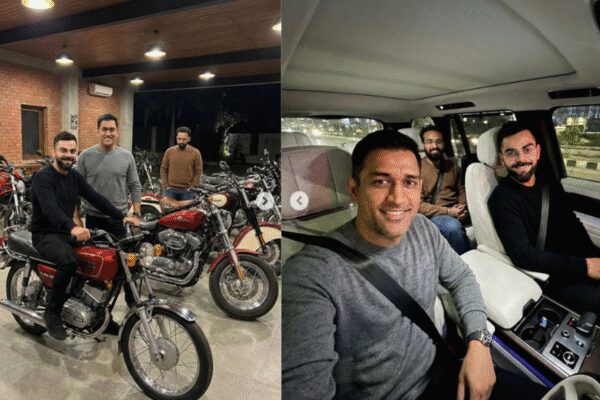
Virat Kohli & MS Dhoni (Insta) In the lead-up to India’s ODI series against South Africa, a fresh wave of excitement hit social media. Recently, a set of images featuring Virat Kohli and MS Dhoni went viral, showing Kohli sitting on Dhoni’s iconic Yamaha RX 100, a selfie of the two legends, and the duo…

Read More
Temba Bavuma calls Rohit Sharma and Virat Kohli ‘two living legends’, eager to face them on the field

Temba Bavuma calls Rohit Sharma and Virat Kohli ‘two living legends’, eager to face them on the field

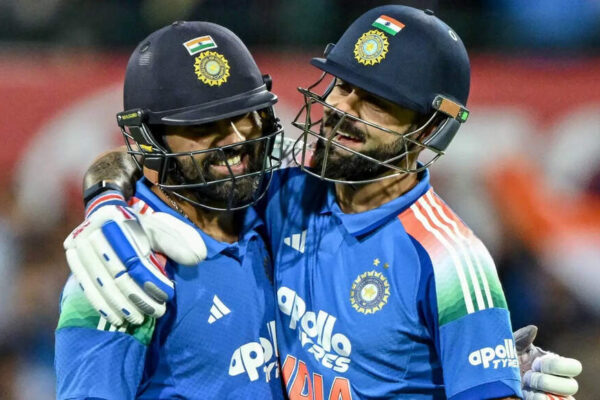
Rohit Sharma and Virat Kohli. (Image: File) South Africa cricket captain Temba Bavuma expressed excitement about facing Indian veterans Rohit Sharma and Virat Kohli in the upcoming three-match ODI series starting Sunday at JSCA International Stadium, highlighting the unique energy they bring to the field. The series will be played across Ranchi, Raipur and Visakhapatnam.The…

Read More
‘Phenomenally stupid’: Zerodha CEO Kamath sounds alarm on retail investors chasing pre-IPO gains; what he said

‘Phenomenally stupid’: Zerodha CEO Kamath sounds alarm on retail investors chasing pre-IPO gains; what he said

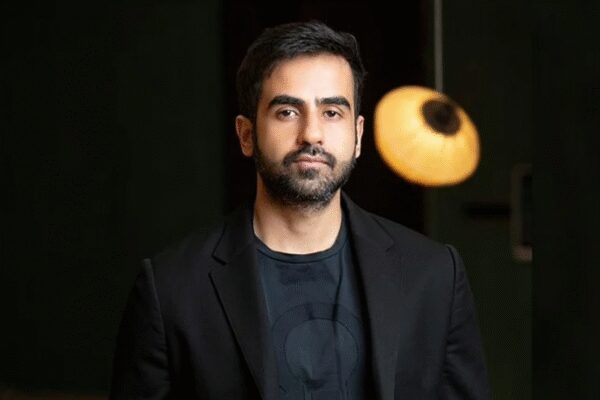
Zerodha founder and CEO Nithin Kamath cautioned retail investors against blindly chasing opportunities in India’s unlisted market, which is currently experiencing a surge in speculative activity. In a post on X Friday, Kamath said the ongoing IPO boom has fueled what he described as “phenomenally stupid” behaviour, with buyers eagerly seeking pre-IPO shares in hopes…

Read More
BSEB board exams 2026: Bihar board releases second dummy admit card for classes 10, 12, submit corrections by this date

BSEB board exams 2026: Bihar board releases second dummy admit card for classes 10, 12, submit corrections by this date

Bihar board releases second dummy admit card for classes 10, 12 The Bihar School Examination Board (BSEB) on Thursday, 28 November 2025, issued the second dummy admit card for students appearing in the Class 10 (Matric) and Class 12 (Intermediate) board exams scheduled for 2026. This release marks the final opportunity for students to verify…

Read More
Shah Rukh Khan opens up on how he got resilient in life

Shah Rukh Khan opens up on how he got resilient in life

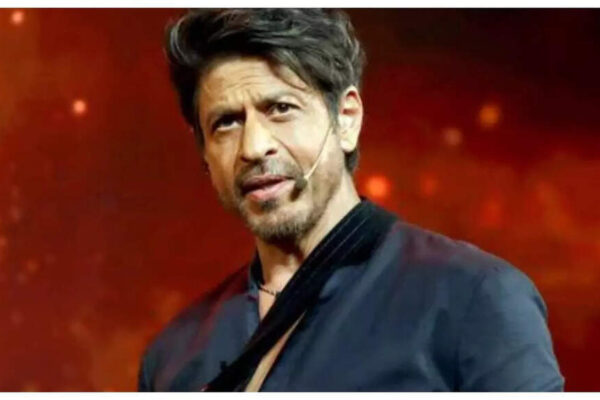
Bollywood superstar Shah Rukh Khan attributes his resilience through life’s challenges and career setbacks to humility and accepting both good and bad with grace. He shared this philosophy during his TED Talks India appearance, emphasizing that life’s experiences, including personal losses, have provided strength. Now, the actor is preparing for his next film, ‘King,’ alongside…

Read More
NBA trade rumors: Los Angeles Lakers predicted to chase 6 million Milwaukee Bucks star to form the league’s next superteam

NBA trade rumors: Los Angeles Lakers predicted to chase $186 million Milwaukee Bucks star to form the league’s next superteam

Giannis and LeBron (Image via Getty) Talk around the league has escalated as the Los Angeles Lakers are increasingly positioned as a potential landing spot for Milwaukee Bucks superstar Giannis Antetokounmpo. With the franchise eyeing a future built around Luka Dončić, the possibility of pairing him with another generational MVP has created a wave of…

Read More
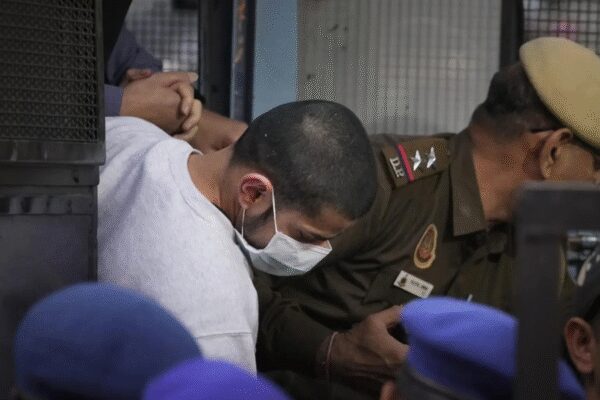
Gangster Lawrence Bishnoi’s brother, Anmol Bishnoi, has been remanded to NIA custody in Delhi following his extradition from the US. Wanted in several high-profile cases including the murder of NCP leader Baba Siddique, Anmol is accused of aiding terror activities and extortion from abroad. His arrest is part of a larger probe into a terror syndicate. (PTI photo) NEW DELHI: A Delhi court on Saturday extended the NIA custody of gangster Lawrence Bishnoi’s brother, Anmol Bishnoi. Just days earlier, Anmol, wanted in the NCP leader Baba Siddique murder case, was extradited from the United States to India. The NIA took him into custody immediately after he landed in Delhi.He was arrested in connection with a 2022 case probing an alleged nexus between criminal gangs in India and Babbar Khalsa International (BKI), which investigators say was used to raise funds, recruit youths, and plan terror attacks. According to the NIA, Anmol was accused of providing shelter and logistical support to gang shooters and operatives in the US “He was also allegedly engaged in extortion in India from foreign soil with the help of other gangsters,” the agency stated.Apart from being wanted in Baba Siddique’s murder case, Anmol is also accused in the firing at actor Salman Khan’s residence in April 2024 and the killing of Punjabi singer Sidhu Moosewala, among other crimes. He was “removed” from the US on November 18 after being detained there in November last year.On the run since 2022, the US-based Anmol is the 19th person arrested in the terror-syndicate case linked to his jailed brother, Lawrence Bishnoi. He was charged by the NIA in March 2023 after investigators concluded he had helped designated terrorist Goldy Brar and Lawrence Bishnoi carry out multiple crimes between 2020 and 2023.His deportation to India was coordinated by the NIA.About the AuthorTOI News DeskThe TOI News Desk comprises a dedicated and tireless team of journalists who operate around the clock to deliver the most current and comprehensive news and updates to the readers of The Times of India worldwide. With an unwavering commitment to excellence in journalism, our team is at the forefront of gathering, verifying, and presenting breaking news, in-depth analysis, and insightful reports on a wide range of topics. The TOI News Desk is your trusted source for staying informed and connected to the ever-evolving global landscape, ensuring that our readers are equipped with the latest developments that matter most.”Read MoreEnd of ArticleFollow Us On Social MediaVideosSiddaramaiah, DK Shivakumar Project Unity After High-Stakes Karnataka Meet Amid Rumours Of Cong RiftEU MP Filip Dewinter Labels Pakistan As A ‘Terror State’, Urges Europe To Act And Align With IndiaNepal’s Currency Map Includes Indian Land; Ex-Minister Calls Dialogue Essential Amid Rising TensionIndia’s Maritime Future Is Preordained: CDS Chauhan Predicts Indian Navy’s Decisive Warfighting RolePak Slams Rajnath’s Sindh Remark But Ignores Its Leader Claiming Gujarat, Rajasthan, Haryana As OwnIndiGo And Air India Warn Of Delays As Airbus Solar Radiation Snag Hits 350 A320 Jets In IndiaPakistan Faces Global Scrutiny as UN Flags Grave Risks to Rule of Law, Judicial Freedom, GovernanceCyclone Ditwah Approaches India: Tamil Nadu, Puducherry, Andhra Pradesh Brace For Impact’Op Sindoor Was Just A Glimpse Of Future Theatre Commands’: Air Marshal Ashutosh DixitPM Modi Unveils World’s Tallest Bronze Statue Of Lord Ram In South Goa123PhotostoriesYour soul temple: 6 powerful temples to visit in India based on personality types7 houseplants to avoid if you have kidsEveryday fashion inspired by Bollywood elegance and effortless celebrity charm influencing real life wardrobes across generations5 must visit places in Delhi for a fun weekend with kidsHow Dilwale Dulhania Le Jayenge rewrote the way India falls in loveHow Universe Communicate With You According To Your Birth Date7 everyday Indian foods that help improve your child’s memoryExpert-approved 3 best drinks and their right quantity to reverse fatty liver naturallyWeekly Cosmic Messages From November 29 To December 5, 2025 According To Your Birth DateBrainless but brilliant: 5 animals that survive without a brain123Hot PicksDelhi AQI TodayNew Labour CodeWorld NewsGold rate todaySilver rate todayPublic Holidays NovemberBank Holidays NovemberTop TrendingGiannis AntetokounmpoBo BichetteWWE Smackdown HighlightsDonald TrumpPerez HiltonCyclone DitwahR AshwinAyesha CurryFuzzy ZoellerJammie Booker

Gangster Lawrence Bishnoi’s brother, Anmol Bishnoi, has been remanded to NIA custody in Delhi following his extradition from the US. Wanted in several high-profile cases including the murder of NCP leader Baba Siddique, Anmol is accused of aiding terror activities and extortion from abroad. His arrest is part of a larger probe into a terror syndicate. (PTI photo) NEW DELHI: A Delhi court on Saturday extended the NIA custody of gangster Lawrence Bishnoi’s brother, Anmol Bishnoi. Just days earlier, Anmol, wanted in the NCP leader Baba Siddique murder case, was extradited from the United States to India. The NIA took him into custody immediately after he landed in Delhi.He was arrested in connection with a 2022 case probing an alleged nexus between criminal gangs in India and Babbar Khalsa International (BKI), which investigators say was used to raise funds, recruit youths, and plan terror attacks. According to the NIA, Anmol was accused of providing shelter and logistical support to gang shooters and operatives in the US “He was also allegedly engaged in extortion in India from foreign soil with the help of other gangsters,” the agency stated.Apart from being wanted in Baba Siddique’s murder case, Anmol is also accused in the firing at actor Salman Khan’s residence in April 2024 and the killing of Punjabi singer Sidhu Moosewala, among other crimes. He was “removed” from the US on November 18 after being detained there in November last year.On the run since 2022, the US-based Anmol is the 19th person arrested in the terror-syndicate case linked to his jailed brother, Lawrence Bishnoi. He was charged by the NIA in March 2023 after investigators concluded he had helped designated terrorist Goldy Brar and Lawrence Bishnoi carry out multiple crimes between 2020 and 2023.His deportation to India was coordinated by the NIA.About the AuthorTOI News DeskThe TOI News Desk comprises a dedicated and tireless team of journalists who operate around the clock to deliver the most current and comprehensive news and updates to the readers of The Times of India worldwide. With an unwavering commitment to excellence in journalism, our team is at the forefront of gathering, verifying, and presenting breaking news, in-depth analysis, and insightful reports on a wide range of topics. The TOI News Desk is your trusted source for staying informed and connected to the ever-evolving global landscape, ensuring that our readers are equipped with the latest developments that matter most.”Read MoreEnd of ArticleFollow Us On Social MediaVideosSiddaramaiah, DK Shivakumar Project Unity After High-Stakes Karnataka Meet Amid Rumours Of Cong RiftEU MP Filip Dewinter Labels Pakistan As A ‘Terror State’, Urges Europe To Act And Align With IndiaNepal’s Currency Map Includes Indian Land; Ex-Minister Calls Dialogue Essential Amid Rising TensionIndia’s Maritime Future Is Preordained: CDS Chauhan Predicts Indian Navy’s Decisive Warfighting RolePak Slams Rajnath’s Sindh Remark But Ignores Its Leader Claiming Gujarat, Rajasthan, Haryana As OwnIndiGo And Air India Warn Of Delays As Airbus Solar Radiation Snag Hits 350 A320 Jets In IndiaPakistan Faces Global Scrutiny as UN Flags Grave Risks to Rule of Law, Judicial Freedom, GovernanceCyclone Ditwah Approaches India: Tamil Nadu, Puducherry, Andhra Pradesh Brace For Impact’Op Sindoor Was Just A Glimpse Of Future Theatre Commands’: Air Marshal Ashutosh DixitPM Modi Unveils World’s Tallest Bronze Statue Of Lord Ram In South Goa123PhotostoriesYour soul temple: 6 powerful temples to visit in India based on personality types7 houseplants to avoid if you have kidsEveryday fashion inspired by Bollywood elegance and effortless celebrity charm influencing real life wardrobes across generations5 must visit places in Delhi for a fun weekend with kidsHow Dilwale Dulhania Le Jayenge rewrote the way India falls in loveHow Universe Communicate With You According To Your Birth Date7 everyday Indian foods that help improve your child’s memoryExpert-approved 3 best drinks and their right quantity to reverse fatty liver naturallyWeekly Cosmic Messages From November 29 To December 5, 2025 According To Your Birth DateBrainless but brilliant: 5 animals that survive without a brain123Hot PicksDelhi AQI TodayNew Labour CodeWorld NewsGold rate todaySilver rate todayPublic Holidays NovemberBank Holidays NovemberTop TrendingGiannis AntetokounmpoBo BichetteWWE Smackdown HighlightsDonald TrumpPerez HiltonCyclone DitwahR AshwinAyesha CurryFuzzy ZoellerJammie Booker

NEW DELHI: A Delhi court on Saturday extended the NIA custody of gangster Lawrence Bishnoi’s brother, Anmol Bishnoi. Just days earlier, Anmol, wanted in the NCP leader Baba Siddique murder case, was extradited from the United States to India. The NIA took him into custody immediately after he landed in Delhi.He was arrested in connection…

Read More