
‘You’re not sounding like an interesting actor’

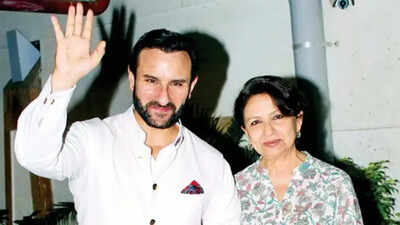
For Saif Ali Khan, finding his footing as an actor was a gradual process. His breakthrough as the charming urban man in Hindi cinema came with Dil Chahta Hai, directed by Farhan Akhtar. But years later, another landmark project revealed a far more intense side to his acting, one that he would later revisit in titles like Laal Kaptaan, Sacred Games, and his latest Netflix film, ‘Kartavya’.Reflecting on his journey, Saif says, “When you look back at your career, not everything is a highlight. There are some highlights, and that’s good enough. Omkara is definitely something I’m proud of. Sacred Games even more so, in a way. I don’t think if there’s a connection between the two, but they both stood out when you look back at some pieces of work that stand out in shining letters.”Interestingly, Saif credits his mother, veteran actor Sharmila Tagore, for pushing him to explore deeper, more meaningful roles. Recalling her advice, he shares, “There was a time when she told me you’re not sounding like a very interesting actor. You have to balance your choices and think more creatively. That was when I was taking things for granted a bit.”Though he cannot clearly place the moment in time, whether it was during the 1990s or early 2000s, Saif remembers the conversation vividly. He had once excitedly mentioned shooting a film in France, only for his mother to respond, “When are you going to tell me you’re doing an interesting role?” Looking back, Saif says, “She saw more potential. So, she was nudging me in her way to wake up.”The actor also believes the rise of streaming platforms in India opened up fresh creative possibilities. It allowed him to collaborate with filmmakers such as Anurag Kashyap, Vikramaditya Motwane, and Pulkit, partnerships that may not have happened within the conventional theatrical system. Pulkit, who directs Kartavya, had recently spoken about how streaming projects felt liberating after the pressure surrounding his theatrical film Maalik starring Rajkummar Rao.Saif, however, views it differently. “I don’t know if it should be seen as a relief,” he says. “There have always been all kinds of filmmakers. There are some commercial ones with their eyes on the Friday number, which means there’s a certain kind of energy required for that, whatever that is, I don’t know. But then there are some filmmakers with more artistic scope, who didn’t have an option but to release their films in the same way.”For him, streaming platforms have emerged as “an important, alternate expression” for storytellers seeking creative freedom. “There are some films I’d love to work in, which people wouldn’t take a chance with to release in theatres. But I think even Netflix and other streaming platforms want you to get entertained, so it’s all eventually competitive,” he adds.


