
World Cup 2026: Is FIFA destroying the American matchday experience by banning tailgating? | International Sports News

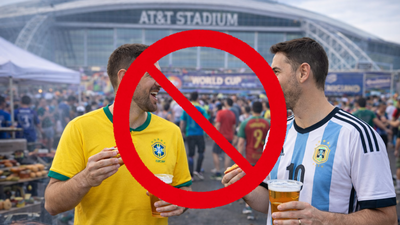
For many people travelling to the United States for the World Cup, the idea of an American matchday arrives already formed, shaped as much by familiarity as by experience. It leans into a well-worn Hollywood image: hot dogs on a grill, coolers packed with beer, music in the background, tents pitched and trucks lined up hours before kickoff. If there’s a television, it gets propped up somewhere between the boot and a folding chair so the earlier matches can run in the background. You don’t need a ticket to be part of it. You just need to turn up.That version of the day has always sat slightly outside the official one, operating in its own space alongside the stadium experience. It doesn’t belong to the league, the stadium, or the organisers so much as it belongs to the people who show up.That part of the experience will be largely absent at the 2026 World Cup in the United States.Multiple reports indicate that FIFA plans to prohibit traditional tailgating at several major US venuues, including MetLife Stadium, Arrowhead Stadium and Gillette Stadium. Parking at some sites, particularly MetLife, is expected to be heavily restricted or unavailable. In its place, supporters are being directed towards organised fan zones and hospitality areas, spaces that can be controlled, ticketed and, more importantly, managed.FIFA has not offered a detailed public explanation. The reasoning, as it stands, has to be inferred from the shape of the tournament and the problems it is trying to avoid.
How the tournament is set up, and where the pressure points are
The 2026 World Cup stretches across three countries and 16 host venues, with the United States staging 11 of them and hosting the majority of matches, including all from the quarter-finals onward. The first match on US soil is scheduled for June 12, 2026, when the United States face Paraguay at SoFi Stadium, a day after the tournament officially opens in Mexico City.Many of the American stadiums in use, AT&T Stadium, NRG Stadium, Levi’s Stadium, were built in suburban settings over the past two to three decades. They are designed around car access and large surrounding parking lots.That design works differently under World Cup conditions. Instead of staggered arrivals over several hours, large numbers of supporters tend to move within tighter windows, often with additional security layers and international travel variables. Parking areas that normally absorb that flow can become gathering points that are harder to manage once they fill up.The memory of the 2024 Copa América final in Miami still lingers in that context, where large crowds outside Hard Rock Stadium overwhelmed entry points, causing bottlenecks, delays to kickoff and forcing organisers to manage not just the matchday crowd inside the ground but also the growing one at the perimeter.
What tailgating is, and why it matters in the US
Tailgating, in the American sense, is not just eating before a game. It is part of how the day is lived.Fans gather in parking lots, opening up car boots into makeshift setups with grills, coolers, music and sometimes small TVs. They show up hours early, settle in, and the whole thing builds slowly long before kickoff. It turns into a familiar pre-match routine where people meet, eat, and pass the time together.
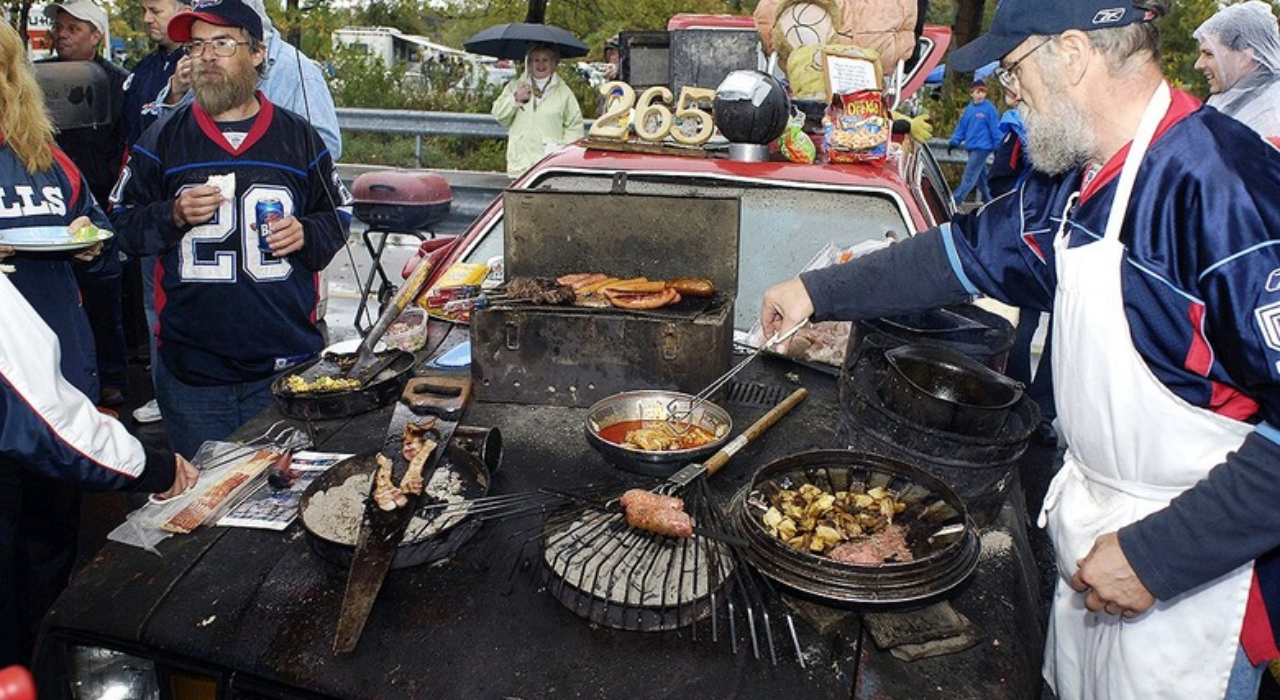
Tailgating involves pre-match gatherings in stadium parking lots with grills, food, drinks and fan rituals./ image: AP Photo/Don Heupel
It also has a practical and economic side. Tickets, particularly for events on this scale, are expensive and limited. Turning up with friends, setting up outside, watching on a small screen, and following the crowd noise spilling from the stadium has long been an accepted version of attendance. It is participation without entry, and for many, it is the only practical way of being there.The habit itself has a longer history than the stadiums it now surrounds. What might be considered the first American tailgate took place on July 21, 1861, when Washington residents travelled by carriage into Virginia to watch the First Battle of Bull Run, packing food and gathering while following the sound of artillery from a distance. By 1869, similar behaviour appeared around early football matches, with spectators picnicking from wagons at Rutgers–Princeton games. In the 1880s, Yale–Princeton crowds were even reported enjoying food and drink from horse-drawn coaches, marking the early evolution of a social viewing ritual.
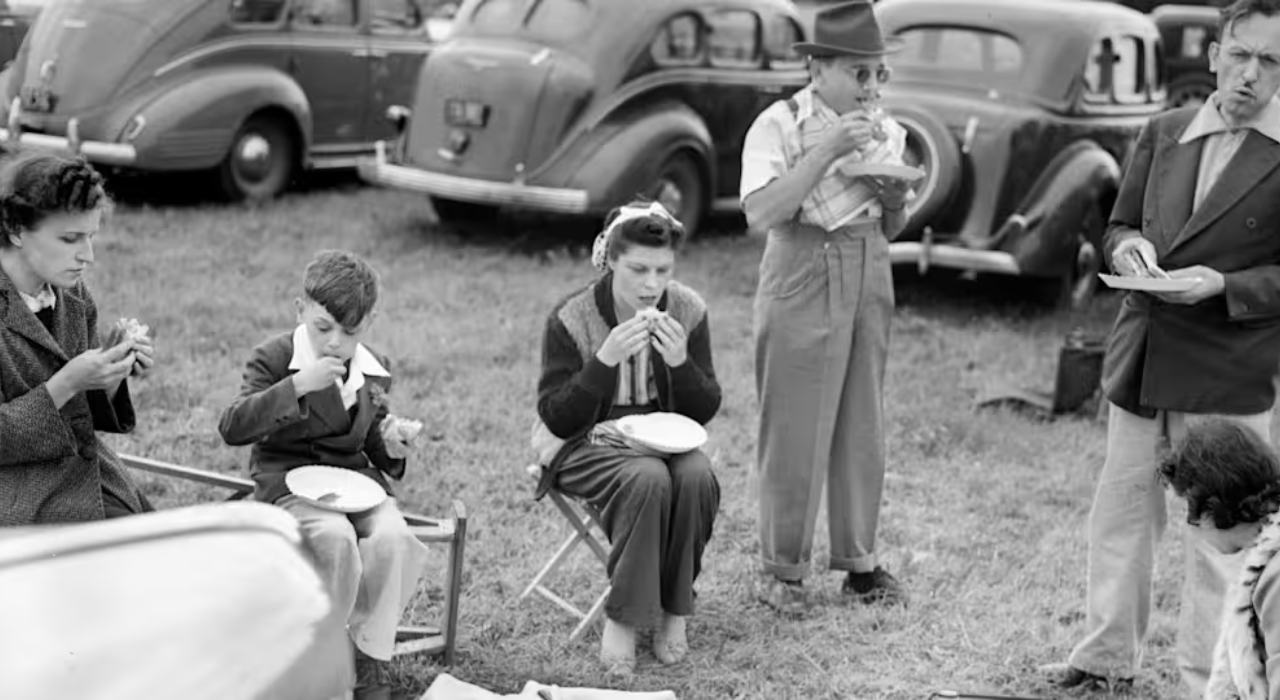
Fans in Chicago tailgating, circa 1940s. / Kirn Vintage Stock/Corbis via Getty Images
The hidden cost of attending the World Cup
As if ticket prices, which for major World Cup fixtures can run into the thousands of dollars depending on the stage and location, are not enough, multiple reports have noted that transport costs on matchdays are also expected to see a sharp increase.Public Transit is expected to carry a larger share of the burden, with fares increasing sharply across host cities. In New Jersey, travel to MetLife Stadium from New York Penn Station, typically under $13, is expected to exceed $100 during the tournament, according to The Athletic. In Boston, journeys to Gillette Stadium have been priced around $80, with bus options reaching $95.
How other World Cups have handled the same problem
In recent World Cup memory, the question of how to move and manage large crowds has been handled more cleanly than what currently appears to be taking shape in the United StatesAt the 2022 FIFA World Cup, which was hosted by Qatar across compact venues in and around Doha, transport was built into the tournament structure. Ticket holders were given free access to the Doha Metro, buses and trams through the Hayya Card system, with clear routing between stadiums and fan areas.A similar logic was in place at the 2018 FIFA World Cup, which Russia hosted across multiple cities. Ticket holders who registered for a Fan ID were given free transport within host cities and access to more than 700 additional long-distance trains running between venues. Journeys that might otherwise have been logistical hurdles were folded into the structure of the tournament itself, so supporters could move between cities and stadiums without needing to organise travel separately.In both cases, supporters spent most of their time either in transit, in designated fan zones, or inside the stadium. The space immediately around the venues remained tightly controlled, and in both instances the hosts built their planning around that reality, accommodating the large logistical demands of moving crowds between transport links, fan areas and stadiums in a way that kept the overall flow more organised and welcoming.The United States does not map onto that model as neatly, and by the looks of it does not appear too willing to fully adapt to it. Its stadiums are often built on the outskirts of cities, far from dense public transport links, which makes getting to and from venues more dependent on cars, parking and organised shuttles. With transport costs also expected to rise sharply on matchdays, the combined effect is a system that feels less accommodating for supporters, with limited ease or flexibility in how fans move around the stadium environment.


