
Why your airtight room could make you sick this winter? |

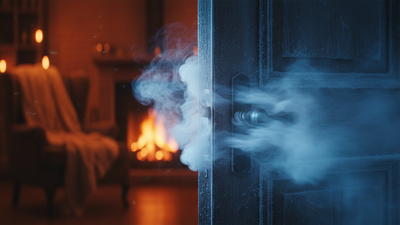
After months of summer heat, you naturally want to make your house cosier when the temperature finally drops. You seal the drafty windows, weatherstrip the doors, and retain as much heat as possible within. It seems sensible and useful. The problem is that the air you breathe in a securely sealed chamber may be worse than you realise, and it might pose a health concern.The real cost of keeping the cold outSealing your house is effective. Research published in the Journal of Building Engineering shows that tightening a building’s envelope can lower heating requirements by 20 to 30%. It is a significant reduction in your energy bill, which is why modern building codes require higher airtightness standards.However, there is a catch. The air trapped in your home is constantly recirculating. Stale indoor air is not just uncomfortable; it also contains every harmful substance, including carbon dioxide from your body, volatile organic compounds (VOCs) released from your furniture, and formaldehyde from the pressed wood used for furniture. Stagnant air in a room with low ventilation will continue to build up until there are no further fresh air exchanges in the home.You can actually over-seal a roomPeople are often surprised by this part. There comes a time when sealing does more harm than good. The abovementioned research found a clear link: when airtightness increases without proper ventilation, CO2 levels inside the house rise. If you spend a lot of time in a room with high CO2 levels, you might feel tired and foggy. You might think this is because of the weather or not getting enough sleep, but it is really just because your room needs fresh air.However, there is a bright side. If you live in a city with high outdoor air pollution, a tighter seal can keep PM2.5 particles and nitrogen dioxide from entering your home.

Over-sealing without proper ventilation leads to poor air quality and potential health issues.
The window-cracking habit that actually worksIf you do not want to have to choose between warmth and clean air, what should you do? The answer is surprisingly low-tech: short, planned bursts of fresh air. A study in the journal Buildings found that short, well-timed windows of natural ventilation can greatly reduce indoor particulate matter, such as that from cooking and heating, without lowering room temperature. You are not letting the air out for hours; you are just opening a window for a few minutes.The key is timing. You can let stale air out of a window without losing the heat you have built up by fully opening it in the morning or evening when it is cooler. On the other hand, a window that is only partially open does not always let in enough fresh air; it just makes the room feel cold.Moisture is a silent problemHumidity is another important thing that does not get enough attention. Ventilation affects air quality and directly influences how much moisture builds up in your space. This can cause condensation on your walls, which can lead to mould. Depending on how much air flow there is, indoor spaces go through different stages. When there is insufficient airflow, the air becomes warm and damp, and condensation forms. When there is too much airflow, cold drafts form. Finding the right balance, ideally with some way to control the temperature of the air coming in, keeps your walls dry and your lungs healthy.Your habits matter moreIf the person living in the space does not know how to use it, even the best mechanical ventilation system will not work well. How and when you open windows, as well as other things you do, have a big effect on the quality of the air inside. It is not about being an expert in ventilation; it is about being more careful. You need to keep in mind that partial window openings are often not enough. Cooking and heating raise the number of particles in the air inside, and a little bit of real airflow can make a big difference.The takeawayIt is not wrong to seal your room when it gets cold; it is just not a full plan. The goal is not to make everything as airtight as possible; it is to make it smartly airtight by sealing where it matters, letting air in on purpose, and paying attention to the air you breathe. You can save money on your energy bill and keep your lungs healthy this winter if you do it right.


