
Why a Shanghai grandpa gave away his Rupees 1.4 Crore flat to a stranger who showed him kindness

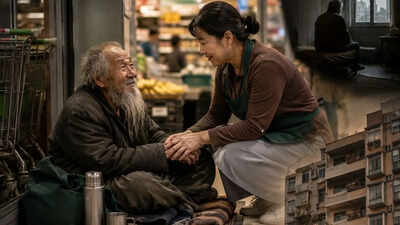
Loneliness does not always look dramatic. Sometimes, it sits beside a person in an empty room, waits through silent meals, and slowly changes the meaning of home. That is what makes the story of 78-year-old Qiangming from Shanghai so deeply emotional.For nearly 10 years, the elderly man chose to sleep at the staff entrance of a supermarket instead of living inside his own apartment worth nearly one million yuan. He was not homeless. He owned a flat nearby. But after a painful divorce and years of distance from his son, the fear of growing old alone became stronger than the comfort of walls and furniture.Then, one small act of care changed his life.A nanny named Huang, who visited the supermarket while caring for another elderly person, noticed him. She washed his hair, brought him meals, cleaned him up, and slowly gave him something that had disappeared from his life long ago, human warmth.Their unusual bond has now sparked a fierce debate across China. Was this genuine compassion? Was it an exchange built on emotional need and financial security? Or was it both at the same time?The story has become far bigger than a property dispute. It has opened painful conversations about ageing, loneliness, family breakdown, and the emotional cost of growing old in modern cities.
A man who feared dying alone more than poverty
Qiangming’s life in the supermarket shocked many people online. He slept on a mat, carried cash in his pocket, and spent his days in the store’s dining area. His appearance often made people mistake him for a beggar. But he repeatedly described himself as a “drifter”, not someone without means.What he truly lacked was companionship.According to reports, his relationship with his son collapsed after his divorce in 2000. The emotional distance grew so large that they stopped speaking. The flat that could have been a safe place slowly became a symbol of isolation.The US government’s National Institute on Aging has noted that social isolation increases the risk of depression, heart disease, cognitive decline, and even premature death.Qiangming’s decision to avoid living alone may sound unusual, but experts say many elderly people quietly struggle with the same fear.
The nanny who became family
When Huang first met Qiangming in 2021, she was simply accompanying another elderly client to the supermarket. But her kindness slowly transformed his daily life.She washed his hair. She brought food. She helped him look cleaner and healthier. Old neighbours reportedly noticed the difference immediately. For someone who had spent years drifting emotionally and physically, this care carried enormous meaning.Qiangming eventually called Huang his “daughter” and decided to leave his apartment to her in return for lifelong care.To many people online, the arrangement sounded transactional. But experts on elderly care say such arrangements are becoming increasingly common in ageing societies, especially where family support systems are weakening.In many societies, caregiving itself is emotional labour. It demands patience, time, emotional energy, and sacrifice. People online who defended Huang argued that meaningful care should not automatically become suspicious simply because money or property is involved.One comment from the online debate captured this tension clearly: “You certainly cannot expect strangers to look after you for free?”
The painful battle between blood ties and chosen bonds
The situation became more complicated when Qiangming attempted to legally transfer his property and establish a voluntary guardianship agreement with Huang.Chinese authorities required notification of his son. The son strongly opposed the arrangement, accused Huang of manipulation, and took the matter to court. Eventually, the son won legal ownership of the flat.This part of the story divided public opinion sharply.Some people believed the son was protecting his father from exploitation. Others questioned why the son, who had reportedly remained distant for years, became involved only when property entered the discussion.The emotional question at the centre of the case is uncomfortable but universal: Does family depend only on blood, or can care create family too?Modern societies are increasingly confronting this issue. Across many countries, elderly people are relying more on friends, neighbours, paid carers, and chosen support systems instead of traditional family structures.In response to such growing concerns, Shanghai reportedly introduced new rules this year allowing government bodies and organisations to supervise voluntary guardianship agreements. The move aims to protect both elderly citizens and caregivers from abuse, manipulation, or legal uncertainty.The case also reveals how law and emotion do not always move together. Courts can decide ownership. But they cannot repair emotional distance.
Why this story struck such a nerve online
Millions reacted strongly because the story touches fears many people rarely say aloud.People fear abandonment. They fear ageing alone. They fear becoming emotionally invisible.In fast-moving cities, elderly people are surrounded by crowds yet deeply isolated. Children move away. Marriages break down. Friend circles shrink. Physical weakness increases dependence on others. Sometimes, even a brief act of kindness becomes life-changing.That is why the supermarket itself became symbolic in this story. It was not simply a store. For Qiangming, it became a social space, a shelter, and perhaps the only place where he did not feel entirely forgotten.The reaction online shows that many people recognised this emotional poverty immediately.
Beyond property, this is really a story about dignity
After losing ownership of the flat, Qiangming reportedly continued depending on Huang, who even took him to sleep at her rented apartment because she worried for his safety.That detail says more than the legal battle ever could.The story is no longer just about inheritance. It is about dignity in old age. It is about whether elderly people receive emotional care only when property is involved. It is also about how societies value caregivers, especially women who quietly carry emotional and physical burdens for ageing populations.There are no easy heroes or villains here. The son may have acted out of legal concern. Huang may genuinely care for the elderly man while also benefiting financially. Qiangming himself may simply be searching for emotional safety in the final chapter of his life.Human relationships are often far more layered than internet debates allow.But perhaps the saddest truth is this: a man with a home still felt homeless.And that feeling is becoming more common around the world than many societies are prepared to admit.Disclaimer: This article is based on reports published by the South China Morning Post and discussions surrounding the case in Chinese media. The story reflects claims and legal developments reported publicly at the time. The article is intended for informational and human-interest purposes only and does not offer legal or psychological advice.


