
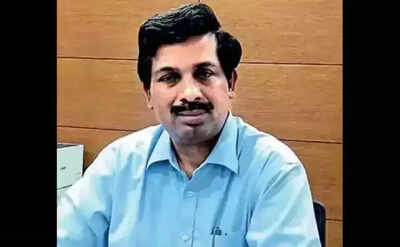
V Umashankar (File photo) NEW DELHI: Mere awareness drives or campaigns will not be enough to reduce violations of road traffic rules and road crashes; rather, the “certainty of enforcement” will have a greater deterrent impact, Union road transport secretary V Umashankar said on Thursday while sharing details of the recently notified e-challan rules. Speaking at the release of the New Delhi Road Safety Declaration at the National Road Safety Confluence held at the Indian Institute of Technology Delhi, Umashankar questioned whether a juvenile (referring to a recent case in Delhi) did not know that he was underage and should not have been driving a car, or whether the vehicle owner who modified a tourist bus — resulting in the deaths of more than 20 people in a fire — did not know that such modifications were illegal. “Forty-five percent of fatalities involve two-wheelers or people riding two-wheelers. We find that most of these deaths occurred because the rider was not wearing a helmet. Does he not know that wearing a helmet is good for him?” he observed. Umashankar said, “Awareness is not enough — what we need is organised, district-level action, backed by certainty of enforcement and supported by strong institutions. When compliance becomes a habit and accountability becomes certain, road safety will move from intention to impact.” Mats-Ake Belin, global lead for the Decade of Action for Road Safety at the World Health Organization, said that road safety is now firmly on the global agenda, with strong political and media attention. “Our responsibility is to move beyond awareness and ensure consistent, evidence-based implementation so that no country is left behind in preventing road traffic deaths,” he added. The New Delhi Road Safety Declaration, aligned with the WHO Decade of Action for Road Safety, states that India records the highest number of road fatalities globally, with vulnerable road users — such as pedestrians, cyclists, two-wheeler riders, gig workers, and rural communities — being the most affected. Despite several initiatives, the absence of coordinated, institution-led action has limited national impact. “The declaration addresses this gap by adopting a Safe System approach, placing human life at the centre of all mobility decisions,” it said. The declaration, spearheaded by the Bharat Association of Road Safety Volunteers (BARS), an organisation comprising members from diverse fields, has set five pillars of action: strengthening road safety management through leadership at all levels; promoting open crash data, annual public reviews, dedicated funding, and enhanced enforcement; ensuring safer vehicles and fleets; promoting safer road users and improved post-crash response; and creating a safer driving environment.Participants included representatives from ministries, WHO and other multilateral agencies, civil society, academia, industry bodies, OEMs, technology innovators, and youth groups.End of ArticleFollow Us On Social MediaVideosEpstein Files: King Charles’ Brother & UK’s Former Prince Andrew Arrested For ‘Misconduct In Office'”We Can’t Be Seen As Weak”: Tharoor’s Bold Claim On Rafale Deal“Nothing Like Money”: Donald Trump Says 200% Tariff Warning Stopped India-Pak FightRishi Sunak Highlights India’s Rise As Global AI Powerhouse At Impact Summit’Don’t See How People Criticise!’ French President Emmanuel Macron Defends India-France Rafale DealFrom India To Bharat: PM Modi’s Nameplate Grabs Eyes, Draws Global Attention At AI Impact Summit’Challenges At Sea More Complex, Interconnected’, Says Rajnath Singh At MILAN 2026 Naval ExerciseRussia Affirms India Still Buys Russian Oil, Rejects Recent US Statements’India Well Positioned To Lead The World In AI’: OpenAI CEO Sam Altman At AI Impact SummitAI Rivals Altman, Amodei Snub Each Other, Turns India AI Impact Summit Photo Op With PM Modi Awkward123PhotostoriesThe 50: Prince Narula, Mr Faisu, Rajat Dalal to Shiv Thakare: Meet the Top 12 contestants of the reality show5 Vastu-approved fish to keep in your home aquarium for luck and prosperityChef Sanjeev Kapoor’s microwave cleaning tips will make your kitchen life easier5 times Bad Bunny made headlinesWhat’s it like to visit Jhalana Leopard Safari Park in Rajasthan?Top 5 shows to watch on OTT before ‘House of the Dragon Season 3’ arrives7 New High-Speed Rail Corridors! On Which Routes Will Bullet Trains Run In India? Check Cities, Travel Time – Top DetailsRamadan 2026: How to make Chicken Malai Tikka in an air fryer in under 20 minutes7 natural sleep experts from the animal kingdom8 popular types of cars and what they’re best used for123Hot PicksCigarette price hikeGold rate todayITC shareMadhya Pradesh budget 2026–27Income Tax CalculatorPublic holidays February 2026Bank Holidays februaryTop TrendingDeenTheGreatLarry WheelsMikaela ShiffrinNPCIL admit cardGate 2026 Answer KeyDTU ResultMukesh AmbaniBasit AliNBA Trade NewsTamil Nadu Free Electricity

NEW DELHI: Mere awareness drives or campaigns will not be enough to reduce violations of road traffic rules and road crashes; rather, the “certainty of enforcement” will have a greater deterrent impact, Union road transport secretary V Umashankar said on Thursday while sharing details of the recently notified e-challan rules. Speaking at the release of the New Delhi Road Safety Declaration at the National Road Safety Confluence held at the Indian Institute of Technology Delhi, Umashankar questioned whether a juvenile (referring to a recent case in Delhi) did not know that he was underage and should not have been driving a car, or whether the vehicle owner who modified a tourist bus — resulting in the deaths of more than 20 people in a fire — did not know that such modifications were illegal. “Forty-five percent of fatalities involve two-wheelers or people riding two-wheelers. We find that most of these deaths occurred because the rider was not wearing a helmet. Does he not know that wearing a helmet is good for him?” he observed. Umashankar said, “Awareness is not enough — what we need is organised, district-level action, backed by certainty of enforcement and supported by strong institutions. When compliance becomes a habit and accountability becomes certain, road safety will move from intention to impact.” Mats-Ake Belin, global lead for the Decade of Action for Road Safety at the World Health Organization, said that road safety is now firmly on the global agenda, with strong political and media attention. “Our responsibility is to move beyond awareness and ensure consistent, evidence-based implementation so that no country is left behind in preventing road traffic deaths,” he added. The New Delhi Road Safety Declaration, aligned with the WHO Decade of Action for Road Safety, states that India records the highest number of road fatalities globally, with vulnerable road users — such as pedestrians, cyclists, two-wheeler riders, gig workers, and rural communities — being the most affected. Despite several initiatives, the absence of coordinated, institution-led action has limited national impact. “The declaration addresses this gap by adopting a Safe System approach, placing human life at the centre of all mobility decisions,” it said. The declaration, spearheaded by the Bharat Association of Road Safety Volunteers (BARS), an organisation comprising members from diverse fields, has set five pillars of action: strengthening road safety management through leadership at all levels; promoting open crash data, annual public reviews, dedicated funding, and enhanced enforcement; ensuring safer vehicles and fleets; promoting safer road users and improved post-crash response; and creating a safer driving environment.Participants included representatives from ministries, WHO and other multilateral agencies, civil society, academia, industry bodies, OEMs, technology innovators, and youth groups.


