
. The TOI correspondent from Washington: US President Donald Trump pulled another hyperbole out of his MAGA hat on Tuesday, claiming that India had ordered 68 Apache attack helicopters from the United States, the delivery of which was so slow that Prime Minister Narendra Modi deferentially sought a meeting with him to raise concern over the delays. A review of official contracts, delivery records, deployment details and conversations with military and diplomatic sources shows that the claim does not align with facts: India ordered only 28 Apache helicopters in total, and as of December 2025, all of them have been delivered.The discrepancy reinforces a pattern critics have frequently noted in Trump’s public remarks where numbers are often inflated and timelines simplified to emphasise US leverage or personal involvement, like for instance in his persistent claim that he forced India and Pakistan into a truce with threat of tariffs. In this case, while delivery delays were real and did frustrate New Delhi, the scale described by Trump was not; neither was his claim that PM Modi asked “Sir, may I see you, please?” to raise the issue. In Trump’s recalls, everyone – even foreign leaders (except Putin and Xi Jinping) – is always calling him “sir.”India’s acquisition of the Boeing AH-64E Apache Guardian helicopters took place in two distinct phases, not one massive order. The first deal was signed in September 2015, during the final months of the Obama administration, when India signed an agreement to buy 22 Apaches for the Indian Air Force (IAF) in a contract worth about $2.2 billion. These helicopters were delivered on schedule, with the final units arriving by 2020 during the first Trump administration. They were inducted into two frontline squadrons and quickly became a central part of India’s attack helicopter capability.The second deal was signed in February 2020 during Trump’s visit to India. This follow-on contract, valued between $600 million and $800 million, covered six Apaches for the Indian Army Aviation Corps. This is the order that experienced repeated delays and became a talking point in US and Indian political discussions, including PM Modi flagging it during his visit to the White House in February 2025, one of many topics that were on the agenda. Combined, both deals amount to 28 helicopters—less than half of the figure cited by Trump.While the Air Force’s Apaches arrived on time, delivered at the end of Trump’s first term, the Army’s six helicopters were significantly delayed. Deliveries were initially scheduled to begin in early 2024. Instead, the first batch reached India only in July 2025—about 15 months late. The final three helicopters arrived in December 2025, completing the order nearly two years behind schedule.Several factors contributed to the delays. Boeing’s Apache production line in Mesa, Arizona, was affected by post-pandemic supply chain disruptions, including shortages of engines, gearboxes, and specialised electronics. In addition, India reportedly had a relatively low priority ranking within the US defence priorities and allocations system (DPAS) in 2024, meaning other customers—including the US. Army—were ahead in the queue for certain components.There were also technical and logistical complications. Boeing briefly paused some Apache deliveries worldwide due to electrical and power-generation concerns that required additional safety testing. In a final twist, the last batch bound for India in November 2025 had to turn back mid-flight after Turkey denied overflight clearance to the Antonov-124 transport aircraft carrying the helicopters, adding several more weeks of delay.These genuine frustrations likely form the basis of Trump’s comments, but the numerical exaggeration undermines their credibility. Is it possible that Trump may have conflated two separate Indian helicopter purchases from Boeing: the AH-64E Apache attack helicopter and the CH-47F Chinook heavy-lift helicopter? Both deals were signed around the same time, both involved Boeing (for which Trump claimed to be the all-time best salesman), but they still add up to only 43, since India ordered 15 Chinooks, all of which have been delivered between 2019 and 2020. There is no record in India’s ministry of defence or US foreign, military Sales (FMS) notifications of any additional Apache orders beyond the 28 units. While the Army originally projected a requirement for 39 Apaches, no new contracts have been signed.In fact, despite the Apache’s formidable firepower, India’s experience with dodgy US supply chains issues and increasingly mercurial strategic shifts vis-a-vis China and Pakistan is such that it is now peeling away from American, and for that matter, any foreign dependency. Instead, New Delhi is increasingly prioritising indigenous solutions under its “Make in India” policy. In this case, it is leaning on the HAL Prachand Light Combat Helicopter. A lighter chopper optimized for extreme altitudes, Prachand can operate where the heavier Apache struggles, including at heights above 20,000 feet like in Siachen. India plans to induct 156 Prachand helicopters across the Army and Air Force, gradually reducing reliance on foreign attack helicopters.The emerging strategy is clear: Apaches will remain India’s heavy strike platforms in plains and desert sectors, but the future of India’s rotary-wing combat power will be increasingly domestic. Trump’s claim of 68 helicopters may have overstated the scale, but it has inadvertently highlighted why India is determined to avoid dealing with a maverick.About the AuthorChidanand RajghattaRajghatta is author of Kamala Harris: Phenomenal WomanEnd of ArticleFollow Us On Social MediaVideosOn Cam: Maduro’s Deputy Delcy DARES Trump On Day 1 As Venezuela Interim Pres. | ‘US Doesn’t Run Us’Blood On Iran Streets As ‘Deadliest Protests’ Hit Khamenei Regime; 17 Provinces Revolt, 35 Dead’We Don’t Accept…’: Europe Moves To Undercut Trump’s Venezuela Play? Shocking DeclarationTrump Warns Rivals Amid Uproar Over Maduro’s Capture, Defends ‘US Rule In Venezuela’Post-Maduro Venezuela: Foreign Reporters TARGETED, Gunfire & Armed Patrols Under Delcy Rodriguez‘Don’t Wanna Brag But…’: Trump Aide Miller Laughs Over Reporter’s Big Venezuela Question | WatchTrump’s Chilling Missive To Ukraine After US Forces Capture MaduroUS DOJ ‘Backtracks’ On Full Epstein Files Release; ‘Over 2 Million Docs To Take 8 Years…’‘Maduro Not A Drug Kingpin’: US Quietly Drops Charge That Helped Trump Kidnap Venezuelan LeaderTrump Mocks Macron In Room Full Of Republicans; ‘He Requested NO NO, Please…’123PhotostoriesInside Bollywood star Tara Sutaria’s beautiful Mumbai homeAkshay Kumar-Rani Mukherjee to Aamir Khan-Aishwarya Rai: Bollywood actors who never shared screen togetherRobin Sharma reveals 5 super habits to be successful in lifeBirthday special: Bipasha Basu’s best movies to watch on OTTChef Sanjeev Kapoor shares 14 kitchen tips that make life easierHow to make Anda Paratha for breakfastJiya Shankar and her love for ethnic wear: Surreal looks in sarees, lehengas, and more12 railway stations and the foods they are famous forFull list of the winners of ‘MasterChef India’: From Pankaj Bhadouria to Mohammed Ashiq5 simple neck exercises to ease stiffness and restore mobility123Hot PicksBudget 2026Vande Bharat Sleeper TrainPublic holidays January 2026Gold rate todayUS Visa BondsCigarette tax hikeBank Holidays JanuaryTop TrendingSan Francisco 49ersPaige Bueckers vs Sophie Cunningham Net WorthWho is Lenny DykstraYouTube Ad Changes In VietnamWayne GretzkyKliff KingsburyKevin StefanskiChicago Bulls vs Boston CelticsTaylor SwiftWho is Kris Humphries
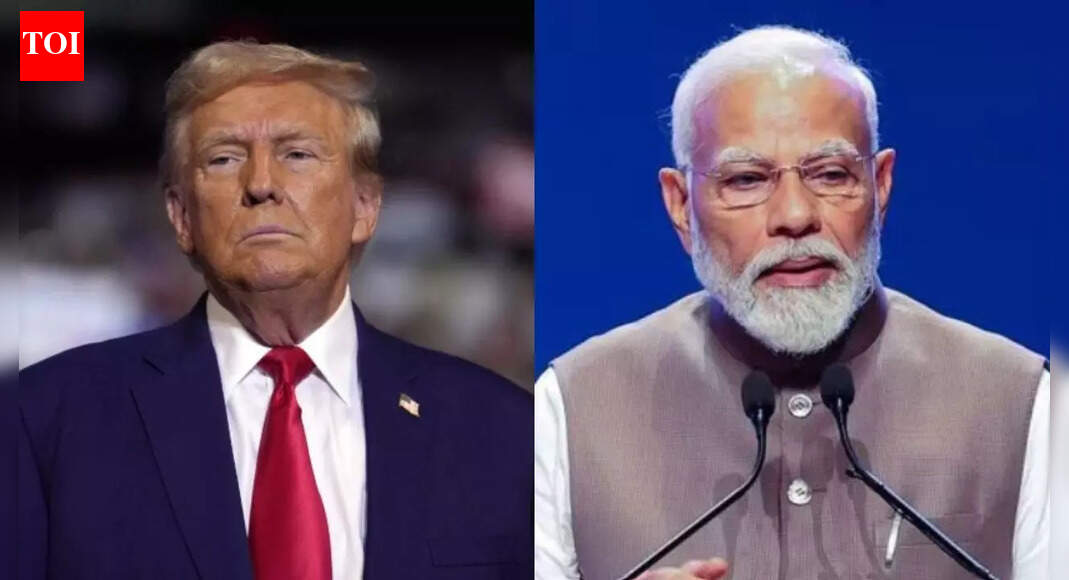
The TOI correspondent from Washington: US President Donald Trump pulled another hyperbole out of his MAGA hat on Tuesday, claiming that India had ordered 68 Apache attack helicopters from the United States, the delivery of which was so slow that Prime Minister Narendra Modi deferentially sought a meeting with him to raise concern over the delays. A review of official contracts, delivery records, deployment details and conversations with military and diplomatic sources shows that the claim does not align with facts: India ordered only 28 Apache helicopters in total, and as of December 2025, all of them have been delivered.The discrepancy reinforces a pattern critics have frequently noted in Trump’s public remarks where numbers are often inflated and timelines simplified to emphasise US leverage or personal involvement, like for instance in his persistent claim that he forced India and Pakistan into a truce with threat of tariffs. In this case, while delivery delays were real and did frustrate New Delhi, the scale described by Trump was not; neither was his claim that PM Modi asked “Sir, may I see you, please?” to raise the issue. In Trump’s recalls, everyone – even foreign leaders (except Putin and Xi Jinping) – is always calling him “sir.”India’s acquisition of the Boeing AH-64E Apache Guardian helicopters took place in two distinct phases, not one massive order. The first deal was signed in September 2015, during the final months of the Obama administration, when India signed an agreement to buy 22 Apaches for the Indian Air Force (IAF) in a contract worth about $2.2 billion. These helicopters were delivered on schedule, with the final units arriving by 2020 during the first Trump administration. They were inducted into two frontline squadrons and quickly became a central part of India’s attack helicopter capability.The second deal was signed in February 2020 during Trump’s visit to India. This follow-on contract, valued between $600 million and $800 million, covered six Apaches for the Indian Army Aviation Corps. This is the order that experienced repeated delays and became a talking point in US and Indian political discussions, including PM Modi flagging it during his visit to the White House in February 2025, one of many topics that were on the agenda. Combined, both deals amount to 28 helicopters—less than half of the figure cited by Trump.While the Air Force’s Apaches arrived on time, delivered at the end of Trump’s first term, the Army’s six helicopters were significantly delayed. Deliveries were initially scheduled to begin in early 2024. Instead, the first batch reached India only in July 2025—about 15 months late. The final three helicopters arrived in December 2025, completing the order nearly two years behind schedule.Several factors contributed to the delays. Boeing’s Apache production line in Mesa, Arizona, was affected by post-pandemic supply chain disruptions, including shortages of engines, gearboxes, and specialised electronics. In addition, India reportedly had a relatively low priority ranking within the US defence priorities and allocations system (DPAS) in 2024, meaning other customers—including the US. Army—were ahead in the queue for certain components.There were also technical and logistical complications. Boeing briefly paused some Apache deliveries worldwide due to electrical and power-generation concerns that required additional safety testing. In a final twist, the last batch bound for India in November 2025 had to turn back mid-flight after Turkey denied overflight clearance to the Antonov-124 transport aircraft carrying the helicopters, adding several more weeks of delay.These genuine frustrations likely form the basis of Trump’s comments, but the numerical exaggeration undermines their credibility. Is it possible that Trump may have conflated two separate Indian helicopter purchases from Boeing: the AH-64E Apache attack helicopter and the CH-47F Chinook heavy-lift helicopter? Both deals were signed around the same time, both involved Boeing (for which Trump claimed to be the all-time best salesman), but they still add up to only 43, since India ordered 15 Chinooks, all of which have been delivered between 2019 and 2020. There is no record in India’s ministry of defence or US foreign, military Sales (FMS) notifications of any additional Apache orders beyond the 28 units. While the Army originally projected a requirement for 39 Apaches, no new contracts have been signed.In fact, despite the Apache’s formidable firepower, India’s experience with dodgy US supply chains issues and increasingly mercurial strategic shifts vis-a-vis China and Pakistan is such that it is now peeling away from American, and for that matter, any foreign dependency. Instead, New Delhi is increasingly prioritising indigenous solutions under its “Make in India” policy. In this case, it is leaning on the HAL Prachand Light Combat Helicopter. A lighter chopper optimized for extreme altitudes, Prachand can operate where the heavier Apache struggles, including at heights above 20,000 feet like in Siachen. India plans to induct 156 Prachand helicopters across the Army and Air Force, gradually reducing reliance on foreign attack helicopters.The emerging strategy is clear: Apaches will remain India’s heavy strike platforms in plains and desert sectors, but the future of India’s rotary-wing combat power will be increasingly domestic. Trump’s claim of 68 helicopters may have overstated the scale, but it has inadvertently highlighted why India is determined to avoid dealing with a maverick.


