
The Supreme Court will soon deliver its verdict on a presidential reference concerning timelines for President and governors’ assent to state bills. The reference, invoking Article 143(1), seeks clarity on judicial powers to mandate deadlines for constitutional functionaries, impacting Centre-state relations amid ongoing legislative disputes. NEW DELHI: The Supreme Court on Thursday held that constitutional courts cannot impose timelines on the President or governors for taking decisions on bills passed by state legislatures, calling such directions unconstitutional. The ruling came in response to a presidential reference seeking clarity on whether courts could mandate time-bound action under Articles 200 and 201.A constitution bench of Chief Justice B R Gavai and justices Surya Kant, Vikram Nath, P S Narasimha and A S Chandurkar said the earlier directions issued by a two-judge bench in the Tamil Nadu case, which prescribed deadlines for governors, were beyond constitutional limits. The court also ruled that constitutional courts cannot grant deemed assent to bills pending before a governor, noting that the two-judge bench’s use of Article 142 to deem assent for 10 Tamil Nadu bills was impermissible. The bench said the Supreme Court cannot unconstitutionally take over the powers of governors and the President.However, the bench made it clear that governors cannot indefinitely withhold assent to bills. It said that in India’s system of cooperative federalism, governors must adopt a process of dialogue with the legislature to address concerns over a bill rather than follow an obstructionist approach.The reference, submitted in May by President Droupadi Murmu under Article 143(1), sought clarity on whether the judiciary could prescribe time limits for decisions taken by the President or governors. The move followed the Supreme Court’s April 8 ruling on the Tamil Nadu governor’s handling of bills passed by the state government.In her five-page reference, the President placed 14 questions before the court regarding the scope of Articles 200 and 201. According to Live Law, the questions included whether governors are bound by ministerial advice when exercising options under Article 200, whether their decisions are subject to judicial review, and whether courts can impose timelines when the Constitution does not specify any. The reference also asked whether similar timelines could be enforced for the President and whether the President must seek the Supreme Court’s advice when a bill is reserved for assent.The questions further addressed whether decisions of the President and governors are justiciable before a bill becomes law, whether the Supreme Court’s powers under Article 142 extend to substituting constitutional functions, and whether a state law is valid without the governor’s assent. Other queries sought clarity on the mandatory nature of referring constitutional questions to a five-judge bench under Article 145(3) and whether Article 131 is the only mechanism for resolving Union-state disputes.The ruling is expected to influence Centre-state relations, especially as several states have accused governors of delaying assent to key legislation.About the AuthorTOI News DeskThe TOI News Desk comprises a dedicated and tireless team of journalists who operate around the clock to deliver the most current and comprehensive news and updates to the readers of The Times of India worldwide. With an unwavering commitment to excellence in journalism, our team is at the forefront of gathering, verifying, and presenting breaking news, in-depth analysis, and insightful reports on a wide range of topics. The TOI News Desk is your trusted source for staying informed and connected to the ever-evolving global landscape, ensuring that our readers are equipped with the latest developments that matter most.”Read MoreEnd of ArticleFollow Us On Social MediaVideos”We Are Done…” Trump Recalls Critical Modi Call That Averted India-Pakistan Nuclear ClashNitish Kumar To Take CM Oath For Record 10th Time At Patna’s Gandhi Maidan, PM Modi To AttendBangladesh To Seek Interpol’s Help To Extradite Sheikh Hasina From India’Fatwa Issued…’: BJP Jabs ‘Indira Nazi Congress’ For Criticising Tharoor Over Modi Speech PraiseRussia Showcases Missile-Only Pantsir SMD-E Air Defence System At Dubai Airshow 2025’We Hit India…’: Pakistani Leader’s Explosive Admission Unmasks Islamabad’s Terror Links Again’Can’t Rule Out All-Out War’: Pakistan’s Khawaja Asif Rattled Over Army Chief’s Sindoor 2.0 WarningSydney Horror Crash Kills 8-Month Pregnant Indian After Teen BMW Driver Slams Into Family WalkIndia Expands Its Diplomatic Presence In Russia As Jaishankar Highlights Strategic New ConsulatesTaliban Trade Minister Lands in Delhi Amid Major Afghan Shift Toward India After Pakistan Conflict123Photostories6 Buddhist techniques to stop overthinking10 life lessons from Lord Hanuman every kid should knowVitamin B12: Signs your body is running low (and why most people don’t notice them)Morning mantras for children for a sharp mind and gentle heart10 life changes that happen when you begin a spiritual journey (that no one talks about)Aishwarya Rai Bachchan’s top 5 important parenting lessons for today’s generationKriti Sanon can’t stop wearing sarees, and each look is more iconic than the last5 lesser-known dangerous animals around the worldSolo travel on Thanksgiving: 5 best places to visit in the USHow to dress in extreme winter: The 3-layer rule to keep you warm123Hot PicksDelhi AQI TodaySheikh Hasina VerdictBihar Government FormationGold rate todaySilver rate todayPublic Holidays NovemberBank Holidays NovemberTop TrendingTrevon DiggsTom BradyMLB SignsDraymond GreenPatrick Kane Net Worth 2025Nadia ComaneciTop Stock RecommendationsGold Silver Price PredictionStefon DiggsBaker Mayfield Wife
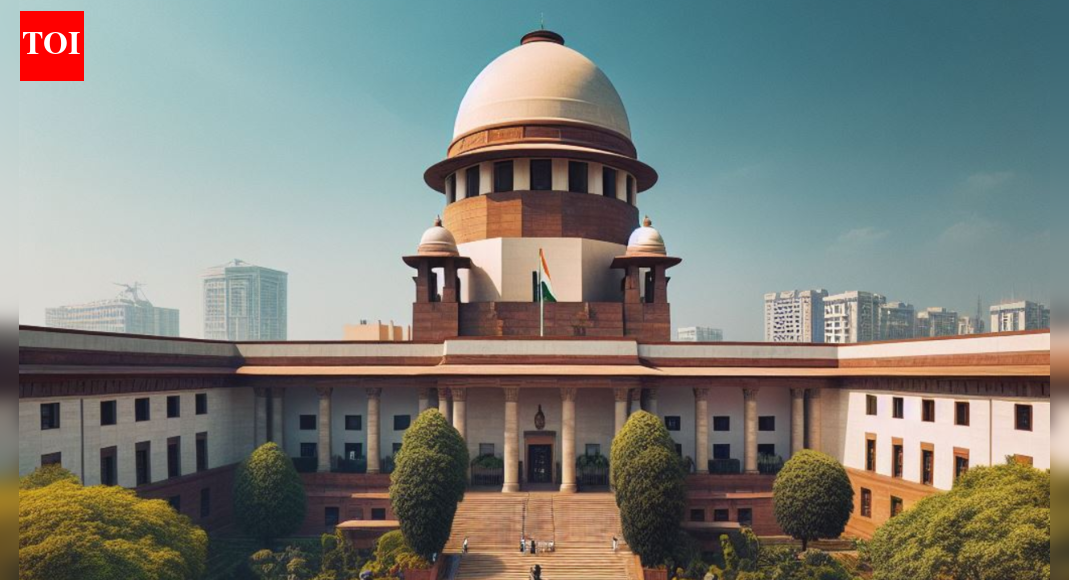
NEW DELHI: The Supreme Court on Thursday held that constitutional courts cannot impose timelines on the President or governors for taking decisions on bills passed by state legislatures, calling such directions unconstitutional. The ruling came in response to a presidential reference seeking clarity on whether courts could mandate time-bound action under Articles 200 and 201.A constitution bench of Chief Justice B R Gavai and justices Surya Kant, Vikram Nath, P S Narasimha and A S Chandurkar said the earlier directions issued by a two-judge bench in the Tamil Nadu case, which prescribed deadlines for governors, were beyond constitutional limits. The court also ruled that constitutional courts cannot grant deemed assent to bills pending before a governor, noting that the two-judge bench’s use of Article 142 to deem assent for 10 Tamil Nadu bills was impermissible. The bench said the Supreme Court cannot unconstitutionally take over the powers of governors and the President.However, the bench made it clear that governors cannot indefinitely withhold assent to bills. It said that in India’s system of cooperative federalism, governors must adopt a process of dialogue with the legislature to address concerns over a bill rather than follow an obstructionist approach.The reference, submitted in May by President Droupadi Murmu under Article 143(1), sought clarity on whether the judiciary could prescribe time limits for decisions taken by the President or governors. The move followed the Supreme Court’s April 8 ruling on the Tamil Nadu governor’s handling of bills passed by the state government.In her five-page reference, the President placed 14 questions before the court regarding the scope of Articles 200 and 201. According to Live Law, the questions included whether governors are bound by ministerial advice when exercising options under Article 200, whether their decisions are subject to judicial review, and whether courts can impose timelines when the Constitution does not specify any. The reference also asked whether similar timelines could be enforced for the President and whether the President must seek the Supreme Court’s advice when a bill is reserved for assent.The questions further addressed whether decisions of the President and governors are justiciable before a bill becomes law, whether the Supreme Court’s powers under Article 142 extend to substituting constitutional functions, and whether a state law is valid without the governor’s assent. Other queries sought clarity on the mandatory nature of referring constitutional questions to a five-judge bench under Article 145(3) and whether Article 131 is the only mechanism for resolving Union-state disputes.The ruling is expected to influence Centre-state relations, especially as several states have accused governors of delaying assent to key legislation.


