
The hidden highway: Why ancient Roman engineers were 2,000 years ahead of modern road science

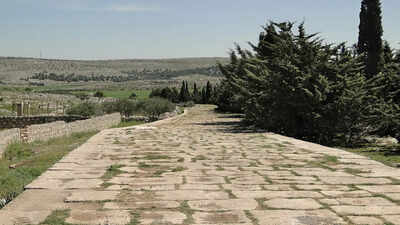
When we view the remains of the ancient Roman road today, what is typically presented to us is the huge, interlocking slabs of stone known as the pavimentum. This represents a powerful symbol of empire and its permanence, but advances in modern civil engineering have shown that this stone was no more than a superficial layer over a far more complicated structure. The real magic of movement for the Roman engineer lay beneath the surface.Popular depictions of Roman roads tend to emphasise their simplicity as well-designed, straight roadways built on paved routes for marching troops. Nevertheless, recent scientific investigations into how they were built may be changing how we view them. Instead of looking only at what we see on the surface, we are gaining a better understanding of how the Romans conquered land and maintained control of it through a meticulous approach toward creating structurally sound foundations and managing moisture.Stratification and structure in Roman road constructionA properly constructed Roman road was essentially an intentionally layered structure where the materials used were carefully selected based on their particular mechanical properties. As described in the academic paper, The Romans and Their Roads, Roman engineering was so far ahead of its time that its methods of construction formed the direct scientific basis for road building in Europe during the eighteenth century. Among other things, the Romans were some of the earliest civilisations to utilise a stratified foundation to support heavy marching legions.The construction process would normally begin by digging two trenches to define where the structure was going to be constructed, as well as offer some drainage. In between these trenches, one would then dig further until reaching the level where the foundation would sit on a good surface. The first layer was called the statumen and consisted of larger rocks arranged in a hand-packed form, thus forming a skeletal structure. The second layer, known as the rudus, was a compacted material formed from smaller stones and lime mortar, hence functioning as a cushioning layer.
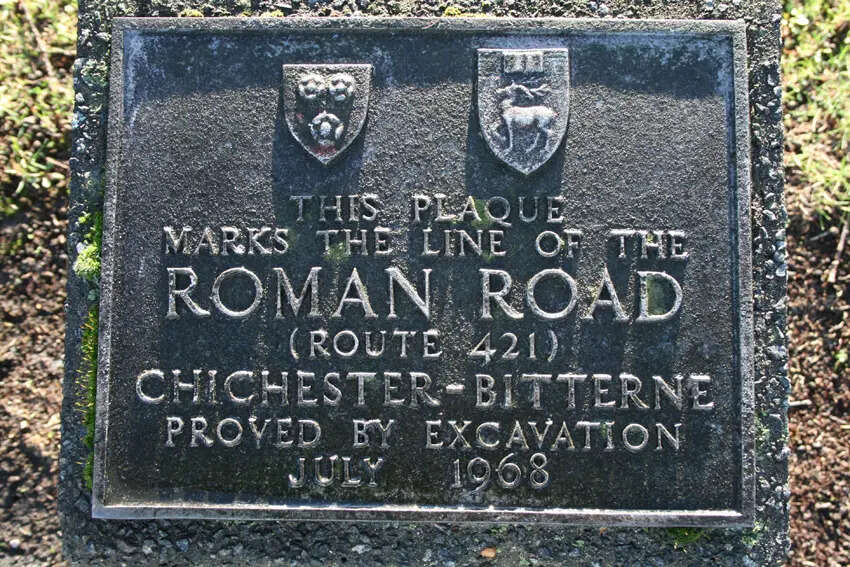
Engineers meticulously layered materials for strong foundations and expertly managed water drainage, a crucial element for their longevity. Image Credit: Wikimedia Commons
The multi-level structure proved to be a predecessor to today’s flexible pavements. The use of different sizes of aggregates ensured that the road was able to support its weight without fracturing. This shows the amount of foresight that these engineers had, even at a time when they had no access to technology, and this is perhaps why the Roman roads became the main transport arteries of Europe for almost two millennia after the collapse of their empire.Hydro engineering and the invisible superpowerAlthough the construction was very strong, the most important aspect of all was hydrology. The engineers understood that water was the biggest enemy of any road. They devised a cambered structure whereby the middle portion of the road would be higher than the edges. This was done to allow water to drain from the road surface and not cause any problems with the foundation.In a technical report titled Pavement Subsurface Drainage Systems by the Transportation Research Board, experts note that the Romans were centuries ahead of their time in their use of longitudinal drainage. Parallel ditches were excavated alongside the roadbed to act as collection points for runoff. By elevating the entire road on an embankment and ensuring water shed away from the centre, they prevented the subgrade from becoming marshy.That is precisely what enabled the world-renowned Appian Way to carry endless amounts of traffic despite the varying conditions it ran through. While the stones may be remarkable to see, it is important to note that these stones would never have been so durable if not for the underground trenches and well-levelled gravel beds that lay silently below. By following the drainage system and its layers, one realises that there is much more than just a road here, for without it, empire-wide governance and transactions would not have been possible.


