
Supreme Court of India New Delhi: Supreme Court on Wednesday said if a person’s fundamental right to freedom of religion is held to be superior to the identical right of a group or denomination, it could lead to dangerous consequences and the court was not going to be part of the process for annihilation of a religion.Bindu Ammini, a lawyer and social activist who was manhandled for attempting to enter Sabarimala after the 2018 SC judgment removed the ban on entry of women in the 10-50 age group, asserted her fundamental right to enter a temple. Indira Jaising, appearing for Bindu and another woman Kanakadurga, said there was no theological bar on women entering any public temple.Matter of reli gion is a matter of conscience, not for debate: SCAppearing before a bench of Chief Justice Surya Kant and Justices B V Nagarathna, M M Sundresh, A Amanullah, Aravind Kumar, A G Masih, P B Varale, R Mahadevan and J Bagchi, advocate Indira Jaising said Bindu did not dispute the ‘naistik brahmachari’ attributes of Ayyappa at Sabarimala, but the custom could not be the ground for violation of her fundamental right to enter the temple.Jaising said that the Indian Constitution was hailed as unique across the world because it gave prominence to individuals’ fundamental rights. “If a woman wants to go into a temple, what legal injury is she causing to anyone? If the court wants to rule the other way round, let it go ahead and do it and the world will be watching how the Supreme Court of India is developing jurisprudence relating to rights of women,” Jaising said.Justice Sundresh disagreed with her line of argument and asked if an individual’s right to freedom of religion under Article 25(1) clashed with that right of a group of devotees or followers of a denomination, whose right should prevail?”How do we enforce individual rights when it violates fundamental rights of others? Article 25(1) right of one cannot be pitted against another. If we agree with your submissions, it will lead to dangerous consequences. If each devotee goes to a common deity and exercises his freedom to worship in a different manner, the consequences will be disastrous for the religion or denomination itself,” he said.Justice Nagarathna agreed with him and said, “It will lead to annihilation of religion, and we do not want to be a part of it. Matters of religion are not a subject on which either the court or the legislature can sit in judgment. It cannot be a matter of debate because it is a matter of conscience.”Justice Amanullah asked whether a practice or custom, which has crystallised over centuries, should be removed by a court to ensure that a person must go into a temple despite knowing that it would hurt the religious feelings of the majority of the followers of the denomination. Arguments will continue on Thursday.End of ArticleFollow Us On Social MediaVideos12 Killed, Dozens Injured As Pickup Collides With SUV On Indore–Ahmedabad HighwayNYC Mayor Mamdani Says He’ll Urge King Charles To Return Kohinoor DiamondRaghav Chadha Fallout: Who Really Wins and Loses in Punjab?Mumbai–Pune Expressway’s ‘Missing Link’ Opens May 1: Faster Travel, Better Safety, No Extra Toll90-Year-Old Rejects Apology, Then Court Pushes ₹20 Crore Case to 2046Ganga Expressway Inaugurated: What ₹1,500 Toll Gets You on UP’s 594-km High-Speed Corridor | PM ModiUAE Quits OPEC In Big Oil Shake-Up: What It Means For India‘Siddaramaiah Ready To Step Down As Karnataka CM If Rahul Gandhi Asks’: Ex-Minister RajannaBengal Phase 2 Polls: 142 Constituencies Vote Today, Over 3.21 Crore Voters to DecideChokepoints of Power: how India can ‘trump’ China on the seas123PhotostoriesUNESCO-recognised rail wonders of India and why they’re among the world’s most unique train experiencesAfter 35, your bones start weakening silently: What most women aren’t told early5 lessons from Premanand Ji Maharaj for a more peaceful, happy, and fulfilling life10 divine baby girl names inspired by Goddess Durga6 low-maintenance plants that survive even if you forget to water themMorning affirmation at 5am: Wake up, check in for a soul resetHow to make Cucumber Sandwich for a light summer breakfastTaarak Mehta Ka Ooltah Chashmah: Who is Nilesh Bhatt? Meet the actor who played over 20 different roles on the showWhy does day-old rice get dry in the refrigerator? 4 easy fixes to keep it soft and fluffy‘Ted Lasso’ season 4 release: Here is all you need to know123Hot PicksExit Poll Result 2026Bengal Election 2026Bengal Poll Phase 2 ViolenceFirhad HakimMK StalinExit Poll PredictionsHimanta Biswa SarmaTop TrendingAssembly Election Exit PollsExit Poll results 2026Bengal Exit Polls 2026Puducherry Exit Polls 2026Exit PollNavy LaunchRaja Raghuvanshi Wife BailBengal PollsGanga ExpresswayIPL Orange Cap

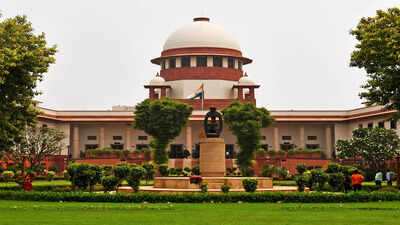
New Delhi: Supreme Court on Wednesday said if a person’s fundamental right to freedom of religion is held to be superior to the identical right of a group or denomination, it could lead to dangerous consequences and the court was not going to be part of the process for annihilation of a religion.Bindu Ammini, a lawyer and social activist who was manhandled for attempting to enter Sabarimala after the 2018 SC judgment removed the ban on entry of women in the 10-50 age group, asserted her fundamental right to enter a temple. Indira Jaising, appearing for Bindu and another woman Kanakadurga, said there was no theological bar on women entering any public temple.Matter of reli gion is a matter of conscience, not for debate: SCAppearing before a bench of Chief Justice Surya Kant and Justices B V Nagarathna, M M Sundresh, A Amanullah, Aravind Kumar, A G Masih, P B Varale, R Mahadevan and J Bagchi, advocate Indira Jaising said Bindu did not dispute the ‘naistik brahmachari’ attributes of Ayyappa at Sabarimala, but the custom could not be the ground for violation of her fundamental right to enter the temple.Jaising said that the Indian Constitution was hailed as unique across the world because it gave prominence to individuals’ fundamental rights. “If a woman wants to go into a temple, what legal injury is she causing to anyone? If the court wants to rule the other way round, let it go ahead and do it and the world will be watching how the Supreme Court of India is developing jurisprudence relating to rights of women,” Jaising said.Justice Sundresh disagreed with her line of argument and asked if an individual’s right to freedom of religion under Article 25(1) clashed with that right of a group of devotees or followers of a denomination, whose right should prevail?“How do we enforce individual rights when it violates fundamental rights of others? Article 25(1) right of one cannot be pitted against another. If we agree with your submissions, it will lead to dangerous consequences. If each devotee goes to a common deity and exercises his freedom to worship in a different manner, the consequences will be disastrous for the religion or denomination itself,” he said.Justice Nagarathna agreed with him and said, “It will lead to annihilation of religion, and we do not want to be a part of it. Matters of religion are not a subject on which either the court or the legislature can sit in judgment. It cannot be a matter of debate because it is a matter of conscience.”Justice Amanullah asked whether a practice or custom, which has crystallised over centuries, should be removed by a court to ensure that a person must go into a temple despite knowing that it would hurt the religious feelings of the majority of the followers of the denomination. Arguments will continue on Thursday.


