
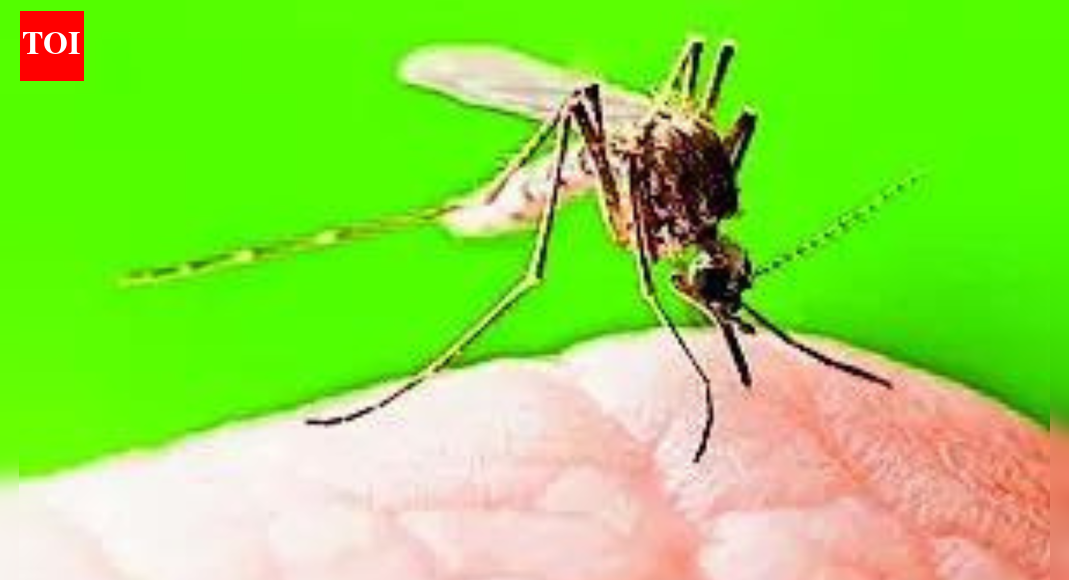
Representative image NEW DELHI: India has recorded steep declines in malaria, tuberculosis, maternal and child deaths, signalling what the government calls a decisive, results-driven phase in the country’s public-health journey.Addressing the Advancing Public Health Outcomes Forum 2025 on Wednesday, Union health minister JP Nadda said the gains were based on sustained political commitment, strong scientific capacity and people’s participation, rather than isolated programmes. “Disease control and immunisation outcomes today are the result of institutional strength and Jan Bhagidari,” he said.Incidence of malaria has dropped by over 80%, with deaths down 78%, shifting India from a high-burden to a high-impact phase. Incidence of tuberculosis has fallen from 237 cases per lakh population in 2015 to 187 per lakh — a 21% decline, nearly double the global average. Maternal mortality has reduced from 130 per lakh live births in 2014 to 88 in 2025, while infant mortality has declined from 39 to 27 per 1,000 live births. Under-five and neonatal mortality rates have also fallen far faster in India than globally.At the forum, four national reports reviewed progress on malaria, tuberculosis, lymphatic filariasis and immunisation. While they show that sustained programmes have sharply reduced the disease burden across most regions, they warn that the final phase of elimination will be the most demanding.The malaria assessment found transmission persisting in tribal, forested and hard-to-reach areas, with emerging risks in some urban pockets. As cases fall, experts cautioned that asymptomatic infections could be missed unless surveillance remains strong.The lymphatic filariasis report flagged gaps in post-treatment districts, especially in urban slums, industrial belts and migrant settlements. Uneven drug uptake, weak follow-up and limited morbidity care could threaten the 2027 elimination target despite years of mass drug administration.On tuberculosis, expanded diagnostics, digital tracking & newer regimens have improved outcomes, but poverty, malnutrition, migration and co-morbidities continue to drive transmission. Disruptions in care for migrants & the growing burden of post-TB lung disease among survivors were highlighted as major concerns.The immunisation assessment pointed to strong childhood coverage but warned of problems beyond early life—gaps in adolescent and adult vaccination, data inconsistencies and the absence of a life-course immunisation strategy.Strengthening primary healthcare remains central to the government’s approach. Nadda reiterated the goal of one Ayushman Arogya Mandir for every 2,000 people, noting that over 30,000 centres have already achieved national quality certification.About the AuthorAnuja JaiswalAnuja Jaiswal is a Senior Assistant Editor at The Times of India, with an impressive 18-year career in narrative journalism. She specializes in health and heritage reporting, expertly simplifying complex health information to make it engaging and understandable for readers. Her deep dives into heritage topics are well-researched, resulting in captivating narratives that resonate with her audience. Over the years, she has worked in Chandigarh, Chhattisgarh and West UP, gaining diverse on-ground experience that shapes her storytelling.Read MoreEnd of ArticleFollow Us On Social MediaVideosBangladesh Situation Remains Very Fluid as Unrest Grows Ahead of 2026 Elections: Journalist”Stop This Nonsense…”: Tharoor Lambasts Bangladesh Govt Over Lynching of Hindu ManEnd Of H-1B Lottery: Donald Trump Overhauls US Work Visa System Prioritising High Pay And SkillsISRO’s Heaviest Launch Yet: Five Reasons Why BlueBird-2 Marks India’s Big Leap In Global Space Race‘Mouths shut when Hindus are killed’: Yogi targets opposition in Assembly”We Are Not Safe…” Unnao Rape Victim’s Mother Manhandled, Protest StoppedIndian Travel Vlogger Anant Mittal Held In China, Comments On Arunachal Pradesh Trigger DetentionFrom Pride To Distress Sale: Pakistan Sells State-Owned PIA For Rs 135 Billion As Economy BucklesCalm With India, Weapons For Pakistan: Pentagon Report Warns Of China’s Strategic Balancing ActAssam’s Karbi Anglong Gripped By Violence, Internet Suspended As Anger Over ‘Encroachers’ Explodes123PhotostoriesFrom ‘My Secret Santa’ to ‘Meet Me Next Christmas’: Best Christmas movies to watch on OTT2 easy recipes that lower blood pressure naturallyTotal number of Birkin bags owned by Jane Birkin: The answer will surprise you10 cheapest countries to visit with surprisingly low daily costs2026 Spiritual Guide For Your Birth Number: How to Strengthen Your Inner Self2025’s headline-grabbing star kids:Aryan Khan, Rasha Thadani, Shanaya Kapoor and more7 comforting winter raitas to add warmth to daily mealsMeet 7 birds of Indian forests that are also masters of camouflageYear ender 2025: Love anthems that ruled playlists from ‘Metro… In Dino’ to ‘Saiyara’7 profound quotes from Herman Melville’s Moby-Dick that still resonate123Hot PicksUAE WeatherPAN-Aadhaar linkingKarbi Anglong CurfewGold rate todayIncome Tax RefundPublic Holidays DecemberBank Holidays DecemberTop TrendingTaylor SwiftPaul RuddPatrick MahomesMegan Thee Stallion Net Worth 2025Travis KelceJoel EmbiidSavannah James Net WorthSophie CunninghamDrew McIntyre and Kaitlyn Frohnapfel Net WorthKhamzat Chimaev
NEW DELHI: India has recorded steep declines in malaria, tuberculosis, maternal and child deaths, signalling what the government calls a decisive, results-driven phase in the country’s public-health journey.Addressing the Advancing Public Health Outcomes Forum 2025 on Wednesday, Union health minister JP Nadda said the gains were based on sustained political commitment, strong scientific capacity and people’s participation, rather than isolated programmes. “Disease control and immunisation outcomes today are the result of institutional strength and Jan Bhagidari,” he said.Incidence of malaria has dropped by over 80%, with deaths down 78%, shifting India from a high-burden to a high-impact phase. Incidence of tuberculosis has fallen from 237 cases per lakh population in 2015 to 187 per lakh — a 21% decline, nearly double the global average. Maternal mortality has reduced from 130 per lakh live births in 2014 to 88 in 2025, while infant mortality has declined from 39 to 27 per 1,000 live births. Under-five and neonatal mortality rates have also fallen far faster in India than globally.At the forum, four national reports reviewed progress on malaria, tuberculosis, lymphatic filariasis and immunisation. While they show that sustained programmes have sharply reduced the disease burden across most regions, they warn that the final phase of elimination will be the most demanding.The malaria assessment found transmission persisting in tribal, forested and hard-to-reach areas, with emerging risks in some urban pockets. As cases fall, experts cautioned that asymptomatic infections could be missed unless surveillance remains strong.The lymphatic filariasis report flagged gaps in post-treatment districts, especially in urban slums, industrial belts and migrant settlements. Uneven drug uptake, weak follow-up and limited morbidity care could threaten the 2027 elimination target despite years of mass drug administration.On tuberculosis, expanded diagnostics, digital tracking & newer regimens have improved outcomes, but poverty, malnutrition, migration and co-morbidities continue to drive transmission. Disruptions in care for migrants & the growing burden of post-TB lung disease among survivors were highlighted as major concerns.The immunisation assessment pointed to strong childhood coverage but warned of problems beyond early life—gaps in adolescent and adult vaccination, data inconsistencies and the absence of a life-course immunisation strategy.Strengthening primary healthcare remains central to the government’s approach. Nadda reiterated the goal of one Ayushman Arogya Mandir for every 2,000 people, noting that over 30,000 centres have already achieved national quality certification.


