
Representative image BENGALURU: The country’s first Earth Observation Satellite System (EOSS) under PPP saw a key milestone Tuesday with the signing of a concession agreement that allows the winning consortium to finally begin work on the ground, four months after it won the project from the Indian National Space Promotion and Authorisation Centre (IN-SPACe)The agreement was between IN-SPACe and Allied Orbits — the special purpose vehicle (SPV) created by the consortium of Pixxel Space, Piersight Space, Satsure Analytics India, and Dhruva Space — at the former’s office in Bengaluru.TOI reported first that the agreement was expected to be signed this week in its Jan 19 edition. Also, as reported in Aug 2025, the consortium had won the project through a “zero-bid”. While the concession agreement was to be signed within three months, a delay in processes saw it signed on Tuesday.The project will create a constellation of 12 satellites, data from which will be used for applications ranging from climate change monitoring and disaster response to agriculture, infrastructure planning, maritime operations, and national security, where there are huge gaps so far as having eyes in the sky is concerned.The consortium will implement the project through Allied Orbits. “As part of the project, PierSight will build synthetic aperture radar (SAR) satellites, Pixxel will build hyperspectral & high resolution optical satellite, Satsure will make multispectral satellites, and Dhruva will develop ground stations,” Gaurav Seth, PierSight CEO and co-founder, told TOI.Over the next four to five years, the consortium is expected to invest more than Rs 1,200 crore to create the 12-satellite constellation in low-Earth orbit. The project is designed to enhance India’s data sovereignty and reduce dependence on foreign imagery. All satellites will be manufactured in India, launched on Indian rockets, and controlled from ground infrastructure within the country.IN-SPACe described the programme as a paradigm shift in India’s space policy – one that places private enterprise at the heart of building national capability. In addition to meeting India’s own needs, the consortium is expected to be allowed to sell analysis-ready data and value-added services commercially.About the AuthorChethan KumarChethan Kumar is a Senior Assistant Editor with the Times of India. Aside from specialising in Space & Science, he has reported extensively on varied topics, with special focus on defence, policy and data stories. He has covered multiple elections, too. As a young democracy grows out of adolescence, Chethan feels, there are reels of tales emerging which need to be captured. To do this, he alternates between the mundane goings-on of the Common Man and the wonder-filled worlds of scientists and scamsters, politicians and soldiers. In a career spanning nearly 18 years, he has reported from multiple datelines — Houston, Florida, Kochi, Hyderabad, Chennai, Sriharikota (AP), NH-1 (J&K Highway), New Delhi, Ahmedabad, Raichur, Bhatkal, Mysuru, Chamarajanagar, to name a few — but is based out of Bengaluru, India’s science capital that also hosts the ISRO HQ.Read MoreEnd of ArticleFollow Us On Social MediaVideos’Stanford Ranks Us Third’: Ashwini Vaishnaw Fires Back At IMF For Callinf India Second Tier In AI’Strong Economy No Good Unless…’: IAF Chief AP Singh Stresses ‘Air Power’ For National SecurityDonald Trump Says He Stopped India-Pakistan Nuclear War Again As India Rejects White House ClaimsIOCL Chairman Says India Is Ready For Venezuelan Oil Amid Tariff Blockade On Russian Oil PurchaseEAM Jaishankar Calls For United Fight Against Terror As India Spain Mark Shared Democratic Values500% Tariff Threat Over Russian Oil: What US Treasury Chief Said On India China And Europe At DavosIndian-Origin Astronaut Sunita Williams Retires After 27 Years, Leaves Behind Spaceflight LegacyIndian-origin NASA Astronaut Sunita Williams Says Her First Act In Space Was To Spot India, HomeVaishnaw Rules Out Trade Talks At WEF; Assures India’s Engagement With Major Economies On All FrontsSatya Nadella Recounts 2023 Story Of Indian Farmer Leveraging AI Bot For Subsidies123Photostories6 water affirmations that actually work and how they affect your energy3 things at your home can be blocking your career growthTop 5 allegations Brooklyn Beckham has levied on parents David and Victoria BeckhamSushant Singh Rajput birth anniversary: Looking back at the late star’s unforgettable journey through BTS picturesSushant Singh Rajput birth anniversary: Most iconic roles of late actor and where to stream his films on OTTHow to explore Delhi like a traveller: Gorgeous places to explore in the city that no one ever talks aboutElvish Yadav’s rise to fame: The winning streak from ‘Bigg Boss’ to ‘Laughter Chefs’8 desi Indian vegetarian dishes made with Oats for lunch‘Border 2’ star Ahan Shetty’s childhood album: Adorable pics with father Suniel Shetty will melt your heart5 plants you should have at home to improve your relationships123Hot PicksSilver price todayBudget 2026Karnataka DGP ScandalGold price predictionNitin NabinPublic holidays January 2026Bank Holidays JanuaryTop TrendingMatthew StaffordTravis KelceDonald Trump PlaneUdaipur Car AccidentJonathan KumingaCandace OwensDonna KelceJohn Harbaughs WifeKlay ThompsonsAshwini Vaishnaw
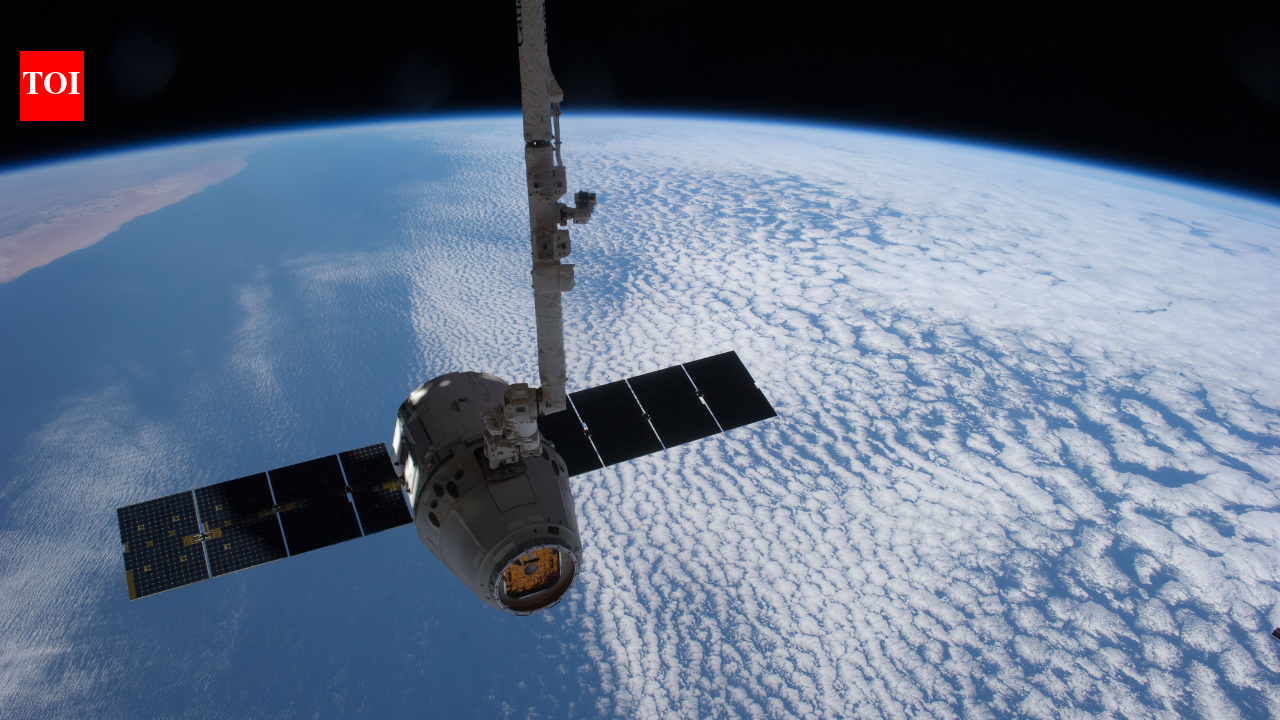

BENGALURU: The country’s first Earth Observation Satellite System (EOSS) under PPP saw a key milestone Tuesday with the signing of a concession agreement that allows the winning consortium to finally begin work on the ground, four months after it won the project from the Indian National Space Promotion and Authorisation Centre (IN-SPACe)The agreement was between IN-SPACe and Allied Orbits — the special purpose vehicle (SPV) created by the consortium of Pixxel Space, Piersight Space, Satsure Analytics India, and Dhruva Space — at the former’s office in Bengaluru.TOI reported first that the agreement was expected to be signed this week in its Jan 19 edition. Also, as reported in Aug 2025, the consortium had won the project through a “zero-bid”. While the concession agreement was to be signed within three months, a delay in processes saw it signed on Tuesday.The project will create a constellation of 12 satellites, data from which will be used for applications ranging from climate change monitoring and disaster response to agriculture, infrastructure planning, maritime operations, and national security, where there are huge gaps so far as having eyes in the sky is concerned.The consortium will implement the project through Allied Orbits. “As part of the project, PierSight will build synthetic aperture radar (SAR) satellites, Pixxel will build hyperspectral & high resolution optical satellite, Satsure will make multispectral satellites, and Dhruva will develop ground stations,” Gaurav Seth, PierSight CEO and co-founder, told TOI.Over the next four to five years, the consortium is expected to invest more than Rs 1,200 crore to create the 12-satellite constellation in low-Earth orbit. The project is designed to enhance India’s data sovereignty and reduce dependence on foreign imagery. All satellites will be manufactured in India, launched on Indian rockets, and controlled from ground infrastructure within the country.IN-SPACe described the programme as a paradigm shift in India’s space policy – one that places private enterprise at the heart of building national capability. In addition to meeting India’s own needs, the consortium is expected to be allowed to sell analysis-ready data and value-added services commercially.


