
Parents abandoning government schools? Enrolment falls below 50% in India, says NITI Aayog

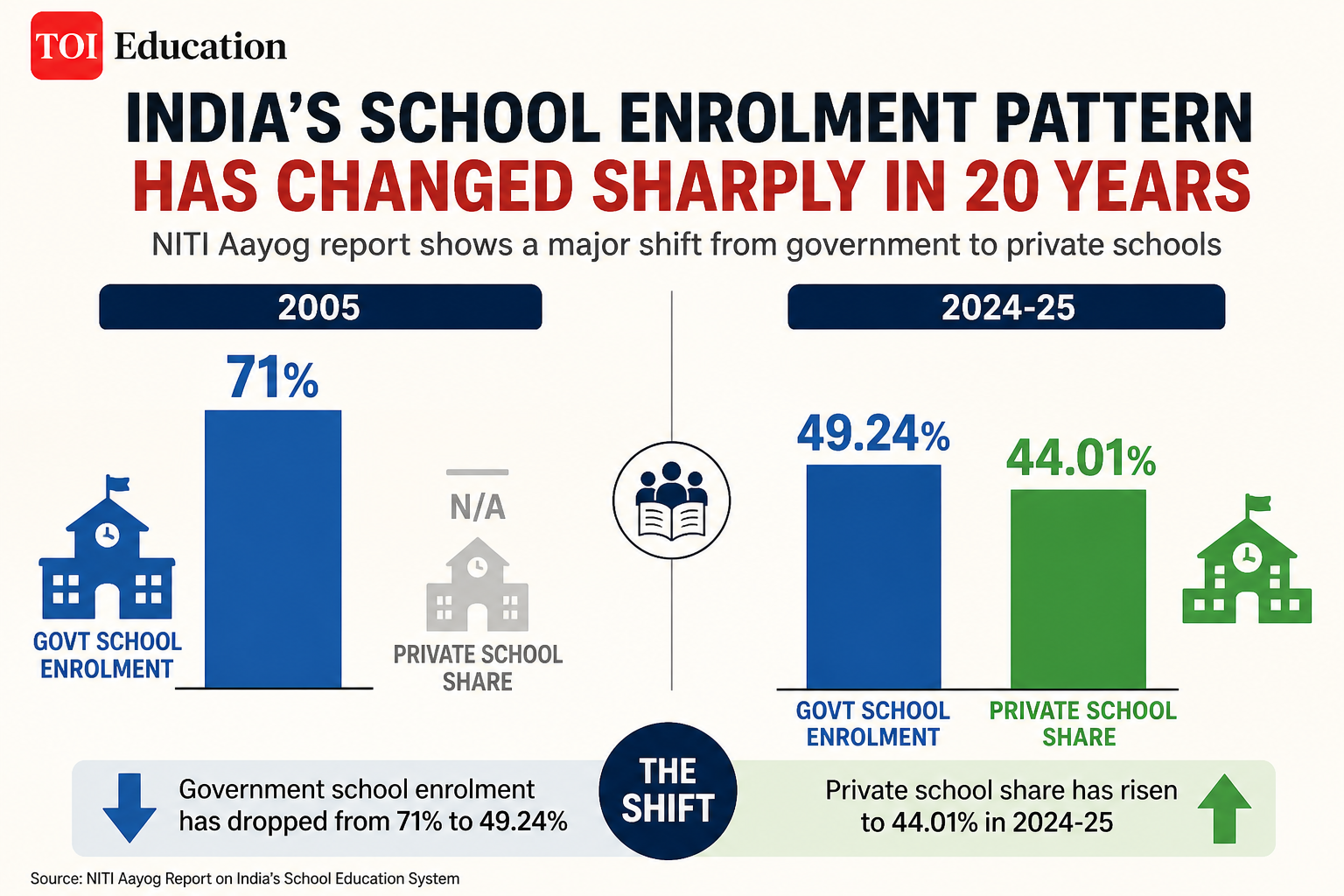
Enrollment in government schools across India has fallen from 71 per cent in 2005 to 49.24 per cent in 2024-25, according to a latest report released by NITI Aayog on the country’s school education system.As government school enrolment declined, private schools expanded steadily over the years. The report says private institutions now make up 44.01 per cent of all secondary schools in India. According to the findings, many parents are increasingly choosing private schools because they believe these institutions offer better English-medium education, stronger discipline and improved employment opportunities for children.However, the report says these expectations are not always reflected in actual classroom learning and notes that a large number of students in low-fee private schools continue to struggle with basic reading and mathematics skills.“India’s school education system has seen a notable shift toward private institutions, particularly at the secondary level. This change reflects parental aspirations for better outcomes, but the private sector’s rapid growth also raises concerns around quality, equity, and regulation,” the report says.
.
Learning gaps in pvt schools
The report also highlighs that 35 per cent of Grade 5 students studying in low-fee private schools are unable to read a Grade 2-level text. 60 per cent of these students cannot solve a basic division problem, raising questions about the quality of education being delivered despite rising enrolment.Along with learning gaps, there are serious infrastructure issues in many private schools. Several low-fee institutions reportedly do not meet standards laid down under the Right to Education Act and continue to function without proper toilets, playgrounds or access to clean drinking water.The report also said teacher recruitment in many such schools remains informal. In several cases, underqualified or untrained teachers are hired on low salaries with little job security or professional support. According to the report, this directly affects teaching quality and student performance in classrooms.
.
Teacher shortage in rural areas
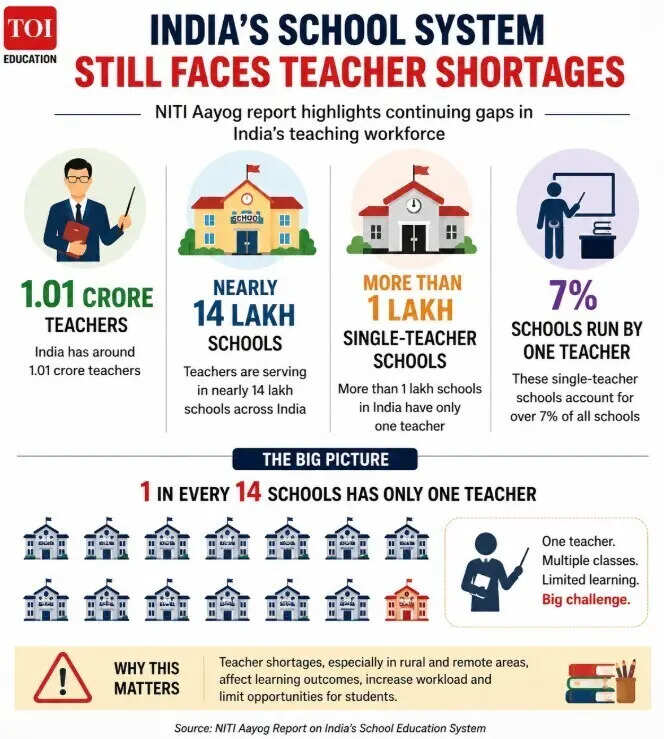
Beyond private schools, the report also highlights wider problems in India’s teaching system. India currently has nearly 1.01 crore teachers working across around 14 lakh schools. While the pupil-teacher ratio has improved over time, rural and underserved areas continue to face teacher shortages and high attrition.One of the biggest concerns flagged is the number of single-teacher schools operating in remote parts of the country. More than one lakh schools in India are functioning with only one teacher, accounting for over 7 per cent of all schools nationwide.Such schools leave very little room for meaningful learning improvements because one teacher is forced to handle multiple classes and subjects at the same time.The report also points to issues such as weak staffing systems, poor teacher deployment, heavy administrative workload, inadequate teacher training and lack of subject expertise as continuing challenges within the education system.


