Al-Quds rally in London: Pro-Iran protesters chant ‘death to IDF’, wave posters of Khamenei; 3 arrested

Al-Quds rally in London: Pro-Iran protesters chant ‘death to IDF’, wave posters of Khamenei; 3 arrested

Pro-Iran protesters gathered in central London on Sunday for the annual Al-Quds Day rally, shouting anti-Israel slogans and waving Palestinian flags as police made three arrests during the protest and a counter-demonstration.Crowds at the demonstration were heard chanting “death, death to the IDF” and “from the river to the sea”, while some protesters held posters…

Read More
7 coastal towns in India offering strong potential for real estate investment

7 coastal towns in India offering strong potential for real estate investment

Puri is a major spiritual and tourist destination known for the famous Jagannath Temple and beautiful coastline. The city attracts millions of visitors annually, supporting hospitality and rental markets. Ongoing development projects and tourism expansion continue to strengthen its real estate investment prospects. As India’s coastal towns are transforming from mere tourist resorts into potential…

Read More
Record-Breaking Night: Full list of world records shattered as Jemimah Rodrigues leads India to historic win over Australia

Record-Breaking Night: Full list of world records shattered as Jemimah Rodrigues leads India to historic win over Australia

Jemimah Rodrigues, centre, celebrates after winning the ICC Women’s World Cup semifinal. (AP Photo) NEW DELHI: It was a night of records, redemption, and roaring emotion at the DY Patil Stadium in Navi Mumbai. Jemimah Rodrigues’ unbeaten 127 off 134 balls powered India to an unprecedented five-wicket win over Australia in the ICC Women’s ODI…

Read More
Neeraj Chopra to compete at Asian Games 2026, AFI confirms | More sports News

Neeraj Chopra to compete at Asian Games 2026, AFI confirms | More sports News

Neeraj Chopra (Image credit: X) NEW DELHI: India’s javelin star Neeraj Chopra will compete at the Asian Games in Japan later this year as he looks to defend his gold medal, Athletics Federation of India (AFI) selection committee chairman Adille Sumariwalla confirmed on Saturday.The two-time Olympic medallist has already confirmed his participation in the Commonwealth…

Read More
AI-generated image Growing up in the late 1990s or early 2000s meant watching the internet arrive not as a single platform, but as a world opened through web browsers.British computer scientist Tim Berners-Lee created the first web browser in 1990 and called it WorldWideWeb. A few years later, Mosaic made the web more visual by bringing graphics into browsing. Microsoft launched Internet Explorer, Mozilla introduced Firefox, and Google later released Chrome.As browsers evolved, so did the culture around them.The internet became a place not just to search, but to wander. Blogs flourished. Forums grew. Platforms such as Quora and Reddit began offering peer-to-peer knowledge, turning the web into a digital version of the ancient Greek agora, a public square where people gathered to ask questions, exchange ideas and debate answers.Over time, this space became the internet’s Mr Fix-it.From solving complex mathematical problems to figuring out how to heal after a breakup, browsing became an everyday habit. People searched, clicked, compared, skimmed, bookmarked and fell into rabbit holes.Now, artificial intelligence is changing that habit.Instead of moving across multiple webpages, users are increasingly turning to AI tools for direct, customised answers. The promise is simple: convenience, speed and efficiency. But the shift also raises a larger question — what happens to the experience of the internet when the answer arrives before the search really begins?From rabbit holes to ready answersNeha, a 42-year-old working professional, remembers a time when the internet was not easily accessible and even a small research project required a trip to a nearby cyber cafe.”When I started using the internet on my personal computer, I used to spend hours reading Wikipedia pages. Easy access to abundant information fuelled my curiosity, and I would go down a rabbit hole on the internet, often losing track of time. It was intellectually stimulating to go down a wiki-rabbit hole and learn obscure facts,” she said.For her, browsing was not just about finding information. It was about the process.She also remembers the sense of achievement that came after a long browsing session led to a successful discovery.”It was like a reward for hours of labour,” she added.That older version of the internet rewarded patience. Users opened multiple tabs, followed links, compared sources and slowly built their understanding of a topic.AI has compressed that process.Internet Browsing vs AI BrowsingThe changing internet userSameer Sheikh, an Instagram influencer with 1.6 million followers, says he once relied almost entirely on Google Search to craft scripts for his videos, which decode Bollywood lyrics.His research process involved reading multiple research papers, blogs and articles, comparing information from different sources and then piecing it together into a compelling narrative.AI has changed that workflow.”Since the rise of AI, I now use tools like ChatGPT, Claude and Perplexity to quickly get a concise summary of information gathered from multiple sources across the internet. This saves me a significant amount of time compared to reading every article individually,” he said.For creators, students and working professionals, this is the biggest draw of AI-assisted browsing. It reduces the time spent moving across webpages and gives users a structured answer almost instantly.But it also changes the relationship between the user and the information.Earlier, users discovered information by navigating the web themselves. Now, many are receiving information filtered, arranged and summarised by AI systems.Is SEO dead in the age of AI browsing?For years, search engine optimisation, or SEO, has been the backbone of digital visibility. The goal was straightforward: optimise webpages so they rank higher on search results and attract more clicks.That model is now under pressure.As AI Overviews and generative search tools answer user queries directly on the results page, the traditional click-through model is being disrupted. Users may get the answer they need without visiting the website that originally produced the information.This has triggered anxiety across the digital publishing and marketing world. If AI can answer questions directly, what happens to websites that depend on search traffic?But digital marketing experts argue that SEO is not dying. It is changing.Chandrakant Agrawal, co-founder and CEO of AppSquadz, said AI Overviews are reshaping how search engines surface and deliver content.”AI Overviews are reshaping how search engines surface and deliver content, answering queries directly on the results page, which can reduce traffic for some websites while, in some cases, driving more qualified and intent-rich visitors than traditional organic clicks ever did,” he said.According to him, the metric of success is no longer just the click.”The marketers and businesses adapting well are those who have accepted that the KPI is no longer the click alone. It now also includes citation, reference and brand recall within the AI responses itself. The businesses which built shallow, keyword-dense content for ranking are losing relevance fast. The ones investing in context-rich, credible, expert-led content are finding that AI systems surface them more consistently,” he said.In other words, AI may not kill SEO, but it is forcing it to evolve.Agrawal said marketers are increasingly turning to Answer Engine Optimisation, or AEO, as a separate discipline from traditional SEO.“The toolkit for AI-era visibility looks meaningfully different from what dominated SEO conversations five years ago. Marketers are increasingly turning to Answer Engine Optimisation as a discipline in its own right, distinct from traditional SEO. The underlying principle, however, is unchanged: AI systems cite sources they assess as credible, consistent and contextually authoritative,” he said.Internet browsing vs AI browsingConvenience, but at a costAI-powered browsers and agentic browsing tools are designed to make the internet more interactive and task-oriented.They can summarise webpages, compare information, help plan trips, assist with bookings, fill forms and, in some cases, complete tasks across websites. Instead of simply displaying information, they can interact with it.For users, this can feel like a major upgrade. A browser is no longer just a window to the web. It can become an assistant that reads, explains, compares and acts.But the same capability also brings risks.Agentic browsers may need access to sensitive user data, including cloud storage, email, banking sessions, shopping accounts and social media platforms. They may be able to click buttons, submit forms and make changes through authenticated sessions.That level of access creates concerns around privacy, security and user control.An article by the University of Tennessee’s Office of Innovative Technologies noted that AI agents may not always be able to distinguish between safe websites and scam sites. A malicious website could embed hidden instructions in its HTML, text or metadata. An agent might misread those instructions as legitimate commands and perform unauthorised actions, such as submitting forms, changing account settings or extracting sensitive information.This is the central trade-off of AI browsing.The more useful an AI agent becomes, the more access it may need. And the more access it has, the higher the risk if something goes wrong.Convenience comes with risksWhat changes when AI becomes the browser?The internet was once built around exploration.Users searched, clicked, wandered, compared and discovered. The journey was part of the experience. A simple question could lead to a Wikipedia page, then a blog, then a forum thread, then a research paper, and finally to an answer that felt earned.AI is turning that journey into a shortcut.That shortcut is powerful. It saves time, reduces information overload and helps users make sense of complex topics quickly. For people who work with large volumes of information, it can be transformative.But it also changes how people learn, verify and trust information.When users browse less and ask more, discovery becomes narrower. The web becomes less of a landscape to explore and more of a system that delivers answers on demand.That does not mean the old internet is disappearing. People will still search, read, watch, compare and debate. But the first instinct is changing. Increasingly, the question is not “What should I search?” but “What should I ask AI?”The browser once taught users how to navigate the internet.AI is now teaching them how to skip parts of it.Get the latest India news and live updates. Download the TOI App.About the AuthorHarshita BansalHarshita Bansal is an intern at the Times of India. She has done a PG Diploma in English journalism from the Indian Institute of Mass Communication.End of ArticleFollow Us On Social MediaVideosAbhijit Dipke Opens Up About CJP’s Next Move, Funding Model & Post-Protest Strategy | WatchCabinet Reshuffle Soon? Big Changes Likely Before Monsoon Session; Who May Enter, Who Could Exit?India’s Oil Import Price Fell Below — Why Petrol & Diesel Prices Won’t Drop Yet |West Asia CrisisDelhi’s Biggest EV Policy Yet! No New Petrol Bikes From 2028 | ₹15,000 Crore Plan ExplainedIndia, US Close to Major Boeing Defence Deal, Says Sergio Gor; Cites .5 Billion Investment BoostRajya Sabha Numbers Tilt Towards NDA, Bringing Two-Thirds Majority Within Striking DistanceIndia Condemns Pakistan’s Airstrikes In Afghanistan, Calls Them Assault On Sovereignty & Peace’No Official Role, No Official Support’: India Distances Itself From India-Pakistan Track-2 DialogueUS Ambassador Says Trump’s India Visit Could Happen Soon, Confirms Quad Meeting in PhilippinesAre We Learning Nothing From Deadly Fire Accidents Across India? Experts Sound Alarm123PhotostoriesLove quote of the day by Plato: ‘The madness of love is the greatest of heaven’s blessings’Kareena Kapoor Khan vrooms in a MINI dressed to kill in pinstriped suit with corsetAre you always complaining? Neurosurgeon explains how it affects the brain, and why its not worth it8 hacks every Indian woman needs this season to beat ‘monsoon frizz’7 Natural ways to clean your home floors without harsh chemicals3 signs you are the ‘fringe friend’ in your groupNaomi Osaka rewrites Wimbledon fashion rules in a striking kimono-inspired ensembleForget Paneer and Besan: Try these 11 unusual Indian sweets made with vegetablesPsychology says loving fresh bedsheets isn’t just about hygiene; it may be your mind’s way of finding calm and control5 topical minoxidil alternatives to increase hair growth123Hot PicksKarnataka SIRJohn CenaSergio GorWWE Summerslam PredictionsiPhone 18 Pro data leakNoida schools timingSachin AhirDK ShivakumarAP EAPCET Result 2026Top TrendingDelhi EV Vehicle Policy 2026Bengal Refinery FireSonam RaghuvanshiFIFA World Cup 2026Monaco BlastBengaluru TechieAnukalp MishraSergei IvanovMK StalinJosh Hokit

AI-generated image Growing up in the late 1990s or early 2000s meant watching the internet arrive not as a single platform, but as a world opened through web browsers.British computer scientist Tim Berners-Lee created the first web browser in 1990 and called it WorldWideWeb. A few years later, Mosaic made the web more visual by bringing graphics into browsing. Microsoft launched Internet Explorer, Mozilla introduced Firefox, and Google later released Chrome.As browsers evolved, so did the culture around them.The internet became a place not just to search, but to wander. Blogs flourished. Forums grew. Platforms such as Quora and Reddit began offering peer-to-peer knowledge, turning the web into a digital version of the ancient Greek agora, a public square where people gathered to ask questions, exchange ideas and debate answers.Over time, this space became the internet’s Mr Fix-it.From solving complex mathematical problems to figuring out how to heal after a breakup, browsing became an everyday habit. People searched, clicked, compared, skimmed, bookmarked and fell into rabbit holes.Now, artificial intelligence is changing that habit.Instead of moving across multiple webpages, users are increasingly turning to AI tools for direct, customised answers. The promise is simple: convenience, speed and efficiency. But the shift also raises a larger question — what happens to the experience of the internet when the answer arrives before the search really begins?From rabbit holes to ready answersNeha, a 42-year-old working professional, remembers a time when the internet was not easily accessible and even a small research project required a trip to a nearby cyber cafe.”When I started using the internet on my personal computer, I used to spend hours reading Wikipedia pages. Easy access to abundant information fuelled my curiosity, and I would go down a rabbit hole on the internet, often losing track of time. It was intellectually stimulating to go down a wiki-rabbit hole and learn obscure facts,” she said.For her, browsing was not just about finding information. It was about the process.She also remembers the sense of achievement that came after a long browsing session led to a successful discovery.”It was like a reward for hours of labour,” she added.That older version of the internet rewarded patience. Users opened multiple tabs, followed links, compared sources and slowly built their understanding of a topic.AI has compressed that process.Internet Browsing vs AI BrowsingThe changing internet userSameer Sheikh, an Instagram influencer with 1.6 million followers, says he once relied almost entirely on Google Search to craft scripts for his videos, which decode Bollywood lyrics.His research process involved reading multiple research papers, blogs and articles, comparing information from different sources and then piecing it together into a compelling narrative.AI has changed that workflow.”Since the rise of AI, I now use tools like ChatGPT, Claude and Perplexity to quickly get a concise summary of information gathered from multiple sources across the internet. This saves me a significant amount of time compared to reading every article individually,” he said.For creators, students and working professionals, this is the biggest draw of AI-assisted browsing. It reduces the time spent moving across webpages and gives users a structured answer almost instantly.But it also changes the relationship between the user and the information.Earlier, users discovered information by navigating the web themselves. Now, many are receiving information filtered, arranged and summarised by AI systems.Is SEO dead in the age of AI browsing?For years, search engine optimisation, or SEO, has been the backbone of digital visibility. The goal was straightforward: optimise webpages so they rank higher on search results and attract more clicks.That model is now under pressure.As AI Overviews and generative search tools answer user queries directly on the results page, the traditional click-through model is being disrupted. Users may get the answer they need without visiting the website that originally produced the information.This has triggered anxiety across the digital publishing and marketing world. If AI can answer questions directly, what happens to websites that depend on search traffic?But digital marketing experts argue that SEO is not dying. It is changing.Chandrakant Agrawal, co-founder and CEO of AppSquadz, said AI Overviews are reshaping how search engines surface and deliver content.”AI Overviews are reshaping how search engines surface and deliver content, answering queries directly on the results page, which can reduce traffic for some websites while, in some cases, driving more qualified and intent-rich visitors than traditional organic clicks ever did,” he said.According to him, the metric of success is no longer just the click.”The marketers and businesses adapting well are those who have accepted that the KPI is no longer the click alone. It now also includes citation, reference and brand recall within the AI responses itself. The businesses which built shallow, keyword-dense content for ranking are losing relevance fast. The ones investing in context-rich, credible, expert-led content are finding that AI systems surface them more consistently,” he said.In other words, AI may not kill SEO, but it is forcing it to evolve.Agrawal said marketers are increasingly turning to Answer Engine Optimisation, or AEO, as a separate discipline from traditional SEO.“The toolkit for AI-era visibility looks meaningfully different from what dominated SEO conversations five years ago. Marketers are increasingly turning to Answer Engine Optimisation as a discipline in its own right, distinct from traditional SEO. The underlying principle, however, is unchanged: AI systems cite sources they assess as credible, consistent and contextually authoritative,” he said.Internet browsing vs AI browsingConvenience, but at a costAI-powered browsers and agentic browsing tools are designed to make the internet more interactive and task-oriented.They can summarise webpages, compare information, help plan trips, assist with bookings, fill forms and, in some cases, complete tasks across websites. Instead of simply displaying information, they can interact with it.For users, this can feel like a major upgrade. A browser is no longer just a window to the web. It can become an assistant that reads, explains, compares and acts.But the same capability also brings risks.Agentic browsers may need access to sensitive user data, including cloud storage, email, banking sessions, shopping accounts and social media platforms. They may be able to click buttons, submit forms and make changes through authenticated sessions.That level of access creates concerns around privacy, security and user control.An article by the University of Tennessee’s Office of Innovative Technologies noted that AI agents may not always be able to distinguish between safe websites and scam sites. A malicious website could embed hidden instructions in its HTML, text or metadata. An agent might misread those instructions as legitimate commands and perform unauthorised actions, such as submitting forms, changing account settings or extracting sensitive information.This is the central trade-off of AI browsing.The more useful an AI agent becomes, the more access it may need. And the more access it has, the higher the risk if something goes wrong.Convenience comes with risksWhat changes when AI becomes the browser?The internet was once built around exploration.Users searched, clicked, wandered, compared and discovered. The journey was part of the experience. A simple question could lead to a Wikipedia page, then a blog, then a forum thread, then a research paper, and finally to an answer that felt earned.AI is turning that journey into a shortcut.That shortcut is powerful. It saves time, reduces information overload and helps users make sense of complex topics quickly. For people who work with large volumes of information, it can be transformative.But it also changes how people learn, verify and trust information.When users browse less and ask more, discovery becomes narrower. The web becomes less of a landscape to explore and more of a system that delivers answers on demand.That does not mean the old internet is disappearing. People will still search, read, watch, compare and debate. But the first instinct is changing. Increasingly, the question is not “What should I search?” but “What should I ask AI?”The browser once taught users how to navigate the internet.AI is now teaching them how to skip parts of it.Get the latest India news and live updates. Download the TOI App.About the AuthorHarshita BansalHarshita Bansal is an intern at the Times of India. She has done a PG Diploma in English journalism from the Indian Institute of Mass Communication.End of ArticleFollow Us On Social MediaVideosAbhijit Dipke Opens Up About CJP’s Next Move, Funding Model & Post-Protest Strategy | WatchCabinet Reshuffle Soon? Big Changes Likely Before Monsoon Session; Who May Enter, Who Could Exit?India’s Oil Import Price Fell Below $70— Why Petrol & Diesel Prices Won’t Drop Yet |West Asia CrisisDelhi’s Biggest EV Policy Yet! No New Petrol Bikes From 2028 | ₹15,000 Crore Plan ExplainedIndia, US Close to Major Boeing Defence Deal, Says Sergio Gor; Cites $20.5 Billion Investment BoostRajya Sabha Numbers Tilt Towards NDA, Bringing Two-Thirds Majority Within Striking DistanceIndia Condemns Pakistan’s Airstrikes In Afghanistan, Calls Them Assault On Sovereignty & Peace’No Official Role, No Official Support’: India Distances Itself From India-Pakistan Track-2 DialogueUS Ambassador Says Trump’s India Visit Could Happen Soon, Confirms Quad Meeting in PhilippinesAre We Learning Nothing From Deadly Fire Accidents Across India? Experts Sound Alarm123PhotostoriesLove quote of the day by Plato: ‘The madness of love is the greatest of heaven’s blessings’Kareena Kapoor Khan vrooms in a MINI dressed to kill in pinstriped suit with corsetAre you always complaining? Neurosurgeon explains how it affects the brain, and why its not worth it8 hacks every Indian woman needs this season to beat ‘monsoon frizz’7 Natural ways to clean your home floors without harsh chemicals3 signs you are the ‘fringe friend’ in your groupNaomi Osaka rewrites Wimbledon fashion rules in a striking kimono-inspired ensembleForget Paneer and Besan: Try these 11 unusual Indian sweets made with vegetablesPsychology says loving fresh bedsheets isn’t just about hygiene; it may be your mind’s way of finding calm and control5 topical minoxidil alternatives to increase hair growth123Hot PicksKarnataka SIRJohn CenaSergio GorWWE Summerslam PredictionsiPhone 18 Pro data leakNoida schools timingSachin AhirDK ShivakumarAP EAPCET Result 2026Top TrendingDelhi EV Vehicle Policy 2026Bengal Refinery FireSonam RaghuvanshiFIFA World Cup 2026Monaco BlastBengaluru TechieAnukalp MishraSergei IvanovMK StalinJosh Hokit

Growing up in the late 1990s or early 2000s meant watching the internet arrive not as a single platform, but as a world opened through web browsers.British computer scientist Tim Berners-Lee created the first web browser in 1990 and called it WorldWideWeb. A few years later, Mosaic made the web more visual by bringing graphics…

Read More
Kerala assembly polls: How rich are candidates in God’s Own Country? | kerala Election News

Kerala assembly polls: How rich are candidates in God’s Own Country? | kerala Election News

File photo How rich are Kerala’s candidates? Early nomination data for the April 9 assembly elections shows a striking spread, from multi-crore fortunes to modest declarations running into a few lakhs, offering a revealing snapshot of the financial profile of those in the fray.Bharatiya Janata Party candidate from Nemom, Rajeev Chandrasekhar, leads the list by…

Read More
Indian trucker Sukhwinder Sidhu pleads guilty in 2023 crash killing Olympian skater in Ontario, was driving for 26 hours

Indian trucker Sukhwinder Sidhu pleads guilty in 2023 crash killing Olympian skater in Ontario, was driving for 26 hours

31-year-old Sukhwinder Sidhu, an Indian-origin trucker in Ontario, pleaded guilty before the trial of the August 2023 crash is scheduled to begin this month. Olympic figure skater Alexandra Paul was killed in the crash as Sidhu’s speeding truck crashed into the back of several vehicles, including Paul’s. It was a multiple-vehicle pileup caused by Sidhu,…

Read More
Nov 13, 2025, 09:00 IST

Nov 13, 2025, 09:00 IST

MUMBAI: Mumbai chief selector Sanjay Patil has made it clear that he is yet to hear from Rohit Sharma, amidst reports that the former India captain is set to make himself available for the Vijay Hazare Trophy. Go Beyond The Boundary with our YouTube channel. SUBSCRIBE NOW!“I have not received any message from Rohit Sharma…

Read More
‘Moment of pride’: India’s poll process gets global recognition; comes amid oppn’s SIR attack

‘Moment of pride’: India’s poll process gets global recognition; comes amid oppn’s SIR attack

Chief election commissioner Gyanesh Kumar (Image credits: ANI) NEW DELHI: Chief election commissioner Gyanesh Kumar on Monday informed that India has been invited to chair the International Institute for Democracy and Electoral Assistance (International IDEA) for the first time, gaining recognition for its electoral process.Commenting on this achievement, he said, “The world recognises the successful…

Read More
NEW DELHI: Student activist Umar Khalid has moved the Supreme Court seeking a review of a verdict that denied him bail while observing that there were reasonable grounds to believe the allegations levelled against him in connection with the conspiracy behind the 2020 Delhi riots.A bench of Justices Aravind Kumar and NV Anjaria was requested by senior advocate Kapil Sibal, who appeared in the court for Khalid, to list the review petition in open court.Sibal said the matter is coming up for consideration before the judges in chambers on April 16 and they have filed an application for an open-court hearing.Justice Kumar said, “We will look into the papers. If required, we will call it.” According to the Supreme Court’s rules, review petitions are considered by judges who delivered a judgment or passed an order in chambers to remedy an apparent error or a resultant grave injustice that has been the consequence of a decision of the apex court. Parties seeking a review can request judges for an open-court hearing to rectify the grave injustice caused due to the decision under review.On January 5, Besides Khalid, the top court had refused bail to Sharjeel Imam but granted it to five others, saying all the accused do not stand on the same footing.Khalid and Imam, who have been incarcerated since 2020, can file fresh bail pleas after the examination of protected witnesses or after a year from the day the order was passed, the court had said, as it rejected their contention of a delay in the trial.There was a prima-facie case against Khalid and Imam under the Unlawful Activities (Prevention) Act (UAPA), the top court had said, noting that prosecution material suggests that they were involved in the “planning, mobilisation and strategic direction” of the riots.While the two will remain in jail, activists Gulfisha Fatima, Meeran Haider, Shifa Ur Rehman, Mohammad Saleem Khan and Shadab Ahmad were given bail by the court, which had imposed 11 conditions and said any misuse of liberty would lead to cancellation of bail.The court had noted that the guarantee of liberty enshrined under Article 21 of the Constitution is of foundational importance, but at the same time, the security of a community, the integrity of a trial process and the preservation of public order are equally legitimate constitutional concerns.Khalid and Imam stand on qualitatively-different footing as compared to the other accused, the court had said.The prosecution had prima facie disclosed “a central and formative role” and “involvement in the level of planning, mobilisation and strategic direction extending beyond episodic and localised acts”, the bench had said.The February 2020 riots in northeast Delhi broke out during protests against the Citizenship (Amendment) Act (CAA) and the National Register of Citizens (NRC), leaving 53 people dead and more than 700 injured.The Delhi Police had arrested a total of 18 people in the conspiracy case. Of them, 11 have got bail so far.The apex court’s January order had said a delay in the trial does not operate as a “trump card” that automatically displaces statutory safeguards.”All the appellants do not stand on equal footing as regards culpability. The hierarchy of participation emerging from the prosecution’s case requires the court to examine each application individually,” it had said, adding that the roles attributed to them were different.”This court is satisfied that the prosecution material disclosed a prima-facie allegation against the appellants, Umar Khalid and Sharjeel Imam…. This stage of proceedings does not justify their enlargement on bail,” the apex court had said.It had cited section 43D(5) of the UAPA, which requires the court to deny bail if, on a perusal of a case diary or a chargesheet, it finds that there are reasonable grounds for believing that the accusation against such a person is prima-facie true.Imam was arrested on January 28, 2020, for speeches made during anti-CAA protests. He was later arrested in the larger conspiracy case in August 2020.Khalid was arrested on September 13, 2020, on charges of delivering provocative speeches on February 24 and 25 when Donald Trump, in his first term as the president of the United States, had visited India.Strongly opposing the bail pleas, the Delhi Police had then contended that the riots were not spontaneous but an orchestrated, pre-planned and well-designed attack on India’s sovereignty.All seven accused were booked under the stringent anti-terror UAPA and provisions of the Indian Penal Code for allegedly being the “masterminds” of the riots.End of ArticleFollow Us On Social MediaVideosTrust Deficit Grows In Ladakh As Activist Sonam Wangchuk Flags Delay In Talks With CentrePatna Posters Push Nishant Kumar As Next Chief Minister Of BiharDelhi To Dehradun In 2.5 Hours? PM To Flag Off India’s New Expressway That Opens New Era Of SpeedWomen’s Quota Bill Back In Focus As PM Modi Urges Parties To Unite For Historic Parliament Move’India Guides World Through Crises’: RSS Chief Mohan Bhagwat’s Big Message Amid US-Iran DeadlockNoida Worker Protest Over Pay Turns Violent As Dispute Escalates Into Chaos, Police Use Tear GasDelimitation Row Heats Up As Sonia Gandhi Slams Modi Govt Over Timing, Process Of Women’s Quota BillIran Lauds India’s Stand After US Talks, Says Strait Of Hormuz Belongs To All NationsUS-Iran Deal HITS DEAD END, Trump SHIFTS TO Pakistan Praise, Replays India-Pak War ClaimMEA Slams China’s ‘Mischievous Attempts’, Rejects Fictitious Names to Arunachal Pradesh Locations123Photostories5 types of soul contracts and how to recognize yoursLearn these powerful life lessons from Guru Gobind Singh based on your numberFrom net worth of approximately Rs 215 crore to a luxurious house in Mumbai: Samay Raina’s lavish lifestyleChilling space facts that will stay in your mind long after readingAbhishek Sharma’s crores worth Chandigarh house is a sanctuary of family comfort, his rising cricket career and a beautiful puja roomHow parents can manage kids’ junk food cravings9 food destinations that should be on every foodie’s bucket list6 stunning buildings designed by women architects that are marvels of creativityWhy did Lata Mangeshkar and Asha Bhosle always swear by white sarees – Faith, fashion, or strategy?Bengaluru–Mumbai Vande Bharat sleeper service coming soon; what we know123Hot PicksIran war ceasefirePAN Card application 2026Purple cap winnerOrange cap winnerIPL Points TablePublic holidays April 2026Bank Holidays AprilTop TrendingTS Dost ScheduleIPL Schedule this weekUK Doctors NewsMorgan StanleyTim DavidJasprit BumrahIPL Points TableRohit SharmaSara TendulkarHardik Pandya

NEW DELHI: Student activist Umar Khalid has moved the Supreme Court seeking a review of a verdict that denied him bail while observing that there were reasonable grounds to believe the allegations levelled against him in connection with the conspiracy behind the 2020 Delhi riots.A bench of Justices Aravind Kumar and NV Anjaria was requested by senior advocate Kapil Sibal, who appeared in the court for Khalid, to list the review petition in open court.Sibal said the matter is coming up for consideration before the judges in chambers on April 16 and they have filed an application for an open-court hearing.Justice Kumar said, “We will look into the papers. If required, we will call it.” According to the Supreme Court’s rules, review petitions are considered by judges who delivered a judgment or passed an order in chambers to remedy an apparent error or a resultant grave injustice that has been the consequence of a decision of the apex court. Parties seeking a review can request judges for an open-court hearing to rectify the grave injustice caused due to the decision under review.On January 5, Besides Khalid, the top court had refused bail to Sharjeel Imam but granted it to five others, saying all the accused do not stand on the same footing.Khalid and Imam, who have been incarcerated since 2020, can file fresh bail pleas after the examination of protected witnesses or after a year from the day the order was passed, the court had said, as it rejected their contention of a delay in the trial.There was a prima-facie case against Khalid and Imam under the Unlawful Activities (Prevention) Act (UAPA), the top court had said, noting that prosecution material suggests that they were involved in the “planning, mobilisation and strategic direction” of the riots.While the two will remain in jail, activists Gulfisha Fatima, Meeran Haider, Shifa Ur Rehman, Mohammad Saleem Khan and Shadab Ahmad were given bail by the court, which had imposed 11 conditions and said any misuse of liberty would lead to cancellation of bail.The court had noted that the guarantee of liberty enshrined under Article 21 of the Constitution is of foundational importance, but at the same time, the security of a community, the integrity of a trial process and the preservation of public order are equally legitimate constitutional concerns.Khalid and Imam stand on qualitatively-different footing as compared to the other accused, the court had said.The prosecution had prima facie disclosed “a central and formative role” and “involvement in the level of planning, mobilisation and strategic direction extending beyond episodic and localised acts”, the bench had said.The February 2020 riots in northeast Delhi broke out during protests against the Citizenship (Amendment) Act (CAA) and the National Register of Citizens (NRC), leaving 53 people dead and more than 700 injured.The Delhi Police had arrested a total of 18 people in the conspiracy case. Of them, 11 have got bail so far.The apex court’s January order had said a delay in the trial does not operate as a “trump card” that automatically displaces statutory safeguards.”All the appellants do not stand on equal footing as regards culpability. The hierarchy of participation emerging from the prosecution’s case requires the court to examine each application individually,” it had said, adding that the roles attributed to them were different.”This court is satisfied that the prosecution material disclosed a prima-facie allegation against the appellants, Umar Khalid and Sharjeel Imam…. This stage of proceedings does not justify their enlargement on bail,” the apex court had said.It had cited section 43D(5) of the UAPA, which requires the court to deny bail if, on a perusal of a case diary or a chargesheet, it finds that there are reasonable grounds for believing that the accusation against such a person is prima-facie true.Imam was arrested on January 28, 2020, for speeches made during anti-CAA protests. He was later arrested in the larger conspiracy case in August 2020.Khalid was arrested on September 13, 2020, on charges of delivering provocative speeches on February 24 and 25 when Donald Trump, in his first term as the president of the United States, had visited India.Strongly opposing the bail pleas, the Delhi Police had then contended that the riots were not spontaneous but an orchestrated, pre-planned and well-designed attack on India’s sovereignty.All seven accused were booked under the stringent anti-terror UAPA and provisions of the Indian Penal Code for allegedly being the “masterminds” of the riots.End of ArticleFollow Us On Social MediaVideosTrust Deficit Grows In Ladakh As Activist Sonam Wangchuk Flags Delay In Talks With CentrePatna Posters Push Nishant Kumar As Next Chief Minister Of BiharDelhi To Dehradun In 2.5 Hours? PM To Flag Off India’s New Expressway That Opens New Era Of SpeedWomen’s Quota Bill Back In Focus As PM Modi Urges Parties To Unite For Historic Parliament Move’India Guides World Through Crises’: RSS Chief Mohan Bhagwat’s Big Message Amid US-Iran DeadlockNoida Worker Protest Over Pay Turns Violent As Dispute Escalates Into Chaos, Police Use Tear GasDelimitation Row Heats Up As Sonia Gandhi Slams Modi Govt Over Timing, Process Of Women’s Quota BillIran Lauds India’s Stand After US Talks, Says Strait Of Hormuz Belongs To All NationsUS-Iran Deal HITS DEAD END, Trump SHIFTS TO Pakistan Praise, Replays India-Pak War ClaimMEA Slams China’s ‘Mischievous Attempts’, Rejects Fictitious Names to Arunachal Pradesh Locations123Photostories5 types of soul contracts and how to recognize yoursLearn these powerful life lessons from Guru Gobind Singh based on your numberFrom net worth of approximately Rs 215 crore to a luxurious house in Mumbai: Samay Raina’s lavish lifestyleChilling space facts that will stay in your mind long after readingAbhishek Sharma’s crores worth Chandigarh house is a sanctuary of family comfort, his rising cricket career and a beautiful puja roomHow parents can manage kids’ junk food cravings9 food destinations that should be on every foodie’s bucket list6 stunning buildings designed by women architects that are marvels of creativityWhy did Lata Mangeshkar and Asha Bhosle always swear by white sarees – Faith, fashion, or strategy?Bengaluru–Mumbai Vande Bharat sleeper service coming soon; what we know123Hot PicksIran war ceasefirePAN Card application 2026Purple cap winnerOrange cap winnerIPL Points TablePublic holidays April 2026Bank Holidays AprilTop TrendingTS Dost ScheduleIPL Schedule this weekUK Doctors NewsMorgan StanleyTim DavidJasprit BumrahIPL Points TableRohit SharmaSara TendulkarHardik Pandya

NEW DELHI: Student activist Umar Khalid has moved the Supreme Court seeking a review of a verdict that denied him bail while observing that there were reasonable grounds to believe the allegations levelled against him in connection with the conspiracy behind the 2020 Delhi riots.A bench of Justices Aravind Kumar and NV Anjaria was requested…

Read More
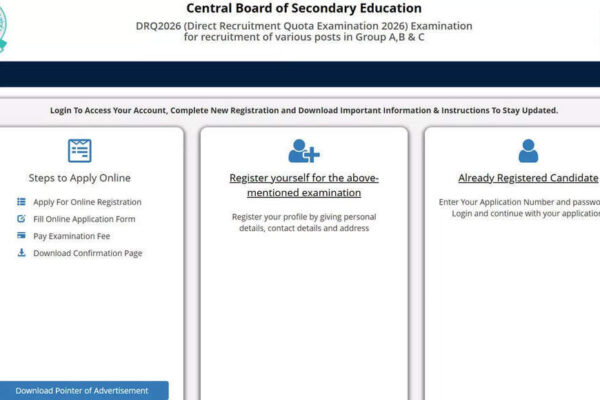
CBSE recruitment 2025-26: Notification released for 124 Group A, B, C posts; apply here

CBSE recruitment 2025-26: Notification released for 124 Group A, B, C posts; apply here

CBSE recruitment 2025-26 notification released for 124 Group A, B, C posts CBSE recruitment 2025-26: The Central Board of Secondary Education (CBSE), New Delhi, has released the official notification for the recruitment of 124 Group A, B, and C non-teaching posts. The recruitment includes positions such as Assistant Secretary, Assistant Director, Accounts Officer, Superintendent, Junior…

Read More
Odisha kicks off 6th National Chilika Bird Festival 2026, spotlight on conservation-led tourism |

Odisha kicks off 6th National Chilika Bird Festival 2026, spotlight on conservation-led tourism |

The Department of Tourism, Government of Odisha, in collaboration with the Forest, Environment and Climate Change Department, recently inaugurated the 6th National Chilika Bird Festival 2026 at the State Convention Hall, Lok Seva Bhawan in Bhubaneswar. The festival once again positions Odisha as a national leader in conservation-led tourism, with a strong emphasis on sustainability,…

Read More
BTER declares diploma engineering third semester result out at techedu.rajasthan.gov.in for November 2025 session

BTER declares diploma engineering third semester result out at techedu.rajasthan.gov.in for November 2025 session

BTER releases engineering diploma results 2026, revaluation dates announced BTER diploma engineering results 2026: The Board of Technical Education Rajasthan (BTER) has declared the Engineering Diploma results for multiple semesters conducted under the November 2025 academic session. The results, released on April 6, 2026, include the third semester examination outcomes, along with previously announced first…

Read More