‘My heart is full and grateful’

‘My heart is full and grateful’

As Vicky Kaushal turned 38 on May 16, wife Katrina Kaif made the day extra special with a heartfelt birthday note that gave fans a rare glimpse into their life as parents. Along with unseen pictures from the intimate celebration, Katrina also shared an adorable moment featuring their baby boy and a special cake that…

Read More
Representational image Back in 2023, India made headlines for becoming the world’s most populous country. For decades, the challenge was a booming population, prompting family-planning campaigns, the slogan “Hum Do, Hamare Do”, and concerns over feeding, educating and employing millions more people.Today, however, the conversation is changing, quite dramatically.For decades, the country was worried about having too many people. Now, it is facing a very different demographic reality: having fewer children than needed to replace the previous generation.According to the latest Sample Registration System (SRS) Statistical Report 2024, India’s Total Fertility Rate (TFR) has fallen to 1.9 children per woman, slipping below the replacement level of 2.1. In simple terms, Indian women are now having fewer children than are needed to maintain the population size over the long run, assuming migration remains unchanged.The decline has been swift. India’s fertility rate stood at 5.2 children per woman in 1971. It fell to 4.3 in 1985, dropped further to 2.9 in 2005, touched 2.0 in 2020 and has now reached 1.9 in 2024. Projections suggest the number could slide even further, to around 1.6 by 2031.On paper, these may seem like dry demographic statistics. In reality, they tell the story of a society in transition.Behind every decimal point are millions of women staying in school longer, enrolling in colleges, building careers, opening bank accounts, marrying later and taking greater control of decisions that were once largely dictated by tradition. The familiar script of “marriage first, baby next” is being rewritten.The fertility saga is no longer just about population but becoming a story about choice.Sejal Chaturvedi, a 34-year-old banking professional married for two years, said she and her husband are fond of children but are not ready for parenthood right now. “We like kids, but having our own is a big responsibility, it’s a lot of work, time and emotional investment, and we don’t feel we can give that right now,” she said. “It’s not about judging anyone who has children, it’s just a choice we’re making for this phase of our lives.”The great demographic U-turnIndia is home to more than 1.46 billion people and continues to be the world’s most populous country. Yet beneath that headline lies a very different reality.Unlike countries such as China, where fertility decline was accelerated through the controversial One-Child Policy, India’s fertility transition has largely occurred through voluntary choices made by families.Having children is a deeply personal choice, and I’m not here to judge anyone who chooses differently. I’ve never been happier, but I only became a mother when I was truly ready—emotionally, personally, and professionally. Now, I understand the weight and meaning of raising another human being. And I genuinely believe there should be no pressure on anyone to have children. People should only become parents if and when they truly want to.Shaili Kaushik, a 37 year old mother and accountantThe decline is being driven by a combination of urbanisation, rising aspirations, better healthcare, access to contraception, improved education and changing social norms.For generations, children were often a “necessity”. They were seen as contributors to household income, support systems for ageing parents and an extension of family lineage. In many parts of the country, parenthood was considered the natural and inevitable next step after marriage.That mindset is evolving.Today, a growing number of young Indians are asking questions that would have seemed unusual only a few decades ago. How many children can we afford? Should we prioritise careers first? Is parenthood necessary at all? What kind of lifestyle do we want?Children are increasingly becoming a choice rather than an expectation. This shift is visible across urban India and is gradually spreading into smaller towns and rural areas as well.Reema Dahiya, a 50-year-old mother, highlighted this contrast between generations.”The younger generation has far more awareness and freedom than we did in our time. Back then, having children was simply the next step after marriage. Today, couples have more choices when it comes to education, careers and the kind of life they want to build, and that is obviously changing how they think about having children,” she told TOI.Women at the centre of India’s fertility transitionAt the heart of India’s demographic story is one obvious but major factor: women.Women’s lives are changing faster than ever before. For decades, discussions about population focused on how many children women were having. Today, it is more about the choices they make.The traditional life path followed by many Indian women often looked like this:School → Marriage → ChildbirthToday, the sequence is more like:Education → Career → Financial independence → Marriage → Maybe parenthoodThis change may appear subtle, but its impact on fertility is enormous.Degrees before babiesA 27 year old MBA student, told TOI, “My parents always prioritised my education first, and that changed everything for me,” she said. “I don’t feel any pressure to rush into motherhood — I want to have children at my own pace, when I’m truly ready.” “I can only give them a better life if I have one of my own first.”According to the latest available data, nearly 46.4% of Indian women have completed at least 10 years of schooling, up from 41% in the previous survey. Meanwhile, 89% of women now operate their own bank or savings accounts, compared to 78.6% earlier. The data shows a pretty clear pattern: the more educated women are, the fewer children they tend to have.These numbers indicate much more than educational achievement. They represent millions of women spending longer periods in classrooms, enrolling in colleges and universities, entering professional careers, earning their own incomes and participating in financial decision-making. How education affects fertility ratesThe total fertility rate is 3.2 for illiterate women, but drops to 1.8 for literate women. And within that, it keeps sliding step by step: 2.1 for those with no formal schooling or below primary, 2.0 at primary level, 1.9 at middle school, 1.8 at Class X, 1.7 at Class XII, and just 1.6 for graduates and above.Across states, the story changes in numbers but not in direction.While Bihar has one of the worst female literacy rates of a little over 50%, their fertility rate stands at 4.2 for illiterate and 2.8 for literate women.At the other end of the spectrum, Kerala with the best female literacy rate of over 90%, holds fertility rate at 0.8.Put simply: the more years in school, the fewer “how many kids?” conversations at home.As women gain access to more opportunities, they are also gaining greater control over reproductive decisions. Parenthood is increasingly becoming something that women actively choose rather than something they automatically enter into.The latest fertility trends suggest that women’s expanding opportunities are fundamentally reshaping India’s demographic future.Smaller families: New normalThe fertility decline is accompanied by a significant reduction in birth rates across the country. India’s Crude Birth Rate has fallen dramatically from 36.9 births per 1,000 population in 1971 to 18.3 births per 1,000 population in 2024. The Crude Birth Rate (CBR) is a key demographic metric defined as the total number of live births per 1,000 population in a given geographical region during a specified year.In just over five decades, the country’s birth rate has effectively been cut in half.How Indian demographics lookThe data indicate that India is no longer a high-fertility society.One of the clearest signs of this shift is birth order.Nearly 66.4% of all births recorded in 2024 were first births. Meanwhile, only 3.5% were fourth-order births or higher. This implies that India is increasingly becoming a 1-child or 2-child country, and large families with over 3 children are now rare exceptions.Large families that were once common are becoming increasingly rare.‘Not thinking about marriage now’Another big reason behind India’s falling fertility is simple: marriage is happening later than before.The latest SRS 2024 report shows that the mean age at effective marriage for women has now risen to 23.1 years. But that number hides a clear split. Urban women are marrying at 24.5 years on average, two years later than rural women (22.5 years). As a result, childbirth is no longer concentrated in the early twenties. Instead, the action has shifted to the late twenties. The highest fertility is now in the 25–29 age group, with an age-specific fertility rate of 134.7 births per 1,000 women, compared to 105.5 in the 20–24 group. Put together, the pattern is pretty clear: Indians are not just having fewer children — they’re having them later. Marriage is getting pushed back, motherhood is getting rescheduled, and the whole timeline of family life is quietly shifting forward.And when the clock starts later, it naturally stops earlier too. A shorter reproductive window usually means fewer children overall.Behind all of this are bigger social shifts, more years in education, better job opportunities for women, and growing confidence in deciding when (and whether) to start a family. It marks a clear break from the older rhythm of early marriage and early motherhood that once defined much of India’s demographic story.Now, that timeline is being rewritten, one late twenties milestone at a time.The urban-rural divideFertility is falling everywhere, but the pace differs significantly between urban and rural India.According to the latest data:Rural India TFR: 2.1Urban India TFR: 1.5National TFR: 1.9Urban India has moved well below replacement fertility.Several factors contribute to this trend.City life is more expensive. Housing costs are higher. Education expenses continue to rise. Women have greater access to employment opportunities. Dual-income households are becoming common. Space constraints and lifestyle preferences often encourage smaller families.As Tamanna, a PR professional puts it, “Everything is getting costlier, so it’s not that people don’t want kids, it’s just that in cities, every expense feels multiplied. Even basic living takes careful budgeting. So it ultimately requires a lot of planning.”Family sizes are becoming smallerFor many urban couples, raising multiple children can appear financially overwhelming.In rural areas, fertility remains somewhat higher, but the decline is still evident. The gap between rural and urban fertility continues to narrow as education, healthcare and media access spread deeper into rural communities.Families are waiting longer between childrenThe data also reveal another important behavioural change.Indian families are spacing births farther apart than before.More than half of all births occur after a gap of at least three years from the previous birth.This trend is significant because longer birth intervals are associated with improved maternal and child health outcomes.It also reflects better access to contraception and family planning services.Parents are increasingly choosing not only to have fewer children but also to invest more time and resources in each child. Good news or bad news?Despite falling fertility, India’s population is unlikely to shrink anytime soon.The reason is population momentum. India still has a large young population entering reproductive age. Even if each woman has fewer children, the sheer number of people in childbearing years will continue generating population growth for some time.However, the country’s age structure is gradually changing.Children aged 0 to 14 years currently account for 24% of the population.Meanwhile, people aged 60 years and above account for 9.7%.As fertility remains low, the share of elderly citizens is expected to rise steadily.This will create new challenges.India will need stronger healthcare systems, pension frameworks, elder-care infrastructure and social security mechanisms to support an ageing population.The country’s policy priorities may gradually shift from managing population growth to managing population ageing.The bottom lineThe country is steadily moving into an era where smaller families are becoming the norm rather than the exception. But this is not a simple story of decline or alarm. It is a story of choices, later marriages, longer education journeys, rising aspirations, better healthcare and, above all, women increasingly deciding when and how they want to build a family. The old rhythm of early marriage and early motherhood is giving way to a more flexible life course, where parenthood is planned, postponed, and sometimes even reconsidered altogether.So, is this good or bad? The honest answer is: both, depending on the lens. In the short to medium term, this shift is largely positive, it reflects better education, improved women’s empowerment, lower child mortality, and more financial stability within households. Smaller families often mean better investment in each child’s health, education and opportunities. But over the long term, sustained low fertility can also bring challenges, including an ageing population, pressure on the working-age workforce, and rising demand for healthcare, pensions and elder care systems. India is not facing these pressures immediately, but the direction is already visible. In the end, this is less about a “population crisis” and more about a societal balancing act, between progress and ageing, freedom and responsibility, and how India chooses to adapt to a future where families are smaller, but expectations from them are bigger.Get the latest India news and live updates. Download the TOI App.End of ArticleFollow Us On Social MediaVideosJahangir Khan’s Wife Arrested For Allegedly Plotting Falta Police Station AttackSanjay Raut Hits Back At Shinde Over ‘Trailer’ Remark, Calls Him A Dishonest LeaderNEET-UG Re-Exam Blunder: Nagpur Student Assigned Abu Dhabi Centre, NTA Corrects Error After OutcryDhaka Erupts In Protest As Hindus Hit Streets With ‘Jai Shri Ram’ Chants | WatchNEET Retest Tragedy: 12 Students Die By Suicide In 37 Days After Exam Cancellation’Just A Trailer’: Eknath Shinde Signals More Shiv Sena (UBT) Defections Amid Operation Tiger BuzzShashi Tharoor Welcomes Modi-Trump Warmth, Says US Relations With Pakistan Need Not Affect IndiaWest Bengal Police Launch Probe Into TMC Bank Accounts Holding ₹535 Crore After MLA’s ComplaintTMC, BJP Workers Clash Outside Kolkata Airport During Abhishek Banerjee’s Return From Delhi”Ready To Step Down”: Uddhav Thackeray’s Emotional Message As MP Revolt Rocks Shiv Sena (UBT)123PhotostoriesWhat happens when you soak dal for 30 minutes before cookingVitamin D supplements not working? 3 common mistakes people make, heart surgeon revealsTeenagers who feel close to their parents make safer choices: 7 activities parents can do with their teens to build deeper connection5 things Vastu says you should remove from your office desk immediatelyThe parenting lessons that Priyanka Chopra learned from her father: From making eye contact to being courageousHow to grow pudina at home fromstore-bought leaves and stem:A step-by-step beginner’s guide for a healthy harvestInside Barun Sobti’s lavish Mumbai house: A massive living room, stunning balconies, elegant decor and moreFrom witchcraft to beauty icon: The surprising history of red lipstick10 signs a couple is losing emotional intimacyBridal colour trends 2026: The wedding hues replacing traditional red123Hot PicksNeeraj ChopraScotland Vs MoroccoBrazil Vs HaltiJIO IPOUddhav ThackerayAbhishek BanerjeeEknath ShindeSamanta BullockLondon Train TragedyTop TrendingBihar gang-rapeUS-Iran Peace DealStock Market LiveFIFA World Cup 2026What is Legacy BadgeBEST bus strikeAIIMS BSc Nursing Admit CardMHT CET PCM 2nd attempt resultsGold rate todayIndia-UK FTA

Representational image Back in 2023, India made headlines for becoming the world’s most populous country. For decades, the challenge was a booming population, prompting family-planning campaigns, the slogan “Hum Do, Hamare Do”, and concerns over feeding, educating and employing millions more people.Today, however, the conversation is changing, quite dramatically.For decades, the country was worried about having too many people. Now, it is facing a very different demographic reality: having fewer children than needed to replace the previous generation.According to the latest Sample Registration System (SRS) Statistical Report 2024, India’s Total Fertility Rate (TFR) has fallen to 1.9 children per woman, slipping below the replacement level of 2.1. In simple terms, Indian women are now having fewer children than are needed to maintain the population size over the long run, assuming migration remains unchanged.The decline has been swift. India’s fertility rate stood at 5.2 children per woman in 1971. It fell to 4.3 in 1985, dropped further to 2.9 in 2005, touched 2.0 in 2020 and has now reached 1.9 in 2024. Projections suggest the number could slide even further, to around 1.6 by 2031.On paper, these may seem like dry demographic statistics. In reality, they tell the story of a society in transition.Behind every decimal point are millions of women staying in school longer, enrolling in colleges, building careers, opening bank accounts, marrying later and taking greater control of decisions that were once largely dictated by tradition. The familiar script of “marriage first, baby next” is being rewritten.The fertility saga is no longer just about population but becoming a story about choice.Sejal Chaturvedi, a 34-year-old banking professional married for two years, said she and her husband are fond of children but are not ready for parenthood right now. “We like kids, but having our own is a big responsibility, it’s a lot of work, time and emotional investment, and we don’t feel we can give that right now,” she said. “It’s not about judging anyone who has children, it’s just a choice we’re making for this phase of our lives.”The great demographic U-turnIndia is home to more than 1.46 billion people and continues to be the world’s most populous country. Yet beneath that headline lies a very different reality.Unlike countries such as China, where fertility decline was accelerated through the controversial One-Child Policy, India’s fertility transition has largely occurred through voluntary choices made by families.Having children is a deeply personal choice, and I’m not here to judge anyone who chooses differently. I’ve never been happier, but I only became a mother when I was truly ready—emotionally, personally, and professionally. Now, I understand the weight and meaning of raising another human being. And I genuinely believe there should be no pressure on anyone to have children. People should only become parents if and when they truly want to.Shaili Kaushik, a 37 year old mother and accountantThe decline is being driven by a combination of urbanisation, rising aspirations, better healthcare, access to contraception, improved education and changing social norms.For generations, children were often a “necessity”. They were seen as contributors to household income, support systems for ageing parents and an extension of family lineage. In many parts of the country, parenthood was considered the natural and inevitable next step after marriage.That mindset is evolving.Today, a growing number of young Indians are asking questions that would have seemed unusual only a few decades ago. How many children can we afford? Should we prioritise careers first? Is parenthood necessary at all? What kind of lifestyle do we want?Children are increasingly becoming a choice rather than an expectation. This shift is visible across urban India and is gradually spreading into smaller towns and rural areas as well.Reema Dahiya, a 50-year-old mother, highlighted this contrast between generations.”The younger generation has far more awareness and freedom than we did in our time. Back then, having children was simply the next step after marriage. Today, couples have more choices when it comes to education, careers and the kind of life they want to build, and that is obviously changing how they think about having children,” she told TOI.Women at the centre of India’s fertility transitionAt the heart of India’s demographic story is one obvious but major factor: women.Women’s lives are changing faster than ever before. For decades, discussions about population focused on how many children women were having. Today, it is more about the choices they make.The traditional life path followed by many Indian women often looked like this:School → Marriage → ChildbirthToday, the sequence is more like:Education → Career → Financial independence → Marriage → Maybe parenthoodThis change may appear subtle, but its impact on fertility is enormous.Degrees before babiesA 27 year old MBA student, told TOI, “My parents always prioritised my education first, and that changed everything for me,” she said. “I don’t feel any pressure to rush into motherhood — I want to have children at my own pace, when I’m truly ready.” “I can only give them a better life if I have one of my own first.”According to the latest available data, nearly 46.4% of Indian women have completed at least 10 years of schooling, up from 41% in the previous survey. Meanwhile, 89% of women now operate their own bank or savings accounts, compared to 78.6% earlier. The data shows a pretty clear pattern: the more educated women are, the fewer children they tend to have.These numbers indicate much more than educational achievement. They represent millions of women spending longer periods in classrooms, enrolling in colleges and universities, entering professional careers, earning their own incomes and participating in financial decision-making. How education affects fertility ratesThe total fertility rate is 3.2 for illiterate women, but drops to 1.8 for literate women. And within that, it keeps sliding step by step: 2.1 for those with no formal schooling or below primary, 2.0 at primary level, 1.9 at middle school, 1.8 at Class X, 1.7 at Class XII, and just 1.6 for graduates and above.Across states, the story changes in numbers but not in direction.While Bihar has one of the worst female literacy rates of a little over 50%, their fertility rate stands at 4.2 for illiterate and 2.8 for literate women.At the other end of the spectrum, Kerala with the best female literacy rate of over 90%, holds fertility rate at 0.8.Put simply: the more years in school, the fewer “how many kids?” conversations at home.As women gain access to more opportunities, they are also gaining greater control over reproductive decisions. Parenthood is increasingly becoming something that women actively choose rather than something they automatically enter into.The latest fertility trends suggest that women’s expanding opportunities are fundamentally reshaping India’s demographic future.Smaller families: New normalThe fertility decline is accompanied by a significant reduction in birth rates across the country. India’s Crude Birth Rate has fallen dramatically from 36.9 births per 1,000 population in 1971 to 18.3 births per 1,000 population in 2024. The Crude Birth Rate (CBR) is a key demographic metric defined as the total number of live births per 1,000 population in a given geographical region during a specified year.In just over five decades, the country’s birth rate has effectively been cut in half.How Indian demographics lookThe data indicate that India is no longer a high-fertility society.One of the clearest signs of this shift is birth order.Nearly 66.4% of all births recorded in 2024 were first births. Meanwhile, only 3.5% were fourth-order births or higher. This implies that India is increasingly becoming a 1-child or 2-child country, and large families with over 3 children are now rare exceptions.Large families that were once common are becoming increasingly rare.‘Not thinking about marriage now’Another big reason behind India’s falling fertility is simple: marriage is happening later than before.The latest SRS 2024 report shows that the mean age at effective marriage for women has now risen to 23.1 years. But that number hides a clear split. Urban women are marrying at 24.5 years on average, two years later than rural women (22.5 years). As a result, childbirth is no longer concentrated in the early twenties. Instead, the action has shifted to the late twenties. The highest fertility is now in the 25–29 age group, with an age-specific fertility rate of 134.7 births per 1,000 women, compared to 105.5 in the 20–24 group. Put together, the pattern is pretty clear: Indians are not just having fewer children — they’re having them later. Marriage is getting pushed back, motherhood is getting rescheduled, and the whole timeline of family life is quietly shifting forward.And when the clock starts later, it naturally stops earlier too. A shorter reproductive window usually means fewer children overall.Behind all of this are bigger social shifts, more years in education, better job opportunities for women, and growing confidence in deciding when (and whether) to start a family. It marks a clear break from the older rhythm of early marriage and early motherhood that once defined much of India’s demographic story.Now, that timeline is being rewritten, one late twenties milestone at a time.The urban-rural divideFertility is falling everywhere, but the pace differs significantly between urban and rural India.According to the latest data:Rural India TFR: 2.1Urban India TFR: 1.5National TFR: 1.9Urban India has moved well below replacement fertility.Several factors contribute to this trend.City life is more expensive. Housing costs are higher. Education expenses continue to rise. Women have greater access to employment opportunities. Dual-income households are becoming common. Space constraints and lifestyle preferences often encourage smaller families.As Tamanna, a PR professional puts it, “Everything is getting costlier, so it’s not that people don’t want kids, it’s just that in cities, every expense feels multiplied. Even basic living takes careful budgeting. So it ultimately requires a lot of planning.”Family sizes are becoming smallerFor many urban couples, raising multiple children can appear financially overwhelming.In rural areas, fertility remains somewhat higher, but the decline is still evident. The gap between rural and urban fertility continues to narrow as education, healthcare and media access spread deeper into rural communities.Families are waiting longer between childrenThe data also reveal another important behavioural change.Indian families are spacing births farther apart than before.More than half of all births occur after a gap of at least three years from the previous birth.This trend is significant because longer birth intervals are associated with improved maternal and child health outcomes.It also reflects better access to contraception and family planning services.Parents are increasingly choosing not only to have fewer children but also to invest more time and resources in each child. Good news or bad news?Despite falling fertility, India’s population is unlikely to shrink anytime soon.The reason is population momentum. India still has a large young population entering reproductive age. Even if each woman has fewer children, the sheer number of people in childbearing years will continue generating population growth for some time.However, the country’s age structure is gradually changing.Children aged 0 to 14 years currently account for 24% of the population.Meanwhile, people aged 60 years and above account for 9.7%.As fertility remains low, the share of elderly citizens is expected to rise steadily.This will create new challenges.India will need stronger healthcare systems, pension frameworks, elder-care infrastructure and social security mechanisms to support an ageing population.The country’s policy priorities may gradually shift from managing population growth to managing population ageing.The bottom lineThe country is steadily moving into an era where smaller families are becoming the norm rather than the exception. But this is not a simple story of decline or alarm. It is a story of choices, later marriages, longer education journeys, rising aspirations, better healthcare and, above all, women increasingly deciding when and how they want to build a family. The old rhythm of early marriage and early motherhood is giving way to a more flexible life course, where parenthood is planned, postponed, and sometimes even reconsidered altogether.So, is this good or bad? The honest answer is: both, depending on the lens. In the short to medium term, this shift is largely positive, it reflects better education, improved women’s empowerment, lower child mortality, and more financial stability within households. Smaller families often mean better investment in each child’s health, education and opportunities. But over the long term, sustained low fertility can also bring challenges, including an ageing population, pressure on the working-age workforce, and rising demand for healthcare, pensions and elder care systems. India is not facing these pressures immediately, but the direction is already visible. In the end, this is less about a “population crisis” and more about a societal balancing act, between progress and ageing, freedom and responsibility, and how India chooses to adapt to a future where families are smaller, but expectations from them are bigger.Get the latest India news and live updates. Download the TOI App.End of ArticleFollow Us On Social MediaVideosJahangir Khan’s Wife Arrested For Allegedly Plotting Falta Police Station AttackSanjay Raut Hits Back At Shinde Over ‘Trailer’ Remark, Calls Him A Dishonest LeaderNEET-UG Re-Exam Blunder: Nagpur Student Assigned Abu Dhabi Centre, NTA Corrects Error After OutcryDhaka Erupts In Protest As Hindus Hit Streets With ‘Jai Shri Ram’ Chants | WatchNEET Retest Tragedy: 12 Students Die By Suicide In 37 Days After Exam Cancellation’Just A Trailer’: Eknath Shinde Signals More Shiv Sena (UBT) Defections Amid Operation Tiger BuzzShashi Tharoor Welcomes Modi-Trump Warmth, Says US Relations With Pakistan Need Not Affect IndiaWest Bengal Police Launch Probe Into TMC Bank Accounts Holding ₹535 Crore After MLA’s ComplaintTMC, BJP Workers Clash Outside Kolkata Airport During Abhishek Banerjee’s Return From Delhi”Ready To Step Down”: Uddhav Thackeray’s Emotional Message As MP Revolt Rocks Shiv Sena (UBT)123PhotostoriesWhat happens when you soak dal for 30 minutes before cookingVitamin D supplements not working? 3 common mistakes people make, heart surgeon revealsTeenagers who feel close to their parents make safer choices: 7 activities parents can do with their teens to build deeper connection5 things Vastu says you should remove from your office desk immediatelyThe parenting lessons that Priyanka Chopra learned from her father: From making eye contact to being courageousHow to grow pudina at home fromstore-bought leaves and stem:A step-by-step beginner’s guide for a healthy harvestInside Barun Sobti’s lavish Mumbai house: A massive living room, stunning balconies, elegant decor and moreFrom witchcraft to beauty icon: The surprising history of red lipstick10 signs a couple is losing emotional intimacyBridal colour trends 2026: The wedding hues replacing traditional red123Hot PicksNeeraj ChopraScotland Vs MoroccoBrazil Vs HaltiJIO IPOUddhav ThackerayAbhishek BanerjeeEknath ShindeSamanta BullockLondon Train TragedyTop TrendingBihar gang-rapeUS-Iran Peace DealStock Market LiveFIFA World Cup 2026What is Legacy BadgeBEST bus strikeAIIMS BSc Nursing Admit CardMHT CET PCM 2nd attempt resultsGold rate todayIndia-UK FTA

Representational image Back in 2023, India made headlines for becoming the world’s most populous country. For decades, the challenge was a booming population, prompting family-planning campaigns, the slogan “Hum Do, Hamare Do”, and concerns over feeding, educating and employing millions more people.Today, however, the conversation is changing, quite dramatically.For decades, the country was worried about…

Read More
The Great Emu War of 1932: How 20,000 flightless birds outsmarted the Australian army | World News

The Great Emu War of 1932: How 20,000 flightless birds outsmarted the Australian army | World News

In 1932, the Government of Australia entered into an unconventional ‘war’ with an unexpected adversary, namely, a large population of approximately 20,000 emus, as reported in Australian Geographic. The emus would migrate from their traditional migratory range to the wheat-growing region of Western Australia after the economic collapse of the Great Depression caused many ex-soldier…

Read More
Gold price prediction today: Is gold in bearish territory? Key levels to watch out for March 30, 2026 week

Gold price prediction today: Is gold in bearish territory? Key levels to watch out for March 30, 2026 week

Gold is witnessing sharp swings in a broad range amidst mixed signals. (AI image) Gold price prediction today: Gold prices seem to be exhibiting a corrective phase with a bearish tone, feels Manav Modi, Senior Analyst, Commodity Research at Motilal Oswal Financial Services Ltd. The analyst shares his outlook on the yellow metal:Gold is witnessing…

Read More
Filmmaker Rumy Jaffery defends Aditya Dhar’s Dhurandhar’, says, ‘It’s not a propaganda film’

Filmmaker Rumy Jaffery defends Aditya Dhar’s Dhurandhar’, says, ‘It’s not a propaganda film’

Aditya Dhar’s ‘Dhurandhar’ which is an adrenaline pumping spy thriller, is smashing box office records in India and worldwide. Starring Ranveer Singh as Hamza, the film also got loved for its ensemble comprising of Arjun Rampal, Akshaye Khanna, R Madhavan, Sanjay Dutt, Rakesh Bedi and others. While it has crossed Rs 790 crore in India,…

Read More
Switching formats: After white-ball glut, players return to red-ball cricket as Ranji season resumes

Switching formats: After white-ball glut, players return to red-ball cricket as Ranji season resumes

BENGALURU/PUNE: Sixty-three days. That is the gap between two Ranji Trophy matches this season. In the intervening period, the domestic calendar was packed with two white-ball tournaments — the Syed Mushtaq Ali Trophy and the Vijay Hazare Trophy.Go Beyond The Boundary with our YouTube channel. SUBSCRIBE NOW!As the country’s premier domestic competition resumes from Thursday,…

Read More
Jan 09, 2026, 17:34 IST

Jan 09, 2026, 17:34 IST

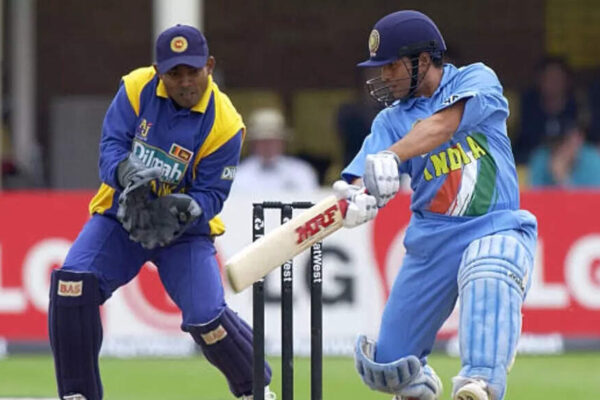
Sachin Tendulkar batting during the 6th NatWest Series One Day International between India and Sri Lanka at Edgbaston, Birmingham, 6th July 2002. The wicketkeeper for Sri Lanka is Romesh Kaluwitharana. (Photo/Getty Images) It’s tough to pinpoint the exact reason why a team goes on to win a long tournament like the World Cup. It will…

Read More
Daily Health Horoscope Today, November 16, 2025: The stars signal weakness, these zodiac signs must slow down immediately

Daily Health Horoscope Today, November 16, 2025: The stars signal weakness, these zodiac signs must slow down immediately

Check out the daily horoscopes and discover how the stars could be speaking about your health and well-being. Get personalized qualities for all twelve zodiac signs-from Aries and Taurus-Gemini and beyond-into reflections as to how celestial interference might oppose their energy, balance, and well-being. Aries Daily Horoscope Today: Health Insights for November 16, 2025 Before…

Read More
Flying through unending turbulence: For Indian airlines one crisis lands, another takes off

Flying through unending turbulence: For Indian airlines one crisis lands, another takes off

Yatrigan, fasten your seatbelts for not just your flight but the whole aviation sector is experiencing turbulence!Flight delays, rising ticket prices, and cancelled international routes are no longer breaking news, but the new normal. In May 2026, airlines are grappling with a mix of economic and geopolitical pressures, creating a cycle of challenges that keeps…

Read More
NEW DELHI: Just days before delivering his biggest political move yet, Raghav Chadha struck a cinematic note, invoking a Bollywood line from Dhurandhar: “ghayal hoon, isliye ghatak hoon” (I am wounded, therefore I am dangerous).In hindsight, the dialogue and its metaphor now read very differently. The “wounded” leader Raghav Chadha has not just walked away from Arvind Kejriwal’s AAP — he has crossed the political ‘border’ by joining the BJP. And in doing so, he may have inflicted the deepest wound yet on the AAP, proving to be the real lethal force for the party. More than a high-profile defection, Chadha’s move, along with a clutch of Rajya Sabha members, strikes at the party’s numbers, narrative, and national positioning. For AAP, the aftershocks are likely to be felt most sharply in Punjab, the only state where it holds full power and the foundation of its national ambitions. For the past few years, I could feel that I am the right man in the wrong party.- Raghav ChadhaHere are 5 reasons why Raghav Chadha’s exit may hit AAP where it hurts the most:1. Cost of this breakup in numbersThe exit of Raghav Chadha from the AAP is not just a political setback for the party; it delivers a sharp blow in pure numerical terms in Parliament.Raghav Chadha exited the party along with 6 other Rajya Sabha members. AAP’s strength has effectively shrunk from 10 MPs to just 3, following the reported shift of seven members. “We have decided that we, the 2/3rd members belonging to the AAP in Rajya Sabha, exercise the provisions of the Constitution of India and merge ourselves with the BJP,” Raghav Chadha said at a press conference, with Sandeep Pathak and Ashok Mittal on stage.”There are 10 AAP MPs in the Rajya Sabha, more than 2/3rd of them are with us in this. They have signed, and this morning we submitted the signed letter and documents to the Rajya Sabha Chairman…three of them are here before you. Besides us, there are Harbhajan Singh, Rajinder Gupta, Vikramjit Singh Sahney and Swati Maliwal,” he said.Crossing the two-thirds mark allows the group to qualify as a merger under anti-defection rules, meaning the loss is both instant and irreversible. For AAP, that translates into a 70% drop in Upper House strength, severely limiting its ability to intervene in debates, secure committee positions, and shape national discourse.The setback is amplified by the fact that AAP’s Rajya Sabha presence is largely rooted in Punjab — its only full-state power base. A weakened parliamentary bench reduces the party’s ability to project Punjab’s interests at the national level, even as it continues to govern the state.2. ‘New politics’ brand takes credibility hitWhile severing ties with the AAP, Raghav Chadha said: “The AAP, which I nurtured with my blood and sweat, and gave 15 years of my youth to, has deviated from its principles, values and core morals. Now this party does not work in the interest of the nation but for its personal benefits … For the past few years, I could feel that I am the right man in the wrong party. So, today, we announce that I am distancing myself from the AAP and getting close to the public.”Since its inception in 2012 after the Anna Hazare movement, AAP’s political strength has long rested on its ability to differentiate itself from traditional parties through a reformist, anti-establishment narrative.Raghav Chadha’s exit complicates that positioning.By alleging that the party now works for “personal benefits” rather than the national interest, he can change the discourse in the coming months from promise to performance.The whole controversy around the liquor scam proved to be fatal for AAP in the 2025 assembly elections.Chadha’s switch may also alter how voters interpret AAP’s governance and intent in the upcoming Punjab elections.Earlier in the month, in a cryptic post, Chadha had said: “Never outshine the master,” suggesting that his rising national profile and perceived independence had made him a target within his own party.If he had gone to the BJP alone, the AAP leadership would have been able to put the entire blame on his loyalty. The breakaway of 7 Rajya Sabha members together will at least raise a doubt in Kejriwal’s leadership in the party. The leadership of the party has, however, has blamed it on the BJP, alleging the saffron party conduction ‘operation lotus’ the divide the AAP.3. AAP’s internal churnThe exit of Raghav Chadha and six other MPs underscores a deeper pattern within the party — one of recurring internal ruptures that date back to its very origins. Born out of the India Against Corruption movement in 2012, AAP itself emerged from a split, with Anna Hazare and Kiran Bedi opposing the shift to electoral politics.Over the years, the party has seen the steady exit of key figures, from early architects like Yogendra Yadav and Prashant Bhushan to prominent faces such as Kumar Vishwas, Ashutosh and Alka Lamba. Just before last Delhi assembly elections, rift between AAP leadership and Swati Maliwal was also out in open. Maliwal also joined Chadha on Friday in quitting the party to join the BJP.What makes the Raghav Chadha episode different is its scale and timing. The simultaneous exit of multiple sitting Rajya Sabha MPs marks one of the most significant setbacks at the parliamentary level. 4. Architect of Punjab victory exits the stageWhile Raghav Chadha’s exit carries symbolic weight, the simultaneous departure of Sandeep Pathak may prove more consequential in structural terms. Widely seen as the architect behind AAP’s Punjab victory, Pathak brought a data-driven, booth-level precision to the party’s campaign machinery. His approach helped AAP convert roughly 42% vote share into a landslide majority of 92 seats of 117 in the 2022 assembly elections, a remarkable strike rate in a multi-cornered contest.Now, at a time when the Bhagwant Mann government is entering a crucial last-leg phase, with the assembly elections to be held next year, the absence of that strategic anchor could create a vacuum.5. National positioning takes a hitThe fallout from Raghav Chadha’s exit extends beyond Punjab into AAP’s standing in national opposition politics. Within the INDIA bloc, the Aam Aadmi Party has positioned itself as a distinct force — often balancing cooperation with competition, especially with the Congress.That positioning now weakens after Chadha’s exit.With its Rajya Sabha strength dropping sharply from 10 to 3, AAP’s ability to project itself as a serious national player takes a direct hit. And in coalition politics, numbers are credibility.This also affects AAP’s leverage in the opposition’s INDIA bloc dynamics. The party has often negotiated from a position of relative strength. That equation had already shifted a blow after last year’s loss in Delhi. Now, as its legislative footprint shrinks, it might get harder for the party to assert itself in seat-sharing talks or strategic decisions.For Chadha, the move resets his trajectory in national politics. Whether it strengthens the Bharatiya Janata Party’s footprint in Punjab or reshapes opposition equations within the INDIA bloc will become clearer in the months ahead.One thing, however, is already evident: this is not just a break-up. It is a moment that could redraw political lines — both in Punjab and beyond.Aam Aadmi Party leader Sanjay Singh has, for now, said he would seek the disqualification of Raghav Chadha, Ashok Mittal and Sandeep Pathak from the Upper House for joining the BJP.About the AuthorPallaviNews desk journalist, digital, at The Times of India, with a focus on Indian politics. Over a decade of chasing stories, taming headlines and arguing with commas like they’re part of the opposition. Tracks elections, policy pivots, party drama and the fine print of power, where every word can tilt the narrative. Believes good journalism is clarity under pressure, ideally filed before the next breaking alert crashes in. Powered by deadlines, context, sharp edits and a steady supply of strong tea.Read MoreEnd of ArticleFollow Us On Social MediaVideosAshok Mittal Joins BJP After Replacing Raghav Chadha In RS & ED Raids | WatchSamrat Choudhary, Tejashwi Yadav Clash Over CM Post, Stability & Lalu LegacyHow Raghav Chadha, Sandeep Pathak, Ashok Mittal Exit Triggers AAP CrisisAAP Targets Raghav Chadha & MPs Over Exit, Says they ‘Betrayed The People Of Punjab’Meet The 7 AAP MPs Who Resigned And Joined BJP In Big Political Shock To KejriwalRaghav Chadha Quits AAP, Joins BJP With Six Other MPs | WatchBihar CM Samrat Choudhary Clears Floor Test, NDA Government Proves Majority In AssemblyTamil Nadu Polls See Surge in First-Time Voters, Youth Drive Record TurnoutBJP Declares Yogi Adityanath as CM Face for 2027 UP Assembly ElectionsRSS’ Dattatreya Hosabale In US: “Hindus Not Supremacist, Have Nothing To Apologise For”123PhotostoriesAre you loading your dishwasher the right way? Here’s what actually worksWhy Gen Z is choosing lab-grown diamonds for modern engagement ringsChronic inflammation may be raising your disease risk: Doctor shares 7 foods that help calm it naturallyWhat that tiny hole in your sink is really forA rare moment put Ranthambore National Park back in the spotlight — 5 reasons fans are going now‘The Devil Wears Prada 2’ star Anne Hathaway’s most iconic red carpet looksThis everyday travel item often triggers airport bag checks — and you probably packed itVitamin B12 deficiency is more common than you think: Foods you need in your daily diet‘Raja Shivaji’, ‘Chand Mera Dil’, ‘Pati Patni Aur Woh Do’: Bollywood releases slated for May 2026’The Devil Wears Prada 2′ cast then vs now: How Meryl Streep, Anne Hathaway and more have evolved 20 years after the original123Hot PicksTamil Nadu ElectionWest Bengal voter turnoutAssembly Election 2026Mamata BanerjeeTamil Nadu voter turnoutAmit ShahPM ModiTop TrendingRaghav Chadha Joins BJPTamil Nadu electionAP SSC Class 10 resultsRRB opens qualificationAIIMS B.Sc. coursesJac Class 12 ResultPatrick MahomesBengal PollsNirmala SitharamanIPL Orange Cap

NEW DELHI: Just days before delivering his biggest political move yet, Raghav Chadha struck a cinematic note, invoking a Bollywood line from Dhurandhar: “ghayal hoon, isliye ghatak hoon” (I am wounded, therefore I am dangerous).In hindsight, the dialogue and its metaphor now read very differently. The “wounded” leader Raghav Chadha has not just walked away from Arvind Kejriwal’s AAP — he has crossed the political ‘border’ by joining the BJP. And in doing so, he may have inflicted the deepest wound yet on the AAP, proving to be the real lethal force for the party. More than a high-profile defection, Chadha’s move, along with a clutch of Rajya Sabha members, strikes at the party’s numbers, narrative, and national positioning. For AAP, the aftershocks are likely to be felt most sharply in Punjab, the only state where it holds full power and the foundation of its national ambitions. For the past few years, I could feel that I am the right man in the wrong party.- Raghav ChadhaHere are 5 reasons why Raghav Chadha’s exit may hit AAP where it hurts the most:1. Cost of this breakup in numbersThe exit of Raghav Chadha from the AAP is not just a political setback for the party; it delivers a sharp blow in pure numerical terms in Parliament.Raghav Chadha exited the party along with 6 other Rajya Sabha members. AAP’s strength has effectively shrunk from 10 MPs to just 3, following the reported shift of seven members. “We have decided that we, the 2/3rd members belonging to the AAP in Rajya Sabha, exercise the provisions of the Constitution of India and merge ourselves with the BJP,” Raghav Chadha said at a press conference, with Sandeep Pathak and Ashok Mittal on stage.”There are 10 AAP MPs in the Rajya Sabha, more than 2/3rd of them are with us in this. They have signed, and this morning we submitted the signed letter and documents to the Rajya Sabha Chairman…three of them are here before you. Besides us, there are Harbhajan Singh, Rajinder Gupta, Vikramjit Singh Sahney and Swati Maliwal,” he said.Crossing the two-thirds mark allows the group to qualify as a merger under anti-defection rules, meaning the loss is both instant and irreversible. For AAP, that translates into a 70% drop in Upper House strength, severely limiting its ability to intervene in debates, secure committee positions, and shape national discourse.The setback is amplified by the fact that AAP’s Rajya Sabha presence is largely rooted in Punjab — its only full-state power base. A weakened parliamentary bench reduces the party’s ability to project Punjab’s interests at the national level, even as it continues to govern the state.2. ‘New politics’ brand takes credibility hitWhile severing ties with the AAP, Raghav Chadha said: “The AAP, which I nurtured with my blood and sweat, and gave 15 years of my youth to, has deviated from its principles, values and core morals. Now this party does not work in the interest of the nation but for its personal benefits … For the past few years, I could feel that I am the right man in the wrong party. So, today, we announce that I am distancing myself from the AAP and getting close to the public.”Since its inception in 2012 after the Anna Hazare movement, AAP’s political strength has long rested on its ability to differentiate itself from traditional parties through a reformist, anti-establishment narrative.Raghav Chadha’s exit complicates that positioning.By alleging that the party now works for “personal benefits” rather than the national interest, he can change the discourse in the coming months from promise to performance.The whole controversy around the liquor scam proved to be fatal for AAP in the 2025 assembly elections.Chadha’s switch may also alter how voters interpret AAP’s governance and intent in the upcoming Punjab elections.Earlier in the month, in a cryptic post, Chadha had said: “Never outshine the master,” suggesting that his rising national profile and perceived independence had made him a target within his own party.If he had gone to the BJP alone, the AAP leadership would have been able to put the entire blame on his loyalty. The breakaway of 7 Rajya Sabha members together will at least raise a doubt in Kejriwal’s leadership in the party. The leadership of the party has, however, has blamed it on the BJP, alleging the saffron party conduction ‘operation lotus’ the divide the AAP.3. AAP’s internal churnThe exit of Raghav Chadha and six other MPs underscores a deeper pattern within the party — one of recurring internal ruptures that date back to its very origins. Born out of the India Against Corruption movement in 2012, AAP itself emerged from a split, with Anna Hazare and Kiran Bedi opposing the shift to electoral politics.Over the years, the party has seen the steady exit of key figures, from early architects like Yogendra Yadav and Prashant Bhushan to prominent faces such as Kumar Vishwas, Ashutosh and Alka Lamba. Just before last Delhi assembly elections, rift between AAP leadership and Swati Maliwal was also out in open. Maliwal also joined Chadha on Friday in quitting the party to join the BJP.What makes the Raghav Chadha episode different is its scale and timing. The simultaneous exit of multiple sitting Rajya Sabha MPs marks one of the most significant setbacks at the parliamentary level. 4. Architect of Punjab victory exits the stageWhile Raghav Chadha’s exit carries symbolic weight, the simultaneous departure of Sandeep Pathak may prove more consequential in structural terms. Widely seen as the architect behind AAP’s Punjab victory, Pathak brought a data-driven, booth-level precision to the party’s campaign machinery. His approach helped AAP convert roughly 42% vote share into a landslide majority of 92 seats of 117 in the 2022 assembly elections, a remarkable strike rate in a multi-cornered contest.Now, at a time when the Bhagwant Mann government is entering a crucial last-leg phase, with the assembly elections to be held next year, the absence of that strategic anchor could create a vacuum.5. National positioning takes a hitThe fallout from Raghav Chadha’s exit extends beyond Punjab into AAP’s standing in national opposition politics. Within the INDIA bloc, the Aam Aadmi Party has positioned itself as a distinct force — often balancing cooperation with competition, especially with the Congress.That positioning now weakens after Chadha’s exit.With its Rajya Sabha strength dropping sharply from 10 to 3, AAP’s ability to project itself as a serious national player takes a direct hit. And in coalition politics, numbers are credibility.This also affects AAP’s leverage in the opposition’s INDIA bloc dynamics. The party has often negotiated from a position of relative strength. That equation had already shifted a blow after last year’s loss in Delhi. Now, as its legislative footprint shrinks, it might get harder for the party to assert itself in seat-sharing talks or strategic decisions.For Chadha, the move resets his trajectory in national politics. Whether it strengthens the Bharatiya Janata Party’s footprint in Punjab or reshapes opposition equations within the INDIA bloc will become clearer in the months ahead.One thing, however, is already evident: this is not just a break-up. It is a moment that could redraw political lines — both in Punjab and beyond.Aam Aadmi Party leader Sanjay Singh has, for now, said he would seek the disqualification of Raghav Chadha, Ashok Mittal and Sandeep Pathak from the Upper House for joining the BJP.About the AuthorPallaviNews desk journalist, digital, at The Times of India, with a focus on Indian politics. Over a decade of chasing stories, taming headlines and arguing with commas like they’re part of the opposition. Tracks elections, policy pivots, party drama and the fine print of power, where every word can tilt the narrative. Believes good journalism is clarity under pressure, ideally filed before the next breaking alert crashes in. Powered by deadlines, context, sharp edits and a steady supply of strong tea.Read MoreEnd of ArticleFollow Us On Social MediaVideosAshok Mittal Joins BJP After Replacing Raghav Chadha In RS & ED Raids | WatchSamrat Choudhary, Tejashwi Yadav Clash Over CM Post, Stability & Lalu LegacyHow Raghav Chadha, Sandeep Pathak, Ashok Mittal Exit Triggers AAP CrisisAAP Targets Raghav Chadha & MPs Over Exit, Says they ‘Betrayed The People Of Punjab’Meet The 7 AAP MPs Who Resigned And Joined BJP In Big Political Shock To KejriwalRaghav Chadha Quits AAP, Joins BJP With Six Other MPs | WatchBihar CM Samrat Choudhary Clears Floor Test, NDA Government Proves Majority In AssemblyTamil Nadu Polls See Surge in First-Time Voters, Youth Drive Record TurnoutBJP Declares Yogi Adityanath as CM Face for 2027 UP Assembly ElectionsRSS’ Dattatreya Hosabale In US: “Hindus Not Supremacist, Have Nothing To Apologise For”123PhotostoriesAre you loading your dishwasher the right way? Here’s what actually worksWhy Gen Z is choosing lab-grown diamonds for modern engagement ringsChronic inflammation may be raising your disease risk: Doctor shares 7 foods that help calm it naturallyWhat that tiny hole in your sink is really forA rare moment put Ranthambore National Park back in the spotlight — 5 reasons fans are going now‘The Devil Wears Prada 2’ star Anne Hathaway’s most iconic red carpet looksThis everyday travel item often triggers airport bag checks — and you probably packed itVitamin B12 deficiency is more common than you think: Foods you need in your daily diet‘Raja Shivaji’, ‘Chand Mera Dil’, ‘Pati Patni Aur Woh Do’: Bollywood releases slated for May 2026’The Devil Wears Prada 2′ cast then vs now: How Meryl Streep, Anne Hathaway and more have evolved 20 years after the original123Hot PicksTamil Nadu ElectionWest Bengal voter turnoutAssembly Election 2026Mamata BanerjeeTamil Nadu voter turnoutAmit ShahPM ModiTop TrendingRaghav Chadha Joins BJPTamil Nadu electionAP SSC Class 10 resultsRRB opens qualificationAIIMS B.Sc. coursesJac Class 12 ResultPatrick MahomesBengal PollsNirmala SitharamanIPL Orange Cap

NEW DELHI: Just days before delivering his biggest political move yet, Raghav Chadha struck a cinematic note, invoking a Bollywood line from Dhurandhar: “ghayal hoon, isliye ghatak hoon” (I am wounded, therefore I am dangerous).In hindsight, the dialogue and its metaphor now read very differently. The “wounded” leader Raghav Chadha has not just walked away…

Read More
Rajinikanth to be honoured at IFFI 2025, ‘Amaran’ nominated for the Golden Peacock Award | Tamil Movie News

Rajinikanth to be honoured at IFFI 2025, ‘Amaran’ nominated for the Golden Peacock Award | Tamil Movie News

The 56th International Film Festival of India (IFFI) will honour superstar Rajinikanth for completing 50 glorious years in cinema. The veteran actor will be felicitated at the closing ceremony of the prestigious event, which will take place in Goa from November 20 to 28, 2025. Rajinikanth’s tribute is expected to be one of the most…

Read More