
NEW DELHI: Union minister for road transport and highways Nitin Gadkari flagged Delhi’s worsening air pollution, saying the capital’s toxic air was so severe that he fell ill after spending just two days in the city, while stressing that the transport sector was a major contributor to the problem.“I stay in Delhi for 2 days and get an infection, it is so polluted,” Gadkari on Tuesday said while speaking at the book launch of My Idea of Nation First – Redefining Unalloyed Nationalism.Linking the capital’s smog to India’s dependence on petrol and diesel, Gadkari said the transport sector alone was responsible for around 40 per cent of Delhi’s pollution. He argued that moving away from fossil fuels towards electric and hydrogen-based mobility was not just an environmental necessity but also a matter of nationalism.“Today, the biggest form of nationalism, Uday ji, is to reduce the country’s imports and increase exports. What situation have we created for ourselves? I can barely stay for two days; I get sick. I got an infection. Why is there pollution everywhere in Delhi? I am the transport minister, and 40 per cent of it is because of us, because of fossil fuels like petrol and diesel,” Gadkari said.The minister questioned India’s continued reliance on imported fossil fuels, saying it imposed a heavy economic and environmental cost. According to Gadkari, the country spends nearly Rs 20 lakh crore every year on fossil fuel imports.“Even today, we are spending Rs 20 lakh crore. What kind of nationalism is this? In this country, we are spending Rs 20 lakh crore on fossil fuels and importing pollution. Can we not create an alternative India?” he said.Gadkari said India already had the capacity to produce cleaner fuel alternatives domestically and pointed to the growing role of farmers in energy production. Recalling earlier discussions on the subject, he said farmers were no longer limited to food production alone.“Sudarshan ji used to tell me many times that the farmer of this country, the annadata, will also become an energy provider, a fuel provider, even an aviation fuel provider. Now all of that has happened. Even vitamins are being made. But no one is ready to trust it,” Gadkari said.Citing advances in clean mobility, the minister said electric and hydrogen-powered vehicles were now economically viable. He claimed that newer technologies were helping reduce both running costs and emissions.“I came here in a car. The world’s first car that runs 100 per cent does not generate 60 per cent electricity. If you compare the cost, on average, this car runs at the equivalent of Rs 25 per litre of petrol. Pollution is zero. Hydrogen is there, we can make it,” he said.Gadkari also pointed to the sharp decline in battery costs over the years as a key factor driving the adoption of electric vehicles. “Electric vehicles have become so popular. When I first spoke about electric vehicles and launched the first one, the lithium battery cost was $150 per kilowatt hour. Now it has come down to $55,” he said.Referring to emerging innovations, he added, “Now sodium technology has arrived. Just yesterday, it came to my house. A boy with a BTech degree developed this technology in five years. Aluminium sheets, which are usually used, are fuel. This is lemon technology.”Gadkari’s remarks came as air quality across Delhi remained in the severe category, with monitoring stations at Anand Vihar recording an AQI of 466, Ashok Vihar 444 and Chandni Chowk 425. Areas around India Gate, Kartavya Path and Rashtrapati Bhavan continued to record very poor air quality.In response to the deteriorating situation, the Commission for Air Quality Management invoked Stage IV of the Graded Response Action Plan across Delhi NCR, including measures such as the deployment of truck-mounted water sprinklers to control dust and particulate pollution.About the AuthorTOI News DeskThe TOI News Desk comprises a dedicated and tireless team of journalists who operate around the clock to deliver the most current and comprehensive news and updates to the readers of The Times of India worldwide. With an unwavering commitment to excellence in journalism, our team is at the forefront of gathering, verifying, and presenting breaking news, in-depth analysis, and insightful reports on a wide range of topics. The TOI News Desk is your trusted source for staying informed and connected to the ever-evolving global landscape, ensuring that our readers are equipped with the latest developments that matter most.”Read MoreEnd of ArticleFollow Us On Social MediaVideosOsman Hadi’s Brother Accuses Yunus Regime Of Murder Plot To Defer Bangladesh Polls Scheduled in FebPak Leader Exposes Munir’s Kabul Hypocrisy As Sharif’s Party Threatens India Over Bangladesh CrisisDRDO Completes User Trials Of Akash-NG Air Defence Missile System, Ready For InductionBangladesh Slipping Into Pakistan’s Pocket: Sushant Sareen Warns India Of New Eastern Security FrontISRO Launches Heaviest-Ever Satellite BlueBird Block-2 Onboard LVM3 RocketBJP Hits Out At Mamata Govt For Stopping Demonstrations Over Bangladesh ViolenceDelhi HC Grants Bail To Kuldeep Sengar; Victim’s Sister Says ‘Put Us In Jail To Keep Us Safe’India Summons Bangladesh High Commissioner Over Violence Against Hindus, Protests Continue”No Cases Filed”: Prachy Accuses Yunus Administration Of Protecting Convicted TerroristsExperts Warn India As Yunus Loses Control In Bangladesh After Hadi Killing Sparks Unrest Nationwide123PhotostoriesTop AIIMS doctor lists 4 healthiest fruits and the right way to consume them6 teas that help support lung health in high AQIWinter Special: How to make Indian Railway–style Cream of Tomato Soup at homeNutrition fact of the day: How bok choy (pak choi) supports gut, bone and heart healthWeddings of 2025: Samantha Ruth Parbhu and Raj Nidimoru to Selena Gomez-Benny Blanco, Celebs who exchanged vows this year7 easiest languages for kids to learn; take a lookThe career you are destined for as per birth numberPsychology says these 7 behaviors make some people impossible to ignoreSimple daily exercises to improve circulation and ease varicose vein discomfort6 reasons why teens feel tired even after enough sleep123Hot PicksUAE WeatherPAN-Aadhaar linkingKarbi Anglong CurfewGold rate todaySilver rate todayPublic Holidays DecemberBank Holidays DecemberTop TrendingShane Bieber and Kara Net WorthMLB Trade RumorsMunetaka MurakamiConnor Bedard Net WorthAleksander Barkov GirlfriendAuston MatthewsJake GuentzelTrey Yesavage and Taylor Fricks EngagementJade Cargill and Brandon Net WorthMax Holloway Net Worth
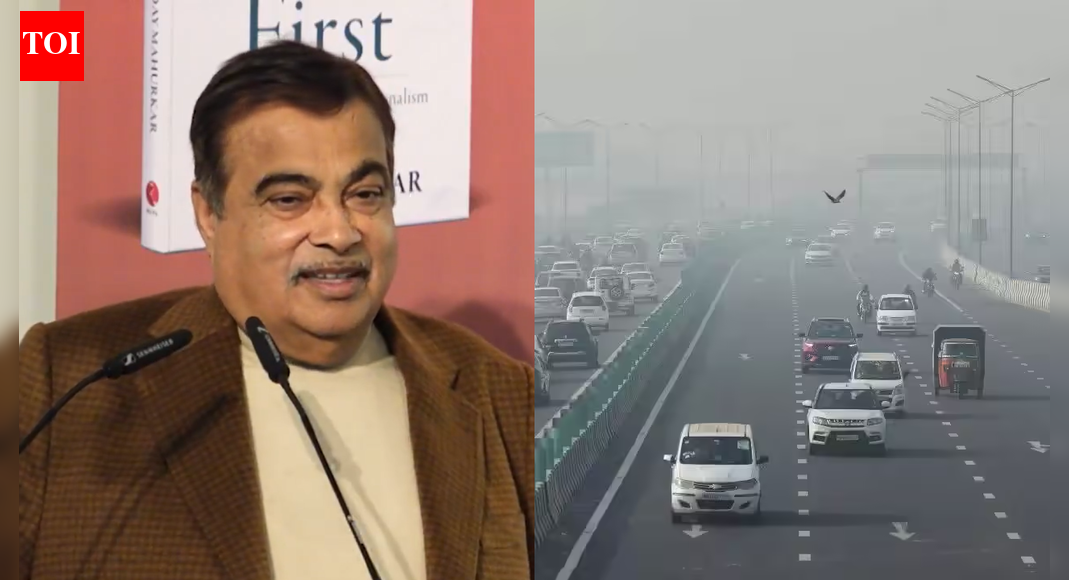
NEW DELHI: Union minister for road transport and highways Nitin Gadkari flagged Delhi’s worsening air pollution, saying the capital’s toxic air was so severe that he fell ill after spending just two days in the city, while stressing that the transport sector was a major contributor to the problem.“I stay in Delhi for 2 days and get an infection, it is so polluted,” Gadkari on Tuesday said while speaking at the book launch of My Idea of Nation First – Redefining Unalloyed Nationalism.Linking the capital’s smog to India’s dependence on petrol and diesel, Gadkari said the transport sector alone was responsible for around 40 per cent of Delhi’s pollution. He argued that moving away from fossil fuels towards electric and hydrogen-based mobility was not just an environmental necessity but also a matter of nationalism.“Today, the biggest form of nationalism, Uday ji, is to reduce the country’s imports and increase exports. What situation have we created for ourselves? I can barely stay for two days; I get sick. I got an infection. Why is there pollution everywhere in Delhi? I am the transport minister, and 40 per cent of it is because of us, because of fossil fuels like petrol and diesel,” Gadkari said.The minister questioned India’s continued reliance on imported fossil fuels, saying it imposed a heavy economic and environmental cost. According to Gadkari, the country spends nearly Rs 20 lakh crore every year on fossil fuel imports.“Even today, we are spending Rs 20 lakh crore. What kind of nationalism is this? In this country, we are spending Rs 20 lakh crore on fossil fuels and importing pollution. Can we not create an alternative India?” he said.Gadkari said India already had the capacity to produce cleaner fuel alternatives domestically and pointed to the growing role of farmers in energy production. Recalling earlier discussions on the subject, he said farmers were no longer limited to food production alone.“Sudarshan ji used to tell me many times that the farmer of this country, the annadata, will also become an energy provider, a fuel provider, even an aviation fuel provider. Now all of that has happened. Even vitamins are being made. But no one is ready to trust it,” Gadkari said.Citing advances in clean mobility, the minister said electric and hydrogen-powered vehicles were now economically viable. He claimed that newer technologies were helping reduce both running costs and emissions.“I came here in a car. The world’s first car that runs 100 per cent does not generate 60 per cent electricity. If you compare the cost, on average, this car runs at the equivalent of Rs 25 per litre of petrol. Pollution is zero. Hydrogen is there, we can make it,” he said.Gadkari also pointed to the sharp decline in battery costs over the years as a key factor driving the adoption of electric vehicles. “Electric vehicles have become so popular. When I first spoke about electric vehicles and launched the first one, the lithium battery cost was $150 per kilowatt hour. Now it has come down to $55,” he said.Referring to emerging innovations, he added, “Now sodium technology has arrived. Just yesterday, it came to my house. A boy with a BTech degree developed this technology in five years. Aluminium sheets, which are usually used, are fuel. This is lemon technology.”Gadkari’s remarks came as air quality across Delhi remained in the severe category, with monitoring stations at Anand Vihar recording an AQI of 466, Ashok Vihar 444 and Chandni Chowk 425. Areas around India Gate, Kartavya Path and Rashtrapati Bhavan continued to record very poor air quality.In response to the deteriorating situation, the Commission for Air Quality Management invoked Stage IV of the Graded Response Action Plan across Delhi NCR, including measures such as the deployment of truck-mounted water sprinklers to control dust and particulate pollution.


