
NEW DELHI: Ministry of external affairs on Friday firmly rejected the China-Pakistan boundary agreement and the China-Pakistan Economic Corridor (CPEC), calling both “illegal and invalid”. External affairs ministry spokesperson Randhir Jaiswal said: “Shaksgam Valley is Indian territory. We have never recognised the so-called China-Pakistan boundary agreement that happened in 1963. We have consistently maintained that the agreement is illegal and invalid.” Jaiswal added that “the entire union territories of Jammu and Kashmir and Ladakh are an integral and inalienable part of India”, a position New Delhi has conveyed repeatedly to both Pakistan and China. He said India has “consistently protested with the Chinese side against attempts to alter the ground reality in Shaksgam Valley” and “further reserve the right to take necessary measures to safeguard our interests”.The remarks come as Pakistan announced the creation of a Special Protection Unit (SPU) to secure thousands of Chinese nationals working on CPEC projects. What is the China-Pakistan Economic Corridor?CPEC is a flagship project of China’s Belt and Road Initiative, valued at around USD 60 billion. It links China’s Xinjiang region to Pakistan’s Gwadar port through a network of roads, railways and energy projects. India opposes CPEC because key sections pass through Pakistan-occupied Kashmir, which New Delhi considers its sovereign territory. India has repeatedly warned that involving third countries in CPEC “directly infringe[s] on India’s sovereignty and territorial integrity”, a stance it has maintained as Pakistan and China now push to widen the project’s regional footprint.Pakistan’s interior minister Mohsin Naqvi made the announcement during meetings in Beijing with China’s Minister of Public Security Wang Xiaohong on Wednesday, as reported by news agency PTI. According to Pakistan’s interior ministry, the SPU will be set up in Islamabad to protect Chinese citizens.Chinese state media confirmed discussions on counter-terrorism, law enforcement cooperation and security capacity building, but did not mention the SPU. It also remains unclear whether the move would involve Chinese security personnel operating on Pakistani soil, something Islamabad has reportedly resisted due to domestic sensitivities.Around 20,000 Chinese personnel are currently involved in CPEC projects, with the Pakistan Army already deploying two corps for their protection. Militant groups such as the Baloch Liberation Army, which opposes CPEC, have repeatedly targeted Chinese interests.About the AuthorTOI News DeskThe TOI News Desk comprises a dedicated and tireless team of journalists who operate around the clock to deliver the most current and comprehensive news and updates to the readers of The Times of India worldwide. With an unwavering commitment to excellence in journalism, our team is at the forefront of gathering, verifying, and presenting breaking news, in-depth analysis, and insightful reports on a wide range of topics. The TOI News Desk is your trusted source for staying informed and connected to the ever-evolving global landscape, ensuring that our readers are equipped with the latest developments that matter most.”Read MoreEnd of ArticleFollow Us On Social MediaVideosHow US Pulled Off A Mission Defining Security Operation For Jaishankar During Government ShutdownVenezuelan Oil For India? US Offer Comes With Conditions As Pressure Grows Over Russian CrudeShashi Tharoor Praises Nehru’s Democracy Role, Admits 1962 Errors, Accuses BJP Of Blame PoliticsJaishankar Sends ‘Bad Neighbour’ Pakistan On Anti-India Rant Again, Calls Operation Sindoor Reckless’No Call From PM Modi’: Trump Aide Lutnick’s Shocker On India-US Trade Deal Amid Tariff Threats‘India Can Balance A Chaotic World’: French President Macron On BRICS, Multipolarity, Power Politics‘India Will Not Be Anybody’s Vassal’: French President Macron’s Remark During Jaishankar MeetMeet Tina Shah, The Indian American Doctor Running For US Congress in New Jersey Democratic RaceBJP Targets Mamata Banerjee Over ED Raid At I-PAC, Alleges Evidence TamperingFrom Op Sindoor To Venezuela: How Chinese Air Defence And Radar Systems Continue To Fail Nations123Photostories5 infamous roads where people are known to disappear without a trace12 non-vegetarian dishes from Indian cities to keep you warm during wintersKatrina Kaif-Vicky Kaushal, Kiara Advani-Sidharth Malhotra to Parineeti Chopra: Celebrity newborn reveals are getting more thoughtfulThis Kaal Bhairav Avatar Protects You Based on Your Birth DateBengaluru airport space shift pushes bus commuters to costly cabs‘Barfi!’, ‘Fashion’, and ‘Mary Kom’: A look at Priyanka Chopra’s most memorable performancesPrada makes chai-inspired perfume: 7 times food became a part of high fashion10 winter habits that build unshakeable inner strengthBTS’s funniest moments: From Jungkook’s Vine phase to J-Hope’s butter chicken incidentLove with restraint, ‘Taal’, ‘Dil Chahta Hai’, ‘Hulchul’ define Akshaye Khanna’s romantic legacy123Hot PicksTrump Mexico NewsTrump Denmark NewsGold rate todayBengaluru newsCigarette price hikePublic holidays January 2026Bank Holidays JanuaryTop TrendingCandace OwensTommy Fleetwood and Clare Fleetwood Net WorthTravis KelceICE Shooting VictimSarfaraz KhanRic Flair Net Worth in 2025Patrick Mahomes InjuryUnion BudgetDelhi AQIStefon Diggs
![NEW DELHI: Ministry of external affairs on Friday firmly rejected the China-Pakistan boundary agreement and the China-Pakistan Economic Corridor (CPEC), calling both “illegal and invalid”. External affairs ministry spokesperson Randhir Jaiswal said: “Shaksgam Valley is Indian territory. We have never recognised the so-called China-Pakistan boundary agreement that happened in 1963. We have consistently maintained that the agreement is illegal and invalid.” Jaiswal added that “the entire union territories of Jammu and Kashmir and Ladakh are an integral and inalienable part of India”, a position New Delhi has conveyed repeatedly to both Pakistan and China. He said India has “consistently protested with the Chinese side against attempts to alter the ground reality in Shaksgam Valley” and “further reserve the right to take necessary measures to safeguard our interests”.The remarks come as Pakistan announced the creation of a Special Protection Unit (SPU) to secure thousands of Chinese nationals working on CPEC projects. What is the China-Pakistan Economic Corridor?CPEC is a flagship project of China’s Belt and Road Initiative, valued at around USD 60 billion. It links China’s Xinjiang region to Pakistan’s Gwadar port through a network of roads, railways and energy projects. India opposes CPEC because key sections pass through Pakistan-occupied Kashmir, which New Delhi considers its sovereign territory. India has repeatedly warned that involving third countries in CPEC “directly infringe[s] on India’s sovereignty and territorial integrity”, a stance it has maintained as Pakistan and China now push to widen the project’s regional footprint.Pakistan’s interior minister Mohsin Naqvi made the announcement during meetings in Beijing with China’s Minister of Public Security Wang Xiaohong on Wednesday, as reported by news agency PTI. According to Pakistan’s interior ministry, the SPU will be set up in Islamabad to protect Chinese citizens.Chinese state media confirmed discussions on counter-terrorism, law enforcement cooperation and security capacity building, but did not mention the SPU. It also remains unclear whether the move would involve Chinese security personnel operating on Pakistani soil, something Islamabad has reportedly resisted due to domestic sensitivities.Around 20,000 Chinese personnel are currently involved in CPEC projects, with the Pakistan Army already deploying two corps for their protection. Militant groups such as the Baloch Liberation Army, which opposes CPEC, have repeatedly targeted Chinese interests.About the AuthorTOI News DeskThe TOI News Desk comprises a dedicated and tireless team of journalists who operate around the clock to deliver the most current and comprehensive news and updates to the readers of The Times of India worldwide. With an unwavering commitment to excellence in journalism, our team is at the forefront of gathering, verifying, and presenting breaking news, in-depth analysis, and insightful reports on a wide range of topics. The TOI News Desk is your trusted source for staying informed and connected to the ever-evolving global landscape, ensuring that our readers are equipped with the latest developments that matter most.”Read MoreEnd of ArticleFollow Us On Social MediaVideosHow US Pulled Off A Mission Defining Security Operation For Jaishankar During Government ShutdownVenezuelan Oil For India? US Offer Comes With Conditions As Pressure Grows Over Russian CrudeShashi Tharoor Praises Nehru’s Democracy Role, Admits 1962 Errors, Accuses BJP Of Blame PoliticsJaishankar Sends ‘Bad Neighbour’ Pakistan On Anti-India Rant Again, Calls Operation Sindoor Reckless’No Call From PM Modi’: Trump Aide Lutnick’s Shocker On India-US Trade Deal Amid Tariff Threats‘India Can Balance A Chaotic World’: French President Macron On BRICS, Multipolarity, Power Politics‘India Will Not Be Anybody’s Vassal’: French President Macron’s Remark During Jaishankar MeetMeet Tina Shah, The Indian American Doctor Running For US Congress in New Jersey Democratic RaceBJP Targets Mamata Banerjee Over ED Raid At I-PAC, Alleges Evidence TamperingFrom Op Sindoor To Venezuela: How Chinese Air Defence And Radar Systems Continue To Fail Nations123Photostories5 infamous roads where people are known to disappear without a trace12 non-vegetarian dishes from Indian cities to keep you warm during wintersKatrina Kaif-Vicky Kaushal, Kiara Advani-Sidharth Malhotra to Parineeti Chopra: Celebrity newborn reveals are getting more thoughtfulThis Kaal Bhairav Avatar Protects You Based on Your Birth DateBengaluru airport space shift pushes bus commuters to costly cabs‘Barfi!’, ‘Fashion’, and ‘Mary Kom’: A look at Priyanka Chopra’s most memorable performancesPrada makes chai-inspired perfume: 7 times food became a part of high fashion10 winter habits that build unshakeable inner strengthBTS’s funniest moments: From Jungkook’s Vine phase to J-Hope’s butter chicken incidentLove with restraint, ‘Taal’, ‘Dil Chahta Hai’, ‘Hulchul’ define Akshaye Khanna’s romantic legacy123Hot PicksTrump Mexico NewsTrump Denmark NewsGold rate todayBengaluru newsCigarette price hikePublic holidays January 2026Bank Holidays JanuaryTop TrendingCandace OwensTommy Fleetwood and Clare Fleetwood Net WorthTravis KelceICE Shooting VictimSarfaraz KhanRic Flair Net Worth in 2025Patrick Mahomes InjuryUnion BudgetDelhi AQIStefon Diggs](https://vknewstoday.in/wp-content/uploads/2026/01/1767959535_photo.jpg "NEW DELHI: Ministry of external affairs on Friday firmly rejected the China-Pakistan boundary agreement and the China-Pakistan Economic Corridor (CPEC), calling both “illegal and invalid”. External affairs ministry spokesperson Randhir Jaiswal said: “Shaksgam Valley is Indian territory. We have never recognised the so-called China-Pakistan boundary agreement that happened in 1963. We have consistently maintained that the agreement is illegal and invalid.” Jaiswal added that “the entire union territories of Jammu and Kashmir and Ladakh are an integral and inalienable part of India”, a position New Delhi has conveyed repeatedly to both Pakistan and China. He said India has “consistently protested with the Chinese side against attempts to alter the ground reality in Shaksgam Valley” and “further reserve the right to take necessary measures to safeguard our interests”.The remarks come as Pakistan announced the creation of a Special Protection Unit (SPU) to secure thousands of Chinese nationals working on CPEC projects. What is the China-Pakistan Economic Corridor?CPEC is a flagship project of China’s Belt and Road Initiative, valued at around USD 60 billion. It links China’s Xinjiang region to Pakistan’s Gwadar port through a network of roads, railways and energy projects. India opposes CPEC because key sections pass through Pakistan-occupied Kashmir, which New Delhi considers its sovereign territory. India has repeatedly warned that involving third countries in CPEC “directly infringe[s] on India’s sovereignty and territorial integrity”, a stance it has maintained as Pakistan and China now push to widen the project’s regional footprint.Pakistan’s interior minister Mohsin Naqvi made the announcement during meetings in Beijing with China’s Minister of Public Security Wang Xiaohong on Wednesday, as reported by news agency PTI. According to Pakistan’s interior ministry, the SPU will be set up in Islamabad to protect Chinese citizens.Chinese state media confirmed discussions on counter-terrorism, law enforcement cooperation and security capacity building, but did not mention the SPU. It also remains unclear whether the move would involve Chinese security personnel operating on Pakistani soil, something Islamabad has reportedly resisted due to domestic sensitivities.Around 20,000 Chinese personnel are currently involved in CPEC projects, with the Pakistan Army already deploying two corps for their protection. Militant groups such as the Baloch Liberation Army, which opposes CPEC, have repeatedly targeted Chinese interests.About the AuthorTOI News DeskThe TOI News Desk comprises a dedicated and tireless team of journalists who operate around the clock to deliver the most current and comprehensive news and updates to the readers of The Times of India worldwide. With an unwavering commitment to excellence in journalism, our team is at the forefront of gathering, verifying, and presenting breaking news, in-depth analysis, and insightful reports on a wide range of topics. The TOI News Desk is your trusted source for staying informed and connected to the ever-evolving global landscape, ensuring that our readers are equipped with the latest developments that matter most.”Read MoreEnd of ArticleFollow Us On Social MediaVideosHow US Pulled Off A Mission Defining Security Operation For Jaishankar During Government ShutdownVenezuelan Oil For India? US Offer Comes With Conditions As Pressure Grows Over Russian CrudeShashi Tharoor Praises Nehru’s Democracy Role, Admits 1962 Errors, Accuses BJP Of Blame PoliticsJaishankar Sends ‘Bad Neighbour’ Pakistan On Anti-India Rant Again, Calls Operation Sindoor Reckless’No Call From PM Modi’: Trump Aide Lutnick’s Shocker On India-US Trade Deal Amid Tariff Threats‘India Can Balance A Chaotic World’: French President Macron On BRICS, Multipolarity, Power Politics‘India Will Not Be Anybody’s Vassal’: French President Macron’s Remark During Jaishankar MeetMeet Tina Shah, The Indian American Doctor Running For US Congress in New Jersey Democratic RaceBJP Targets Mamata Banerjee Over ED Raid At I-PAC, Alleges Evidence TamperingFrom Op Sindoor To Venezuela: How Chinese Air Defence And Radar Systems Continue To Fail Nations123Photostories5 infamous roads where people are known to disappear without a trace12 non-vegetarian dishes from Indian cities to keep you warm during wintersKatrina Kaif-Vicky Kaushal, Kiara Advani-Sidharth Malhotra to Parineeti Chopra: Celebrity newborn reveals are getting more thoughtfulThis Kaal Bhairav Avatar Protects You Based on Your Birth DateBengaluru airport space shift pushes bus commuters to costly cabs‘Barfi!’, ‘Fashion’, and ‘Mary Kom’: A look at Priyanka Chopra’s most memorable performancesPrada makes chai-inspired perfume: 7 times food became a part of high fashion10 winter habits that build unshakeable inner strengthBTS’s funniest moments: From Jungkook’s Vine phase to J-Hope’s butter chicken incidentLove with restraint, ‘Taal’, ‘Dil Chahta Hai’, ‘Hulchul’ define Akshaye Khanna’s romantic legacy123Hot PicksTrump Mexico NewsTrump Denmark NewsGold rate todayBengaluru newsCigarette price hikePublic holidays January 2026Bank Holidays JanuaryTop TrendingCandace OwensTommy Fleetwood and Clare Fleetwood Net WorthTravis KelceICE Shooting VictimSarfaraz KhanRic Flair Net Worth in 2025Patrick Mahomes InjuryUnion BudgetDelhi AQIStefon Diggs")
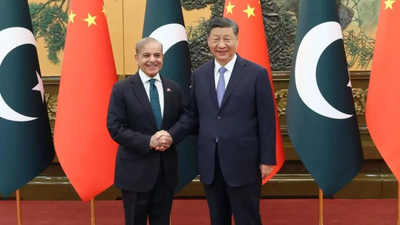
NEW DELHI: Ministry of external affairs on Friday firmly rejected the China-Pakistan boundary agreement and the China-Pakistan Economic Corridor (CPEC), calling both “illegal and invalid”. External affairs ministry spokesperson Randhir Jaiswal said: “Shaksgam Valley is Indian territory. We have never recognised the so-called China-Pakistan boundary agreement that happened in 1963. We have consistently maintained that the agreement is illegal and invalid.” Jaiswal added that “the entire union territories of Jammu and Kashmir and Ladakh are an integral and inalienable part of India”, a position New Delhi has conveyed repeatedly to both Pakistan and China. He said India has “consistently protested with the Chinese side against attempts to alter the ground reality in Shaksgam Valley” and “further reserve the right to take necessary measures to safeguard our interests”.The remarks come as Pakistan announced the creation of a Special Protection Unit (SPU) to secure thousands of Chinese nationals working on CPEC projects.
What is the China-Pakistan Economic Corridor?
CPEC is a flagship project of China’s Belt and Road Initiative, valued at around USD 60 billion. It links China’s Xinjiang region to Pakistan’s Gwadar port through a network of roads, railways and energy projects. India opposes CPEC because key sections pass through Pakistan-occupied Kashmir, which New Delhi considers its sovereign territory. India has repeatedly warned that involving third countries in CPEC “directly infringe[s] on India’s sovereignty and territorial integrity”, a stance it has maintained as Pakistan and China now push to widen the project’s regional footprint.Pakistan’s interior minister Mohsin Naqvi made the announcement during meetings in Beijing with China’s Minister of Public Security Wang Xiaohong on Wednesday, as reported by news agency PTI. According to Pakistan’s interior ministry, the SPU will be set up in Islamabad to protect Chinese citizens.Chinese state media confirmed discussions on counter-terrorism, law enforcement cooperation and security capacity building, but did not mention the SPU. It also remains unclear whether the move would involve Chinese security personnel operating on Pakistani soil, something Islamabad has reportedly resisted due to domestic sensitivities.Around 20,000 Chinese personnel are currently involved in CPEC projects, with the Pakistan Army already deploying two corps for their protection. Militant groups such as the Baloch Liberation Army, which opposes CPEC, have repeatedly targeted Chinese interests.


