
. NEW DELHI: Captagon, widely known as the ‘jihadi drug’ for its rampant use by extremist networks active in the conflict zones across the Middle East/West Asia, enables its users to remain awake for extended periods, suppress fear and exhaustion, increase aggression and risk-taking behaviour, thus sustaining prolonged combat-like activity under stressful conditions.According to sources in the security establishment, Captagon’s stimulant and euphoric effects have led the international media and security agencies to frequently refer to it as the ‘jihadi drug’ due to allegations and intelligence inputs over the years, linking its abuse and trafficking with extremist and conflict-zone networks operating in parts of West Asia.The update on the 228-kg seizures of Captagon, valued at around Rs 182 crore, came a day after home minister Amit Shah had, while delivering the annual R N Kao memorial lecture at RAW headquarters here, declared that India would be drugs-free by 2047 and not allow a single gram of narcotics to enter or transit through its borders. He had also appealed for a unified, global fight against narcotics and narco-terror, while pushing for a uniform legal framework, similar penalties and synergised action against drug kingpins and syndicates.Congratulating “the brave and vigilant warriors of NCB” for the Captagon seizure, home minister Amit Shah on Thursday posted on X: “Glad to share that through ‘Operation RAGEPILL’, our agencies have achieved the first-ever seizure of Captagon, the so-called ‘jihadi drug’, worth Rs 182 crore. The busting of the drug consignment destined for the Middle East and the arrest of a foreign national stand out as shining examples of our commitment to zero tolerance against drugs.””I repeat we will clamp down on every gram of drugs entering India or leaving the country using our territory as the transit route,” he added.Senior officials on Saturday disclosed that Captagon is the common street name historically associated with Fenethylline, a synthetic stimulant drug originally developed in the 1960s for medical treatment of attention disorders and narcolepsy. Owing to its addictive properties and abuse potential, the original pharmaceutical formulation was eventually prohibited internationally.Today, most illicit Captagon tablets circulating in illegal drug markets are clandestinely manufactured and typically contain combinations of amphetamine, caffeine, methamphetamine, and other synthetic stimulants.Sources told TOI that various international investigations and conflict-zone recoveries over the past decade had indicated that Captagon tablets were found in use by armed groups and trafficking syndicates operating in war-affected regions. The enormous profits generated from Captagon trafficking have also reportedly become a significant source of illicit financing for organised criminal and extremist-linked networks in certain regions.Due to its comparatively low production cost and extremely high illicit demand, Captagon is also referred to in some regions as the “Poor Man’s Cocaine”.It is not only ISIS fighters who want Captagon, the drug is highly popular across the Middle East, where alcohol is banned by Sharia law. It has also been used as a sex stimulant among the younger population in the Near and Middle East since early 1980s.A Time magazine report revealed that Saudi Arabia alone accounts for more than one-third of global amphetamine seizures a year. “Qatar, Kuwait and the UAE have reported similar spikes in multimillion-tablet seizures of the drug in the past two years,” as per the report.International agencies have identified Captagon trade as one of the most significant emerging synthetic drug threats in the Middle East, involving clandestine laboratories, precursor chemical diversion, hawala financing, forged trade documentation, maritime trafficking routes, courier networks, and sophisticated concealment mechanisms.” said a source.About the AuthorBharti JainBharti Jain is senior editor with The Times of India, New Delhi. She has been writing on security matters since 1996. Having covered the Union home ministry, security agencies, Election Commission and the ‘prime’ political beat, the Congress, for The Economic Times all these years, she moved to TOI in August 2012. Her repertoire of news stories delves into the whole gamut of issues related to terrorism and internal strife, besides probing strategic affairs in India’s neighbourhood.Read MoreEnd of ArticleFollow Us On Social MediaVideosUnion Minister Bandi Sanjay’s Son Surrenders In POCSO Case, Remanded Till May 29Five Maoist Functionaries Surrender In Gadchiroli As ‘Operation Antim Prahar’ IntensifiesPM Modi’s Netherlands Visit: India-Dutch Ties Upgraded To Strategic PartnershipUnion Minister Bandi Sanjay Hands Over Son To Police In POCSO Case, Says ‘All Are Equal Before Law’Centre Restricts Silver Bar Imports, Changes Status From ‘Free’ To ‘Restricted’Tamil Nadu Cabinet: CM Vijay Takes Home, Sengottaiyan Gets Finance; Check Full List’Modi Ji…’: Rahul Gandhi Demands Sacking Of Dharmendra Pradhan Over NEET Paper Leak’History Or Geography’: Indian Army Chief Upendra Dwivedi Issues Stern Warning To PakistanCBI Seeks 14-Day Custody Of Accused In NEET-UG 2026 Paper Leak Case; Pune Botany Teacher Arrested’Misquoted’: CJI Surya Kant Clarifies ‘Cockroach’ Remarks On Unemployed Youth123PhotostoriesArt quote of the day by Vincent Van Gogh: “I dream my painting and I paint my dream”What gardening teaches you about patience, seasons, and slowing down”Not a fan of lassi; I like…” Priyanka Chopra on her favourite Indian drink to cool down in summerThought of the day inspired by the Bhagavad Gita: Why comparison steals peaceYour daily stress may be raising blood pressure silently: Here’s how long work hours, poor sleep, and mental exhaustion are affecting the heart10 baby girl names inspired by flowers and blossomsShakira, Madonna, and BTS to co-headline FIFA halftime show: A look at the top 5 performers of all timeTannaz Irani opens up about marrying an older Muslim man, dealing with mom’s guilt after divorce, and the age gap between her and Bakhtyaar Irani“I can’t be her friend”: Riddhima Kapoor gets real about raising daughter SamaraFrom Will Smith to Emily Blunt: 10 actors who rejected roles that later became iconic123Hot PicksCBSE class 12 resultUS Iran warPrateek YadavHaryana election resultForeign outflowNEET exam cancelledTamil Nadu assemblyTop TrendingRishabh PantNEET PaperIPL Points TableNEET Aspirant DieKerala Board SSLC Result 2026IPL 2026IPL Orange Cap 2026Bengaluru RapeCBSE 2 Language RuleTS EAPCET Result 2026

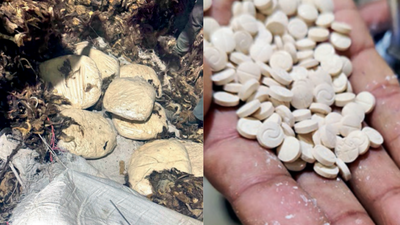
NEW DELHI: Captagon, widely known as the ‘jihadi drug’ for its rampant use by extremist networks active in the conflict zones across the Middle East/West Asia, enables its users to remain awake for extended periods, suppress fear and exhaustion, increase aggression and risk-taking behaviour, thus sustaining prolonged combat-like activity under stressful conditions.According to sources in the security establishment, Captagon’s stimulant and euphoric effects have led the international media and security agencies to frequently refer to it as the ‘jihadi drug’ due to allegations and intelligence inputs over the years, linking its abuse and trafficking with extremist and conflict-zone networks operating in parts of West Asia.The update on the 228-kg seizures of Captagon, valued at around Rs 182 crore, came a day after home minister Amit Shah had, while delivering the annual R N Kao memorial lecture at RAW headquarters here, declared that India would be drugs-free by 2047 and not allow a single gram of narcotics to enter or transit through its borders. He had also appealed for a unified, global fight against narcotics and narco-terror, while pushing for a uniform legal framework, similar penalties and synergised action against drug kingpins and syndicates.Congratulating “the brave and vigilant warriors of NCB” for the Captagon seizure, home minister Amit Shah on Thursday posted on X: “Glad to share that through ‘Operation RAGEPILL’, our agencies have achieved the first-ever seizure of Captagon, the so-called ‘jihadi drug’, worth Rs 182 crore. The busting of the drug consignment destined for the Middle East and the arrest of a foreign national stand out as shining examples of our commitment to zero tolerance against drugs.““I repeat we will clamp down on every gram of drugs entering India or leaving the country using our territory as the transit route,” he added.Senior officials on Saturday disclosed that Captagon is the common street name historically associated with Fenethylline, a synthetic stimulant drug originally developed in the 1960s for medical treatment of attention disorders and narcolepsy. Owing to its addictive properties and abuse potential, the original pharmaceutical formulation was eventually prohibited internationally.Today, most illicit Captagon tablets circulating in illegal drug markets are clandestinely manufactured and typically contain combinations of amphetamine, caffeine, methamphetamine, and other synthetic stimulants.Sources told TOI that various international investigations and conflict-zone recoveries over the past decade had indicated that Captagon tablets were found in use by armed groups and trafficking syndicates operating in war-affected regions. The enormous profits generated from Captagon trafficking have also reportedly become a significant source of illicit financing for organised criminal and extremist-linked networks in certain regions.Due to its comparatively low production cost and extremely high illicit demand, Captagon is also referred to in some regions as the “Poor Man’s Cocaine”.It is not only ISIS fighters who want Captagon, the drug is highly popular across the Middle East, where alcohol is banned by Sharia law. It has also been used as a sex stimulant among the younger population in the Near and Middle East since early 1980s.A Time magazine report revealed that Saudi Arabia alone accounts for more than one-third of global amphetamine seizures a year. “Qatar, Kuwait and the UAE have reported similar spikes in multimillion-tablet seizures of the drug in the past two years,” as per the report.International agencies have identified Captagon trade as one of the most significant emerging synthetic drug threats in the Middle East, involving clandestine laboratories, precursor chemical diversion, hawala financing, forged trade documentation, maritime trafficking routes, courier networks, and sophisticated concealment mechanisms.” said a source.


