
NASA confirms School bus-sized asteroid 2026 JH2 to pass very close to Earth

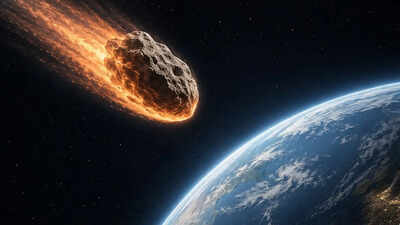
A newly discovered near-Earth asteroid known as 2026 JH2 is set to make an unusually close flyby of Earth on May 18, according to orbital data tracked by NASA and astronomers monitoring near-Earth objects. The asteroid, estimated to be roughly the size of a school bus, was only detected days before its close approach, making it one of the more closely watched small-body encounters of the month. While the object poses no impact threat to Earth, its trajectory will bring it remarkably close in astronomical terms, giving astronomers and amateur skywatchers a rare opportunity to observe a newly discovered asteroid during a near-Earth pass.
What is asteroid 2026 JH2?
Asteroid 2026 JH2 is classified as an Apollo-type near-Earth asteroid, meaning its orbit crosses Earth’s orbital path around the Sun. The object was identified by observatories including the Mount Lemmon Survey in Arizona, part of the global network dedicated to detecting potentially hazardous objects in space.Preliminary observations suggest the asteroid measures somewhere between around 16 and 35 metres across, though scientists caution that early size estimates can change as additional observations refine the object’s brightness, shape and reflectivity. At the lower end, the asteroid would be comparable in size to a large bus, while larger estimates place it closer to the height of a multi-storey building.
How close will the asteroid come to Earth?
According to data from NASA’s Jet Propulsion Laboratory, asteroid 2026 JH2 is expected to pass Earth at a distance of roughly 0.0006 astronomical units (AU). That translates to approximately 90,000 kilometres from Earth, or about one-quarter of the average distance between Earth and the Moon.Although that sounds alarmingly close, astronomers emphasise that the asteroid will safely miss the planet. In cosmic terms, however, the flyby is considered extremely close, particularly for an object discovered only shortly before its encounter.The asteroid is also expected to make a relatively close pass by the Moon before continuing along its orbit around the Sun.
Why astronomers are interested in the flyby
Close asteroid encounters like this provide valuable opportunities for planetary defence research and orbital analysis. Because 2026 JH2 was discovered shortly before its Earth approach, astronomers are rapidly gathering new observations to improve calculations of its trajectory and physical characteristics.Scientists use these encounters to better understand how small near-Earth asteroids move through space, how sunlight affects their orbits over time and how accurately current detection systems can identify objects approaching Earth.Such flybys also help refine global asteroid-tracking systems designed to detect genuinely hazardous objects much earlier in the future.
Will the asteroid be visible from Earth?
The asteroid is expected to brighten to around magnitude 11.5 during its closest approach. That is far too faint to be seen with the naked eye, but it may become visible through modest amateur telescopes under dark sky conditions.Astronomy organisations such as the Virtual Telescope Project are also expected to livestream observations of the flyby for viewers worldwide.Many small asteroids are only detected days or weeks before passing near Earth because of their relatively tiny size and faint brightness. Large planetary defence programmes continuously scan the skies for such objects, but smaller asteroids can remain difficult to detect until they move closer to the inner Solar System.Most near-Earth asteroids discovered in this way pose no danger. Instead, they serve as reminders of the vast number of rocky bodies moving through the Solar System and the importance of continued monitoring efforts by agencies such as NASA and observatories around the world.


