
Months after snubbing Trump’s ‘Operation Epic Fury’, Nato weighs Hormuz mission to protect ships

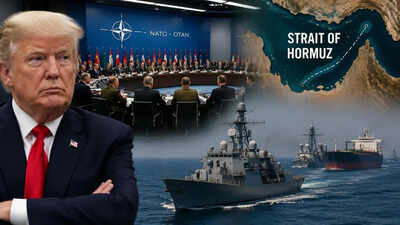
North Atlantic Treaty Organization is discussing the possibility of deploying forces to help protect commercial shipping through the strategically crucial Strait of Hormuz if the waterway remains blocked into July, Bloomberg reported, citing senior alliance and diplomatic officials.According to Bloomberg, the proposal has backing from several Nato members, though the alliance has not yet reached the unanimous consensus required for any formal mission. Leaders of Nato countries are scheduled to meet in Ankara on July 7 and 8, where the issue is expected to feature prominently in discussions.The move would mark a significant shift in Nato’s approach toward the ongoing US-Israeli conflict with Iran. Until now, Nato allies had largely maintained that any involvement in the Strait of Hormuz would only come after active fighting ended and under a broader international coalition that included non-Nato countries.Bloomberg reported that growing economic pressure is now forcing allies to reconsider their position, with the closure of the Strait of Hormuz sending global energy prices sharply higher and weighing on growth forecasts across major economies.Iran blocked the Strait of Hormuz after the US and Israel launched strikes on Iranian targets in late February, according to Bloomberg. The narrow waterway is one of the world’s most critical energy chokepoints, handling nearly one-fifth of global oil and liquefied natural gas shipments.The blockade has also deepened tensions between the United States and several European Nato allies, many of whom resisted calls by US President Donald Trump to assist in reopening the route.Bloomberg reported that Trump has repeatedly expressed frustration over the lack of support from Nato allies and recently announced plans to withdraw 5,000 US troops from Germany.“The North Atlantic Treaty Organisation wasn’t there when US needed them, and they wouldn’t be there if Washington needed them again,” Trump said in a post on Truth Social after a private meeting with Nato Secretary General Mark Rutte at the White House in April.The remarks came after several Nato countries reportedly resisted Trump’s calls for assistance in reopening the Strait of Hormuz amid soaring oil prices and escalating regional instability.According to Bloomberg, a senior Nato official said that while some alliance members still oppose authorising a Nato mission in the strait, support could grow if the blockade continues. A diplomat from a Nato country also told Bloomberg that several allies favour intervening to secure shipping routes, though others remain reluctant to be drawn directly into the conflict.Some Nato members, including Spain, have openly opposed the war. Bloomberg reported that Madrid barred the US from using Spanish airspace and military bases for strikes on Iran.However, most Nato allies have quietly provided logistical support by allowing access to military bases, according to the report.Bloomberg also reported that a coalition led by France and the United Kingdom is separately developing plans to secure navigation through the Strait of Hormuz once active hostilities subside. Several countries have already positioned military assets in the region in preparation.Despite Trump’s criticism, Bloomberg said the US has so far made no formal request for Nato involvement in the strait. White House Press Secretary Karoline Leavitt, however, said discussions over Washington’s future role within Nato remained ongoing.In a separate meeting, US Secretary of State Marco Rubio and Rutte discussed increasing coordination and “burden shifting” among Nato allies, according to the US State Department.


