
Meet Manindra Agrawal: IIT Kanpur director elected Fellow of the prestigious Royal Society, joining the ranks of Einstein and Newton

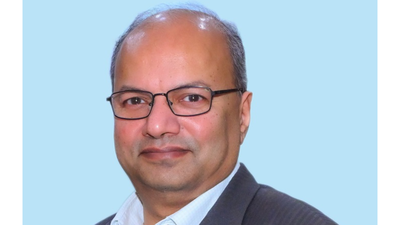
IIT Kanpur director Manindra Agrawal has been elected a Fellow of the Royal Society, one of the world’s most prestigious scientific honours. The recognition places him among an elite group of scientists whose work has shaped modern knowledge, including figures such as Isaac Newton and Albert Einstein. Agrawal received the honour for his pioneering contributions to theoretical computer science, especially the AKS primality test, a breakthrough that changed the way mathematicians think about prime numbers.Agrawal is one of India’s most respected computer scientists and mathematicians, best known for his work in theoretical computer science, computational complexity and number theory. Born in Uttar Pradesh, he studied at Indian Institute of Technology Kanpur, where he later became a faculty member and eventually the institute’s director. Over the years, his research has earned international recognition for solving major mathematical and computational problems.
The Royal Society honour that placed Manindra Agrawal among science’s elite
The Royal Society is the United Kingdom’s national academy of sciences and one of the world’s most elite scientific institutions. Founded in 1660, it has historically included some of the greatest scientific minds in history. Election as a Fellow of the Royal Society is considered one of the highest honours a scientist can receive, with only a limited number of researchers from around the world elected each year. More than 280 Nobel Prize winners have been fellows of the society at some point in history.Agrawal became internationally known in 2002 after developing the AKS primality test along with his students Neeraj Kayal and Nitin Saxena. The breakthrough solved a major long-standing problem in mathematics and computer science: how to efficiently determine whether a number is prime.Prime numbers are numbers greater than 1 that can only be divided evenly by themselves and 1, and they play a critical role in modern cryptography and internet security. Before the AKS breakthrough, existing methods often relied on probabilistic testing or specialised assumptions. The AKS primality test became the first unconditional deterministic polynomial-time algorithm capable of proving whether a number is prime.The AKS test provided a mathematically rigorous and efficient framework for verifying prime numbers, making it one of the most celebrated breakthroughs in theoretical computer science.
Why the AKS primality test mattered so much
The AKS primality test was considered revolutionary because it solved a problem that mathematicians had worked on for centuries. Its importance extended beyond pure mathematics because prime numbers are essential for encryption systems that protect digital communication, banking systems and online security.Although the AKS test is not necessarily the fastest method used in practical computing today, its theoretical importance remains enormous because it proved that prime testing could be done efficiently without relying on probability.The discovery earned Agrawal and his collaborators several major honours, including the Gödel Prize and the Fulkerson Prize.
Why Agrawal’s election is significant for Indian science
The first Indian-origin Fellow of the Royal Society was Ardaseer Cursetjee in 1841. Several legendary Indian and Indian-origin scientists later joined the society, including Srinivasa Ramanujan, C. V. Raman, Jagadish Chandra Bose, Homi J. Bhabha and Subrahmanyan Chandrasekhar.However, Agrawal’s election remains especially significant because of his contributions to modern theoretical computer science from an Indian academic institution. The recognition highlights the growing global influence of Indian research in mathematics and computer science and reinforces IIT Kanpur’s reputation as one of India’s leading centres for advanced scientific research.For many students and researchers, Agrawal’s journey represents the global impact that can emerge from Indian institutions through deep theoretical work and long-term scientific dedication.


